
GJEPC Pushes for Essential GST Reforms to Bolster India’s Gem & Jewellery Exports
The Gem & Jewellery Export Promotion Council (GJEPC), a pivotal body overseeing India’s vibrant gem and jewellery sector, is at the forefront of a robust advocacy campaign aimed at rationalizing Goods and Services Tax (GST) rates and procedures. These crucial adjustments are deemed indispensable for maintaining and enhancing the competitiveness of Indian exports in the global market. With a deep understanding of the industry’s intricate supply chain and its significant contribution to the national economy, GJEPC committee members and senior officials have been diligently engaging with various stakeholders, including representatives from state governments and key central government authorities, to present their comprehensive viewpoint on the existing GST framework and seek beneficial amendments.
India’s gem and jewellery sector is not merely an economic powerhouse; it is a symbol of exceptional craftsmanship, innovation, and entrepreneurial spirit. Employing millions and contributing significantly to the nation’s foreign exchange earnings, the industry’s continued success is paramount for sustained economic growth. However, a complex or burdensome tax regime, particularly the GST, can inadvertently create headwinds, impeding the smooth flow of trade and eroding the profitability of exporters. Recognizing this potential challenge, GJEPC has taken a proactive stance, channeling the collective voice of the industry to policymakers.
Strategic Dialogue: GJEPC’s Comprehensive Outreach to Government Bodies
GJEPC’s strategy involves multi-pronged engagement, ensuring that its concerns and recommendations are heard at both regional and national levels. This collaborative approach underscores the council’s commitment to fostering an environment conducive to export growth and operational efficiency for its members.
Engaging with State Governments: Regional Perspectives
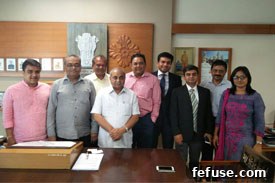
Highlighting the localized impact of tax policies, GJEPC delegations have made concerted efforts to meet with state leaders. On June 8, a prominent delegation from the GJEPC’s Gujarat region held a pivotal meeting with Shri Nitin Patel, the Deputy Chief Minister of Gujarat. During this constructive dialogue, the delegation meticulously outlined a series of suggestions put forth by the Council, emphasizing how localized GST interpretations or implementations could affect the region’s robust diamond and jewellery manufacturing hubs.
Similarly, a day prior, members of the GJEPC committee in Jaipur, a renowned global hub for coloured gemstones, convened with the Finance Minister of Rajasthan. This meeting provided an invaluable platform to articulate the Council’s specific perspectives on GST rates, particularly as they pertain to the unique aspects of the coloured gemstone trade, which differs in many regards from the diamond sector.
Appraising Central Government Officials: National Policy Impact
Beyond regional engagements, GJEPC has simultaneously conducted a series of high-level meetings with various senior officials within the central government. The primary objective of these discussions has been to comprehensively appraise decision-makers on the potential negative ramifications of certain existing GST rates on Indian gem and jewellery exports. The Council has meticulously presented data and case studies demonstrating how these rates could adversely affect liquidity, increase operational costs, and ultimately diminish India’s competitive edge in the international arena. The central government meetings are critical for advocating for broader, national-level policy adjustments that can provide relief and impetus to the entire export ecosystem.
Key Recommendations: Charting a Path for Export Excellence
Through these extensive deliberations, GJEPC has distilled its core concerns into a set of precise and actionable recommendations, each designed to address a specific bottleneck or anomaly within the GST framework. These proposals are not just about reducing taxes; they are about creating a more equitable, efficient, and internationally competitive tax environment for India’s gem and jewellery exporters.
1. Abolition of 0.25% Integrated GST (IGST) on Rough Diamonds
The Council vehemently advocates for the complete abolition of the 0.25% IGST currently levied on rough diamonds. While seemingly a minor percentage, this levy significantly impacts the working capital of diamond manufacturers, particularly those involved in large-scale processing. For an industry that thrives on high-volume, low-margin transactions, even a small blockage of funds due to input credit accumulation can create substantial liquidity challenges. Eliminating this IGST would streamline operations, free up capital, and align India’s tax structure more closely with global best practices for diamond trading hubs.
2. Rationalizing GST on Labour Charges for Diamond Manufacturing
A critical issue raised by GJEPC is the prohibitive 18% GST on labour charges incurred for the manufacture of diamonds, especially when processed through job workers. This high rate places an undue burden on manufacturers, increasing their cost of production and making Indian-made diamonds less competitive. GJEPC proposes either the complete abolition of this 18% GST or, at a minimum, its reduction to a nominal rate, ideally comparable to the GST on rough diamonds. The rationale behind a nominal rate is to maintain an audit trail without imposing a significant financial encumbrance on a sector that is inherently labour-intensive and relies heavily on skilled craftsmanship and specialized job work facilities.
3. Achieving Parity for Coloured Gemstones with Diamonds
India is a global leader in the cutting, polishing, and trading of coloured gemstones. To foster the growth and international standing of this segment, GJEPC urges that coloured gemstones be accorded the same preferential treatment as diamonds across all levels of GST taxation and procedural frameworks. This includes aligning GST rates, simplifying compliance procedures, and ensuring an equitable playing field. Discrepancies in taxation and regulatory burdens between diamonds and coloured gemstones can lead to operational inefficiencies and disincentivize investment in the coloured gemstone sector, thereby hindering its vast export potential.
4. Nil-Rating Diamond Dollar Account (DDA) Transactions Under GST
The Diamond Dollar Account (DDA) scheme is a crucial facility for diamond exporters, enabling them to conduct transactions in foreign currency, thereby mitigating foreign exchange risks. GJEPC recommends that all transactions routed through DDA accounts be subject to a ‘nil’ GST rate. This measure is essential to ensure the seamless functioning of this critical export-oriented mechanism and to prevent any unintended tax implications that could disrupt the financial operations of diamond exporters and impact their global trade fluidity.
5. Rationalizing GST on Labour Charges for Jewellery Manufacturing
Mirroring the concerns for diamond manufacturing, GJEPC also advocates for a ‘nil’ GST rate on labour charges associated with jewellery manufacturing. Alternatively, the Council proposes that this rate be set at par with the GST rate applicable to the final product, i.e., finished jewellery. The jewellery sector is another cornerstone of India’s export economy, renowned for its intricate designs and manual artistry. High GST on labour significantly inflates production costs, particularly for small and medium-sized enterprises (SMEs) and artisans. A streamlined approach to labour taxation would empower manufacturers, boost domestic production, and enhance the attractiveness of ‘Made in India’ jewellery in international markets.
6. Streamlined GST Procedures for Jewellery Exports
The existing framework allows for Duty-Free Gold/Silver procurement through nominated agencies, which is vital for jewellery exporters. GJEPC emphasizes that the GST procedure for jewellery exports must be fully commensurate and integrated with this established mechanism. This implies implementing systems like bonds or bank guarantees to ensure that exporters can seamlessly procure precious metals without upfront tax burdens that would otherwise block working capital. Such an alignment is critical to maintaining India’s position as a competitive sourcing hub for gold and silver jewellery globally.
7. International Parity for Cut & Polished Diamonds: 3% to 1% GST
A significant proposal from the Council is the reduction of the GST rate on cut and polished diamonds from the current 3% down to 1%. This reduction is specifically aimed at achieving parity with other major global diamond trading and processing centers, such as Belgium, which often benefit from more favorable tax regimes. A higher tax rate in India can make Indian-processed diamonds less attractive price-wise, potentially diverting trade to competing nations. Reducing this rate to 1% would significantly boost India’s global competitiveness, solidify its position as the world’s leading diamond manufacturing hub, and stimulate further growth in an already robust sector.
Broader Economic Implications and the Path Forward
The successful implementation of GJEPC’s recommendations holds profound implications for India’s economic landscape. Rationalizing GST rates and procedures would not only alleviate the financial burden on exporters but also inject renewed vigor into the entire gem and jewellery ecosystem. These reforms are expected to lead to increased export volumes, a significant boost in foreign exchange earnings, and the creation and sustenance of countless jobs across the value chain, from mining to retail. By enhancing India’s export competitiveness, these changes would reinforce the ‘Make in India’ initiative and position the nation more strongly on the global stage.
GJEPC continues its relentless efforts, engaging in constructive dialogue and providing comprehensive data to support its proposals. The Council remains optimistic that the government, recognizing the strategic importance of the gem and jewellery sector, will consider these vital recommendations favorably. Such policy adjustments are not merely concessions but strategic investments in an industry that has consistently demonstrated its capacity to contribute significantly to India’s prosperity and global trade leadership.
News Source: www.gjepc.org