
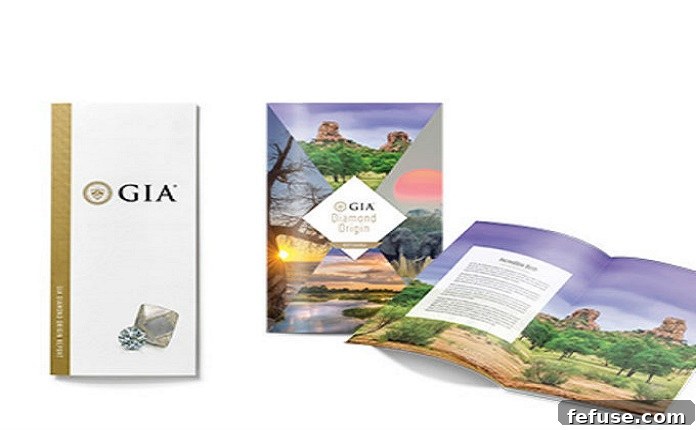
GIA Revolutionizes Diamond Transparency with Expanded Origin Report for Fancy Colors
In an increasingly interconnected world where consumers demand transparency and authenticity, the Gemological Institute of America (GIA) continues to lead the way in establishing trust within the global diamond industry. The GIA has recently announced a significant enhancement to its renowned GIA Diamond Origin Report Service, which now includes natural fancy color diamonds. This expansion marks a pivotal moment, offering an unprecedented level of assurance by scientifically matching these exquisite gems to their original rough, thereby confirming their country of origin.
This groundbreaking service, which previously covered D-to-Z color diamonds, utilizes advanced scientific techniques to provide irrefutable proof of a diamond’s journey from the mine to the market. The inclusion of fancy color diamonds – some of the rarest and most valuable stones on Earth – addresses a growing need for verified provenance in a highly specialized segment of the market. This move underscores GIA’s commitment to consumer protection and industry integrity, ensuring that every fancy color diamond accompanied by this report tells a clear, verifiable story of its birth.
The Growing Imperative for Diamond Origin Transparency
The diamond industry, like many luxury sectors, has undergone significant transformation in response to evolving consumer expectations. Modern buyers are not only interested in the beauty and quality of their diamonds but also in their ethical provenance, their journey through the supply chain, and their impact on mining communities. The concept of “blood diamonds” brought global attention to the critical need for responsible sourcing, leading to initiatives like the Kimberley Process Certification Scheme. However, consumers today seek an even deeper level of transparency – a verifiable narrative that extends beyond conflict-free status to encompass ethical labor practices, environmental stewardship, and community beneficiation.
This heightened demand for information has created a powerful impetus for organizations like GIA to innovate. While retailers have long relied on the GIA’s impartial 4Cs grading reports, the Diamond Origin Report adds a crucial layer of verified data that resonates profoundly with today’s conscious consumer. It transforms a diamond from a mere geological marvel into a tangible link to a specific place, a community, and a responsible supply chain, enhancing its value and desirability.
GIA Diamond Origin Report: Setting a New Standard for Trust
The positive reception to the GIA Diamond Origin Report has been overwhelmingly strong across all segments of the diamond value chain. Tom Moses, GIA executive vice president and chief laboratory and research officer, noted, “Reaction to the GIA Diamond Origin Report is very positive. There is strong interest in this programme from miners, manufacturers and retailers. We are adding capacity for evaluating rough diamonds to meet the strong demand.” This enthusiasm is a clear indicator of the industry’s collective recognition of the report’s potential to build profound consumer trust and differentiate responsibly sourced diamonds in a competitive market.
The report’s core strength lies in its scientific rigor and impartiality. As an independent, non-profit organization, GIA does not buy, sell, or trade diamonds, ensuring its reports are objective and trustworthy. This scientific validation replaces anecdotal assurances with concrete evidence, providing an unparalleled level of confidence for both trade members and end-consumers.
Unveiling the Scientific Matching Process
The GIA’s scientific matching process is a testament to cutting-edge gemological research and technology. It involves a meticulous, multi-step procedure that begins at the very source of the diamond’s life:
- Initial Data Collection from Rough Diamonds: The process commences with the collection of comprehensive physical measurements and other scientific data from natural rough diamonds before they undergo any cutting or polishing. GIA experts analyze a myriad of characteristics unique to each rough stone. This involves advanced microscopy to observe internal growth structures, spectroscopic analysis to identify trace elements and absorption patterns, and precise dimensional mapping. These characteristics serve as an immutable “fingerprint” of the rough diamond.
- Unique Identification and Traceability: Once this data is meticulously recorded, GIA assigns a unique identification number to each individual rough stone. This number is securely stored alongside its detailed scientific profile in GIA’s robust database, establishing an unalterable record from the earliest stage.
- Polished Diamond Submission and Data Comparison: When these same diamonds, now transformed into dazzling polished gems bearing their rough identification number, are submitted to GIA for grading services, the GIA laboratory staff repeats the data collection process. The same suite of physical measurements and scientific observations is meticulously gathered from the finished stone.
- Confirmation of Origin and Report Generation: The crucial step involves a sophisticated comparative analysis. GIA’s expert gemologists and advanced systems compare the data collected from the polished gem against the original data stored for the corresponding rough stone. If the unique scientific “fingerprints” from the polished diamond precisely match those of the rough diamond, GIA can scientifically confirm the country of origin that was initially provided by the mining company. This confirmation is then prominently featured on the comprehensive GIA Diamond Origin Report, ensuring an unbroken chain of custody and verifiable provenance.
The Significance of Adding Fancy Color Diamonds
The inclusion of natural fancy color diamonds in the GIA Diamond Origin Report Service is particularly momentous. Fancy color diamonds – ranging from vibrant yellows and intense pinks to captivating blues and greens – are exceptionally rare and derive their unique hues from specific geological conditions and trace elements present during their formation. Their rarity often translates into significantly higher values, making their provenance even more critical. By extending the origin report to these extraordinary gems, GIA addresses a high-value segment where authenticity and backstory are paramount. It offers collectors, connoisseurs, and investors an added layer of confidence, ensuring that the unique story of their fancy color diamond is scientifically verifiable and completely transparent.
Building Unwavering Consumer Trust Through Verified Provenance
The diamond industry’s ability to foster enduring trust hinges on its capacity to meet the evolving expectations of consumers. As Anna Martin, GIA senior vice president for global business development and beneficiation, aptly summarized, “There is recognition across the diamond value chain of the potential for building consumer trust with scientifically confirmed diamond origin. Consumers clearly want to know more about their gems – where they come from, how they are produced, and how their purchases contribute to the well-being and sustainability of gem-producing communities.”
This sentiment reflects a paradigm shift in consumer behavior. Today’s buyers, particularly younger generations, are not just purchasing a product; they are investing in a story, a value system, and a piece of verifiable history. A GIA Diamond Origin Report empowers them with the knowledge that their diamond has been sourced responsibly, allowing them to feel a deeper connection to their purchase and the positive impact it represents.
Empowering the Entire Diamond Value Chain
The benefits of the GIA Diamond Origin Report extend far beyond consumer assurance, creating value across the entire diamond supply chain:
- For Miners: Enhancing Reputation and Value: Mining companies that adhere to high standards of ethical sourcing and environmental responsibility can leverage the GIA Origin Report to validate their practices. This recognition can lead to enhanced brand reputation, premium pricing opportunities for their diamonds, and improved access to markets that prioritize transparency.
- For Manufacturers: Differentiation and Marketing Power: Manufacturers can differentiate their polished diamonds by offering a verified origin. This allows them to create compelling narratives for their products, streamlining marketing efforts and appealing directly to retailers and consumers who seek ethical provenance.
- For Retailers: A Powerful Sales Tool and Trust Builder: For retailers, the GIA Diamond Origin Report is an invaluable sales tool. It provides concrete evidence to address consumer inquiries about a diamond’s journey, transforming a potential point of hesitation into a compelling selling point. This ultimately builds stronger customer relationships based on transparency and trust, fostering loyalty.
- For Communities: Fostering Sustainable Development: By confirming the country of origin, the report helps highlight and reinforce the positive contributions that responsible diamond mining makes to local economies and communities. It strengthens the link between consumer purchases and the tangible benefits these communities receive, such as investments in infrastructure, education, healthcare, and job creation, thereby promoting sustainable development in gem-producing regions.
GIA’s Unwavering Commitment and Expanding Capacity
GIA’s commitment to advancing industry standards is evident in its continuous investment in research and infrastructure. The strong demand for the Diamond Origin Report has prompted GIA to actively increase its capacity for evaluating rough diamonds. This expansion involves significant investments in cutting-edge technology, recruitment and training of highly specialized gemologists and scientists, and potentially the establishment of new rough evaluation centers in key diamond-producing regions. This proactive approach ensures that GIA can continue to meet the industry’s needs efficiently and maintain its leadership position in gemological science and consumer protection.
Decoding the GIA Diamond Origin Report
Every GIA Diamond Origin Report is a comprehensive document that combines the traditional assurances of diamond quality with the critical information of its source. It provides a complete picture of the diamond, ensuring that all vital details are easily accessible:
- Confirmed Country of Origin: The most distinctive feature, clearly stating the country where the rough diamond was mined. This information is backed by GIA’s rigorous scientific matching process, providing undeniable proof.
- Comprehensive 4Cs Quality Analysis: The report includes a full, impartial analysis of the diamond’s quality based on the GIA’s universally accepted 4Cs grading system: Carat Weight, Color Grade (whether D-to-Z or fancy color), Clarity Grade, and Cut Grade (for standard round brilliant diamonds). This provides a complete assessment of the diamond’s intrinsic value and beauty.
- Unique Report Number Inscription: Each diamond is laser-inscribed with its unique GIA report number. This micro-inscription, often invisible to the naked eye but easily verifiable under magnification, provides an extra layer of security and traceability, linking the physical diamond directly to its corresponding GIA report and its confirmed origin.
In conclusion, the expansion of the GIA Diamond Origin Report Service to include natural fancy color diamonds is more than just an operational update; it is a profound affirmation of the industry’s evolution towards greater transparency and accountability. By providing scientifically verified provenance, GIA is not only safeguarding consumer trust but also empowering every participant in the diamond value chain to make more informed, ethical, and meaningful choices. This initiative solidifies GIA’s role as a cornerstone of confidence, ensuring that the allure of diamonds continues to shine brightly with integrity and a clear, beautiful story.
News Source: Jewellerynet