
Unveiling the Origins: GIA’s Scientific Approach to Colored Gemstone Identification
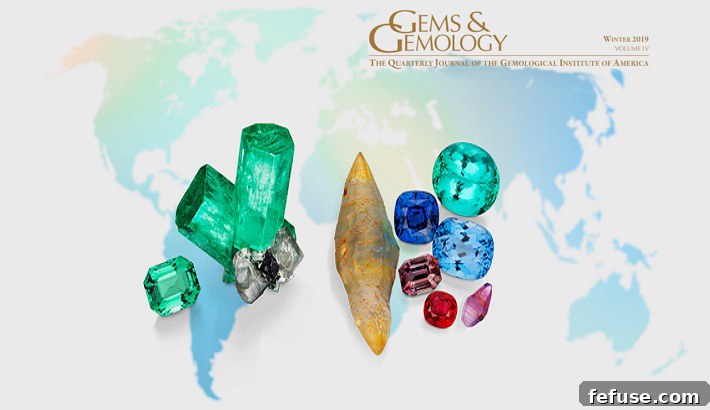
The precise determination of the geographic origin of colored gemstones represents one of the most intricate and crucial challenges confronting the global gem and jewelry industry today. It’s a field steeped in scientific complexity, with significant market implications and a profound impact on consumer confidence and ethical sourcing. Acknowledging this paramount importance, the Gemological Institute of America (GIA), a revered global authority in gemological research and education, dedicated its entire Winter 2019 edition of Gems & Gemology (G&G)—its prestigious quarterly professional journal—to an exhaustive exploration of the science, inherent issues, and limitations surrounding geographic origin determination for these captivating stones.
The Indispensable Role of Gemstone Origin in the Modern Market
“Origin determination for colored gems is the most challenging aspect of gem identification, and a significant issue for the gem and jewelry trade as well as consumers,” affirmed Thomas M. Moses, GIA executive vice president and chief laboratory officer. This statement encapsulates the multifaceted importance of origin. For both buyers and sellers, an accurately attributed origin can dramatically influence a gemstone’s market value, perceived prestige, and overall desirability. Certain regions, historically and presently, are celebrated for yielding stones of extraordinary quality or possessing unique characteristics, often commanding premium prices and stimulating heightened demand. Beyond economic valuation, origin information has become increasingly vital for ensuring ethical sourcing and fostering transparency throughout the supply chain, enabling consumers to make informed purchasing decisions that resonate with their personal values regarding responsible practices.
GIA’s unwavering commitment to openly sharing its methodologies and being transparent about the scientific boundaries of origin determination lies at the core of its public benefit mission. This proactive stance not only cultivates a deeper understanding within the trade but also empowers consumers with reliable, science-backed information, thereby strengthening trust and integrity across the entire gem and jewelry market. The Winter 2019 G&G issue stands as a monumental testament to this commitment, offering an unparalleled deep dive into GIA’s rigorous processes and contributing to the ongoing scientific discourse.
The Geographic Origin Dilemma: Understanding Geology Versus Geography
The seminal opening article of this landmark issue, aptly titled “The Geographic Origin Dilemma,” was co-authored by Shane F. McClure, GIA’s global director of colored stone services; Thomas M. Moses; and GIA Distinguished Research Fellow Dr. James E. Shigley. This foundational piece meticulously articulates the compelling rationale behind dedicating an entire journal to this singular, complex topic. The authors clearly state the issue’s ambitious purpose: “to lay out what we know about determining geographic origin and how we arrive at those opinions. We intend for this issue to promote healthy and useful discussion and debate – fueled by our collective interest in bringing more understanding and consistency to the reporting of the geographic origin of colored stones.”
One of the most profound and consistently highlighted insights throughout the journal is the fundamental distinction between geological and geographical boundaries. A gemstone’s inherent characteristics—ranging from its unique internal inclusions and distinctive growth patterns to its precise trace element composition—are unequivocally shaped and determined by the geological conditions prevalent during its formation. These characteristics are entirely independent of the arbitrary political lines drawn on a map to delineate country borders. The article forcefully emphasizes this point: “Where lines have been placed on a map to mark country boundaries is completely irrelevant to where gems form. The geologic conditions needed to form gemstones can occur in many countries and often do not respect geographic boundaries.”
This critical distinction lies at the very heart of the “dilemma.” Geological formations, which are the ultimate architects of gemstone presence and characteristics, often span vast regions, effortlessly disregarding human-imposed political borders. For instance, a specific type of basalt-related sapphire might be discovered across multiple countries in Southeast Asia or East Africa, exhibiting remarkably similar gemological characteristics irrespective of the particular nation’s soil from which it was unearthed. This geological reality mandates a sophisticated scientific approach that transcends mere assumptions based on historical mining locations or prevailing market perceptions. It requires meticulous analysis and detailed comparative studies to effectively differentiate between sources that may share common geological histories but are geographically distinct, making the task of accurate origin determination a truly challenging endeavor.
GIA’s Rigorous Methodology: A Synergy of Science, Technology, and Expertise
To expertly navigate this complex and often ambiguous landscape, GIA employs a multi-faceted and exceptionally scientific methodology for origin determination. This comprehensive approach harmoniously integrates extensive field gemology, state-of-the-art analytical instrumentation, and the unparalleled expertise of its highly seasoned gemologists. The Winter 2019 G&G issue offers an unprecedented and detailed exposé of how these critical components converge and operate in perfect synergy to formulate robust, scientifically substantiated opinions on gemstone origin.
The Cornerstone of Field Gemology and the Indispensable Reference Database
Central to GIA’s robust and reliable methodology is its world-renowned, comprehensive field gemology program. This critical initiative involves dedicated GIA staff members undertaking extensive expeditions to known gem deposits across the globe, often venturing into remote, challenging, and logistically demanding locations. The primary objective is to collect verified samples directly from their source, ensuring their exact geographic and geological origins are meticulously documented and beyond any reasonable doubt. These invaluable samples are then carefully gathered, exhaustively cataloged, and thoroughly analyzed, forming the bedrock of GIA’s reference database—an expansive, unparalleled, and continually growing library of authenticated gemstones from a multitude of worldwide mining locations and geological environments.
This meticulously curated reference data is absolutely critical because it provides the essential comparative material against which unknown stones can be accurately evaluated. By diligently studying the specific geological “fingerprints”—the unique combinations of inclusions, distinct trace elements, and characteristic growth features—of stones from these known deposits, GIA systematically builds a sophisticated and nuanced understanding of how gem characteristics vary systematically by origin. Without such a robust, continuously updated, and scientifically validated reference database, any attempt at definitive origin determination would remain largely speculative and severely lack the scientific rigor and empirical evidence demanded by the discerning gem and jewelry industry.
Harnessing Advanced Analytical Tools and Techniques for Precision
In parallel with its extensive field sample collection, GIA leverages cutting-edge scientific instrumentation to analyze gemstones with microscopic precision and chemical exactitude. Sophisticated techniques such as Raman spectroscopy, Fourier-transform infrared (FTIR) spectroscopy, ultraviolet-visible (UV-Vis) spectroscopy, and laser ablation-inductively coupled plasma-mass spectrometry (LA-ICP-MS) are routinely employed across GIA’s laboratories. These advanced analytical tools enable gemologists to precisely identify and quantify minute trace elements—impurities present in parts per million or even parts per billion—as well as to detect distinct spectral signatures that serve as unique identifiers for a gem’s specific geological formation environment.
For example, the presence and precise ratios of specific trace elements like vanadium, chromium, and iron can provide powerful and unequivocal indicators of a ruby or sapphire’s formation conditions, often pointing to a particular geological setting. Similarly, the unique types and patterns of inclusions—microscopic crystals, minute fluid-filled cavities, or characteristic growth tubes—when observed under high magnification, function as geological “fingerprints” that frequently pinpoint a specific geographic region or type of deposit. The judicious combination of these highly precise analytical results, expertly interpreted by seasoned professionals, offers an exceptionally powerful means of narrowing down potential origins and ultimately formulating conclusive, science-backed opinions.
The Indispensable Role of Expert Gemologists and Human Insight
While advanced technology and sophisticated instrumentation are undeniably indispensable, the accurate interpretation of the vast amount of complex data generated by these tools ultimately rests with GIA’s team of highly skilled and exceptionally experienced gemologists. These experts possess a profound and intricate understanding of gemology, geology, and mineralogy, honed by years of practical experience observing, analyzing, and comparing countless gemstones. They are rigorously trained to identify subtle patterns in inclusions, interpret intricate spectral data, and adeptly correlate these findings with the extensive and continually evolving reference database. Their discerning judgment, critical thinking, and unparalleled ability to synthesize diverse scientific information are paramount in formulating the accurate, reliable, and respected origin opinions for which GIA is renowned.
Focused Expertise on Key Colored Stones: Ruby, Sapphire, Emerald, and Beyond
The remarkable 230-page journal—making it the largest G&G issue ever published—features a comprehensive collection of scholarly articles penned by esteemed GIA staff and other distinguished scientists, including GIA Governor Dr. Barbara L. Dutrow, Williams Distinguished Alumni Professor of Geology and Geophysics at Louisiana State University. Collectively, these insightful works delve deeply into the specific gemological observations and advanced analytical methods rigorously applied in GIA’s state-of-the-art laboratories to determine the geographic origin of some of the most highly sought-after and economically significant colored gemstones:
- Ruby: The articles meticulously explore the unique characteristics that differentiate rubies from various global sources, such as those historically significant deposits from Myanmar (Burma), the burgeoning sources in Mozambique, and the classic localities of Thailand. These distinct regions often yield rubies with specific trace element profiles and characteristic inclusion scenes, making origin determination a complex but vital process.
- Sapphire: Detailed analyses are provided on the variations observed in sapphires, encompassing the legendary blue sapphires from Kashmir, the ancient mines of Sri Lanka, and the significant modern sources in Madagascar. The focus is on understanding how diverse geological settings profoundly impact their color, clarity, and unique internal features, which serve as crucial origin indicators.
- Emerald: The journal thoroughly examines the identifying features of emeralds from iconic sources like Colombia, Zambia, and Brazil. In these cases, the presence of specific fluid inclusions, along with diagnostic trace elements such as chromium, vanadium, and iron, are key indicators of their respective origins, each contributing to their distinct characteristics and value.
- Copper-bearing (i.e., “Paraíba”) Tourmaline: This section addresses the intricate challenges involved in distinguishing this rare and exceptionally valued variety, celebrated for its vivid neon blue-to-green hues, originating from Brazil, Nigeria, and Mozambique. Origin determination often relies on minute variations in their copper and manganese content, alongside other subtle gemological features.
- Alexandrite: The discussions highlight the distinct properties of alexandrite from renowned sources such as Russia (Ural Mountains), Sri Lanka, and Brazil. Differences in their chromium and iron content significantly influence their remarkable color-change phenomenon and serve as critical markers for establishing their geographic provenance.
Each article contributes profoundly to a deeper, more nuanced understanding of these specific gem types, meticulously illustrating how a synergistic combination of traditional gemological observation and sophisticated analytical techniques is employed by GIA to ascertain their geographic provenance with the highest possible degree of scientific certainty and confidence.
Fostering Consistency and Promoting Informed Dialogue Across the Industry
By dedicating an entire, unprecedented issue to this intricate and pivotal subject, GIA aims to foster a more consistent, standardized, and scientifically sound approach to origin reporting across the entire gem and jewelry industry. The unparalleled transparency provided by detailing GIA’s rigorous processes, acknowledging inherent limitations, and presenting ongoing research actively encourages healthy discussion, constructive debate, and collaborative engagement among gemologists, traders, academics, and regulatory bodies worldwide. This collective engagement is absolutely crucial for developing universally accepted standardized practices and terminology, which will ultimately benefit every segment of the gem and jewelry supply chain, from mine to market.
The strategic decision to focus exclusively and comprehensively on origin determination meant that popular regular features typically found in Gems & Gemology—such as Lab Notes, Micro World, Gem News International, and Diamonds from the Deep—were temporarily set aside. These eagerly anticipated sections are scheduled to make their return in the Spring 2020 issue, allowing the Winter 2019 edition to offer an unparalleled, uninterrupted deep dive into its highly specialized and critical topic. This thoughtful and strategic choice by GIA powerfully underscores the exceptional significance and urgent priority placed on advancing the understanding and scientific rigor of gemstone origin determination.
Ensuring widespread accessibility to this crucial information is also paramount to GIA’s overarching mission of public benefit. This, and every single issue of G&G since its esteemed inception in 1934, including full contents, extensive photo galleries, and exclusive video footage, is made readily available at no cost on GIA’s official website: GIA.edu/gems-gemology. This commitment to open access ensures that students, researchers, industry professionals, and enthusiastic consumers worldwide can all freely benefit from GIA’s leading-edge research, profound insights, and authoritative expertise in the complex and fascinating field of gemology.
The Evolving Landscape and Future of Gemstone Origin Determination
The comprehensive body of work presented in the Winter 2019 G&G issue not only consolidates the current state of knowledge but also powerfully illuminates the future trajectory of gemstone origin determination. As new gem deposits are continuously discovered across the globe and analytical technologies undergo relentless advancement, the science and methodologies will undoubtedly continue to evolve and refine. GIA remains steadfastly at the forefront of this critical evolution, continuously refining its analytical methods, diligently expanding its indispensable reference database, and investing significantly in cutting-edge research to proactively address emerging challenges and complexities. This unwavering commitment to scientific rigor, transparency, and education ensures that GIA consistently provides invaluable, authoritative services to the gem and jewelry trade and, by extension, to all consumers seeking authenticity, confidence, and peace of mind in their cherished precious purchases.
This comprehensive and sustained dedication to understanding, scientifically analyzing, and accurately reporting gemstone origins unequivocally reaffirms GIA’s enduring role as a globally trusted authority, committed to safeguarding the public’s trust in gems and jewelry through objective, science-based standards and unparalleled expertise.