
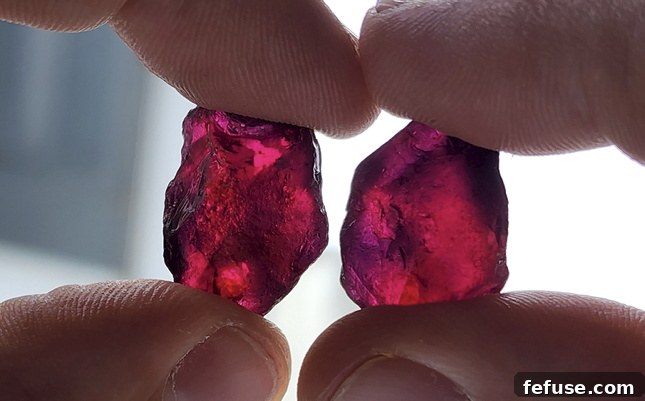
Gemfields Halts Montepuez Ruby Mine Operations Amid Escalating Cabo Delgado Insurgency
Gemfields, a leading global supplier of ethically sourced, rare gemstones, has announced the immediate suspension of operations at its vital Montepuez ruby mine in Mozambique. This critical decision follows a recent insurgent attack on a neighboring facility, prompting the swift evacuation of all personnel from the site. The move underscores the severe and escalating security challenges faced by companies operating in the resource-rich but conflict-ridden Cabo Delgado province of northern Mozambique.
The incident, which occurred on Thursday, October 20th, involved an attack attributed to insurgent activity at a ruby mine belonging to Gemrock. This facility is situated approximately 12 kilometers south-east of Gemfields’ Montepuez Ruby Mining (MRM) operations. While direct damage to MRM’s infrastructure was not reported, the proximity of the assault necessitates a proactive and cautious approach, placing the health and safety of employees and contractors as the absolute highest priority.
The Unfolding Crisis in Cabo Delgado: A Region Under Siege
The brutal conflict in Cabo Delgado began in October 2017 and has since claimed the lives of thousands of people, displacing hundreds of thousands more. The insurgency, spearheaded by groups locally known as Ahlu Sunnah wa-Jama’ah (ASWJ), often referred to as Al-Shabaab (though not directly affiliated with the Somali group), and increasingly linked to the Islamic State (ISIS-Mozambique), aims to establish an Islamic state within Mozambique. The escalating violence has transformed the province into a significant geopolitical hotspot, drawing international attention and regional military intervention.
Cabo Delgado is a province of immense strategic importance, rich in natural resources including rubies, graphite, and vast offshore natural gas reserves. The presence of these valuable assets, while offering potential for national development, has paradoxically fueled the conflict, providing both a motive and a means for various groups to assert control and exploit the region’s wealth. The insurgency has crippled local economies, destroyed infrastructure, and created a profound humanitarian crisis, challenging both local governance and international humanitarian efforts.
The nature of the attacks has grown in sophistication and brutality, moving beyond isolated incidents to coordinated assaults on towns, villages, and critical economic infrastructure. These actions not only destabilize the region but also send chilling signals to foreign investors and companies vital to Mozambique’s economic future. The direct targeting of mining facilities, even neighboring ones, illustrates a clear threat to the stability and operational continuity of key industries.
Gemfields and Montepuez Ruby Mining: A Cornerstone of the Global Ruby Market
Gemfields, a London-based miner, holds a 75 percent ownership stake in Montepuez Ruby Mining (MRM) and is responsible for its operations. MRM is widely recognized as the world’s largest ruby mine by licensed resource, playing a pivotal role in the global supply of high-quality rubies. Its operations contribute significantly to Mozambique’s economy through taxes, royalties, and job creation, supporting thousands of livelihoods directly and indirectly within the region.
The Montepuez mine has been instrumental in professionalizing the ruby sector, introducing transparent auction systems that have transformed the market and brought Mozambican rubies to prominence on the international stage. The mine’s ethical sourcing practices and commitment to sustainability have been hallmarks of Gemfields’ approach, making the continuation of its operations critical not only for the company but for the integrity of the gemstone industry as a whole.
Despite its economic importance, MRM operates in an increasingly precarious environment. Gemfields has previously acknowledged the rising security threats in Cabo Delgado. As recently as August, the company confirmed that operations would continue with heightened vigilance, even after an attack occurred in the vicinity as part of the broader Islamic State-linked insurgency. This continuous monitoring and adaptation to security realities demonstrate the company’s commitment to balancing operational continuity with paramount safety concerns.
The recent attack on Gemrock’s neighboring mine, merely 12 kilometers away, represented a critical threshold. Gemfields’ statement highlighted that the company and MRM are in “regular contact with government authorities,” emphasizing a collaborative approach to navigating the volatile situation. The decision to halt operations and evacuate the site reflects a measured but firm response to an immediate and verifiable threat, prioritizing human life over production targets.
Broader Ramifications: Economic Stability and Humanitarian Crisis
The suspension of operations at a mine of Montepuez’s stature sends ripples across the global gemstone industry. Mozambique has, in recent years, emerged as a dominant force in ruby production, and any disruption to its supply can impact market prices, global availability, and the confidence of buyers and investors. Jewelers, dealers, and collectors worldwide rely on a stable supply chain, and prolonged closures in key producing regions can have significant financial implications.
Beyond the gemstone sector, the escalating conflict in Cabo Delgado casts a long shadow over Mozambique’s broader economic development prospects. The province is also home to vast natural gas projects, which are seen as critical drivers for the nation’s future prosperity. Instability and insecurity directly deter foreign direct investment, stalling progress on mega-projects and undermining efforts to alleviate poverty and build sustainable infrastructure across the country.
The human cost of the Cabo Delgado conflict remains staggering. Thousands of innocent civilians have been killed, and countless others have been forced to flee their homes, becoming internally displaced persons (IDPs) within Mozambique or seeking refuge in neighboring countries. The humanitarian crisis is exacerbated by food insecurity, lack of access to basic services, and the psychological trauma inflicted by years of violence. The disruption of economic activities like mining only further compounds the suffering by reducing employment opportunities and local spending power.
Navigating Future Challenges: Security, Sustainability, and Stability
For companies like Gemfields operating in conflict zones, the challenges are multifaceted. They must not only safeguard their assets and personnel but also fulfill their corporate social responsibilities to the communities they operate in. This includes providing economic opportunities, investing in local development, and, critically, ensuring that their presence does not inadvertently exacerbate local tensions or resource conflicts.
The Mozambican government, supported by regional forces from the Southern African Development Community (SADC) and Rwanda, has been engaged in sustained efforts to counter the insurgency. While these efforts have achieved some tactical successes in pushing back insurgent groups, the underlying socio-economic grievances that fuel recruitment and support for these groups remain significant. A lasting solution will require not only military action but also comprehensive development programs, improved governance, and a concerted focus on local grievances.
The long-term outlook for Montepuez and the wider Cabo Delgado province hinges on the ability of security forces to establish and maintain peace, and for civilian authorities to rebuild trust and foster inclusive development. For Gemfields, the resumption of operations will depend on a thorough assessment of the security landscape and assurances that the safety of its workforce can be guaranteed. This may necessitate enhanced security protocols, closer collaboration with government forces, and potentially, a re-evaluation of operational strategies in high-risk areas.
In conclusion, the decision by Gemfields to halt operations at its Montepuez ruby mine is a stark reminder of the volatile and complex security situation in Mozambique’s Cabo Delgado province. While prioritizing the safety of its people, the move underscores the profound impact of the ongoing insurgency on critical economic sectors and the broader humanitarian crisis gripping the region. The path to stability and the resumption of full-scale operations for key industries like ruby mining will require a concerted, multi-faceted approach involving security, economic development, and robust community engagement.