
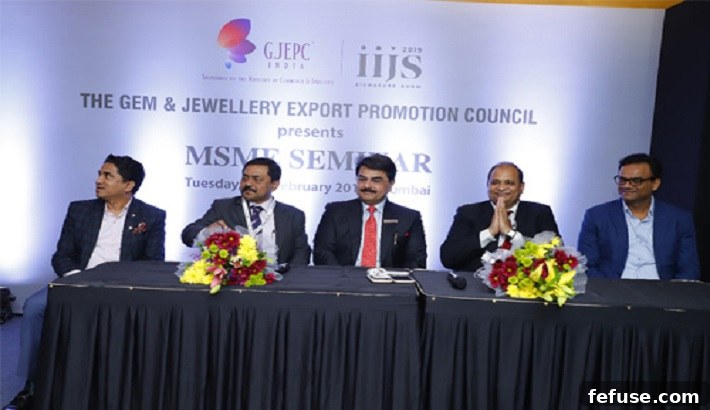
The Indian economy’s robust growth is significantly powered by its Micro, Small, and Medium Enterprises (MSMEs). These enterprises, often considered the backbone of industrial development, play a crucial role in job creation, innovation, and export promotion. Recognizing their immense potential and the need for sustained support, the Gem & Jewellery Export Promotion Council (GJEPC) organized a pivotal MSME Seminar at the prestigious Signature IIJS venue. This event served as an insightful platform, offering a comprehensive overview of the myriad opportunities available to small entrepreneurs in today’s dynamic economic landscape, alongside a detailed look into the government schemes designed to foster growth and competitiveness within the sector.
Empowering India’s MSMEs: A Deep Dive into Growth Opportunities and Government Support
The seminar brought together leading experts and policymakers, providing invaluable insights into the challenges and triumphs of the MSME sector. Esteemed speakers, including Shri Rajiv Chawla, Chairman and Founder of IamSMEofindia, and Shri P. Krishnamohan, Deputy General Manager of The National Small Industries Corporation (NSIC), shared their profound knowledge. They meticulously addressed the evolving needs of the sector and elucidated the various support mechanisms and schemes available under diverse government programs, demonstrating a concerted effort to nurture these vital economic contributors.
MSMEs: The Unsung Heroes of Industrial Development
In his compelling welcome address, Shri Pramod Agrawal, Chairman of GJEPC, underscored the indispensable role of MSME units. He articulated that these enterprises are not merely components but the fundamental pillars of the industry. Shri Agrawal emphasized that with appropriate backing, including technological upgrades and capacity building, MSMEs could transform into powerful engines driving future economic growth. This sentiment reflects a widespread understanding that the prosperity of the broader industry is intricately linked to the health and vitality of its MSME segment.
Navigating a New Era: Technology, Disruption, and Collaboration
Shri Chawla’s detailed presentation offered a panoramic view of the rapidly changing global manufacturing sector. He highlighted how technological advancements are instigating profound “disruptive” changes across industries. Drawing a vivid analogy, Shri Chawla noted that the era of colossal factories and mega manufacturing plants, much like the dinosaurs of millions of years ago, is swiftly becoming obsolete. The modern manufacturing paradigm favors agility, innovation, and specialized capabilities over sheer scale. This shift presents both challenges and unparalleled opportunities for smaller, more adaptable enterprises.
Embracing Collaboration for Unprecedented Growth
A cornerstone of Shri Chawla’s message was the transformative power of collaboration. He passionately explained how small entrepreneurs could evolve into formidable agents of change by adopting a collaborative mindset and approach. This involves not only being willing to confront existing challenges head-on but also proactively seeking avenues to scale up their operations through partnerships and collective action. Collaboration, in this context, translates into shared resources, knowledge exchange, joint ventures, and a collective pursuit of market opportunities that might be inaccessible to individual units.
Furthermore, Shri Chawla assured the attendees that governments, at both central and state levels, are keenly committed to facilitating this essential transformation. They offer a spectrum of support mechanisms, including numerous financial incentives, designed to catalyze growth and innovation within the MSME sector. He urged all participants to diligently explore these opportunities and leverage them effectively to accelerate the sector’s evolution and bolster its competitive standing in the global market. This proactive engagement is critical for MSMEs to harness their full potential.
IamSMEofindia: A Catalyst for MSME Empowerment
Shri Chawla further elaborated on the extensive range of MSME schemes and support programs meticulously crafted and provided by IamSMEofindia. These initiatives are strategically designed to address various facets of MSME operations, from enhancing manufacturing efficiency to navigating the complexities of modern business. The comprehensive suite of offerings demonstrates a holistic approach to MSME development, ensuring that enterprises receive targeted support across critical areas.
Key Initiatives by IamSMEofindia:
- Lean Manufacturing Competitiveness Scheme: This scheme focuses on improving efficiency and reducing waste in manufacturing processes. By implementing lean principles, MSMEs can enhance productivity, minimize defects, and optimize resource utilization, leading to significant cost savings and improved competitiveness.
- Cluster Development Scheme/Cluster Project: This initiative encourages MSMEs to form geographical clusters, fostering collaboration and shared resources. Within clusters, businesses can benefit from common facilities, joint marketing efforts, and collective bargaining power, leading to mutual growth and synergy.
- Design Support Scheme: Recognizing the importance of aesthetics and functionality, this scheme provides assistance for product design and development. Good design is crucial for market differentiation, attracting customers, and creating value in a competitive landscape.
- Intellectual Property Rights (IPR) Centres: These centers assist MSMEs in protecting their innovations, brands, and creative works. Securing patents, trademarks, and copyrights is vital for establishing a unique market identity and preventing unauthorized use of intellectual assets.
- Scalability: Programs under this pillar focus on helping MSMEs expand their operations and market reach. This includes strategic planning, market research, and identifying avenues for sustainable growth beyond their current capacity.
- New Marketing Strategy: In the digital age, effective marketing is paramount. This scheme guides MSMEs in developing modern marketing strategies, including digital marketing, e-commerce integration, and brand building to reach wider audiences.
- Use of Technology: Promoting the adoption of advanced technologies, this initiative helps MSMEs integrate automation, software solutions, and data analytics into their operations to enhance efficiency, quality, and innovation.
- Financial Literacy, including Transparency and Alternate Finance Options: This crucial program educates entrepreneurs on sound financial management, budgeting, and exploring diverse funding sources beyond traditional bank loans. It emphasizes transparency in financial dealings, building trust and access to capital.
- Team Building, Training & Retaining Talent: Recognizing that human capital is key, this scheme supports MSMEs in developing their workforce through skill enhancement programs, leadership training, and strategies to attract and retain skilled employees.
- New Laws, New Compliances, Cyber Security, Risk Management, Succession Planning: This covers vital aspects of corporate governance and operational resilience. It helps MSMEs navigate the complex legal and regulatory landscape, protect against cyber threats, manage business risks, and plan for future leadership transitions.
- Networking with Knowledge Centres, Universities, Institutions: Fostering collaboration with academic and research institutions allows MSMEs to access cutting-edge research, specialized expertise, and talent pools, driving innovation and problem-solving.
Shri Chawla further announced a significant financial incentive, stating that IamSMEofindia would provide collateral-free financial assistance of up to Rs. 75 lakhs per unit. This assistance is contingent upon units forming clusters with a minimum number of companies under the IamSMEofindia umbrella, thereby encouraging collective growth and shared responsibility. He assured that the organization would provide comprehensive assistance in fulfilling all necessary formalities, simplifying the process for eligible MSMEs. Highlighting the impact of their efforts, he proudly stated that the total loans disbursed to SMEs under IamSMEofindia had already surpassed Rs. 100 crore, underscoring their substantial contribution to the sector’s financial empowerment.
NSIC’s Crucial Role in Fortifying the MSME Ecosystem
Shri P. Krishnamohan, from The National Small Industries Corporation (NSIC), provided an illuminating overview of the pivotal role NSIC plays in bolstering the MSME sector. NSIC, a government of India enterprise, is dedicated to promoting and supporting MSMEs by providing integrated support services in areas of finance, technology, marketing, and other allied services. Shri Krishnamohan detailed several key NSIC schemes that are instrumental in fostering MSME growth and resilience:
Crucial NSIC Schemes for MSME Growth:
- Credit Facilitation Through Banks: This scheme acts as a bridge between MSMEs and financial institutions, making it easier for small businesses to access credit. NSIC assists MSMEs in preparing project reports, liaising with banks, and facilitating the sanctioning of loans, thereby addressing one of the most critical challenges faced by the sector – access to finance.
- Single Point Registration (SPR): The SPR scheme simplifies the process for MSMEs to participate in government procurement. Registered units receive benefits such as exemption from earnest money deposit, tender sets free of cost, and a purchase preference in government tenders, significantly enhancing their market access and business opportunities with government bodies.
- Procurement & Marketing Support: NSIC offers extensive support to MSMEs in both procurement of raw materials and marketing of their finished products. This includes participation in domestic and international exhibitions, organizing buyer-seller meets, and providing market intelligence, which are vital for expanding market reach and improving profitability.
Shri Krishnamohan further elaborated on the exhibition grants provided by NSIC, which enable MSMEs to showcase their products and services at national and international trade fairs, gaining crucial exposure and networking opportunities. He also highlighted NSIC’s strategic collaborations with a consortium of banks, designed to streamline and accelerate the loan application and approval process for MSMEs. This collaborative approach significantly reduces bureaucratic hurdles and ensures a smoother flow of capital to deserving enterprises, fostering investment and expansion.
Among its existing and highly beneficial schemes, Shri Krishnamohan specifically drew attention to NSIC’s impactful role in assisting small units to secure finance from banks. This direct support helps overcome common financing barriers. He also mentioned the raw material procurement scheme, a lifeline for many manufacturers, which was slated for imminent extension to encompass silver. This particular expansion holds immense significance for the gem and jewellery sector, where silver is a crucial raw material. Both these schemes, he affirmed, were readily available and highly advantageous for small gem and jewellery units seeking to optimize their operations and enhance their financial stability.
Real-World Success: A Case Study from the Gem & Jewellery Sector
The seminar featured an inspiring success story from Shri Kamlesh Vyas and Shri Rajesh Vyas of Ram Jewels. Their company stands out as the pioneering ‘Zero-Defect, Zero-Effect’ (ZED) MSME within the highly competitive gem and jewellery sector. They shared their invaluable experiences in successfully leveraging the benefits offered through various MSME schemes. Their testimony particularly focused on the transformative impact of the lean manufacturing competitiveness scheme and the ZED scheme. The ZED certification signifies a commitment to producing high-quality goods without any defects, while also ensuring a negligible environmental footprint – a benchmark for sustainable and responsible manufacturing. Their story served as a powerful testament to how strategic adoption of these schemes can lead to operational excellence and a competitive edge.
Fostering a Collaborative Ecosystem for Future Growth
The GJEPC MSME Seminar unequivocally demonstrated the profound commitment of industry bodies and government agencies towards nurturing and empowering India’s vast MSME sector. The insights shared by the eminent speakers, coupled with the detailed exposition of support schemes, provided a roadmap for small entrepreneurs to navigate the complexities of the modern economy and seize emerging opportunities. The emphasis on technology adoption, collaborative models, financial literacy, and regulatory compliance reflects a holistic strategy to build a robust, resilient, and globally competitive MSME ecosystem.
As the session concluded, Shri Mithlesh Pandey, Head of MSME at GJEPC, graciously welcomed all the distinguished speakers, acknowledging their invaluable contributions. Following this, Shri Manish Jivani, Convener of the MSME Committee at GJEPC, delivered a heartfelt Vote of Thanks, expressing gratitude to all participants, speakers, and organizers for making the seminar a resounding success. Such events are vital catalysts, fostering dialogue, disseminating crucial information, and forging partnerships essential for the sustained growth and prosperity of the MSME sector, which is undeniably integral to India’s economic future.
NewsSource: gjepc