
Navigating the Unpredictable: Gold and Precious Metals Forecasts for 2019
The financial markets, renowned for their inherent complexities and constant shifts, continue to defy straightforward predictions. A stark illustration of this unpredictability is highlighted by the 2019 gold price forecasts compiled by the London Bullion Market Association (LBMA). This influential survey, gathering insights from a panel of expert analysts, revealed a fascinating mix of conservative estimates alongside remarkably ambitious targets, underscoring the deep divisions and uncertainties pervading the precious metals sector.
Gold’s Elusive Path: A Deep Dive into 2019 Predictions
The LBMA Consensus: A Modest Gain Amidst Wild Swings
As a leading standards-setting body for the global bullion industry, the LBMA’s annual survey provides a vital snapshot of market sentiment. In 2019, the average forecast from the 30 polled analysts pointed towards a modest 1.8% gain for gold prices. This seemingly conservative projection, however, masked a much broader spectrum of individual expectations. A significant two-thirds of the analysts anticipated that gold would touch or even surpass the critical $1,400 per ounce threshold at some point during the year. This disparity between the average forecast and the strong belief in a higher peak price reflected the highly volatile and nuanced outlook for the yellow metal.
The wide divergence in predictions was further emphasized by an astounding $325 per ounce trading range projected across the individual forecasts. This represented a full 25% of the average forecast price, indicating profound disagreements on both the potential upside and downside risks for gold. Such a substantial variance truly encapsulates the challenges faced by market participants attempting to chart gold’s trajectory.
Key Drivers Shaping Gold’s Destiny
Analysts pointed to a myriad of interconnected global factors influencing gold’s prospects in 2019. While some downside risks, such as the uncertainties surrounding Brexit and the ongoing US-China trade disputes, had already been partially “factored in” by the markets, other significant variables continued to cast long shadows of doubt. These included:
- US Real Interest Rates: The level of real interest rates in the United States plays a crucial role in gold’s appeal. Higher real rates increase the opportunity cost of holding non-yielding assets like gold, potentially dampening demand. Conversely, lower rates make gold more attractive compared to interest-bearing investments.
- Strength/Weakness of the US Dollar: Gold traditionally holds an inverse relationship with the US dollar. A stronger dollar makes gold more expensive for holders of other currencies, potentially reducing demand, while a weaker dollar tends to boost gold prices.
- Geopolitical Factors: The inherent safe-haven appeal of gold is often amplified during periods of heightened geopolitical tension. Beyond Brexit and trade wars, factors such as political instability in key regions, international conflicts, or significant policy shifts can drive investors towards gold as a store of value.
- Pace of Global Economic Growth: A robust global economy with strong growth often translates to increased investor confidence, leading some to move away from safe-haven assets. Conversely, signs of an economic slowdown or recession typically bolster demand for gold.
- US Recession Likelihood: The increasing probability of a US recession was a significant theme, with many analysts highlighting how such an event would invariably lead to a flight to safety, with gold being a primary beneficiary. A recession typically prompts central banks to lower interest rates, further enhancing gold’s relative attractiveness.
These complex and often conflicting forces created an environment where predicting gold’s precise path became exceedingly challenging, fostering the wide range of expert opinions observed in the LBMA survey.
Analyst Spotlights: Bulls, Bears, and the Most Accurate
Among the diverse panel of experts, individual convictions painted contrasting pictures for gold’s future. Eddie Nagao of Sumitomo in Tokyo emerged as the most bullish voice, boldly forecasting a high of $1,475 per ounce. Nagao’s optimistic stance was rooted in the growing likelihood of a US recession. He articulated that in such an economic climate, gold would likely become one of the most favored asset classes among both institutional and private investors, seeking refuge from market turbulence and uncertainty. His prediction underscored the deep-seated belief in gold’s role as the ultimate safe haven during economic downturns.
On the other side of the spectrum, Adam Williams of Fastmarkets MB (Metal Bulletin) represented the most bearish outlook. Williams was one of only six analysts who predicted an annual average below $1,300. His forecast included a high of $1,355, a dip below $1,200, and an average of $1,242. Williams’ perspective was largely contingent on an expected resolution to the US-China trade dispute. He posited that “With a US/China trade deal expected before too long, a return to more broad-based growth may well come to the rescue. If so, demand for haven assets may diminish.” Furthermore, he suggested that “Gold was a bolthole for investors in the second half of 2018, but a return to more concerted growth should mean that prices will start to drift lower again in 2019, especially if the Fed’s more dovish stance proves short-lived.” This viewpoint emphasized the potential for renewed global economic stability to shift investor focus away from safe-haven assets.
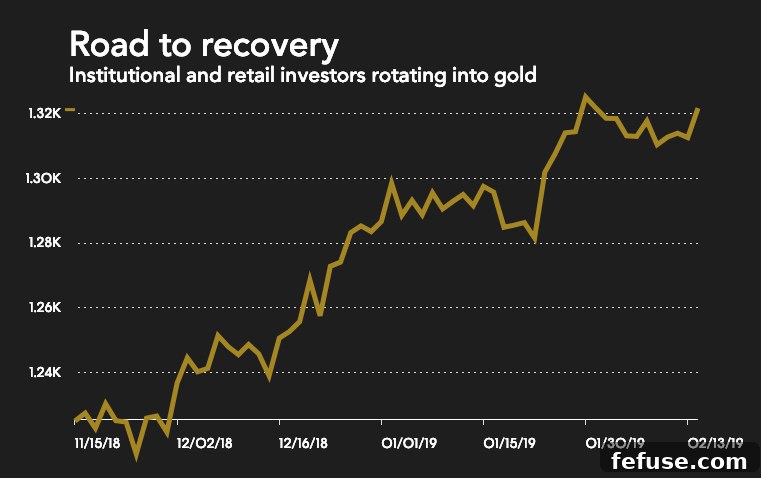
Ross Norman of Sharps Pixley, a distinguished bullion broker based in London, offered a more constrained forecast for gold. Norman predicted a tight trading range, with a downside of $1,280, a high of $1,410, and an average of $1,337. Norman’s predictions carry considerable weight in the industry, given his exceptional track record as a forecaster. He has consistently demonstrated remarkable accuracy in recent years, clinching the outright winner title five times and securing a runner-up position four times in previous LBMA competitions. His consistent performance lends significant credibility to his more conservative yet well-defined outlook.
Another prominent voice, Bernard Dahdah of the French investment bank Natixis, who famously came within $1 of the average price in the 2015 competition, presented a more bullish stance for gold in 2019 compared to his previous years’ forecasts, projecting an average of $1,330. Interestingly, gold ended the preceding Friday’s trading in New York precisely at Dahdah’s predicted average of $1,330, a testament to the accuracy of some expert analyses despite the overarching market volatility.
Beyond Gold: The Diverse Landscape of Other Precious Metals
While gold often commands the lion’s share of attention, the LBMA survey also provided valuable insights into the prospects of its sister metals: silver, platinum, and palladium. Each of these metals presents its own unique set of supply and demand dynamics, making their individual forecasts equally compelling.
Silver’s Potential Rebound: A Lagging Asset Ready for Rerating?
Silver, often dubbed “poor man’s gold” due to its historical correlation with the yellow metal but lower price point, was forecast for a notable increase of over 4% in 2019, potentially averaging $16.28 an ounce. The range of predictions for silver was also broad, stretching from a low of $12.25 to a high of $20. For several years leading up to 2019, silver had significantly lagged gold’s performance, leading many analysts to believe it was “ripe for a rerating.” This sentiment was based on the expectation that silver’s dual role as both a monetary metal and a crucial industrial commodity would eventually see its value catch up, particularly if industrial demand, driven by uses in electronics, solar panels, and medical applications, experienced a resurgence. Its relatively undervalued position compared to gold also hinted at significant upside potential.
Platinum’s Resurgence: From Multi-Year Lows to Promising Gains
Forecasters expressed particular optimism for platinum, predicting an average gain of more than 5% for the year. This bullish sentiment followed a challenging period where the precious metal had plunged to multi-year lows in the preceding year, trading at approximately $808 an ounce in New York at the time of the report. Platinum’s primary demand stems from its use in catalytic converters for diesel vehicles and in jewelry, particularly in Asia. The struggles of the diesel automotive sector in recent years had negatively impacted platinum prices. However, the projected rebound suggested that analysts saw potential for increased industrial demand, perhaps driven by stricter emissions standards globally, or a revival in its investment and jewelry appeal after reaching what many considered to be undervalued levels.
Palladium’s Parabolic Journey: Uncharted Territory and Volatility
High-flying palladium, which had seen an extraordinary surge in value, was predicted to ease back to an average of $1,267 during 2019. However, even more so than gold, the palladium market had become notoriously difficult to read and predict accurately. Its remarkable ascent had created a unique market dynamic, characterized by extreme volatility and speculative interest. Predictions for palladium ranged dramatically, from a conservative low of $900 to an astonishing high of $1,715.
The upper end of this range, specifically the $1,715 forecast, was championed by Ross Norman, who elaborated on palladium’s unique market conditions. He noted that the metal, predominantly used in autocatalysts for gasoline-powered vehicles, “has the capacity to surprise even further to the upside, especially if the supply deficit attracts speculators.” This persistent supply deficit, primarily due to constrained production from its largest producers, Russia and South Africa, combined with robust demand from the automotive industry (driven by increasingly stringent global emissions standards), created a fertile ground for price surges. Furthermore, Norman added a critical geopolitical dimension to his forecast: “More so, if the political risk from its biggest producer, Russia, becomes inflamed.” Any disruption to supply from Russia, a major palladium producer, would undoubtedly send shockwaves through the market, pushing prices even higher due to exacerbated scarcity. Reflecting this extreme bullishness and ongoing market momentum, palladium exchanged hands at a fresh record high of $1,433 on the Monday following the survey, underscoring its unprecedented rally and the speculative fervor surrounding it.
The Broader Market Perspective: Embracing Uncertainty
The comprehensive LBMA survey for 2019 serves as a potent reminder of the inherent complexities and multifaceted influences that shape the financial markets, especially within the precious metals sector. The wide array of forecasts, from cautious optimism to bold bullishness and stark bearishness, reflects a landscape rich with both opportunity and significant risk. Key economic indicators, geopolitical shifts, currency movements, and specific industrial demands all converge to create a constantly evolving picture. For investors, this environment underscores the critical importance of a nuanced understanding of these driving forces, diligent risk management, and the potential benefits of diversification across various asset classes.
Source: mining