
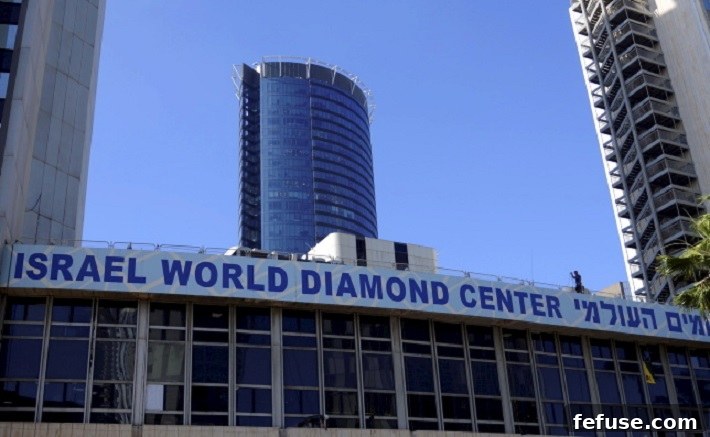
Israel’s Diamond Trade Plummets: A Deep Dive into the August Downturn and Global Industry Crisis
The venerable diamond trade in Israel experienced another significant setback in August, revealing a deepening crisis within the sector. New figures released by the Ministry of Economy and Industry paint a stark picture, with rough diamond imports registering a precipitous 69 percent year-on-year decline and rough diamond exports falling by an even more alarming 80 percent. These figures not only highlight a severe contraction but also represent a considerable worsening compared to the already challenging performance observed in July, when imports and exports had fallen by 46 percent and 44 percent respectively. The sustained downward trend underscores the profound challenges currently facing the global diamond industry, casting a shadow over one of Israel’s most historically significant economic pillars.
Unpacking the August Figures: A Sharp Contraction
August proved to be a particularly brutal month for the Israeli diamond sector. The nation imported a mere 314,371 carats of rough diamonds, valued at $49.8 million. This dramatic reduction in both volume and value compared to the previous year signifies a drastic reduction in manufacturing activity and demand within the country’s diamond polishing centers. The magnitude of the decline in rough exports – an 80 percent drop – suggests a severe slowdown in international trade and a reluctance from global buyers to purchase Israeli-processed diamonds or even raw materials for further processing elsewhere. This data signals not just a temporary dip but potentially a structural shift or a prolonged period of suppressed demand, impacting every facet of the supply chain from mining to retail.
While Ofir Gore, Israel’s diamond controller, refrained from specific commentary on the August figures, his earlier remarks regarding July’s performance continue to resonate. He attributed the slow trade to a “global diamond industry that was still in crisis,” a statement that now appears to be an understatement in light of August’s even more devastating results. The interconnectedness of the global diamond market means that challenges in one region or segment quickly cascade, impacting major trading hubs like Israel, which has long prided itself as a global leader in diamond cutting, polishing, and trade.
Year-to-Date Performance: A Persistent Downtrend
The August slump further exacerbated the year-to-date performance, indicating that the challenges are not isolated to a single month but represent a persistent, systemic issue. For the period spanning January to August, total polished diamond exports from Israel were down by 22 percent, reaching $2.18 billion. This metric is crucial as polished diamonds represent the value-added output of the Israeli industry, directly reflecting its manufacturing prowess and ability to meet international consumer demand. A 22 percent decline in this segment signifies a substantial reduction in revenue for local manufacturers and exporters.
Equally concerning are the year-to-date figures for rough diamond exports, which plummeted by an even steeper 56 percent to $543 million over the same period. This indicates a significant drop in Israel’s role as a trading hub for rough stones, whether re-exported or as part of its internal supply chain. The combined decline in both rough and polished exports paints a comprehensive picture of a sector under immense pressure, grappling with reduced demand, pricing volatility, and broader economic headwinds.
The Global Diamond Industry Crisis: Underlying Factors
The “global diamond industry in crisis” referenced by the diamond controller is a multifaceted phenomenon, driven by several interlocking factors that have created a perfect storm for traditional diamond markets. Understanding these contributing elements is essential for grasping the depth of Israel’s current challenges:
- Macroeconomic Headwinds: High inflation, rising interest rates, and the looming threat of recession in key consumer markets like the United States, Europe, and China have significantly curtailed discretionary spending. Diamonds, being luxury goods, are often among the first items consumers cut back on during economic uncertainty.
- Slowing Demand in Key Markets: China, once a booming market for luxury goods, has experienced a significant economic slowdown, impacting demand for diamonds. Similarly, consumer sentiment in Western markets remains cautious.
- Inventory Overhang: Many retailers and wholesalers accumulated significant inventory during periods of higher demand or supply chain disruptions. With current subdued demand, these inventories need to be cleared, leading to fewer new orders for manufacturers and traders.
- Rise of Lab-Grown Diamonds (LGDs): The increasing acceptance and affordability of lab-grown diamonds have introduced a significant competitor to natural diamonds. LGDs offer a more budget-friendly alternative with identical chemical and physical properties, appealing to a segment of consumers, particularly younger generations, who are often more price-sensitive and environmentally conscious. This shift has put downward pressure on natural diamond prices and market share.
- Geopolitical Factors and Sanctions: Conflicts and associated sanctions, particularly those impacting major diamond-producing nations, have introduced uncertainty into the supply chain, affected pricing, and altered trading routes.
- Lack of Consumer Marketing: Some industry experts argue that the natural diamond industry has not invested enough in modern, compelling marketing campaigns to differentiate itself and reignite consumer desire, especially when compared to the aggressive marketing by LGD producers.
Impact on the Israeli Economy and Industry Structure
The diamond sector has historically been a cornerstone of the Israeli economy, contributing significantly to exports, employment, and the nation’s image as a global trading hub. Israel’s advanced cutting and polishing facilities, combined with its strong network of traders, have given it a prominent position in the international diamond market. The current downturn, therefore, has far-reaching implications:
- Export Revenue Loss: The substantial decline in both rough and polished diamond exports directly impacts Israel’s overall trade balance and foreign currency earnings.
- Job Losses and Economic Strain: Manufacturers and trading firms facing reduced orders and profitability may be forced to downsize, leading to job losses within the sector. This can have a ripple effect on supporting industries and local communities.
- Reduced Investment: A prolonged downturn can deter new investments in technology, training, and infrastructure, potentially hindering the industry’s ability to innovate and compete in the long term.
- Reputational Challenges: While Israel maintains a strong reputation for quality and ethical trade, a significant and prolonged crisis can impact investor confidence and perception of its economic resilience.
Navigating the Storm: Future Outlook and Strategic Responses
For Israel’s diamond industry to navigate this challenging period, a multi-pronged approach will be essential. The recovery hinges not just on a global economic rebound but also on proactive strategies within the industry itself:
- Market Diversification: Exploring new emerging markets for polished diamonds and strengthening existing relationships could help mitigate reliance on traditionally strong but currently struggling regions.
- Value Proposition Reinforcement: The industry must more effectively communicate the unique value, rarity, and enduring appeal of natural diamonds, differentiating them from lab-grown alternatives. This could involve enhanced marketing campaigns focusing on heritage, emotional significance, and investment potential.
- Technological Advancement and Efficiency: Investing in advanced cutting, polishing, and grading technologies can improve efficiency, reduce costs, and enhance the quality and uniqueness of Israeli-processed diamonds. Automation could help maintain competitiveness against lower-cost manufacturing centers.
- Sustainable and Ethical Sourcing: Emphasizing transparent and ethical sourcing practices can appeal to conscious consumers and differentiate natural diamonds in a crowded market. Israel has long been committed to the Kimberley Process, and further strengthening this commitment can enhance consumer trust.
- Innovation in Business Models: Adapting to new consumer buying habits, exploring online sales channels more vigorously, and potentially offering new service models could open up new revenue streams.
- Government Support and Policy Adjustments: The Israeli government, through the Ministry of Economy and Industry, may need to consider measures to support the industry, such as facilitating access to credit, promoting research and development, or offering temporary relief measures.
Conclusion: A Critical Juncture for Israel’s Diamond Sector
The alarming figures from August, demonstrating a 69 percent decline in rough imports and an 80 percent fall in rough exports, serve as a stark reminder of the intense pressures bearing down on Israel’s diamond trade. This downturn is not an isolated incident but a symptom of a deeper global industry crisis, characterized by macroeconomic challenges, shifting consumer preferences, and evolving market dynamics. While the short-term outlook remains challenging, the resilience and historical importance of Israel’s diamond sector suggest that with strategic adaptations, robust industry collaboration, and a renewed focus on innovation and market differentiation, it can eventually emerge stronger. The current period represents a critical juncture, demanding proactive measures to secure the future of this vital industry within the Israeli economy.