
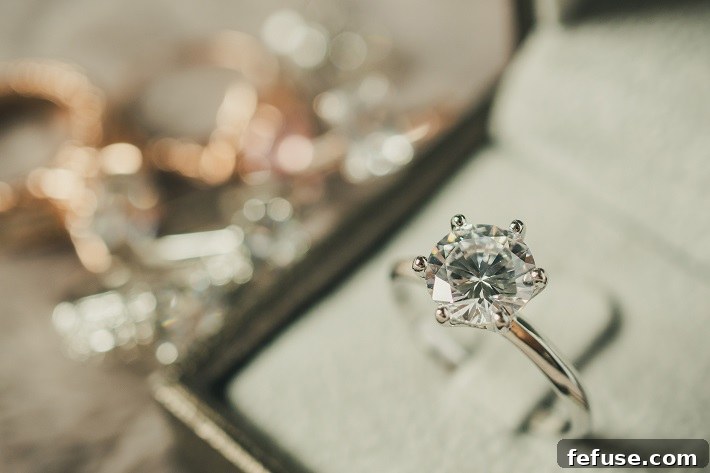
The engagement ring is more than just a piece of jewelry; it’s a profound symbol of love, commitment, and the promise of a shared future. While its sentimental value is immeasurable, the financial aspect of purchasing one can often feel daunting. In a world where traditions often clash with modern financial realities, the quest for the perfect ring can be fraught with questions about cost, quality, and personal preference. Gone are the days when rigid rules dictated how much one *should* spend on an engagement ring. Today, the focus has shifted towards making a choice that resonates with your unique love story and fits comfortably within your financial landscape.
Historically, the conventional wisdom suggested allocating at least two months’ salary towards an engagement ring. However, this guideline, born from clever marketing campaigns in the mid-20th century, struggles to hold relevance in an era marked by escalating living costs, significant mortgage values, and often six-figure student loan debts. Adhering strictly to such an arbitrary rule can place undue financial strain on individuals or couples, potentially derailing carefully planned annual budgets and causing unnecessary stress at the outset of a significant life milestone.
Fortunately, the modern market offers a vast array of options, ensuring that every couple can find a ring that beautifully symbolizes their commitment without necessitating financial hardship. The key lies in informed decision-making, strategic planning, and understanding where value truly lies. This comprehensive guide is designed to empower you with the knowledge and strategies needed to navigate the exciting journey of selecting an engagement ring that perfectly blends your needs, style, and budget. Here’s how to find the ideal symbol of your eternal love:
1. Determine Your Budget: The Foundation of Your Search
The very first and arguably most critical step in your engagement ring journey is to honestly assess your financial capabilities. This involves a realistic look at your savings, income, and overall financial health to determine how much you can comfortably allocate to this significant purchase. While the outdated “two-month-salary” rule still lingers in popular culture, it’s crucial to recognize that it’s a marketing construct, not a financial imperative. For many, adhering to such a hefty expenditure simply isn’t feasible or financially prudent.
It’s imperative to resist external social pressures or unrealistic expectations often portrayed in media. Your engagement ring should be a joyful purchase, not a source of debt or financial anxiety. Be realistic with your current financial strengths and focus on what you can genuinely afford without compromising your other financial goals or future security. Setting a clear budget isn’t about being restrictive; it’s about being responsible and ensuring that the ring you choose brings lasting happiness, not regret.
During this emotionally charged period, it’s easy to get swept away by the excitement and the desire to “splurge.” Having a predefined financial limit acts as an anchor, helping you maintain focus and make rational decisions when faced with countless dazzling options. By establishing a clear budget range from the outset, you streamline your search, avoid looking at rings beyond your means, and ultimately ensure that the final choice is one you’ll cherish without any lingering financial frustrations. Remember, the true value of an engagement ring is in the love it represents, not its price tag.
2. Decide on the Right Metal: A Balance of Durability and Style
The metal choice for an engagement ring plays a significant role in its overall aesthetic, durability, and, crucially, its price. Various metals are used in ring crafting, ranging from luxurious and expensive to more accessible and equally beautiful options. Understanding the characteristics and cost implications of each will guide you towards a decision that balances quality and affordability.
Platinum and gold are historically the most popular and often the most expensive metals for engagement rings. Platinum, known for its exceptional durability, natural white luster, and hypoallergenic properties, is a premium choice. It’s denser than gold, making rings feel more substantial, and it ages beautifully, developing a satin patina over time. Gold, available in classic yellow, elegant white, and romantic rose, offers versatility. While 24k gold is pure, it’s too soft for jewelry, so it’s typically alloyed with other metals to create 18k or 14k gold, which are more durable. White gold is created by alloying yellow gold with white metals and is usually plated with rhodium to enhance its whiteness, requiring re-plating every few years to maintain its luster.
For those seeking a balance of quality and affordability, or simply a different aesthetic, other fantastic options exist. Silver, particularly sterling silver, offers a beautiful, bright white appearance at a fraction of the cost of platinum or white gold. However, it’s softer and tarnishes more easily, requiring more frequent cleaning and care. Palladium is another strong, naturally white, and hypoallergenic metal that was once a popular, more affordable alternative to platinum, though its market availability has fluctuated.
Modern couples are also exploring metals like titanium, tungsten, and stainless steel, especially for wedding bands or alternative engagement rings. These metals are incredibly durable, scratch-resistant, and significantly more affordable than traditional precious metals, offering a distinct contemporary aesthetic. While perhaps not traditionally used for the central setting of a diamond, they are excellent for the band itself or for couples looking for something truly unique and robust.
When considering your metal choice, think about the wearer’s lifestyle, potential allergies, and how much maintenance you’re willing to commit to. MDTdesign Engagement Rings, for instance, offers a curated selection of rings in various metals, allowing you to find the perfect match for your preferences and budget. By carefully weighing these factors, you can select a metal that not only looks stunning but also offers lasting beauty and comfort without overstretching your finances.
3. Research for Reference: Unveiling the World of Diamonds and Gemstones
Thorough research is an indispensable part of finding the perfect engagement ring, especially when it comes to the center stone. The market today presents a spectrum of choices, most notably between traditional natural diamonds and the increasingly popular lab-grown diamonds. Understanding the nuances of each, along with factors like clarity and cut, will empower you to make an informed and budget-savvy decision.
Natural vs. Lab-Grown Diamonds
Natural diamonds are geological marvels, formed deep within the Earth over billions of years under immense pressure and heat. Each natural diamond is unique, carrying a story millions of years in the making. Lab-grown diamonds, on the other hand, are created in controlled laboratory environments using advanced technological processes that replicate the natural conditions under which diamonds form. Chemically, physically, and optically, lab-grown diamonds are identical to their natural counterparts; they are real diamonds, not simulants.
The primary distinctions lie in their origin, environmental impact, and price. Lab-grown diamonds are typically 30-50% less expensive than natural diamonds of comparable size and quality. This significant price difference is due to the difference in their supply chain and the lower cost of production compared to the intensive mining process. Furthermore, lab-grown diamonds often boast fewer inclusions and superior purity due to the controlled growth environment. For couples seeking an ethically sourced and more environmentally friendly option, lab-grown diamonds present an attractive and increasingly popular choice.
Understanding Diamond Clarity
Diamond clarity refers to the absence of inclusions (internal flaws) and blemishes (external imperfections). Clarity is graded on a scale ranging from Flawless (FL) to Included (I3). The highest clarity grades include: Flawless (FL), Internally Flawless (IF), Very, Very Slightly Included 1 and 2 (VVS1 & VVS2), and Very Slightly Included 1 and 2 (VS1 & VS2). Diamonds with the highest clarity are exceptionally rare and, consequently, very expensive, capable of leaving a substantial dent in your wallet.
But are these top-tier clarity grades always necessary, especially if you’re working with a limited budget? The answer, for many, is no. Most inclusions in diamonds graded VS1 or VS2, and even some SI1 or SI2, are microscopic and cannot be seen with the naked eye. These are often referred to as “eye-clean” diamonds. By opting for an eye-clean diamond in the VS1-SI2 range, you can achieve a stunning appearance without paying a premium for microscopic perfection that you’ll never see. This strategic compromise can lead to significant savings, allowing you to allocate more of your budget to other important factors like cut or carat weight.
Exploring Gemstone Alternatives
Beyond diamonds, a world of breathtaking gemstones offers unique beauty and often more budget-friendly options for an engagement ring. Sapphires, with their mesmerizing blue hues (though they come in almost every color of the rainbow), are a timeless and durable choice, favored by royalty for centuries. Rubies, symbolizing love and passion, offer a rich red sparkle, while emeralds provide a vibrant green elegance. Moissanite, a lab-created gemstone with fire and brilliance often exceeding that of a diamond, is another excellent and highly affordable alternative that shares many of the diamond’s desirable qualities.
Each gemstone carries its own symbolism and unique characteristics, making it possible to find a ring that truly reflects your partner’s personality and your shared story. Exploring these alternatives can open up possibilities for a truly distinctive ring that stands out from the traditional diamond, often at a much more accessible price point.

4. Set Your Priorities Right: Mastering the Four Cs
When selecting a diamond, understanding the “Four Cs” – Carat, Cut, Color, and Clarity – is paramount. These four characteristics determine a diamond’s quality and, consequently, its price. While all are crucial to a diamond’s overall beauty, recognizing which Cs are most important to you and your partner can help you make strategic compromises to stay within budget without sacrificing the ring’s visual appeal.
Carat Weight: Size Matters, But Not Always How You Think
Carat refers to a diamond’s weight, not necessarily its size, though larger diamonds typically weigh more. While a higher carat weight often correlates with a higher price, strategic choices can help you save. For instance, a diamond weighing 0.90 carats will look nearly identical in size to a 1.00 carat diamond but can be significantly less expensive. Prices often jump significantly at popular carat thresholds (e.g., 0.50, 0.75, 1.00, 1.50 carats). Opting for a diamond just shy of these thresholds can offer excellent value.
Additionally, the shape and cut of a diamond can influence its perceived size. Elongated shapes like oval, marquise, or pear often appear larger than round diamonds of the same carat weight, providing an optical illusion that can be a great budget-friendly hack.
Cut Quality: The Sparkle Engine
The cut of a diamond is arguably the most important of the Four Cs because it dictates how well a diamond interacts with light, determining its brilliance, fire, and scintillation (sparkle). A poorly cut diamond, even with excellent color and clarity, will appear dull. Conversely, a well-cut diamond can maximize its light performance, making it appear brighter and even larger than its actual carat weight. This is one area where it’s generally recommended *not* to compromise. Investing in an “Excellent” or “Very Good” cut grade will ensure your diamond has maximum sparkle, making it visually stunning regardless of other characteristics.
Color Grade: Finding the Perfect Hue
Diamond color is graded on a scale from D (colorless) to Z (light yellow or brown). Truly colorless diamonds (D, E, F) are rare and command premium prices. However, diamonds in the “near colorless” range (G, H, I, J) often appear colorless to the naked eye, especially when mounted in white gold or platinum settings which tend to mask any subtle yellow tints. Opting for a G or H color can result in substantial savings without a noticeable difference in appearance for most observers, particularly if you prioritize cut and clarity.
Clarity Grade: Eye-Clean is Key
As discussed earlier, clarity refers to the presence of inclusions and blemishes. While Flawless diamonds are the pinnacle of rarity, they come with a hefty price tag. For those on a budget, focusing on “eye-clean” diamonds (typically in the VS1, VS2, SI1, or even some SI2 grades) offers the best value. These diamonds have inclusions that are too small to be seen without magnification, meaning they will look perfect to the naked eye without the premium associated with higher clarity grades.
To make the best choices among the Four Cs, extensive research is crucial. Understand what each grade signifies and how it impacts the diamond’s appearance and price. Consider your partner’s preferences; some may prioritize size (carat), while others might value sparkle (cut) above all else. If you’re concerned about authenticity, especially with the rise of lab-grown diamonds, diamond test instruments are available to determine the nature of your purchase. By strategically prioritizing and making thoughtful compromises on one or two of the Four Cs, you can acquire a magnificent diamond ring that aligns with your budget and truly captivates.
5. Split the Cost: A Modern Approach to Engagement Ring Financing
The tradition of a surprise proposal and the sole responsibility of one partner bearing the cost of the engagement ring is evolving. In modern relationships, where partnership and equality are increasingly valued, the idea of splitting the cost of such a significant purchase is gaining traction. This contemporary approach offers several compelling benefits and can significantly alleviate the financial burden on either individual.
For many couples, finding a diamond that meets both their aesthetic desires and financial constraints can be a genuine challenge. If you find yourselves in this situation, openly discussing the possibility of sharing the expense with your partner can be a pragmatic and empowering solution. While the element of surprise is a cherished aspect of proposals, a growing trend indicates that around 9% of couples are now purchasing their engagement rings together, transforming the experience into a collaborative journey.
Splitting the cost allows for the acquisition of a higher quality, larger, or more uniquely designed ring than either partner might be able to afford individually. This shared investment means neither person feels the disproportionate financial pinch that can come with such a significant purchase, fostering a sense of shared responsibility and mutual commitment even before the “I do.” It also allows both partners to actively participate in the selection process, ensuring the ring truly reflects their collective taste and dreams. This collaborative effort can strengthen communication and reinforce the idea that their future life together is built on shared decisions and mutual support.
Embracing this modern approach doesn’t diminish the romance or significance of the engagement; rather, it redefines it in a way that aligns with contemporary values and financial realities. It’s a testament to a partnership where important decisions are made together, celebrating love and commitment without unnecessary financial strain.
6. Search the Internet: Unlocking a World of Options and Savings
In today’s digital age, the internet has revolutionized the way we shop, and engagement rings are no exception. The online market offers an unparalleled breadth of selection, competitive pricing, and a wealth of information, making it an indispensable tool for anyone seeking an engagement ring. Shopping online doesn’t just save you time and the hassle of visiting multiple physical stores; it often translates into significant financial savings as well.
One of the primary advantages of exploring engagement rings online is the sheer variety. Reputable online jewelers typically have much larger inventories than traditional brick-and-mortar stores, providing access to thousands of diamonds and settings from around the world. This wide range of options means you can easily compare different stones, metals, and designs, ensuring you find something that perfectly matches your vision and budget. You can effortlessly jump from one virtual storefront to another, comparing price ranges, clarity grades, and cut qualities with just a few clicks, a process that would be incredibly time-consuming in person.
Online retailers often operate with lower overhead costs compared to physical stores, allowing them to pass those savings on to consumers through more competitive pricing. This can result in significant discounts on comparable rings you might find elsewhere. Furthermore, the transparency of online shopping is a huge benefit. Many online platforms provide comprehensive details about each diamond, including detailed 360-degree videos, high-resolution images, and direct links to independent grading reports (from reputable labs like GIA or AGS). This level of detail empowers you to make highly informed decisions from the comfort of your home.
If you’re new to diamond shopping, the internet also serves as an invaluable educational resource. While browsing products in various online shops, you can simultaneously research specific brands, diamond terminology, and expert reviews. Many sites offer extensive guides on the Four Cs, metal types, and ring styles, helping you become a more knowledgeable buyer. Before making a purchase, always ensure the online retailer has a robust return policy, offers clear certification for their diamonds, and has positive customer reviews to guarantee a secure and satisfying experience.
Conclusion
The journey to find an engagement ring is a deeply personal and exciting one, a testament to a love story about to unfold. While the prospect of such a significant purchase can initially feel daunting, especially when navigating financial constraints or a lack of prior experience, it doesn’t have to be a source of stress. By approaching the task with a clear strategy and informed decisions, you can find a ring that is both beautiful and within your budget.
Key factors to consider include an honest assessment of your financial comfort level, exploring the diverse world of metals, and making smart choices about the center stone. Whether you opt for the classic elegance of a natural diamond, the ethical and economic advantages of a lab-grown diamond, or the vibrant beauty of an alternative gemstone, understanding the nuances of cut, color, clarity, and carat will empower your decision. Remember, strategic compromises on certain characteristics, such as choosing an eye-clean diamond over a flawless one, can lead to substantial savings without diminishing the ring’s visual appeal.
Moreover, embrace modern approaches like splitting the cost with your partner or leveraging the vast resources and competitive pricing offered by online retailers. The most important aspect of an engagement ring is not its price tag, but the profound commitment and love it symbolizes. By following the advice outlined in this guide, you can embark on this special chapter with confidence, ultimately selecting a ring that truly reflects your unique bond and brings joy for a lifetime.
References
- “Choosing The Right Metal For Engagement Rings”, Source: https://marketbusinessnews.com/choosing-the-right-metal-for-engagement-rings/291062/
- “Diamond Clarity Chart & Ratings – Best Clarity for Diamonds”, Source: https://www.ringspo.com/diamond-clarity/
- “Is There a Difference Between Natural and Laboratory-Grown Diamonds?”, Source: https://www.gia.edu/gia-news-research/difference-between-natural-laboratory-grown-diamonds
- “Engagement Ring Survey 2022”, Source: https://www.ringspo.com/engagement-ring-survey/