
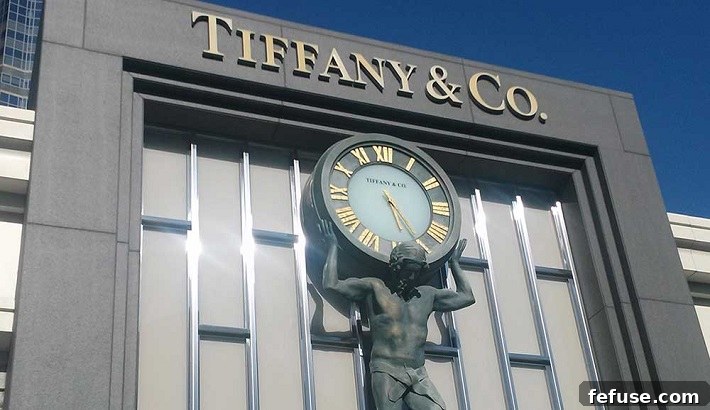
Tiffany & Co Navigates Shifting Sands: Holiday Sales Miss Forecast Amidst Global Uncertainties
Luxury jewelry powerhouse Tiffany & Co has recalibrated its full-year financial outlook, following a holiday sales period that fell short of initial expectations. This adjustment underscores the broader challenges faced by the high-end retail sector, influenced by a confluence of geopolitical and economic factors impacting consumer confidence and spending habits worldwide.
A Closer Look at Holiday Performance: December & November Results
During the crucial two-month ‘holiday’ sales period spanning November and December, Tiffany & Co reported a slight dip in its global performance. Worldwide net sales experienced a modest decline of 1%, reaching $1.04 billion. Concurrently, comparable sales, a key indicator of retail health, were down by 2% globally. These figures represent a departure from the company’s more optimistic internal projections for modest year-over-year growth, signaling an unexpected softening in consumer demand for luxury goods in key markets.
The luxury jeweler has attributed this performance, in part, to what it describes as “uncertainties” pervading the Americas and Europe. External events such as the partial United States government shutdown and the ongoing Brexit saga in the United Kingdom appear to have exerted a more profound influence on consumer sentiment and purchasing decisions than the firm had initially anticipated. This highlights the increasing vulnerability of even established luxury brands to macroeconomic and political turbulence.
CEO’s Perspective: Navigating Headwinds and Identifying Bright Spots
Alessandro Bogliolo, Chief Executive Officer of Tiffany & Co, provided a candid assessment of the holiday season’s outcomes. He acknowledged, “With continued strong sales growth in mainland China (by a double-digit percentage), solid results in Japan and healthy growth in global e-commerce sales, overall holiday sales results came in short of our expectations which had called for modest year-over-year growth.” Bogliolo elaborated that the variance was largely attributable to “lower sales to foreign (primarily Chinese) tourists globally, and to softening demand attributed to local customers in the Americas and Europe, which we believe may have been influenced more than expected by external events, uncertainties, and market volatilities.”
This statement provides crucial insight into the multifaceted challenges faced by Tiffany. The decline in spending by foreign tourists, particularly those from China, points to shifts in global travel patterns and potentially tightened discretionary spending among high-net-worth individuals. Simultaneously, the erosion of local customer demand in mature markets like the Americas and Europe suggests that political and economic anxieties are making consumers more cautious about significant luxury purchases.
Regional Disparities: Europe’s Performance Under Scrutiny
Europe presented a particularly challenging landscape for Tiffany & Co. Total net sales in the region decreased by 4% year-on-year, settling at $132 million. Comparable sales in Europe also declined by 5%, reflecting a varied performance across different countries and a general reduction in spending by both local clientele and international visitors. When measured on a constant-exchange-rate basis, total sales in Europe managed a modest increase of 1%, while comparable sales still dipped by 1%, indicating that currency fluctuations played a minor role in the reported declines.
The European market, often a bellwether for luxury spending, has been particularly sensitive to Brexit-related uncertainties, which have cast a shadow over economic stability and consumer confidence across the continent. Such an environment can lead prospective buyers to defer non-essential, high-value purchases, directly impacting luxury retailers.
Product Category Highlights: Shifting Consumer Preferences
Within Tiffany’s diverse product portfolio, performance varied significantly. Classic jewelry collections emerged as a strong performer during the holiday period, seeing a healthy increase in sales of 2%. This suggests a continued appeal for timeless pieces and core offerings that resonate with loyal customers. However, other key categories faced headwinds. Both engagement jewelry and designer jewelry experienced declines in sales, down by 3% and 8% respectively. This divergence hints at potential shifts in consumer priorities or competitive pressures within specific segments of the luxury jewelry market, particularly in high-ticket items like engagement rings and exclusive designer collaborations.
Revised Fiscal 2018 Forecast and Long-Term Strategic Vision
In light of the holiday period’s sales results, Tiffany & Co’s management has adjusted its expectations for the full fiscal year 2018. The company now anticipates worldwide net sales to increase by 6%-7% over the previous year, both on a reported basis and on a constant-exchange-rate basis. While this represents a slight moderation from prior, more ambitious projections, it still signifies robust growth in a challenging market.
Despite the forecast adjustment, CEO Alessandro Bogliolo maintains a confident outlook, expecting the company to report record sales and net earnings for the full fiscal year. Reflecting on 2018, Bogliolo remarked, “As I reflect on 2018, we accomplished what we set out to achieve. By increasing the levels of strategic investment spending in certain areas, we recovered lost ground from several years of soft sales trends and we expect to report record levels of net sales and net earnings in fiscal 2018.” This statement underscores the impact of the company’s proactive strategic investments throughout the year, which appear to have successfully counteracted some of the negative market forces.
Looking ahead, the CEO emphasized a forward-looking strategy: “Now the focus is to grow to new heights.” Tiffany & Co is committed to pursuing the six key strategic priorities introduced earlier in 2018. These priorities are expected to demand sustained effort and commitment for years to come, forming the bedrock of the company’s long-term growth trajectory. These strategic pillars likely encompass initiatives such as brand elevation, product innovation, omni-channel excellence, enhancing customer experience, expanding market reach, and operational efficiency.
Plans for 2019 and Anticipated Headwinds
For 2019, Tiffany & Co is poised for significant strategic advancements. The company has plans for a series of new product launches designed to invigorate its offerings and attract diverse customer segments. Alongside product innovation, an evolved marketing message will seek to deepen brand engagement and relevance in a competitive luxury landscape. Furthermore, store expansions and enhancements to its digital platforms, including website upgrades, are planned to bolster its retail footprint and improve the online customer journey, recognizing the growing importance of e-commerce in luxury sales.
However, the company also acknowledges potential headwinds for fiscal 2019, particularly in the first half of the year. Bogliolo stated, “We acknowledge that external pressures, difficult year-over-year sales comparisons and annualized internal spending are expected to have some negative effects on fiscal 2019 results, mostly in the first half of the year.” This pragmatic view indicates an awareness of ongoing market volatility and the impact of comparing current results against previous strong periods, as well as the initial costs associated with strategic investments.
Despite these anticipated short-term challenges, the long-term vision remains optimistic. Bogliolo concluded, “but we believe that Tiffany is on a solid path for improved sales, margins, earnings, and cash flow generation over the long-term.” This confidence is rooted in the strategic initiatives put in place, which are designed to build a more resilient and growth-oriented business model capable of thriving in a dynamic global environment.
The Broader Luxury Market Context
Tiffany & Co’s performance is reflective of broader trends and challenges within the global luxury retail market. While the demand for luxury goods generally remains robust, shifts in consumer behavior, geopolitical instability, and the increasing importance of digital channels are reshaping the industry. Brands are increasingly required to offer seamless omni-channel experiences, engage with younger demographics, and demonstrate strong ethical and sustainable practices to maintain relevance.
The slowdown in spending by Chinese tourists, a significant driver of luxury sales globally, underscores the need for brands to diversify their customer base and strengthen local market engagement. Simultaneously, the resilience of e-commerce, as highlighted by Tiffany’s healthy growth in this segment, emphasizes that digital transformation is no longer an option but a critical imperative for luxury brands seeking sustained growth and market leadership.
Ultimately, Tiffany & Co’s revised forecast and strategic roadmap demonstrate a luxury brand actively adapting to a complex and evolving global market. By focusing on core strengths, strategic investments, and a clear vision for future growth, the company aims to solidify its position as a leading purveyor of luxury jewelry, navigating both anticipated and unforeseen challenges with strategic foresight and unwavering commitment.
NewsSource: Professionaljeweller