
The Evolving Landscape of Platinum: Navigating Demand, Supply, and Market Dynamics
Platinum, a rare and precious metal, holds a multifaceted role in the global economy, serving vital functions across various industries, from luxury jewelry to cutting-edge automotive technology. Its market dynamics are a complex interplay of geological availability, industrial innovation, investment sentiment, and consumer trends. While 2019 anticipated a modest 9 percent increase in overall platinum demand, specific sectors experienced notable shifts. For instance, the demand for platinum in jewelry saw a significant decline of 5 percent in the second quarter of that year, indicating a broader repositioning within the luxury market.
A Deep Dive into Platinum Demand: Sectoral Shifts and Underlying Factors
Shifting Tides in Jewelry Demand: The Chinese Influence and Beyond
The precious metal’s appeal in the jewelry sector has historically been substantial, particularly in key markets. However, recent trends reveal a significant reorientation. The decline in jewelry demand, specifically a 30,000 troy ounces (koz) year-on-year drop, was primarily attributed to a sustained reduction in Chinese demand. China, once a powerhouse for platinum jewelry consumption, has experienced a cultural shift and increased competition from other precious metals like gold, as well as alternative luxury goods. Economic slowdowns and changing consumer preferences towards more accessible or fashion-forward alternatives have also played a role. Furthermore, global economic uncertainties and fluctuating platinum prices can impact purchasing decisions, prompting consumers to delay purchases or opt for different materials. Understanding these nuanced shifts is crucial for jewelers and producers alike, as they navigate evolving consumer tastes and market conditions.
Platinum’s Pivotal Role in Automotive Catalysts: Driving Emission Control
Beyond its aesthetic appeal, platinum’s most significant industrial application lies in automotive catalytic converters. Here, it plays a critical role in mitigating harmful vehicle emissions by converting pollutants like carbon monoxide, nitrogen oxides, and unburnt hydrocarbons into less noxious substances. The ongoing global push for stricter emission standards, particularly in developed and rapidly industrializing nations, continues to underpin this demand. While diesel vehicles have traditionally utilized more platinum, the ‘dieselgate’ scandal and a subsequent shift towards gasoline vehicles have somewhat impacted this balance, leading to increased demand for palladium (often used in gasoline catalysts). However, platinum remains essential, especially in heavy-duty vehicles and certain hybrid powertrains. The long-term outlook for this sector is intertwined with the automotive industry’s transition towards electric vehicles (EVs), although internal combustion engines are expected to dominate for several more decades, ensuring continued, albeit evolving, demand for platinum in emissions control technology.
Industrial Applications Beyond the Engine: Innovation and Versatility
Platinum’s unique catalytic properties, high melting point, and excellent corrosion resistance make it indispensable in a broad array of industrial applications. In the chemical industry, it serves as a catalyst in the production of nitric acid, fertilizers, and silicone rubber. The petroleum industry uses platinum in refining processes to produce high-octane gasoline. Its electrical conductivity and resistance to oxidation make it valuable in electrical contacts, specialized sensors, and laboratory equipment. Furthermore, the glass industry employs platinum-rhodium alloys in equipment for producing high-quality optical and fiberglass products. Emerging technologies, particularly in the realm of fuel cells and the nascent hydrogen economy, present promising new avenues for platinum demand. Fuel cells, which convert hydrogen and oxygen into electricity with water as the only byproduct, heavily rely on platinum group metals as catalysts, positioning platinum at the forefront of sustainable energy solutions.
Platinum as an Investment Vehicle: Portfolio Diversification and Safe-Haven Appeal
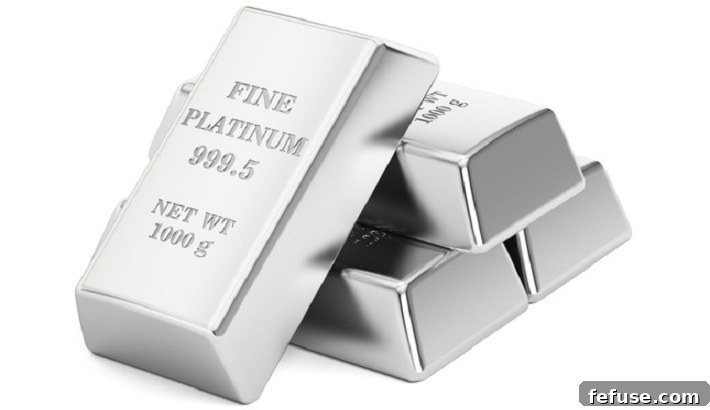
For investors, platinum offers a distinct appeal as a precious metal. It is traded in various forms, including physical bullion (bars and coins) and exchange-traded funds (ETFs), allowing diverse investment strategies. Unlike gold, which is primarily seen as a monetary and safe-haven asset, platinum’s price is often more closely tied to industrial demand, particularly the automotive sector’s health. This makes it sensitive to global economic growth indicators. However, its rarity and “precious metal” status also lend it some safe-haven characteristics, attracting investors during periods of economic uncertainty. The investment segment plays a crucial role in overall platinum demand, acting as a buffer during periods of weak industrial uptake or amplifying upward price movements during times of strong market confidence. Comparing platinum to its sister metals, gold and palladium, reveals a fascinating dynamic where each metal responds differently to macroeconomic forces, offering unique risk-reward profiles for a diversified portfolio.
Understanding Platinum Supply Dynamics: Geological Constraints and Operational Challenges
South Africa: The Dominant Force in Platinum Mining
South Africa stands as the undisputed leader in global platinum production, home to the vast Bushveld Igneous Complex, which accounts for approximately 75% of the world’s known platinum reserves. This geological endowment makes the nation a pivotal player in the platinum market, with its operational stability profoundly influencing global supply. However, platinum mining in South Africa is fraught with challenges. The ore bodies are often deep, requiring extensive and costly underground mining operations. The industry grapples with significant issues such as aging infrastructure, frequent power disruptions (often due to issues with the state-owned utility Eskom), and persistent labor disputes and industrial action. These factors frequently lead to production stoppages and delays, impacting output and adding volatility to supply forecasts. The socio-political landscape and regulatory environment also play a crucial role, influencing investment decisions and operational continuity for major mining companies.
Global Platinum Producers and Emerging Sources
While South Africa dominates, other nations contribute to the global platinum supply. Russia is another significant producer, primarily from Norilsk Nickel’s operations, where platinum group metals (PGMs) are mined as byproducts of nickel and copper extraction. Zimbabwe also holds substantial platinum reserves, with several active mining operations, albeit facing its own set of economic and political complexities. North America, particularly Canada and the United States, contributes a smaller but important share of platinum, often as a co-product of other base metals. Exploring and developing new platinum deposits in these and other regions is an ongoing endeavor, but the geological rarity of economic platinum concentrations means that finding new, large-scale, viable mines is a considerable challenge. The global supply chain is thus heavily reliant on a few key regions, making it susceptible to localized disruptions.
The Critical Role of Recycling in Platinum Supply: An Increasingly Sustainable Source
In an increasingly resource-conscious world, recycling has emerged as a vital component of platinum supply, often referred to as “urban mining.” A significant portion of recycled platinum originates from end-of-life automotive catalytic converters. As vehicles are scrapped, the PGMs within their catalysts are recovered and refined, providing a substantial and growing stream of secondary supply. This reduces the reliance on newly mined metal and offers environmental benefits by minimizing the ecological footprint associated with primary mining. Other sources of recycled platinum include jewelry, industrial catalysts, and electrical scrap. The efficiency and scale of platinum recycling processes continue to improve, making it an increasingly important factor in balancing the overall supply-demand equation and contributing to the sustainability goals of the platinum industry.
Overcoming Supply Chain Disruptions and Bottlenecks
The World Platinum Investment Council (WPIC) noted that total platinum supply was expected to increase by 4 percent in 2019, primarily due to the refining of mined metal accumulated in South Africa’s processing pipeline during 2018. This suggests a catch-up in processing rather than a direct increase in new mining output. However, the report also highlighted the fragility of this supply, warning that continued power disruptions and industrial action in the latter half of the year could significantly reduce the supply of platinum from South Africa. These intermittent challenges underscore the inherent risks in a highly concentrated supply market. Bottlenecks can occur at various stages, from mining and ore extraction to beneficiation, smelting, and refining. Companies are continually investing in infrastructure improvements, automation, and labor relations to mitigate these risks, but the fundamental challenges persist, creating an element of uncertainty in the global platinum market.
Navigating the Platinum Market: Price Drivers and Future Projections
Factors Influencing Platinum Prices: A Confluence of Forces
Platinum prices are influenced by a complex interplay of macroeconomic trends, industry-specific demand drivers, and speculative investment flows. Global economic health is a primary determinant, as robust industrial activity and higher automotive sales generally translate to increased platinum demand. Conversely, economic downturns can depress prices. The strength of the US dollar also plays a role, as platinum is priced in dollars; a stronger dollar can make platinum more expensive for buyers using other currencies, potentially dampening demand. Geopolitical events, particularly those affecting major mining regions like South Africa, can cause significant price volatility due to supply concerns. Furthermore, the relative performance of palladium and gold, and the potential for substitution between PGMs in catalytic converters, can also impact platinum’s market value. Monitoring these diverse factors is essential for accurate price forecasting and strategic decision-making in the platinum market.
The Interplay of Supply and Demand: A Balanced or Deficit Market?
The WPIC’s assessment that the anticipated 4 percent increase in total platinum supply in 2019 would not be able to keep pace with demand suggests a market moving towards a deficit, or at least a tighter supply-demand balance. A market deficit occurs when demand outstrips supply, typically leading to upward pressure on prices, assuming all other factors remain constant. Conversely, a surplus can depress prices. The balance is constantly shifting, influenced by mining output, recycling rates, and the varying fortunes of the jewelry, automotive, industrial, and investment sectors. Market participants closely monitor WPIC reports and other industry analyses for insights into these dynamics, including inventory levels held by producers and financial institutions, which can buffer against short-term imbalances but also signal longer-term trends. Understanding whether the market is in a structural surplus or deficit is key to anticipating future price movements.
Platinum’s Future: Challenges and Opportunities in a Changing World
The future of platinum is poised at an exciting juncture, balancing both significant challenges and transformative opportunities. While evolving automotive technologies, particularly the rise of electric vehicles, present a long-term headwind for its primary demand segment, platinum is also uniquely positioned to benefit from the burgeoning hydrogen economy. Its critical role in fuel cells and electrolyzers for green hydrogen production could unlock a substantial new source of demand. Furthermore, research into new industrial applications and the potential for platinum to serve as a catalyst in various sustainable processes offer additional growth avenues. The industry is also focused on enhancing sustainability throughout its supply chain, from responsible mining practices to advanced recycling technologies. Navigating these complexities will require continuous innovation, strategic investment, and a keen understanding of global macroeconomic and technological shifts. The intrinsic value, rarity, and versatile properties of platinum ensure its enduring significance in the modern world.
As of this writing, platinum continues to be a closely watched commodity, reflecting its crucial industrial roles and investment appeal. Its price, currently hovering around $936.35 per ounce (figure for illustration, actual market prices fluctuate daily), remains a key indicator of the broader economic landscape and the specific dynamics within its diverse demand and supply segments.
News Source: idexonline