
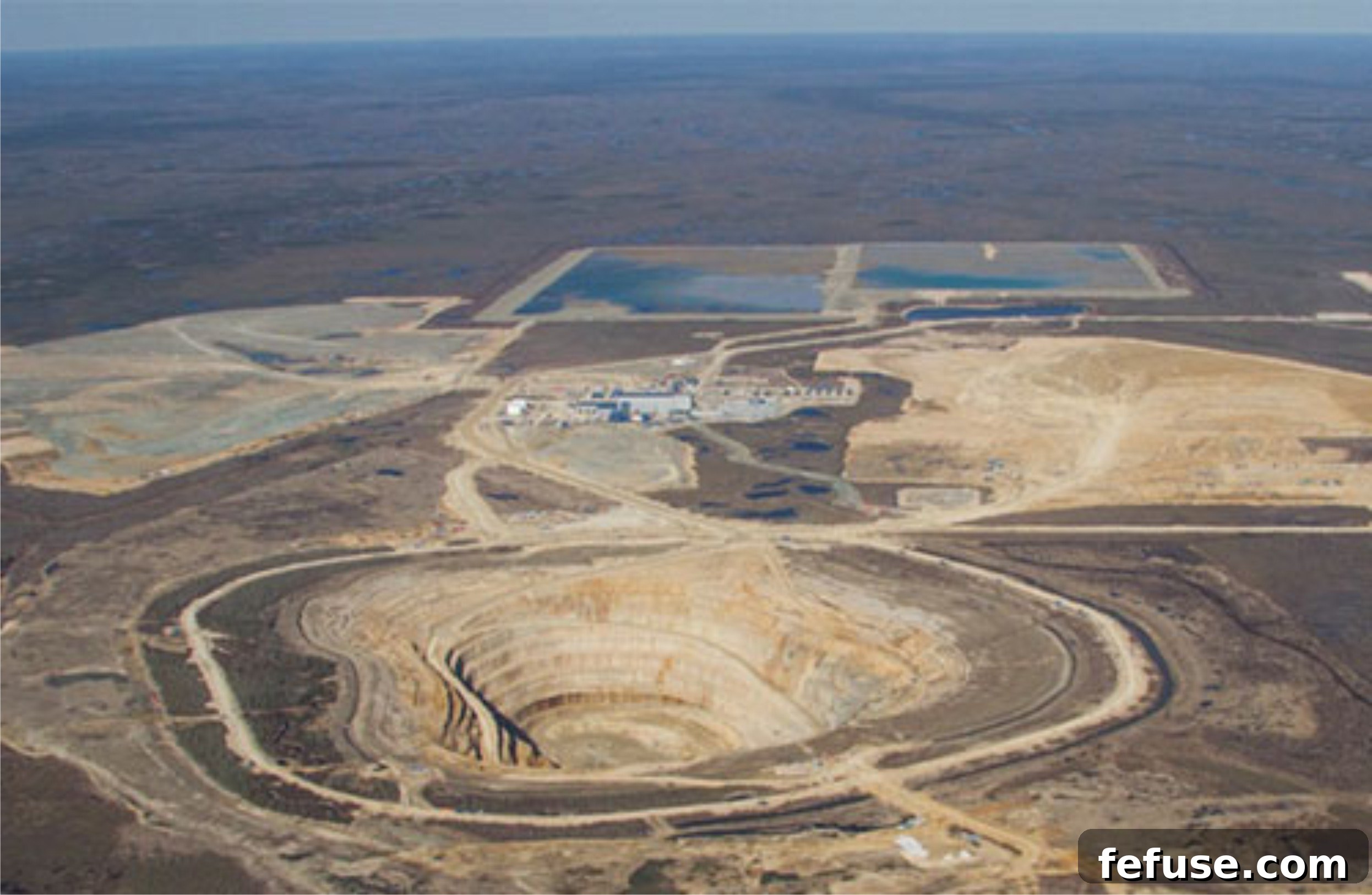
De Beers’ Victor Mine: A Legacy of Diamond Production and Responsible Closure in Canada
De Beers Group, a global leader in diamond production, has announced the impending closure of its renowned Victor Mine located in northern Ontario, Canada. This significant operation is set to complete its current mine plan and cease all mining and production activities by the first quarter of 2019, following the depletion of its open pit reserves. This planned cessation is not an unexpected event but rather a carefully orchestrated conclusion, entirely consistent with the mine’s original feasibility study and its long-standing operational plan.
The Victor Mine’s journey from a promising discovery to a cornerstone of Canadian diamond mining has been marked by remarkable success and a deep commitment to sustainable practices. Its closure represents a natural progression in the lifecycle of a modern mining operation, underscoring De Beers’ dedication to responsible resource management from inception to rehabilitation.
A Model of Responsible Mine Planning and Reclamation
Long before the Victor Mine even commenced operations, De Beers meticulously developed a comprehensive mine closure plan. This proactive approach highlights a forward-thinking strategy, integrating environmental stewardship and community considerations into every phase of the mine’s existence. This detailed planning has enabled De Beers to implement progressive reclamation work at the site over the past several years, ensuring that environmental restoration is an ongoing process rather than a post-closure afterthought.
The commitment to environmental rehabilitation is evident in the substantial efforts already undertaken. The dedicated mine team has successfully planted more than 200,000 tree saplings and willow stakes. Crucially, these plant materials were harvested and grown locally, demonstrating a commitment to using indigenous species and supporting local ecosystems. Furthermore, this initiative was integrated into a broader community youth work programme, providing valuable employment and skill-building opportunities for local residents while fostering a shared sense of responsibility for environmental restoration.
Following the complete cessation of mining and production activities, the closure process will transition into its subsequent phases. The demolition of surface infrastructure and an intensive environmental monitoring phase are anticipated to span a period of three to five years. Throughout this critical transition, De Beers has pledged to collaborate closely with its community partners. This partnership will focus on identifying and creating new opportunities for employment and awarding contracts, ensuring a sustained positive economic impact for the region as the mine transitions from an operational site to a reclaimed landscape.
Victor Mine’s Operational Excellence and Economic Contribution
Since its inception in July 2008, the Victor Mine has consistently delivered exceptional performance, exceeding even the most optimistic forecasts. Originally projected to produce six million carats of diamonds over its lifespan, the mine has already yielded an impressive approximately seven million carats to date. This outstanding production record is a testament to the efficiency, innovation, and dedication of the Victor Mine team. Despite its impending closure, the mine is committed to operating at full production capacity throughout its remaining operational life, maximizing its final contribution to De Beers’ global diamond supply and to the Canadian economy.
Beyond its significant output, the Victor Mine has also earned international acclaim for its operational excellence and unwavering commitment to safety. In 2009, it was distinguished as the “International Mine of the Year,” a prestigious accolade recognizing its pioneering design, efficient operations, and high standards. Furthermore, the mine proudly received the coveted John T. Ryan National Award for the safest mine in Canada not once, but twice, in both 2015 and 2016. These awards underscore a culture of safety that prioritized the well-being of every employee, setting a benchmark for the mining industry both nationally and internationally.
Kim Truter, Chief Executive of De Beers Canada, eloquently articulated the mine’s profound impact. “Victor Mine has made a significant contribution to De Beers and to Canada,” Truter stated, acknowledging the mine’s role in enriching both the company’s portfolio and the national economy. He further praised the Victor Mine team for consistently delivering the highest standards of performance and safety, attributing the mine’s success to their unwavering dedication. Truter emphasized De Beers’ dual focus: maintaining robust production during the final operational period while simultaneously planning responsibly for Victor Mine’s closure. This approach aligns perfectly with the agreed mine plan and De Beers’ fundamental commitment to leaving a positive and enduring legacy for the communities and environment impacted by its operations.
The economic contribution of Victor Mine to northern Ontario and Indigenous communities cannot be overstated. During its operational years, it has provided stable, high-paying jobs, stimulated local businesses through procurement and contracts, and invested in community development initiatives. The wealth generated from its diamond production has indirectly supported numerous other sectors, solidifying its place as a key economic driver in a remote region. Its closure will undoubtedly bring challenges, but De Beers’ proactive approach to transition and employment opportunities aims to mitigate these impacts, reinforcing the positive legacy Truter alluded to.
De Beers’ Enduring Commitment to Canadian Diamond Mining
The closure of Victor Mine marks a shift in De Beers’ Canadian operational landscape, yet it by no means signifies a withdrawal from the country’s rich diamond potential. For several years, De Beers’ Snap Lake mine has been under care and maintenance, reflecting the dynamic and often challenging nature of resource extraction. However, the future of De Beers’ Canadian operations is robustly anchored by the Gahcho Kué diamond mine.
Located in Canada’s Northwest Territories, Gahcho Kué stands as a beacon of modern diamond mining. It holds the distinction of being the largest new diamond mine to open globally in more than a decade, representing a significant investment and a long-term commitment by De Beers. Operated in a successful joint venture with Mountain Province Diamonds, Gahcho Kué will become De Beers’ sole operational mine in Canada once Victor Mine concludes its activities. This mine is not just an asset; it is a strategic stronghold, boasting substantial reserves and production capacity that will continue to contribute significantly to the global diamond supply and to the economy of the Northwest Territories.
Gahcho Kué’s operations mirror De Beers’ commitment to ethical and responsible mining. Like Victor, it emphasizes strong environmental stewardship, community engagement, and providing socio-economic benefits to local and Indigenous communities. The successful ramp-up and consistent production from Gahcho Kué underscore Canada’s ongoing importance as a stable and high-quality source of diamonds for the global market. De Beers’ continued investment in this mine, alongside its diligent management of the Victor closure, demonstrates a balanced strategy focused on maximizing value while upholding environmental and social responsibilities across its Canadian portfolio.
The Canadian diamond industry as a whole has garnered a reputation for ethical sourcing and technological advancement. Mines like Victor and Gahcho Kué have played pivotal roles in establishing Canada as a leading producer of ethically sourced diamonds, appealing to consumers who increasingly value transparency and responsible practices. As the Victor Mine concludes its chapter, its legacy will continue to inspire new standards for mine planning, operation, and closure, reinforcing the principles of sustainable development within the global mining community.
News Source: gjepc.org