
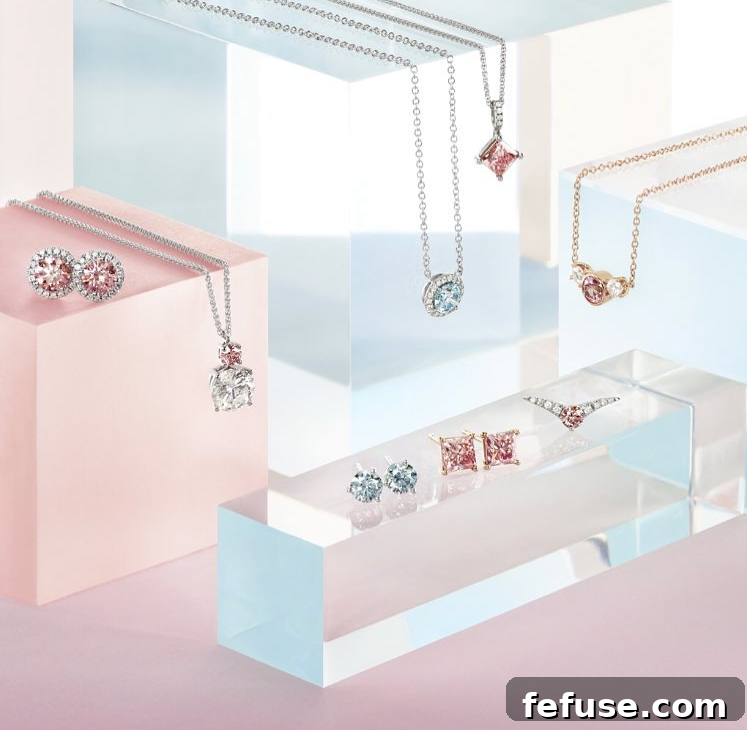
The global jewelry industry recently witnessed a significant shift as De Beers, a name synonymous with natural diamonds for over a century, unveiled its innovative lab-grown diamond brand, Lightbox Jewelry. At the highly anticipated JCK show in Las Vegas, the brand made its official debut, capturing the attention of trade professionals and consumers alike. Professional Jeweller had the exclusive opportunity to sit down with David Prager, De Beers Group’s executive vice-president of corporate affairs, and Sally Morrison, the driving force behind Lightbox, to delve into the strategic rationale and future aspirations guiding this unprecedented move into machine-made diamond products.
De Beers’ Strategic Leap: The Journey to Lightbox Jewelry
The introduction of Lightbox Jewelry was not an impulsive decision but the culmination of extensive research and strategic planning. De Beers Group, through its renowned Element Six business unit, has been at the forefront of diamond synthesis for over half a century. Element Six is a world leader in producing high-quality industrial diamonds, and the underlying technology for creating gem-quality lab-grown diamonds is remarkably similar to that used for industrial applications. This long-standing capability provided De Beers with a unique advantage as they explored new avenues within the jewelry sector.
Over the past 18 months, De Beers undertook a comprehensive consumer research initiative, aiming to gain a profound understanding of perceptions and attitudes towards lab-grown diamonds. The findings were illuminating: consumers clearly saw a distinct role for lab-grown diamonds within the jewelry landscape, primarily in the realm of fashion jewelry. They perceived these products as ‘fun,’ ‘playful,’ and distinct from the deeply sentimental value often associated with natural diamonds. Crucially, consumers expressed an expectation that the pricing of lab-grown diamonds should reflect this fashion-oriented positioning, distinguishing them from the established market for natural diamonds. Furthermore, the research highlighted widespread confusion within the market regarding lab-grown diamonds – their origin, value proposition, and how they differ from their natural counterparts.
Capitalizing on Expertise: Element Six’s Role in Lightbox
Leveraging Element Six’s unparalleled expertise and ability to produce high-quality lab-grown diamonds at relatively low costs, De Beers identified an attractive market opportunity. The vision for Lightbox was clear: to enter the lab-grown diamond jewelry market with an offering that directly addressed consumer desires – fun, fashion-forward lab-grown diamond jewelry at an accessible price point. This differentiated approach aimed to fill a gap in the market that no other producer was adequately addressing. Beyond merely launching a product, De Beers also saw an opportunity to bring much-needed clarity and transparency to a confused sector. Lightbox was conceived as a brand that would be entirely open and honest about its products, their positioning, and crucially, their pricing. This commitment to transparency extends to a linear pricing model, directly reflecting the consistent, linear cost of production across different sizes of lab-grown diamonds.
The Strategic Timing of a Groundbreaking Launch
The decision to launch Lightbox when it did was also carefully calculated. Once the extensive consumer research was completed and the strategic direction established, significant time and resources were dedicated to developing the brand identity and product line. This meticulous development process spanned a considerable period, leading up to the present moment. A key strategic imperative was to unveil the brand prior to the JCK trade show in Las Vegas. This allowed De Beers to engage directly with key trade participants, providing them with comprehensive information about this groundbreaking new offering and addressing any initial questions or concerns from the industry.
Initial Industry Reception and Consumer Excitement
The initial reaction to De Beers Group’s entry into the lab-grown diamond space was met with a degree of surprise across the industry. Given De Beers’ historical stronghold in natural diamonds, this move marked a significant departure from tradition. However, this initial surprise quickly gave way to a broader appreciation for the innovative nature of Lightbox. Most industry observers recognized that the brand offers consumers something entirely new and unique within the fashion jewelry category. This distinct positioning is crucial, as consumers themselves articulate a clear differentiation between lab-grown diamonds and natural diamonds, viewing them as products serving very different purposes and catering to different emotional needs.
The market has responded positively to Lightbox’s offering of vibrant color and dazzling sparkle, made accessible through its friendly price point. The brand’s aesthetic, its overall look and feel, has also garnered favorable reviews. Furthermore, Lightbox has received significant support for its commitment to clarifying the existing consumer confusion surrounding lab-grown diamonds. By being unequivocally clear about what these diamonds are, how they are produced, and how these factors influence their value proposition, Lightbox aims to build trust and educate the market. While it is still early days, and a diverse range of reactions is anticipated as the brand matures, the overall response thus far has been highly encouraging, reinforcing De Beers’ strategic vision.
Who is the Lightbox Customer? Embracing Fun and Affordability
Lightbox Jewelry is designed for a broad and inclusive audience. It appeals to any consumer who seeks to celebrate life’s more light-hearted moments and desires to infuse their daily lives with an extra touch of sparkle, vibrant color, and undeniable fun, all without a significant financial commitment. The brand’s versatility makes it suitable for a wide demographic, from younger consumers looking to purchase a treat for themselves or a thoughtful gift for friends, to seasoned jewelry collectors who might see Lightbox as an inexpensive and joyful way to brighten and diversify their existing jewelry wardrobe with playful bursts of color.
The Core Marketing Philosophy: Color, Sparkle, and Accessibility
The central marketing message underpinning Lightbox Jewelry is elegantly simple yet powerfully effective: “Color and sparkle at a friendly price.” This concise statement encapsulates the brand’s core value proposition and speaks directly to its target audience. Beyond the product attributes, Lightbox aims to embody an inclusive and lighthearted spirit, fostering a sense of joy and approachability. This philosophy is integrated into all aspects of the brand’s communication, from its visual identity to its consumer engagement strategies, ensuring that the brand resonates with a wide array of individuals seeking joyful self-expression through jewelry.
Ensuring Clarity: Differentiating Lab-Grown from Mined Diamonds
One of De Beers’ paramount concerns in launching Lightbox was to prevent any potential confusion between lab-grown and natural diamonds. This commitment to transparency is evident in every facet of the Lightbox brand. Lightbox will always communicate with absolute clarity that its products are lab-grown diamonds. This distinction is overtly reinforced through all branding and marketing materials, leaving no room for ambiguity. Moreover, a key technological safeguard is integrated into the product itself: each Lightbox diamond contains a subtle, internal laser mark, allowing for quick and easy identification as a lab-grown diamond.
A further strategic decision to mitigate confusion involves the judicious use of the De Beers name. While Lightbox is proudly a De Beers Group business, the prominent “De Beers” name, which carries such profound historical association with natural diamonds, will be deliberately excluded from Lightbox branding. This thoughtful separation ensures that consumers maintain a clear distinction between the two product categories. Further solidifying this differentiation, Lightbox products will not be sold through De Beers Jewellers or Forevermark channels, as these brands are exclusively dedicated to natural diamonds and will continue to uphold that legacy. This multi-faceted approach to transparency underscores De Beers’ commitment to ethical marketing and consumer clarity.
Strategic Coexistence: Impact on De Beers’ Natural Diamond Business
A crucial question in the wake of the Lightbox launch pertains to its potential impact on De Beers Group’s long-established natural diamond business. Extensive consumer research conducted by De Beers consistently indicates that individuals perceive natural diamonds and lab-grown diamonds as fundamentally different products, purchased for distinct reasons. Consumers often associate natural diamonds with significant life milestones, enduring value, and profound emotional meaning, while lab-grown diamonds are more frequently viewed through the lens of fashion, affordability, and playful self-expression. Based on these insights, De Beers does not anticipate any negative cannibalization or detrimental impact on its core natural diamond business. In fact, the Group believes that introducing a brand like Lightbox, which actively helps consumers understand what lab-grown diamonds are, how they are produced, and what their value proposition is, will ultimately be beneficial to the entire diamond sector by fostering greater transparency and informed decision-making.
While De Beers is making a serious and considered investment in Lightbox, it is vital to contextualize this within the broader scope of their operations. The scale of investment in Lightbox is nowhere near the magnitude of the capital dedicated to their natural diamond business. To illustrate, De Beers is allocating US$94 million to Lightbox over a four-year period. In stark contrast, the company currently has approximately US$3 billion of investment planned for its natural diamond business. This significant disparity underscores De Beers’ unwavering long-term commitment to natural diamonds, for which they foresee a very bright future and sustained demand. Global demand for diamond jewelry reached record highs last year, topping US$82 billion, signaling robust health in the natural diamond market. Lightbox, while an important and complementary venture, is projected to remain a relatively small business compared to De Beers’ core natural diamond operations. It strategically provides a complementary revenue opportunity by offering consumers a product that, as their research consistently shows, serves a very different purpose in their lives from a natural diamond – catering to different needs and occasions.
Future Horizons: Global Expansion and Launch Plans
Currently, Lightbox Jewelry’s strategic focus is exclusively on the U.S. market. This allows the brand to concentrate its efforts on establishing a strong foundation, refining its market approach, and consolidating its presence in a key consumer market. While the U.S. remains the immediate priority, De Beers will undoubtedly consider expanding into additional international markets in due course, once the brand has achieved its initial objectives and gained valuable insights from its domestic launch.
Regarding the immediate launch plans, Lightbox Jewelry products are set to become widely available to consumers through the brand’s dedicated e-commerce platform in September. This digital-first approach aligns with modern consumer purchasing habits and allows for broad accessibility. Furthermore, there are plans to pilot Lightbox in a limited number of physical brick-and-mortar retail locations later this year. The Lightbox team is actively engaging with potential retail partners, exploring synergistic collaborations that will extend the brand’s reach and provide consumers with diverse shopping experiences. As these discussions are still in their early stages, the industry and consumers alike are encouraged to “watch this space” for further exciting announcements regarding Lightbox’s expanding presence.