
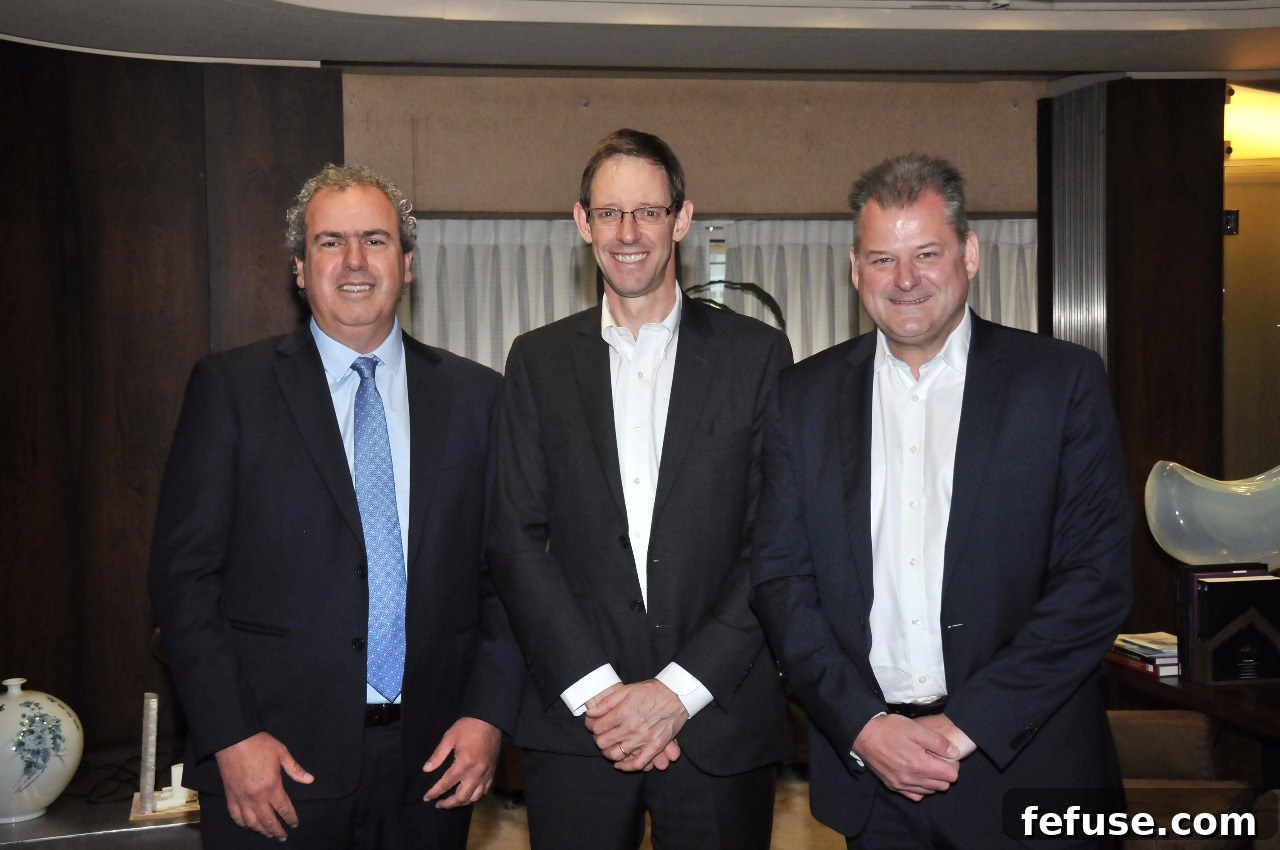
De Beers Leadership Engages with Israeli Diamond Industry Leaders: A Strategic Dialogue for Future Growth
In a significant move underscoring the enduring importance of established partnerships and the dynamic evolution of the global diamond landscape, a high-powered delegation from the De Beers Group of Companies recently convened with key figures of the Israeli Diamond Exchange (ISDE) and the broader local diamond industry in Israel. The purpose of this high-level engagement, as articulated in a press release from ISDE, was multifaceted: to receive comprehensive updates on the Exchange’s latest activities, to foster a deeper understanding of the market dynamics, and critically, to better acquaint themselves with De Beers’ valued clients and stakeholders operating within the vibrant Israeli diamond sector.
The strategic importance of this meeting cannot be overstated. De Beers, a world leader in diamond exploration, mining, and marketing, and the ISDE, a pivotal global hub for diamond trading and manufacturing, represent two cornerstones of the international diamond trade. Their direct dialogue signifies a mutual commitment to navigating current market complexities, exploring avenues for growth, and reinforcing the foundations of a relationship that has shaped the industry for decades. The discussions held during this visit are expected to have considerable implications for both entities, influencing future strategies and collaborative initiatives in a rapidly changing global environment.
A Prestigious Delegation: Leadership from De Beers and ISDE
The De Beers Group delegation was spearheaded by its Chief Executive Officer, Mr. Bruce Cleaver, whose presence at such a meeting highlights the strategic significance De Beers places on the Israeli market. Accompanying Mr. Cleaver were other prominent executives, including Executive Vice President Paul Rowley and Vice President Nicholas Moltke, forming a team rich in experience and insight across various facets of the diamond pipeline. This senior representation signals De Beers’ proactive approach to direct engagement with its core markets and key partners.
Matching the prestige of the De Beers delegation, the Israeli side was represented by an equally distinguished assembly of leaders from across the Israeli diamond industry. Among the attendees were Mr. Yoram Dvash, the esteemed President of the ISDE, a figure instrumental in steering the exchange through contemporary challenges and opportunities. He was joined by Mr. Kobi Koren, President of The Israel Diamond Manufacturers’ Association, advocating for the manufacturing arm of the industry. Further enhancing the breadth of representation were Mr. Shmuel Schnitzer, Chairman of the Israeli Diamond Institute, a body focused on promoting and marketing the Israeli diamond industry globally, and Mr. Yehezkel Blum, Acting President of the IDE. The operational leadership was provided by Mr. Eli Avidar, CEO of the IDE, alongside executive managers Shai Schnitzer and Meir Delumi. This comprehensive lineup ensured that De Beers had access to a holistic view of the Israeli diamond industry, encompassing trading, manufacturing, and institutional development.
Navigating Market Realities: Rough, Polished, and Pricing Dynamics
A central tenet of the meeting’s agenda was an in-depth exploration of the prevailing market scenario for both rough and polished diamonds, coupled with a critical analysis of pricing dynamics as they relate to current global market conditions. This segment of the discussion is particularly crucial given the inherent volatility and nuanced factors that influence the diamond trade. The past few years have presented unique challenges, from shifts in consumer demand and the rising prominence of laboratory-grown diamonds to geopolitical complexities affecting supply chains and logistical operations. For industry leaders, understanding these intricate relationships between supply, demand, and pricing is paramount to strategic planning and maintaining market stability.
De Beers, as a primary source of rough diamonds globally, holds significant sway over supply, while the Israeli Diamond Exchange, with its extensive network of traders and manufacturers, plays a vital role in processing and distributing polished diamonds to international markets. The dialogue between these entities allows for a synergistic exchange of insights, helping to establish realistic market expectations and identify potential areas of concern or opportunity. Topics likely covered include the health of key consumer markets (such as the US, China, and India), inventory levels across the pipeline, the impact of sustainability and ethical sourcing concerns on purchasing decisions, and the evolving role of digital platforms in diamond trading. Understanding these facets provides a robust framework for both De Beers in its supply management and the ISDE in its market positioning and operational strategies.
ISDE’s Vision for the Future: Pioneering Development and Innovation
Beyond market analysis, the meeting served as a crucial platform for the ISDE management to present comprehensive updates on a series of ambitious and forward-thinking projects designed to bolster Israel’s position as a leading global diamond hub. These initiatives underscore a proactive approach to modernizing infrastructure, expanding operational capabilities, and fostering innovation within the sector.
A New Frontier: The Ramat-Gan Rock Processing Factory
A significant highlight of the ISDE’s presentation was the update regarding the permit received from the Ramat-Gan municipal authorities for the construction of a large rock processing factory within the Maccabi building. This project represents a strategic pivot towards enhancing value addition capabilities directly within Israel. Historically, some initial stages of diamond processing might have been undertaken elsewhere, but establishing an advanced rock processing facility in Ramat-Gan signifies a commitment to integrating more of the diamond value chain domestically. This factory is expected to leverage cutting-edge technology to handle rough diamonds from their initial rock form, potentially streamlining operations, reducing reliance on external processing facilities, and creating specialized job opportunities within the local industry. The “Maccabi building” location likely offers logistical advantages, being situated within or very close to the established diamond district, facilitating seamless integration with existing trading and manufacturing operations. This move could significantly improve efficiency, control over the supply chain, and enhance the overall competitiveness of the Israeli diamond sector.
Ambitious Expansion: Adding 250,000 Square Meters to the Diamond Exchange Compound
Looking further into the future, the ISDE also unveiled plans for an impressive construction project, due to add an additional 250,000 square meters to the existing Diamond Exchange compound. This substantial expansion is a testament to the ISDE’s long-term vision and confidence in the continued growth and relevance of the Israeli diamond industry. An addition of this magnitude suggests a comprehensive development plan that could encompass various new facilities.
These new areas might include state-of-the-art trading floors, advanced manufacturing workshops equipped with the latest laser cutting and polishing technologies, dedicated spaces for gemological research and certification laboratories, and expanded office spaces for diamond companies, brokers, and service providers. Furthermore, such an expansion could accommodate new logistics centers, secure vaults, and perhaps even dedicated exhibition spaces to host international trade shows and events. The aim is not merely to increase physical footprint but to create a more integrated, efficient, and technologically advanced ecosystem that can cater to the evolving needs of the global diamond industry, cementing Ramat-Gan’s status as a premier international diamond trading center for decades to come.
Cultivating the Future: The ISDE Innovation Center
Perhaps one of the most forward-looking initiatives discussed was the ISDE innovation center, which is currently in the process of being established. This project signifies a profound understanding by the ISDE leadership that the future of the diamond industry hinges on its ability to embrace technological advancements, foster creative solutions, and adapt to new market paradigms. The innovation center is envisioned as a nexus for research and development, a breeding ground for startups, and a collaborative space for industry players to explore new methodologies, technologies, and business models.
The center’s objectives are likely broad, encompassing areas such as enhancing the traceability and transparency of diamonds, developing advanced authentication technologies to distinguish natural from laboratory-grown diamonds, exploring new digital platforms for trading, and integrating AI and machine learning into various stages of the diamond pipeline, from sorting to valuation. It also aims to address critical industry challenges like sustainable practices, ethical sourcing, and improving consumer trust through technological solutions.
A particularly exciting aspect of the innovation center’s development is the possibility of including international players in the diamond industry as partners. This collaborative approach recognizes that innovation thrives on diverse perspectives and shared expertise. Such international partnerships could bring global best practices, access to broader talent pools, and accelerate the development and adoption of new technologies. Potential partners could range from leading technology firms and research institutions to other major diamond exchanges or industry associations globally, creating a powerful synergy that benefits the entire diamond ecosystem.
Crucially, the discussions also highlighted the potential involvement of the Israeli government, working through the Israeli Innovation Authority, as a partner in this venture. The Israeli Innovation Authority is renowned worldwide for its role in fostering technological innovation across various sectors, providing funding, expertise, and a supportive regulatory environment for groundbreaking projects. Their involvement would not only lend significant credibility and financial backing to the innovation center but also integrate it within Israel’s broader national innovation ecosystem. This public-private-international partnership model is designed to maximize the center’s impact, ensuring that Israel remains at the forefront of technological advancement and sustainable growth in the global diamond industry.
Conclusion: A Strategic Partnership for a Resilient Future
The recent meeting between De Beers and the Israeli Diamond Exchange represents far more than a routine update. It underscores a strategic dialogue between two titans of the diamond world, intent on collaboratively shaping a resilient and innovative future for the industry. From navigating complex market scenarios and reinforcing vital trade relationships to launching ambitious infrastructure projects and pioneering an innovation center, the Israeli diamond industry, in partnership with global leaders like De Beers, is clearly positioning itself for sustained growth and leadership in the 21st century. These proactive steps, combining physical expansion with technological innovation and robust partnerships, indicate a strong commitment to adaptability and excellence, ensuring that Israel continues to be a crucial pillar in the intricate and magnificent world of diamonds.
News Source : gjepc.org