
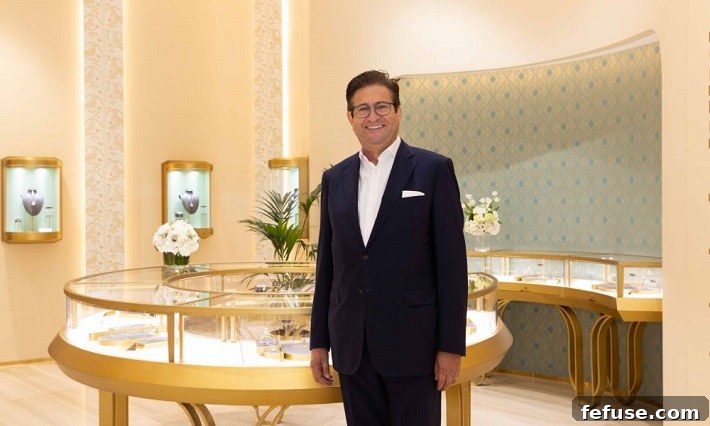
Damas Jewellery Charts a Course for Global Expansion: India, E-commerce, and Sustainable Luxury
In an exclusive and illuminating interview with Solitaire, Luc P. Perramond, the esteemed Chairman & CEO of Damas Jewellery, shed light on the strategic future of the UAE-based luxury brand. As a frontrunner in the opulent world of fine jewellery, Damas is setting ambitious sights on expanding its retail footprint in India, leveraging the groundbreaking opportunities presented by the Indo-UAE CEPA trade agreement. Perramond also elaborated on the brand’s comprehensive global expansion strategy, the immense potential for continued growth within the Middle East, and Damas’s commitment to adapting to evolving consumer trends, particularly in the realm of sustainable luxury.
Unlocking Potential: The Indo-UAE CEPA and India’s Market Appeal
Damas Jewellery has historically maintained strong and enduring relationships with Indian suppliers and manufacturers, a testament to the intricate ties between the two nations’ jewellery industries. The recent Indo-UAE Comprehensive Economic Partnership Agreement (CEPA) trade agreement marks a pivotal moment, presenting unprecedented opportunities for companies like Damas.
Perramond highlighted the immediate and profound benefits of this agreement, stating, “The CEPA trade agreement, specifically including gems and jewellery, will significantly benefit Damas’ trade with India. The elimination of tariffs on jewellery imported from India is a game-changer that will undoubtedly boost our level of activity with Indian suppliers and manufacturers.” This tariff reduction is expected to streamline operations, reduce costs, and foster a more dynamic exchange of high-quality jewellery, further solidifying the symbiotic relationship between Damas and its Indian partners. The CEPA acts as a catalyst, encouraging greater collaboration and potentially leading to innovative co-creation projects that merge the design sensibilities of Damas with the unparalleled craftsmanship of India.
Re-establishing a Retail Presence in India: A Strategic Imperative
During a recent visit to the GJEPC office in Mumbai, Luc P. Perramond conveyed Damas’s clear intent to re-establish a significant retail presence in the vibrant Indian market. While the journey is still in its nascent stages, the commitment is unequivocal. “We are still in the exploratory stage,” Perramond confirmed. “We have indeed initiated talks with several key players, and our teams are diligently exploring the most effective and mutually beneficial way forward to ensure a successful re-entry into this crucial market.” This deliberate approach underscores Damas’s meticulous planning and its dedication to forging the right partnerships that align with its brand values and long-term vision.
The decision to relaunch Damas in India at this particular juncture is rooted in a confluence of compelling factors, demonstrating a keen understanding of global market dynamics. “India offers a tremendous opportunity to significantly expand our business,” Perramond explained. “It stands as the second-largest jewellery market globally, surpassed only by China, presenting an immense consumer base with a deep cultural affinity for fine jewellery.”
Damas already enjoys a strong brand recognition and a loyal customer base among the Indian diaspora in the Gulf Cooperation Council (GCC) region. “Over one-third of our customer base in the GCC is of South Asian origin,” Perramond revealed. “We have successfully cultivated a distinctive brand positioning through our unique collections, immersive in-store experiences, and evocative communication strategies, all of which resonate exceptionally well with the Indian community.” This existing connection provides a solid foundation for Damas to build upon as it ventures directly into the Indian subcontinent.
Furthermore, the timing aligns perfectly with Damas’s internal brand evolution. “We are looking at this expansion now because, as you know, Damas has undergone a comprehensive brand transformation since my arrival in 2020,” Perramond elaborated. “Our initial focus was to consolidate our positioning, reinforce our market presence, and enhance brand desirability within the GCC, our core market. Having successfully achieved this, we believe we are now ideally positioned and ready to explore the tremendous potential offered by the Indian jewellery market, which notably experienced an impressive 35% growth in 2022.” This strategic readiness, coupled with a booming market, creates an optimal environment for Damas’s re-entry.
Targeting the Accessible Luxury Segment in India
Regarding its specific market segmentation in India, Damas will maintain its established identity. “Damas is firmly positioned within the accessible luxury market,” Perramond affirmed. “We proudly serve as the leading regional House of Jewellery Design across the Middle East, catering to a diverse clientele ranging from medium to high-tier consumers.” This positioning allows Damas to appeal to a broad demographic seeking quality and distinctive design without the prohibitive price points of ultra-high luxury. “We are committed to maintaining this same positioning in India, albeit with thoughtful local adaptations to resonate authentically with the Indian consumer palate.” The exact retail footprint and the number of stores are still under meticulous planning, indicative of a cautious yet ambitious expansion strategy.
Strengthening Bilateral Trade: India and UAE Gem & Jewellery Relations
The future of gem and jewellery trade relations between India and the UAE is exceptionally bright, according to Perramond. “The trade relations between India and the UAE are already incredibly robust and continue to grow steadily at a fast pace,” he observed. “I firmly believe that the future of jewellery trading between these two economic powerhouses offers a wealth of opportunities and is set to continue its upward trajectory, particularly in the thriving segment of diamond jewellery.” This mutual growth benefits both nations, fostering economic prosperity and cultural exchange through the glittering medium of precious gems and metals.

Damas’s Strategic Global Expansion and Digital Frontiers
Beyond the Indian market, Damas has a well-defined global expansion roadmap for the coming years, designed to strategically enter new territories and broaden its customer base. This multi-pronged approach focuses on strengthening existing strongholds, re-entering promising markets, and aggressively expanding its digital presence.
In the short to medium term, Damas is doubling down on its expansion within Saudi Arabia, with a particular emphasis on the burgeoning capital, Riyadh. “Damas currently operates 26 stores across the Kingdom, and we are planning to open additional stores there to further solidify our leadership in this profoundly strategic market,” Perramond announced. Saudi Arabia represents a significant growth engine for the luxury sector in the Middle East, driven by ambitious economic diversification plans and a youthful, affluent population.
Another key market on Damas’s radar is Egypt. “Damas historically had a presence in Egypt, but our current aim is to relaunch the brand with its revitalized identity, showcasing our new in-house collections, innovative designs, and a refreshed store aesthetic,” Perramond elaborated. This strategic re-entry into a historically significant market with a fresh approach signifies Damas’s adaptability and commitment to growth.
The third, and arguably most dynamic, expansion pillar for Damas is its robust online business. “We have been experiencing remarkable triple-digit growth on Damas e-commerce, a clear indicator of the brand’s increasing traction online,” Perramond proudly stated. The digital platform is proving instrumental in reaching new demographics, particularly the younger generation, without cannibalizing sales from physical stores. This synergistic relationship between online and offline channels is crucial in today’s retail landscape.
Damas’s digital success extends to collaborations with leading luxury marketplaces. “Damas is also prominently featured on Ounass.com, the premier luxury marketplace in the Middle East,” Perramond added. “Within just a few months, we have rapidly ascended to become the No. 1 jewellery brand on the platform, and our growth continues unabated.” This performance underscores the brand’s strong online appeal and the effectiveness of its digital strategy. “We firmly believe that online business presents enormous potential for Damas, given our established positioning and strong brand awareness. We will continue to invest significantly in enhancing our own e-commerce platform within the GCC and will perpetually explore new online business opportunities and partnerships with pure-play digital retailers.”
Navigating Evolving Consumer Trends in Luxury Jewellery
The jewellery industry is currently undergoing a significant transformation, shaped by dynamic consumer preferences. Luc P. Perramond outlined several key trends and how Damas is proactively adapting to them.
“Today’s consumers seek more than just exquisite pieces; they desire to purchase jewellery from strong, authentic brands that not only deliver unparalleled quality and craftsmanship but also offer exclusive designs, compelling storytelling, and an exceptional client experience,” Perramond emphasized. Recognizing this shift, Damas strategically placed brand equity at the core of its brand transformation initiative three years ago. “We have worked tirelessly to make the Damas brand significantly more desirable, a fact evidenced by the tens of thousands of new clients we successfully recruit every single month,” he stated, highlighting the quantifiable success of their brand-centric approach.
Another critical trend is the escalating demand for social responsibility. “Consumers increasingly expect brands to be socially responsible and to act accordingly, shunning any semblance of ‘greenwashing’,” Perramond noted. Damas has taken concrete and proactive steps in this regard, demonstrating genuine commitment.
These initiatives include impactful programs such as the “Water Initiative in India,” a testament to their commitment to community welfare. Damas has also forged a meaningful partnership with the Al Jalila Foundation in Dubai, contributing to medical research and education. Furthermore, the brand pioneered the launch of a sustainable Lab Grown Diamond collection named Gaia, signaling a forward-thinking approach to ethical and environmentally conscious luxury. This holistic approach to corporate social responsibility resonates deeply with modern, values-driven consumers.

The Evolving Middle East Landscape and Future Growth Potential
The retail jewellery industry in the Middle East has undergone a significant evolution in recent years, presenting both challenges and vast opportunities. Perramond provided insightful observations on these shifts. “Customers in the Middle East are increasingly seeking products that possess deep meaning, offer reassurance, and serve as a status symbol – attributes that can only be effectively conveyed through powerful brands,” he explained. “The stronger a brand’s desirability, the greater its pricing power.” This highlights a clear shift towards branded luxury over generic pieces.
A notable trend is the escalating growth of branded versus unbranded jewellery. Furthermore, the preferences of younger generations are shaping the market. “Millennials, in particular, hold distinct expectations; they gravitate towards brands that align with their values and mindsets, offering a sense of purpose and identity that resonates emotionally,” Perramond observed. These digitally native consumers often discover such brands through their extensive digital networks, opting for those that foster a genuine social connection.
Damas has strategically positioned itself to meet these evolving demands. “At Damas, we pride ourselves on creating distinctive in-house designs that draw inspiration from the rich heritage and culture of the region,” Perramond elaborated. “Our pieces are iconic, truly unique, and possess a strong DNA, which is expertly communicated through compelling and meaningful storytelling.” This regional relevance, combined with a powerful narrative, creates a deep connection with consumers.
The brand’s digital transformation, initiated in 2020, has been a cornerstone of its success in this changing landscape. “Since launching our digital transformation, we have consistently achieved extremely high web traffic, in addition to securing the leading share of voice across our social digital platforms throughout the Middle East region,” Perramond confirmed. This digital prowess ensures Damas remains at the forefront of consumer engagement.
In a pioneering move, Damas also led the way in introducing sustainable options to the market. “In 2021, we also pioneered the launch of lab-grown diamonds through our dedicated Gaia collection, becoming the first jeweller in the region to do so,” Perramond proudly stated. “This initiative provides our customers with an ethical choice without compromising on quality, helping them fulfill their dreams of owning exquisite diamond jewellery in a socially responsible manner.” This forward-thinking approach caters to the conscientious consumer base without sacrificing luxury or design integrity.
The region continues to offer immense potential for further expansion. “The Middle East undeniably presents great potential for continued growth and expansion,” Perramond concluded. “Damas is strategically poised to leverage these burgeoning opportunities, propelling the brand to new heights and solidifying our leadership in the luxury jewellery sector.” With a clear vision, strategic investments, and a deep understanding of consumer aspirations, Damas Jewellery is set for a sparkling future on both regional and global stages.