
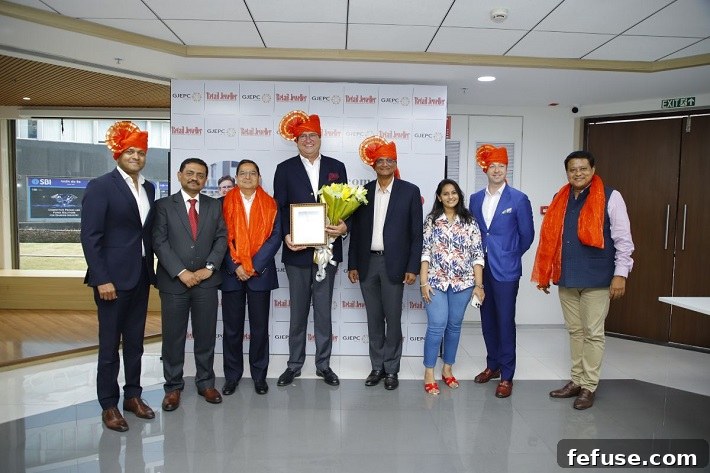
Damas Jewellery CEO Visits India to Strengthen Ties and Explore Market Entry
A landmark visit by Mr. Luc Perramond, Chairman and CEO of Damas Jewellery, to India signals a new era of potential collaboration and market expansion for one of the Middle East’s most prominent jewellery brands.
A Strategic Visit: Damas Jewellery’s Interest in the Indian Market
On April 14th, the esteemed Mr. Luc Perramond, Chairman and CEO of Damas Jewellery, a leading and highly respected brand across the Middle East, undertook his inaugural visit to India. His first stop was the prestigious GJEPC Head Office, situated within the Bharat Diamond Bourse in Mumbai. This visit underscores a significant strategic interest from Damas Jewellery in deepening its engagement with the Indian market and exploring avenues for future growth and partnership.
Damas Jewellery has long been recognized as the largest and most influential jewellery brand in the Middle East region, with an extensive presence and a legacy spanning decades. Mr. Perramond’s visit was not merely a courtesy call but a clear signal of Damas’s intent to re-evaluate and potentially re-enter the dynamic Indian jewellery landscape, a move that could reshape regional trade dynamics.
Fostering Stronger India-UAE Business Ties Through CEPA
During his interaction at the GJEPC, Mr. Perramond expressed his sincere gratitude for the warm hospitality extended by the Council. He highlighted the enduring and robust relationships Damas Jewellery has cultivated with numerous manufacturers in India over the years. These established connections form a strong foundation, which Mr. Perramond believes will only be amplified and solidified by the Comprehensive Economic Partnership Agreement (CEPA) recently signed between India and the UAE.
The CEPA agreement is a pivotal trade pact designed to boost bilateral trade and investment between India and the United Arab Emirates. For the jewellery sector, it promises reduced tariffs, streamlined customs procedures, and greater market access, creating an exceptionally favorable environment for businesses like Damas. Mr. Perramond’s comments reflect a keen understanding of CEPA’s potential to unlock new opportunities and strengthen existing supply chains, making India an even more attractive partner for Damas Jewellery.
Damas’s Potential Re-entry into the Vibrant Indian Market
A key agenda point of Mr. Perramond’s visit was to “explore whether Damas should enter the Indian market.” This statement is particularly noteworthy, indicating a serious consideration for a strategic re-establishment of the brand’s presence in India. Damas Jewellery had a footprint in India previously, and despite its absence for a period, Mr. Perramond confidently affirmed that “the brand recall is strong and we have a loyal client base.” This existing recognition and customer loyalty provide a significant advantage, reducing the barriers typically faced by new entrants.
India represents one of the world’s largest and most culturally significant jewellery markets, driven by strong domestic demand for gold, diamonds, and precious stones, particularly during festivals and weddings. The market is also increasingly influenced by evolving consumer preferences, a growing affluent class, and the rise of e-commerce. For Damas, re-entering India could mean tapping into this immense potential, leveraging its global brand appeal, design expertise, and ethical sourcing practices to carve out a significant niche. The company’s established leadership across the GCC, encompassing countries like the Kingdom of Saudi Arabia (KSA), Kuwait, Qatar, and Oman, provides a strong regional precedent for successful expansion.
A Legacy of Innovation: Damas and Lab Grown Diamonds
Under Mr. Perramond’s astute leadership, Damas Jewellery continues to uphold its legacy as an innovative and forward-thinking brand. Beyond its current expansion spree across various international markets, Damas has also distinguished itself as a pioneer in the Middle East jewellery sector. It holds the unique distinction of being the first brand in the region to launch Lab Grown Diamond (LGD) Jewellery, demonstrating its commitment to meeting evolving consumer demands and embracing sustainable practices.
This leadership in the Lab Grown Diamond segment positions Damas at the forefront of a significant industry shift. LGDs offer a sustainable and ethically sourced alternative to mined diamonds, appealing to a younger, more environmentally conscious demographic. By taking the lead in this burgeoning segment, Damas is not only diversifying its product offerings but also setting a trend for other regional players. Its pioneering spirit in LGDs could be a distinct competitive advantage should it decide to expand its operations more broadly within the Indian market, where the LGD segment is also witnessing rapid growth and acceptance.
Key Discussions with GJEPC: Paving the Way for Collaboration
The core of Mr. Perramond’s visit involved crucial discussions with key figures from the Gem & Jewellery Export Promotion Council (GJEPC). The meeting included GJEPC Chairman Mr. Vipul Shah, GJEPC Vice Chairman Mr. Kirit Bhansali, and GJEPC Executive Director Mr. Sabyasachi Ray. These high-level deliberations centered on exploring a wide array of potential collaborations, strategic partnerships, and mutually beneficial business opportunities.
Among the specific initiatives discussed were:
- India Jewellery Park Mumbai (IJPM): A state-of-the-art infrastructure project designed to provide a comprehensive ecosystem for jewellery manufacturing, trade, and exports in India. Partnership with IJPM could offer Damas a robust manufacturing and distribution base within India.
- India Jewellery Exposition (IJEX): An international platform aimed at showcasing India’s jewellery manufacturing capabilities to global buyers. Participation or collaboration in IJEX could provide Damas with direct access to a broad network of Indian suppliers and designers.
- IGJS Dubai Show: The India Global Jewellery Show in Dubai, which serves as a crucial bridge between Indian manufacturers and international markets, particularly the Middle East. Enhanced collaboration on this platform could strengthen the symbiotic relationship between Damas and Indian exporters.
These discussions highlight the GJEPC’s proactive role in fostering international collaborations and promoting India’s gem and jewellery sector on a global stage. For Damas, these partnerships represent avenues to leverage India’s unparalleled expertise in diamond and gemstone cutting, jewellery manufacturing, and its vast skilled workforce, further enhancing its product offerings and operational efficiencies.
The Future Outlook: A Synergistic Partnership
Mr. Luc Perramond’s inaugural visit to India marks a significant moment for Damas Jewellery and the broader India-UAE gem and jewellery trade. The discussions held with the GJEPC leadership lay the groundwork for what could evolve into a highly synergistic partnership. With Damas’s regional dominance and innovative approach, combined with India’s manufacturing prowess and market potential, the future promises exciting developments.
The potential re-entry of Damas into the Indian market, coupled with strategic collaborations on initiatives like IJPM, IJEX, and IGJS Dubai, could not only bolster Damas’s global footprint but also significantly contribute to India’s jewellery export ambitions. This visit reinforces the growing importance of bilateral economic ties and the shared vision for growth and innovation within the global jewellery industry.