
In the illustrious world of British aristocracy and royal connections, certain jewels stand out not only for their breathtaking beauty but also for the captivating stories they tell. Among these treasures, the Bagration Tiara holds a special place, adorned with rare spinels and steeped in centuries of imperial history. Today, we delve into the magnificent narrative of this unique diadem and its modern wearer, Natalia, Duchess of Westminster, whose elegant choice brought this piece back into the spotlight on her wedding day.
The allure of historic tiaras lies in their ability to connect us to powerful figures and pivotal moments. The Bagration Tiara, with its distinctive design and vibrant gemstones, is a prime example. Its journey from a Georgian princess to a British Duchess spans eras and empires, reflecting shifts in power, fashion, and personal legacies. This article explores the rich tapestry woven around the tiara, from its enigmatic origins to its celebrated appearance at one of the most significant society weddings of the 20th century.
A Union of Aristocratic Legacies: Natalia Phillips and Gerald Grosvenor
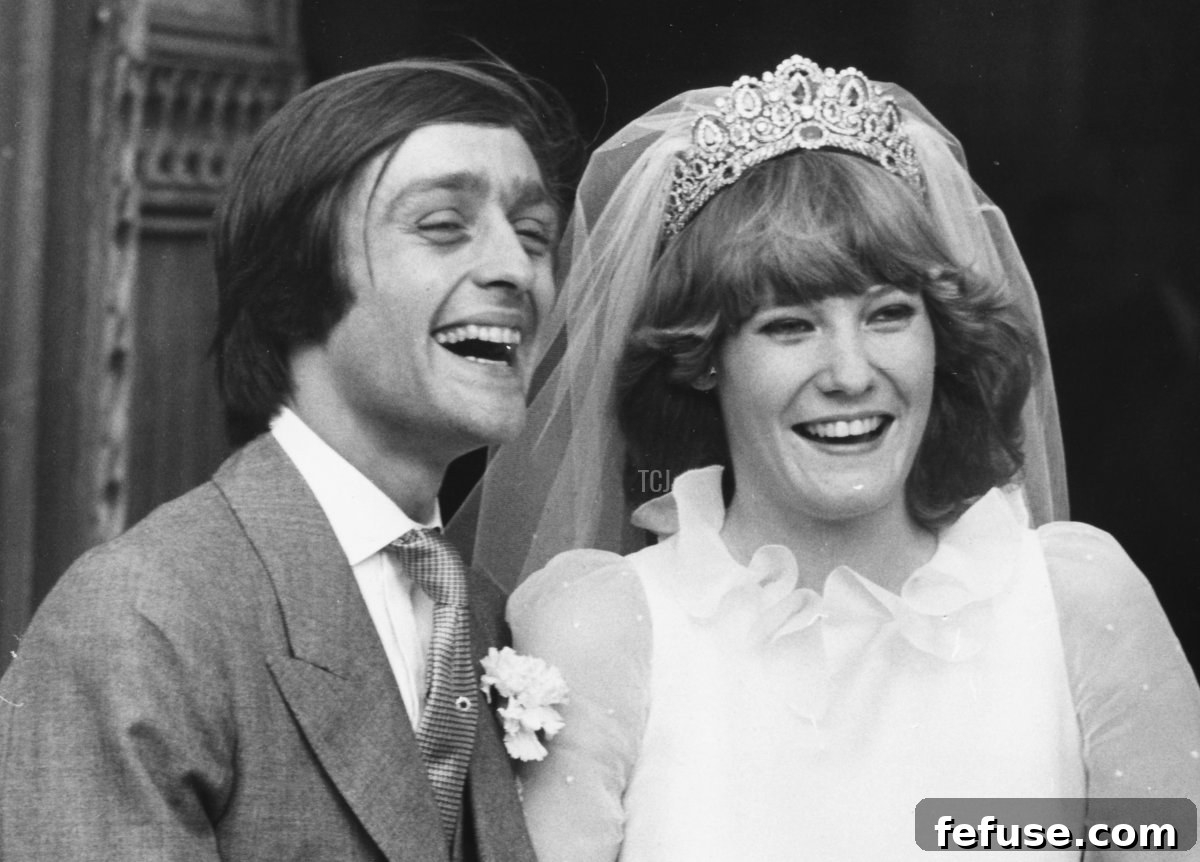
The year 1978 marked a significant event in British high society: the marriage of Natalia “Tally” Phillips to Gerald Grosvenor, then Earl Grosvenor. Their wedding, held in Luton, close to Tally’s ancestral home, was a dazzling affair that united two families of immense wealth, influence, and storied heritage. The couple had first met a year prior at a grand ball hosted at the historic Blenheim Palace, an appropriately majestic setting for the genesis of their romance.
Both bride and groom brought formidable aristocratic lineage to their union. Gerald, the son of the 5th Duke of Westminster, was destined to inherit one of Britain’s most prestigious dukedoms, becoming the 6th Duke of Westminster shortly after their wedding. His family, the Grosvenors, are renowned for their vast estates and immense fortune, historically making them one of the wealthiest landowning families in the United Kingdom. This wealth translated into significant social and political influence, placing Gerald at the very apex of British aristocracy.
Natalia’s Imperial Russian Connections
Natalia Phillips’s own background was equally distinguished, featuring a fascinating link to Russian imperial history. Her mother, Georgina Wernher, was a granddaughter of the flamboyant Grand Duke Mikhail Mikhailovich of Russia and his morganatic wife, Countess Sophie of Merenberg, Countess de Torby. This lineage imbued Natalia with a rich, albeit unconventional, connection to European royalty, adding a layer of international grandeur to her already impressive pedigree. The story of Grand Duke Mikhail and Countess Sophie’s marriage, forbidden by the Tsar, is a romantic saga in itself, echoing the rebellious spirit and independent choices that often define fascinating royal histories. You can explore more about some of their incredible jewels, like the Milford Haven Ruby Kokoshnik, through dedicated historical accounts.
Beyond their direct aristocratic ties, both Gerald and Tally frequently moved within exclusive royal circles. Tally proudly holds the esteemed position of godmother to Prince William, the Duke of Cambridge. Furthermore, their son, Hugh Grosvenor, who later became the 7th Duke of Westminster, is a godfather to Prince George of Cambridge. These intimate connections underscore the deep and enduring relationships between the Grosvenor family and the British Royal Family, cementing their status within the very heart of the establishment.
The Bagration Tiara: A Legacy of Splendor and Spinel
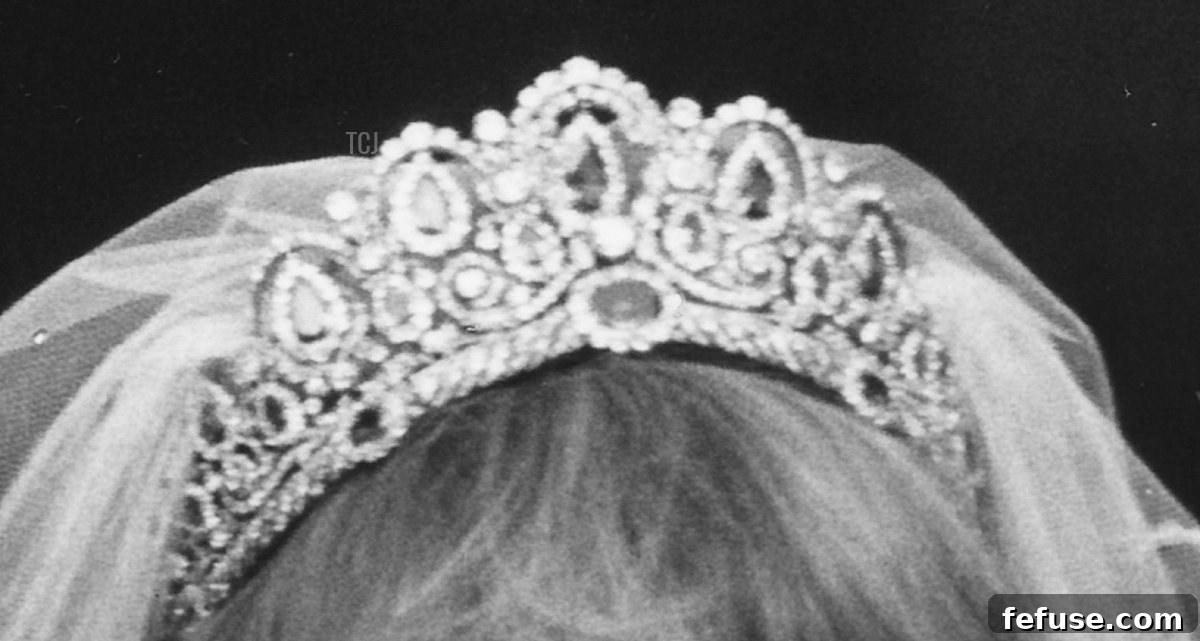
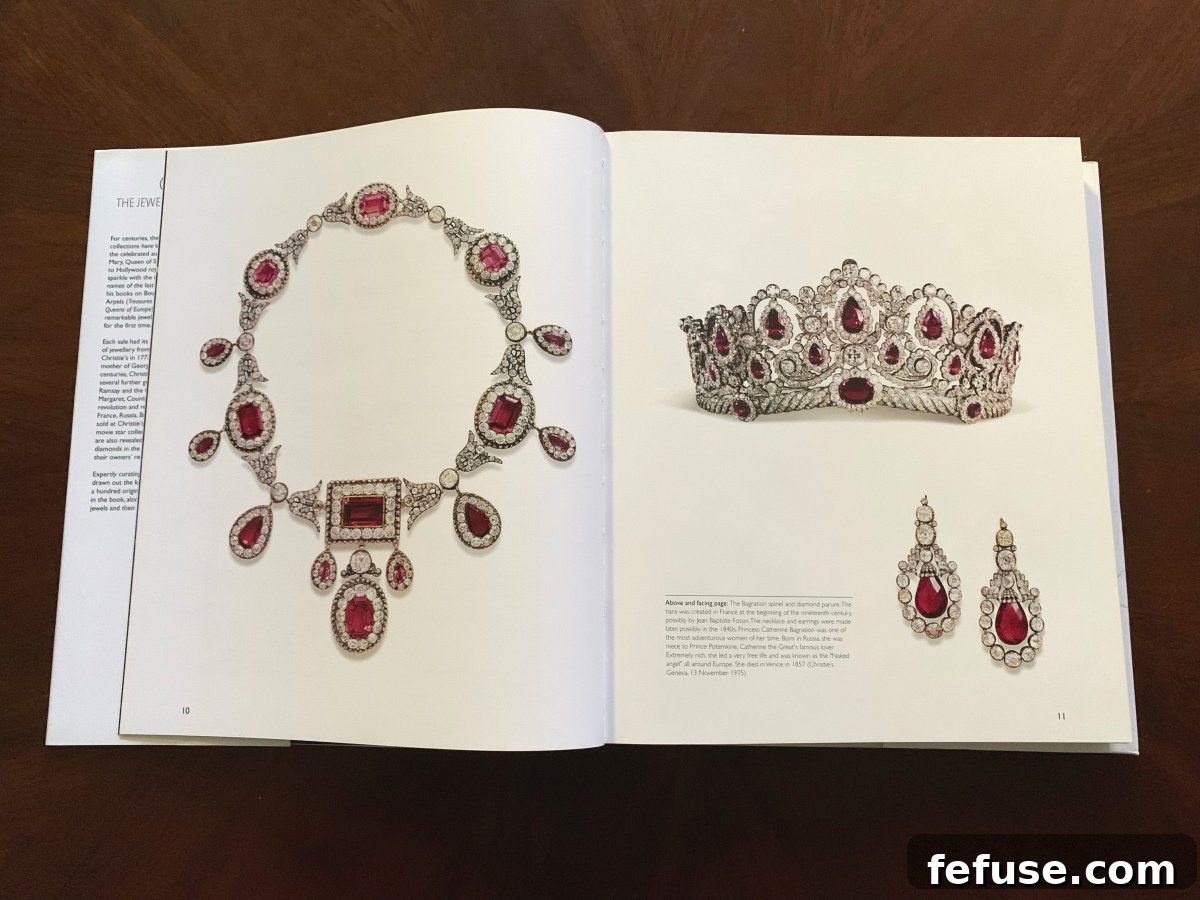
For her momentous wedding day, Natalia chose to wear a truly spectacular antique tiara, a piece that would become known as the Bagration Tiara. This exquisite diadem is a masterpiece of early nineteenth-century craftsmanship, distinguished by its intricate setting of brilliant diamonds and remarkably rare, dark pink spinels. Its design features a unique twisted base, adding to its distinct character and historical charm. The choice of spinel, often mistaken for ruby due to its vibrant hue, highlights the tiara’s rarity and the discerning taste of its original owner.
The tiara was originally created at the dawn of the 19th century for a truly captivating figure: the Georgian princess, Catherine Bagration. Known for her beauty, intelligence, and often scandalous lifestyle, Princess Catherine was a prominent socialite and diplomatic force in European courts. Born Princess Catherine Pavlovna Skavronskaya in 1783, she married Prince Pyotr Bagration, a celebrated Russian general and national hero. Despite her husband’s military renown, Catherine was famous in her own right for her magnetic personality and unconventional behaviour. She was dubbed “the Naked Angel” by Tsar Alexander I due to her penchant for revealing dresses, and she hosted a glittering salon in Vienna, often influencing political affairs.
Crafted in Parisian Workshops
The Bagration Tiara itself was crafted in France, the epicentre of haute joaillerie during that period. While the exact artisan remains a subject of historical debate, it is widely believed to have been created by or under the direction of skilled jewellers associated with the renowned Nitot family. Jean-Baptiste Fossin, a celebrated jeweller who initially worked for the Nitot firm before eventually acquiring it (a business that would later evolve into the iconic house of Chaumet), is often credited with its creation or design influence. This connection to such a prestigious lineage of French jewellers further enhances the tiara’s historical importance and artistic merit, placing it firmly within the pantheon of European royal jewels.
The use of spinel in the tiara is particularly noteworthy. While often overshadowed by diamonds, rubies, and sapphires, spinel is a gemstone with a rich history, cherished by monarchs and aristocrats for centuries. Its exceptional hardness, brilliant lustre, and wide range of vibrant colours, especially the intense reds and pinks seen in the Bagration Tiara, make it a truly spectacular jewel. The Bagration spinels, with their deep pink hue, are especially rare and contribute significantly to the tiara’s unique aesthetic and considerable value, making it a true collector’s item.
A Precious Acquisition: The Bagration Parure at Christie’s
Over time, the Bagration Tiara became part of a larger, coordinated set of jewels – a parure – which included a matching necklace and a pair of exquisite earrings. Such parures were highly fashionable in the 19th century, designed to create a harmonious and magnificent ensemble for grand occasions. The complete Bagration Parure, therefore, represented an even more significant treasure, embodying the elegance and grandeur of its era.
In the 1970s, this historically significant set resurfaced, offered for auction at the prestigious Christie’s auction house. The sale of such a complete and historically rich parure was a major event in the world of antique jewellery, attracting considerable attention from collectors and connoisseurs worldwide. Auctions like these serve as crucial moments in the life of historical jewels, often marking transitions in ownership and sometimes even revealing previously unknown details about their provenance and design. For more in-depth information about this fascinating sale and the broader context of significant jewellery auctions, Vincent Meylan’s exceptional book, Christie’s: The Jewellery Archives Revealed, offers unparalleled insights and detailed accounts.
It was at this pivotal auction in 1977 that Gerald Grosvenor, then Earl Grosvenor, seized the opportunity to acquire the entire Bagration Parure. His decision to purchase the complete set for his fiancée, Natalia, as an engagement present, was a deeply romantic and profoundly generous gesture. This act not only presented Tally with an extraordinary piece of jewellery but also ensured the preservation of a historical parure, bringing it into the distinguished collection of the Dukes of Westminster. The acquisition of such a significant piece underscored the family’s appreciation for heritage and their commitment to maintaining a collection of world-class jewels.
The purchase of the Bagration Parure by Gerald Grosvenor marked a new chapter for these centuries-old jewels. It meant that the tiara, necklace, and earrings would not be separated but would remain together, symbolizing unity and continuity. This move reflected not only immense wealth but also a profound respect for history and artistry, ensuring that the legacy of Princess Catherine Bagration continued through the elegance of Natalia, Duchess of Westminster.
The Grand Wedding Day: A Tiara’s Moment in the Spotlight
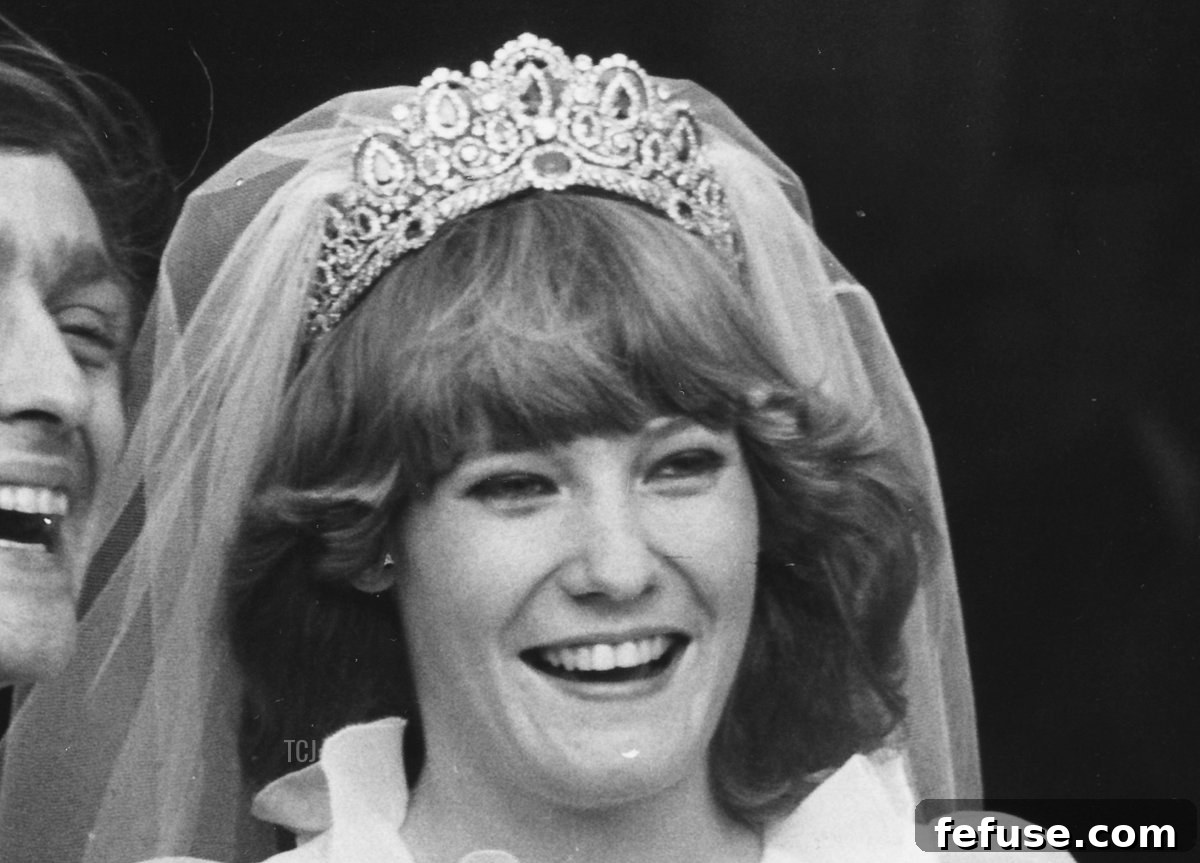
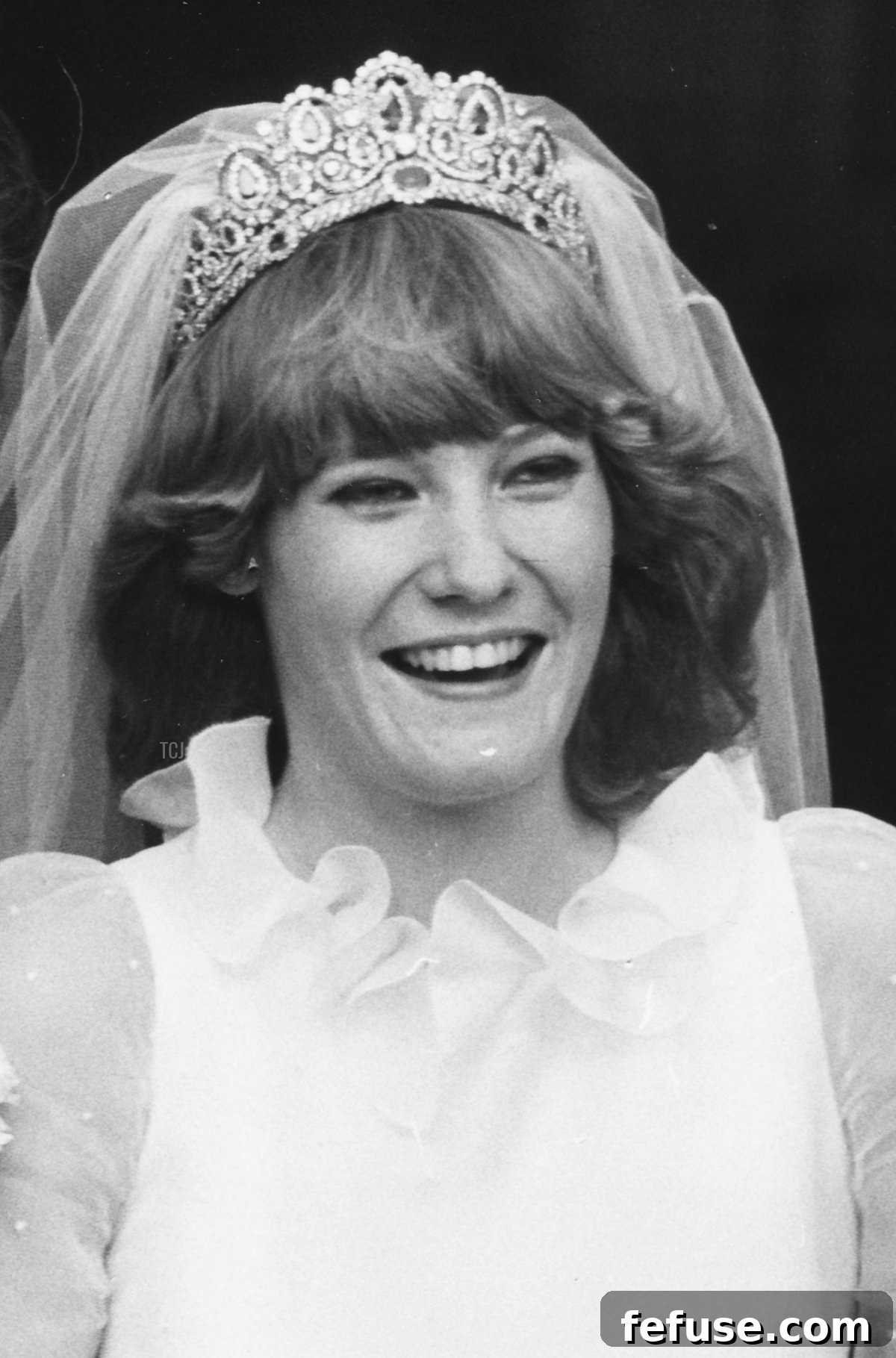
On her wedding day, Natalia, Duchess of Westminster, chose to wear the magnificent Bagration Tiara to secure her delicate tulle veil. This decision perfectly complemented her exquisite silk organza gown, meticulously crafted by the celebrated designer Sarah Butler. The dress, with its charming frilly neckline and cuffs, exuded an air of timeless elegance and sophistication, perfectly harmonizing with the grandeur of the antique tiara. The combination created a bridal look that was both regal and deeply personal, marking Natalia’s entry into one of Britain’s most prominent ducal families.
The nuptials of Natalia Phillips and Gerald Grosvenor were undoubtedly one of the most anticipated and significant society events of 1978. Despite a challenging backdrop – the sudden illness and hospitalization of Gerald’s father, the 5th Duke of Westminster, just before the ceremony – the wedding proceeded, a testament to the family’s resilience and the importance of the occasion. The atmosphere, while tinged with concern for the Duke, was nonetheless celebratory, bringing together an array of distinguished guests from across Britain and Europe.
A Gathering of Royal Dignitaries
The guest list for the Westminster wedding was a roll call of royalty and high aristocracy, reflecting the extensive connections of both families. Among the prominent members of royalty in attendance were Her Royal Highness the Duchess of Gloucester, a senior member of the British Royal Family, and the venerable Lord Mountbatten, a towering figure in both British naval and royal history. From other European houses, there was Princess Margaretha of Sweden along with her husband John Ambler, adding an international dimension to the royal presence. Also present were Prince George and Princess Anne of Denmark, further underscoring the cross-border aristocratic ties. Rounding out the royal contingent were Prince and Princess Michael of Kent, close relations to the British throne, emphasizing the intimate connections shared between the Grosvenors and the Windsors.
The presence of such esteemed guests highlighted the immense social standing of the Grosvenor family and the importance of this marital alliance within British society. The Bagration Tiara, with its own royal and imperial heritage, served as a poignant symbol of the continuity of tradition and the weaving together of historical narratives on this memorable day. It was not merely a piece of jewellery, but a silent participant in a grand celebration, reflecting centuries of history and promising a future of enduring legacy.
Natalia, Duchess of Westminster, wore the tiara with grace, embodying the spirit of its previous royal owner while forging her own path as a modern duchess. Her choice not only showcased the tiara’s magnificent beauty but also brought its fascinating history to a new generation, ensuring its story would continue to be told and admired for decades to come.
The Bagration Tiara remains a testament to exceptional craftsmanship and a profound connection to European royalty. Its journey from Princess Catherine Bagration to Natalia, Duchess of Westminster, through a captivating auction at Christie’s, underscores the enduring allure of historical jewels. These treasures are more than just sparkling adornments; they are custodians of history, embodying personal stories, political landscapes, and the timeless elegance of eras long past. The Bagration Tiara, with its rare spinels and intricate design, continues to captivate, solidifying its place as one of the most remarkable pieces in ducal collections, admired for both its aesthetic beauty and its rich, compelling narrative.