
Boosting India’s Gem & Jewellery Exports: Union Minister Suresh Prabhu Interacts with Industry Leaders for Strategic Growth
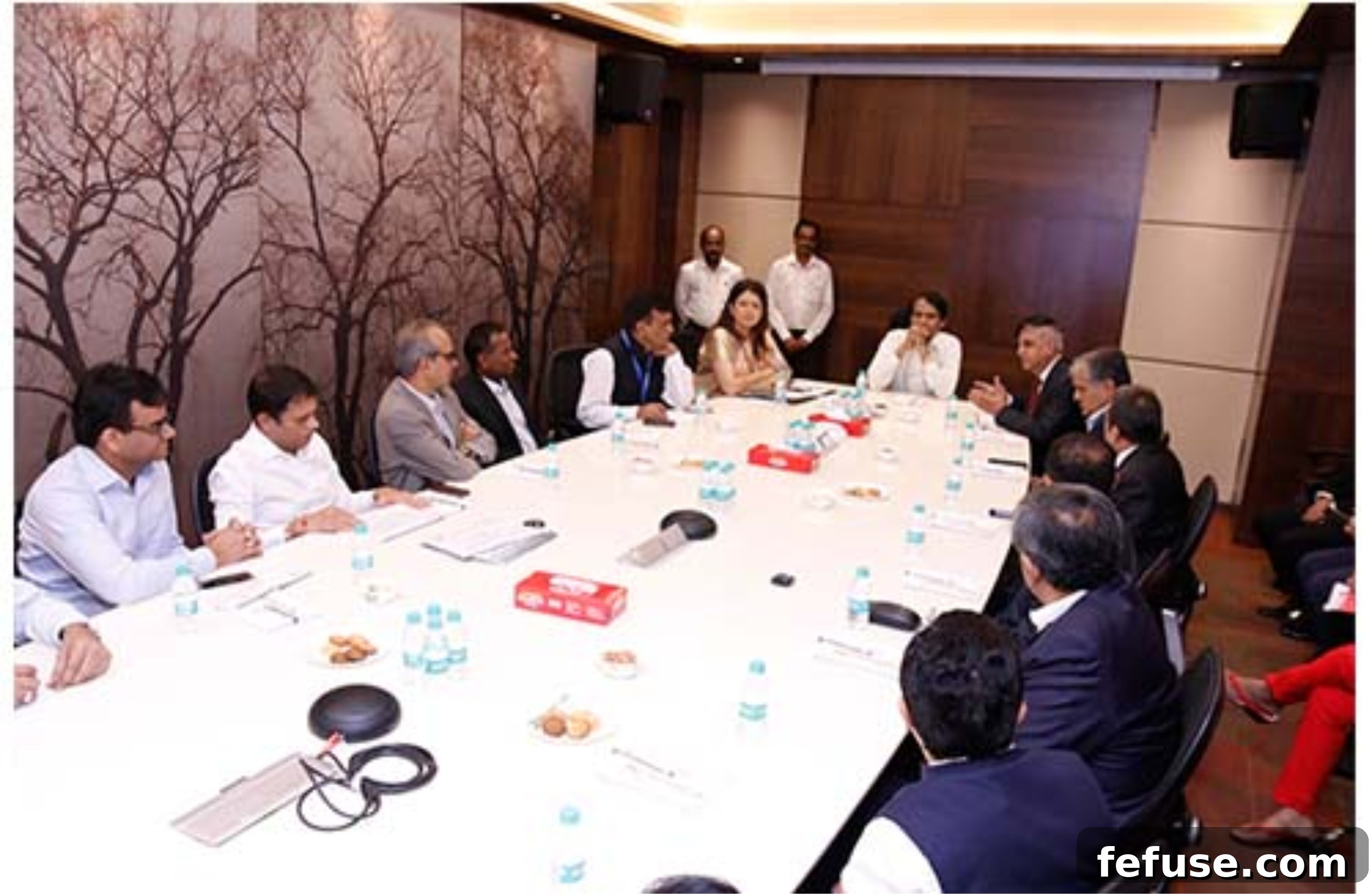
The Indian gem and jewellery sector, a pivotal contributor to the nation’s economy and a significant employer, recently welcomed the Hon’ble Union Minister for Commerce & Industry, Shri Suresh Prabhu. In a highly anticipated maiden visit to the offices of The Gem & Jewellery Export Promotion Council (GJEPC) and the Bharat Diamond Bourse (BDB), Minister Prabhu engaged in a crucial dialogue with a high-level delegation from the trade. This delegation comprised esteemed committee members from both the GJEPC and BDB, representing the diverse facets of this vibrant industry. The occasion was further graced by the presence of Addl DGFT Dr Sonia Sethi, IAS, and other distinguished government officials, underscoring the government’s commitment to supporting the sector.
This interaction marked a significant opportunity for the industry to present its achievements, articulate pressing concerns, and propose actionable recommendations directly to the Minister, who had recently assumed charge of this vital portfolio. The exchange highlighted the collaborative spirit between the government and the industry, aiming to unlock the full potential of India’s gem and jewellery exports on the global stage.
A Strategic Dialogue for Sectoral Growth and Global Leadership
During the comprehensive presentation delivered to Minister Prabhu, Praveenshankar Pandya, the esteemed Chairman of the GJEPC, meticulously outlined the remarkable achievements of each distinct segment within the gem and jewellery industry. He eloquently detailed their collective and individual contributions to the Indian economy, emphasizing the sector’s role in foreign exchange earnings, employment generation, and fostering skilled craftsmanship. Beyond highlighting successes, Chairman Pandya also adeptly brought to the Minister’s attention a series of pertinent concerns and formidable challenges currently faced by the industry, offering well-considered recommendations for each of these critical points.
Praveenshankar Pandya’s Comprehensive Industry Overview
The Chairman’s presentation served as a holistic overview of the sector’s health, aspirations, and strategic needs. It underscored the dynamic nature of the industry, which encompasses everything from diamond mining and processing to gold refining, intricate jewellery manufacturing, and the trade of exquisite coloured gemstones and silver artefacts. Each segment, while unique in its operational nuances, collectively forms a formidable force in India’s export economy. The presentation aimed not just to inform but to solicit governmental support and policy interventions that would foster an even more conducive environment for growth, innovation, and global competitiveness.
Key Recommendations for Enhancing Competitiveness and Exports
The core of Chairman Pandya’s presentation lay in its specific, segment-wise recommendations, designed to address the unique challenges and capitalize on the opportunities within each area of the gem and jewellery industry. These proposals were carefully crafted to ensure India’s continued prominence as a leading player in the international market.
Streamlining the Diamond Sector: Taxation, Finance, and Policy Reform
For the highly intricate and globally significant diamond sector, Chairman Pandya articulated several critical needs. Foremost among these was the urgent requirement for a presumptive taxation system. He explained that implementing such a system would significantly simplify the tax compliance process, reduce administrative burdens, and create a more predictable and transparent tax regime, thereby attracting more investment and fostering greater efficiency within the trade. This move is anticipated to align India’s tax framework with international best practices, making the Indian diamond industry even more attractive for global players.
Accompanying this was the plea for a clear and supportive policy to allow job work in the diamond sector. Such a policy would enable businesses to outsource specific processes like cutting, polishing, or assortment, thereby enhancing operational flexibility, optimizing resource utilization, and creating more opportunities for smaller, specialized units. This structural change is vital for maintaining India’s cost-effectiveness and competitive edge in diamond processing.
Furthermore, the Chairman stressed the crucial need for the effective and timely implementation of the Merchandise Exports from India Scheme (MEIS). These export incentives are fundamental in offsetting infrastructural inefficiencies and other costs faced by exporters, ensuring that Indian diamonds remain competitively priced in international markets. Delayed or inadequate implementation of such schemes can significantly dampen export enthusiasm and profitability.
Finally, a perennial concern for the capital-intensive diamond trade is the availability of adequate financial support. Chairman Pandya highlighted the urgent need for robust support from banks to finance the trade. He elaborated on how accessible and affordable credit, particularly working capital, is the lifeblood of the diamond industry, enabling businesses to procure rough diamonds, manage inventory, and execute export orders seamlessly. Strengthening banking support would not only stabilize the sector but also facilitate its expansion and technological upgrade.
Revitalizing the Gold and Gold Jewellery Sector: Duty Rationalization and Accessibility
The gold and gold jewellery sector, with its rich heritage and significant export potential, also presented its specific set of challenges and recommendations. A primary concern was the high import duty on gold, currently standing at 10%. The Chairman fervently requested a reduction of this duty to 4%. He argued that such exorbitant rates indirectly encourage unscrupulous trade practices, including smuggling, which not only deprives the government of legitimate revenue but also severely hampers the growth and formalization of the legitimate trade. A lower duty, he posited, would formalize the market, boost legal imports, and make Indian gold jewellery more competitive globally.
Beyond duty reduction, the Chairman requested the government to ensure the easy and uninterrupted availability of duty-free gold for exporters. This is paramount for manufacturers to meet international orders promptly and cost-effectively, without facing supply chain bottlenecks or additional financial burdens. Consistency in raw material access is crucial for maintaining production schedules and export commitments.
Moreover, similar to the diamond sector, adequate credit and working capital for Micro, Small, and Medium Enterprises (MSME) companies involved in gold jewellery manufacturing were underscored as critical. MSMEs form the backbone of this sector, and their ability to innovate, scale production, and invest in modern technology heavily relies on accessible and affordable financing solutions.
Fostering Innovation and Market Reach Across the Industry
Beyond sector-specific recommendations, Chairman Pandya also put forth broader proposals aimed at bolstering the overall ecosystem of the Indian gem and jewellery industry.
He mooted the visionary idea of setting up dedicated jewellery parks across the country. These parks would serve as state-of-the-art manufacturing and design hubs, providing skilled artisans and those operating in small, often unorganised handmade production units with unparalleled access to modern technology, shared infrastructure, design facilities, and training. This initiative would not only enhance productivity and quality but also create a collaborative environment conducive to innovation and significant job creation, further solidifying India’s position as a global manufacturing hub for jewellery.
A strong emphasis was also placed on the need for generic promotion of both diamonds and jewellery manufactured in India. Such promotional campaigns are vital for building a strong ‘Brand India’ image in international markets, distinguishing Indian craftsmanship, and boosting overall demand. Generic promotion efforts can help counter misconceptions, highlight ethical sourcing, and drive exports, thereby indirectly fostering employment across the entire value chain.
Finally, the Chairman made a crucial request concerning regulatory practices, asking the Minister to ensure that search and seizure operations by authorities need to be halted for the gems and jewellery industry. He argued that such operations, when conducted without proper justification or in an overly disruptive manner, create an atmosphere of fear and uncertainty, hampering legitimate business operations and discouraging investment. A more supportive and trust-based regulatory environment is essential for the industry to thrive and contribute effectively to the national economy.
Sustaining Growth in Coloured Gemstones and Silver
Addressing the coloured gemstone sector, Chairman Pandya highlighted the critical need for a steady and uninterrupted supply of raw materials. Given the global nature of gemstone sourcing, consistent availability is paramount for manufacturers to remain competitive and meet design demands. He also stressed the importance of support for technology upgradation and skill development initiatives within this sector, enabling artisans to enhance cutting, polishing, and setting techniques, thus adding greater value to Indian coloured gemstones.
Turning to the silver sector, the Chairman requested that the import duty should be on par with other metals, advocating for a level playing field across the precious metals segment. Furthermore, he proposed that silver jewellery must either be nil-rated under GST or taxed at a rate no higher than the earlier indirect tax of 0.5% to 1%. This reduction in taxation is crucial for boosting domestic consumption, formalizing the silver trade, and ensuring that Indian silver jewellery remains affordable and competitive, both domestically and internationally.
Minister Prabhu’s Vision for Global Leadership and Design Excellence
Responding to the comprehensive presentation, Shri Suresh Prabhu acknowledged the importance of the issues raised with regard to the different sectors. He assured the delegation that he would look into these concerns diligently, signaling the government’s openness to constructive dialogue and policy adjustments.
Design, Innovation, and Market Diversification: Pathways to US$60 Billion Exports
Beyond addressing immediate concerns, Minister Prabhu also offered a forward-looking vision for the industry. He underscored the critical need to strengthen design facilities and cultivate a new generation of talented designers who possess the foresight and skill to create products specifically tailored for international markets. He emphasized that innovative design is not just about aesthetics but about creating unique value propositions that resonate with global consumers, helping Indian jewellery move beyond traditional motifs to embrace contemporary trends.
In a strategic move to foster direct market engagement, the Minister suggested that the GJEPC could organise a meeting of select leading retailers from key global markets. Such an initiative would provide invaluable direct feedback, facilitate strategic partnerships, and allow Indian manufacturers to understand international market demands firsthand, thereby streamlining their product development and marketing efforts.
Minister Prabhu then articulated an ambitious goal: for the industry to achieve the vision of US$60 billion in exports. He wisely advised that to reach this target, the industry needed to look beyond the Non-Resident Indians (NRIs) and the Indian diaspora globally. While these segments are valuable, he urged the industry to proactively tap into new, diverse international markets. This diversification strategy involves identifying emerging consumer trends, understanding different cultural preferences, and developing tailored marketing approaches to penetrate untapped geographical regions, ensuring sustainable and exponential growth for India’s gem and jewellery exports.
A Collaborative Path Forward for India’s Gem & Jewellery Sector
The meeting concluded with a renewed sense of purpose and collaboration. The detailed interaction between Union Minister Shri Suresh Prabhu and the industry’s leading representatives underscored the shared commitment to propel India’s gem and jewellery sector to new heights. The dialogue served as a crucial step in addressing long-standing challenges and charting a strategic course for future growth, innovation, and global market leadership. With the government’s supportive ear and the industry’s proactive vision, India is well-positioned to strengthen its legacy as a world leader in the exquisite realm of gems and jewellery.
Pic caption: Union minister Shri Suresh Prabhu holding discussions with gem and jewellery exporters in Mumbai
News Source: gjepc.org