
Nirav Modi Extradition: UK Court Rules Disgraced Jeweller Can Be Sent to India for Trial in $2 Billion PNB Scandal
In a pivotal decision that marks a significant advancement for Indian authorities, a UK court has formally ruled that celebrity jeweller Nirav Modi can be extradited to India. Modi stands accused of orchestrating a monumental $2 billion (£1.44 billion) banking fraud and intricate money laundering scheme, primarily targeting the state-owned Punjab National Bank (PNB). This long-awaited ruling clears a major legal hurdle, paving the way for the once-acclaimed diamond merchant to confront justice in his home country, offering a ray of hope for resolution in one of India’s most notorious financial controversies.
This verdict, delivered after an exhaustive and complex legal process spanning over two years, represents a crucial victory in India’s persistent campaign to bring high-profile economic fugitives back to face trial. For the past two years, Nirav Modi, whose name was once synonymous with unparalleled luxury and international glamour through his exclusive “Nirav Modi Jewels” brand, has been detained in a British prison. His dramatic descent from a global magnate to an international accused has been as astonishing as his rapid ascent, culminating in this court order that unequivocally reinforces the global commitment to tackling sophisticated cross-border financial crime.
The Genesis of Deception: Unravelling the $2 Billion Punjab National Bank Fraud
The allegations leveled against Nirav Modi paint a vivid picture of a meticulously planned and executed financial deception. At the core of this sprawling scandal is a highly sophisticated scheme that purportedly defrauded the Punjab National Bank of an astronomical sum. The alleged modus operandi primarily involved the illicit issuance of Letters of Undertaking (LoUs) and Foreign Letters of Credit (FLCs) through PNB’s Brady House branch in Mumbai. These financial instruments, typically issued by banks to facilitate legitimate international trade, were allegedly misused and manipulated by Modi’s numerous companies with the active connivance of certain corrupt bank officials.
In essence, Modi’s companies, operating through a labyrinthine network of shell corporations, purportedly secured these LoUs and FLCs without providing adequate collateral or engaging in genuine, legitimate business transactions. These fraudulently obtained instruments were then reportedly presented to overseas branches of other Indian banks to obtain short-term credit. This credit, instead of being used for its stated purpose, was allegedly diverted for personal enrichment, to service previous fraudulent loans, and to maintain the illusion of a solvent business empire, thereby creating an intricate and self-perpetuating web of financial trickery. This elaborate mechanism allowed Modi’s enterprises to continuously roll over their debts, effectively concealing the true and escalating extent of the fraud for several years until its dramatic unraveling in early 2018.
The sheer magnitude of the alleged fraud, conservatively estimated at over INR 14,000 crores (approximately $2 billion), sent shockwaves throughout India’s entire banking sector. It provoked serious questions about regulatory oversight, corporate governance standards, and the suspected nexus between powerful individuals and influential financial institutions. The revelation triggered a nationwide crackdown on similar illicit practices and significantly intensified India’s resolve and efforts to pursue and repatriate those who had fled the country after committing grave financial crimes.
Nirav Modi: From Global Luxury Icon to International Fugitive
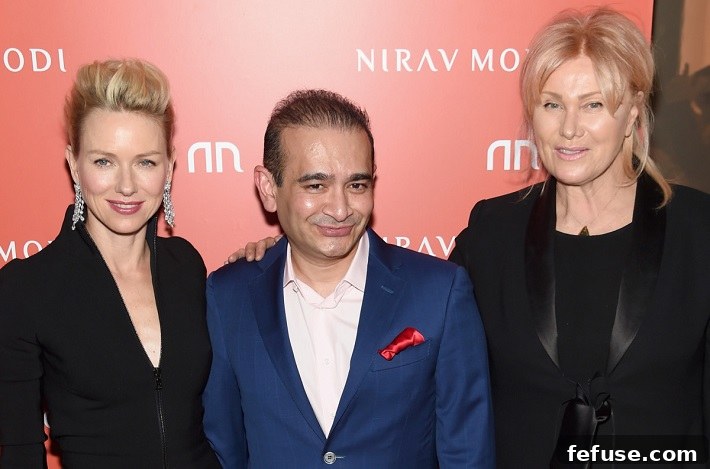
Before the catastrophic scandal broke, Nirav Modi was a name universally recognized in the world of high-end luxury jewellery. His brand, Nirav Modi Jewels, had successfully carved out a prestigious niche for itself on the global stage, proudly boasting opulent boutiques in glamorous and coveted locations such as New York, London, Hong Kong, and Mumbai. His exquisite designs frequently adorned prominent celebrities on red carpet events worldwide, and his high-profile advertising campaigns featured international supermodels, collectively projecting an image of unparalleled sophistication, exclusivity, and monumental success. He was widely celebrated as one of India’s most successful and innovative entrepreneurs, credited with transforming the traditional diamond trading business into a modern, aspirational, and globally recognized luxury brand.
However, beneath this dazzling and glittering façade of success and prestige lay the alleged nefarious foundations of a massive and systematic fraud. When the PNB scam finally came to public light in February 2018, both Nirav Modi and his paternal uncle, Mehul Choksi, who presided over Gitanjali Gems – another equally prominent jewellery chain in India – had reportedly already made their escape from the country. Their sudden and unceremonious disappearance ignited widespread public outrage and significantly intensified the urgency and scope of the subsequent investigation, marking an abrupt and dramatic end to their seemingly invincible and illustrious careers.
Modi’s daring escape and his subsequent prolonged attempts to evade capture and arrest became a high-profile international saga. It took more than a year of concerted effort for British authorities to successfully locate and apprehend him. He was eventually arrested in London in March 2019, following a detailed and compelling extradition request from India, and has since been held at the formidable Wandsworth Prison, awaiting the outcome of the protracted legal proceedings.
Key Allegations Against Nirav Modi:
- Bank Fraud: Alleged involvement in a $2 billion scam through the fraudulent issuance of LoUs and FLCs from Punjab National Bank.
- Money Laundering: Accusations of routing and legitimizing illicit gains through a complex web of shell companies and international transactions.
- Criminal Conspiracy: Charges of conspiring with bank officials and other individuals to execute the large-scale financial fraud.
- Witness Intimidation: Serious allegations of attempting to subvert the criminal investigation by threatening to kill a witness.
The Extradition Battle: Legal Complexities and the Court’s Definitive Stance
The extradition proceedings in the United Kingdom have been characterized by their lengthy duration and inherent legal complexities. Nirav Modi’s formidable legal team mounted an exceptionally vigorous defence against his removal to India. His lawyers argued extensively on a myriad of grounds, including serious concerns over the alleged poor conditions of Indian prisons, potential breaches of his fundamental human rights, and significant claims regarding his mental health. They presented substantial evidence attempting to demonstrate that Modi was suffering from severe clinical depression and that his extradition would inevitably exacerbate his fragile condition, potentially leading to grave consequences, including suicidal ideation.
Conversely, the Indian government, expertly represented by the Crown Prosecution Service (CPS) in the UK, meticulously presented its comprehensive case. They provided detailed and robust assurances regarding the facilities and conditions of Mumbai’s Arthur Road Jail, specifically where Modi would be held. These assurances included explicit provisions for his medical care, mental health support, and overall well-being, effectively countering and discrediting the defence’s arguments. India also submitted an extensive volume of incriminating evidence, encompassing numerous witness statements, detailed financial documents, and corroborating correspondence, all aimed at establishing a strong prima facie case against Modi for fraud, money laundering, and criminal conspiracy.
The UK court, after meticulously considering all presented arguments and scrutinizing every piece of evidence, ultimately concluded that there was indeed a compelling prima facie case for Modi to answer in India. District Judge Samuel Goozee, in his comprehensive and decisive judgment, systematically dismantled the defence’s various claims, noting that the evidence presented by the Indian authorities was robust, credible, and overwhelmingly compelling. He unequivocally stated that the allegations extended far beyond a simple business dispute and clearly pointed towards a deliberate, dishonest, and large-scale scheme meticulously orchestrated by Modi himself.
Crucially, the judge found no substantiated evidence to suggest that Modi would not receive a fair and impartial trial in India or that his fundamental human rights would be violated. The court also thoughtfully addressed the mental health concerns raised by the defence, acknowledging their seriousness but ultimately ruling that they did not sufficiently outweigh the overwhelming and strong case for extradition, especially given the comprehensive assurances provided by the Indian government.
Beyond the Core Fraud: Allegations of Money Laundering and Witness Intimidation
Nirav Modi’s alleged criminal activities extend significantly beyond the initial banking fraud. He faces a barrage of serious charges related to money laundering, which is considered an integral and sophisticated component of the overall scheme aimed at illicitly concealing and legitimizing the vast gains obtained through fraudulent means. The Directorate of Enforcement (ED) in India has been diligently and actively tracing and attaching assets linked to Modi and his various associates, both within India and across multiple international jurisdictions, thereby underscoring the truly global reach and intricate nature of the alleged money laundering operations.
Furthermore, Modi is also gravely accused of actively attempting to subvert the ongoing criminal investigation by allegedly threatening to kill a crucial witness. This extremely serious and chilling allegation underscores the alleged lengths to which he was prepared to go to cover up his tracks, destroy evidence, and obstruct the course of justice. Such severe charges not only significantly add to the overall gravity and complexity of his case but also starkly highlight the immense challenges faced by law enforcement agencies worldwide in dealing with highly sophisticated and often ruthless financial criminals.
His uncle, Mehul Choksi, who was at the helm of Gitanjali Gems, was also inextricably implicated in the sweeping scam and is currently engaged in his own protracted legal battle against extradition from Antigua and Barbuda, where he controversially obtained citizenship. The simultaneous involvement of both these prominent jewellers unequivocally points towards a much larger, intricately interconnected network of alleged fraudulent activities deeply embedded within the Indian jewellery and financial sectors.
The Road Ahead: The Appeal Process and Broader Implications
While the UK court’s definitive ruling represents a monumental hurdle successfully cleared for India, it is imperative to understand that this is not yet the final chapter in this high-stakes legal saga. Reports from respected financial publications such as the Financial Times and other major media outlets consistently indicate that Nirav Modi retains the inherent legal right to appeal this extradition order. His dedicated legal team is widely expected to challenge the decision in the High Court, and potentially even pursue an appeal in the Supreme Court, a complex and lengthy process that could potentially add many more months, if not several years, to his eventual return to India.
Such appeals are a common occurrence in high-profile international extradition cases, and they frequently serve to prolong the legal proceedings significantly. Should Nirav Modi exhaust all available legal avenues within the UK and ultimately lose his appeals, the final administrative decision to extradite him would then ultimately rest with the UK Secretary of State for Home Affairs. Only after receiving this final and crucial administrative approval would Modi physically be handed over to the waiting Indian authorities.
The profound implications of this case are undeniably far-reaching and multifaceted. For India, this ruling sends an unequivocally powerful message that economic offenders cannot simply flee the country and expect to escape accountability indefinitely. It vividly demonstrates the growing effectiveness and strength of international cooperation in combating complex financial crime and provides a much-needed morale boost to crucial investigative agencies like the CBI (Central Bureau of Investigation) and the ED. For the global financial community, this case powerfully reiterates the absolute importance of implementing robust regulatory frameworks, upholding stringent due diligence, and fostering international collaboration to prevent such massive and devastating frauds from occurring again.
The eventual and successful extradition of Nirav Modi, whenever it ultimately materializes, would serve as a powerful deterrent to other potential economic offenders and stand as a profound symbol of India’s unwavering commitment to upholding the rule of law and steadfastly protecting its vital financial integrity. It would mark the culmination of years of relentless pursuit by dedicated Indian agencies and serve as a powerful testament to the perseverance and ultimate triumph of justice.
Conclusion: A Decisive Step Towards Justice and Accountability
The UK court’s landmark decision allowing the extradition of Nirav Modi is undoubtedly a pivotal and defining moment in India’s determined fight against white-collar financial crime. Accused of orchestrating a multi-billion dollar fraud against the Punjab National Bank, engaging in extensive money laundering, and even attempting to intimidate witnesses, Modi’s alleged actions represent an egregious breach of trust and a blatant disregard for legal and ethical principles. While the prospect of further legal appeals may still prolong the process, this definitive ruling firmly establishes that there is an overwhelming and compelling prima facie case for him to answer in India.
This significant development not only brings the long-awaited prospect of justice considerably closer for the Punjab National Bank and the broader Indian public but also powerfully reinforces the fundamental principle that no individual, regardless of their influence, wealth, or former status, is above the law. As the legal battle potentially continues to unfold, the world attentively watches to see the final chapter close in the dramatic and cautionary saga of Nirav Modi, the once-celebrated jeweller now poised on the brink of facing a comprehensive trial in his homeland.