
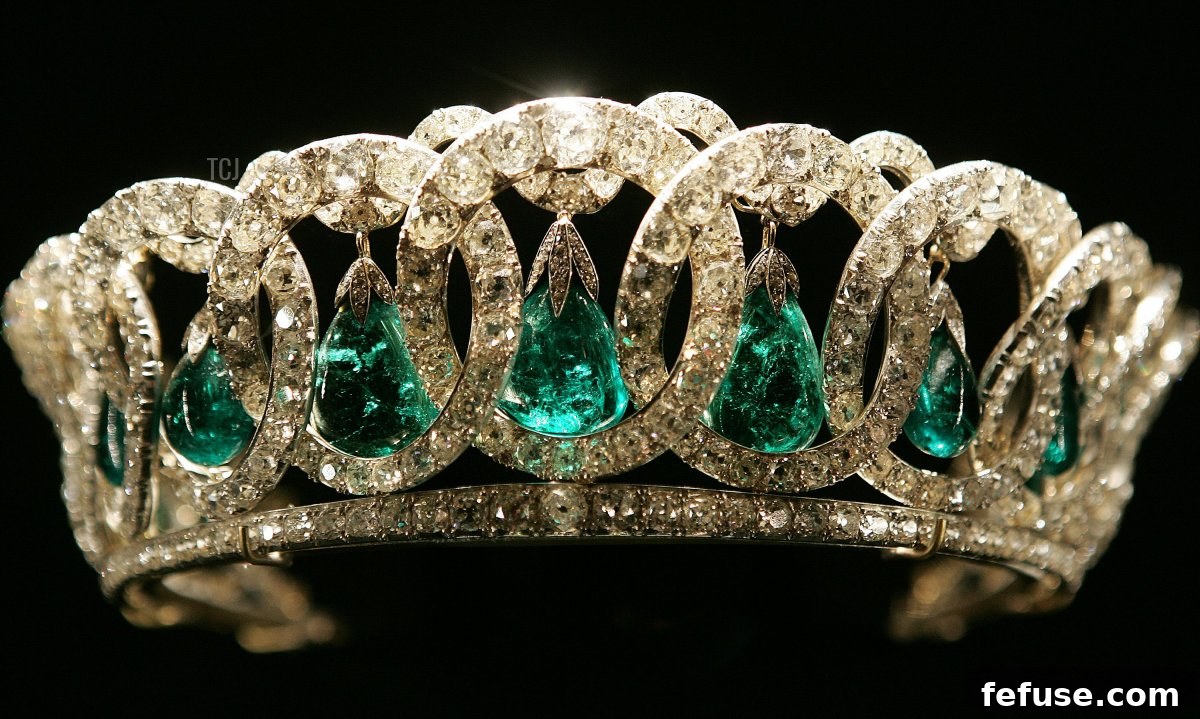
Few collections of royal jewels boast a history as captivating and dramatic as the Cambridge Emeralds. This extraordinary suite of gemstones, with its serendipitous origins, narrow escape from private hands, and eventual magnificent transformation, offers a truly unique glimpse into the world of British royal jewelry. From a humble lottery win in Germany to adorning one of the world’s most recognizable monarchs, the journey of these verdant treasures is a testament to resilience, strategic acquisition, and enduring beauty. Settle in as we unravel the strange, sometimes scandalous, and utterly compelling saga of the Cambridge Emeralds.
The allure of royal jewels lies not only in their intrinsic value but also in the rich narratives they carry. Each diamond, pearl, or emerald tells a story of inheritance, politics, romance, and sometimes, even scandal. The Cambridge Emeralds, vibrant and historically significant, embody all these elements, making them a cornerstone of the British royal collection and a fascinating subject for any enthusiast of royal history and exquisite gemstones.
The Serendipitous Origin: A Lottery Win in Germany
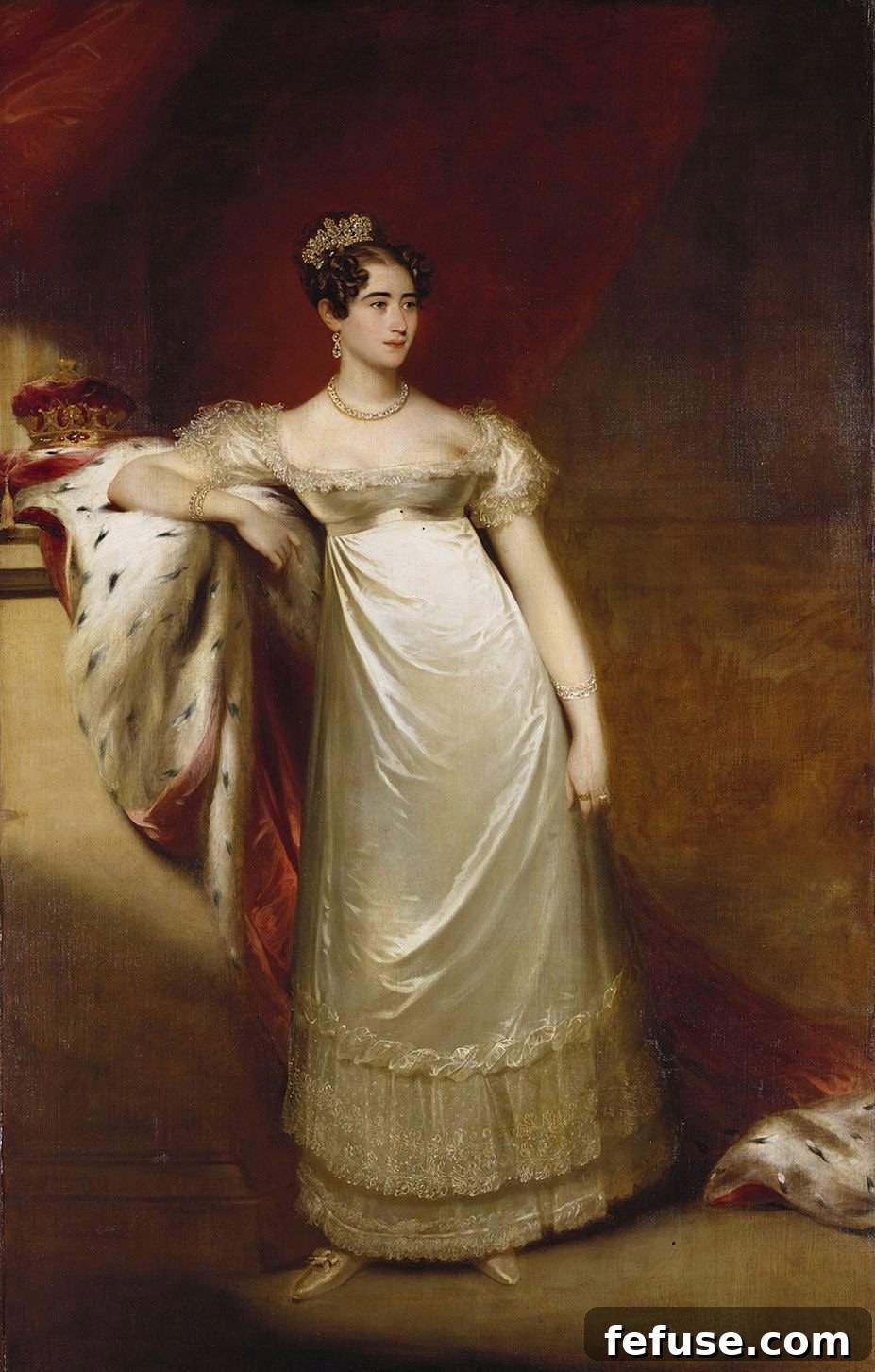
Our tale begins almost two centuries ago, amidst a turbulent period for the British monarchy. Following the untimely death of Princess Charlotte of Wales in 1817, an unexpected crisis of succession prompted the unmarried sons of King George III to hastily seek suitable partners to secure a legitimate heir to the throne. Among them was Prince Adolphus, Duke of Cambridge, the seventh son of the monarch. In 1818, he married Princess Augusta of Hesse-Kassel, a spirited young German royal. The newly wedded Duke and Duchess of Cambridge established their home in Hanover, where Prince Adolphus served as the viceroy, representing the British monarch in the German state.
It was during a visit to her native Hesse that Princess Augusta’s fate, and that of a future iconic royal jewel collection, took an extraordinary turn. While in Frankfurt, she decided, on a whim, to purchase tickets for a state-sponsored charity lottery. Such lotteries were common ways to raise funds for public works or charitable causes. Against all odds, Augusta’s ticket was drawn, winning her a small, unassuming box. Inside, she discovered a treasure trove: approximately forty cabochon emeralds of varying sizes and magnificent deep green hues. These exquisite stones, acquired by such a stroke of luck, were appropriately christened the Cambridge Emeralds, forever linking them to their first royal owner.
From Hanover to Kensington: The First Royal Settings
The personal union between the crowns of Britain and Hanover, which had existed since 1714, came to an end in 1837 upon the ascension of their niece, Victoria, to the British throne. Unlike Britain, Hanover’s Salic Law prevented female succession, meaning the Hanoverian crown passed to Queen Victoria’s uncle, Ernest Augustus, Duke of Cumberland. Consequently, the Duke and Duchess of Cambridge relocated from Germany to England, taking up residence in the iconic Kensington Palace. It was after their move to the United Kingdom that these unique emeralds were finally incorporated into exquisite pieces of jewelry for the first time.
Princess Augusta, Duchess of Cambridge, entrusted an English jeweler with the task of transforming her lottery win into wearable art. The result was a stunning necklace featuring five prominent emerald pendants, each stone showcasing its individual beauty. Complementing the necklace was a pair of elegant drop earrings, designed to perfectly match the larger central stones of the necklace. These initial pieces marked the official entry of the Cambridge Emeralds into the annals of British royal jewelry, establishing their presence within the royal family’s growing collection of precious heirlooms.
The Next Generation: Mary Adelaide and Her Embellishments
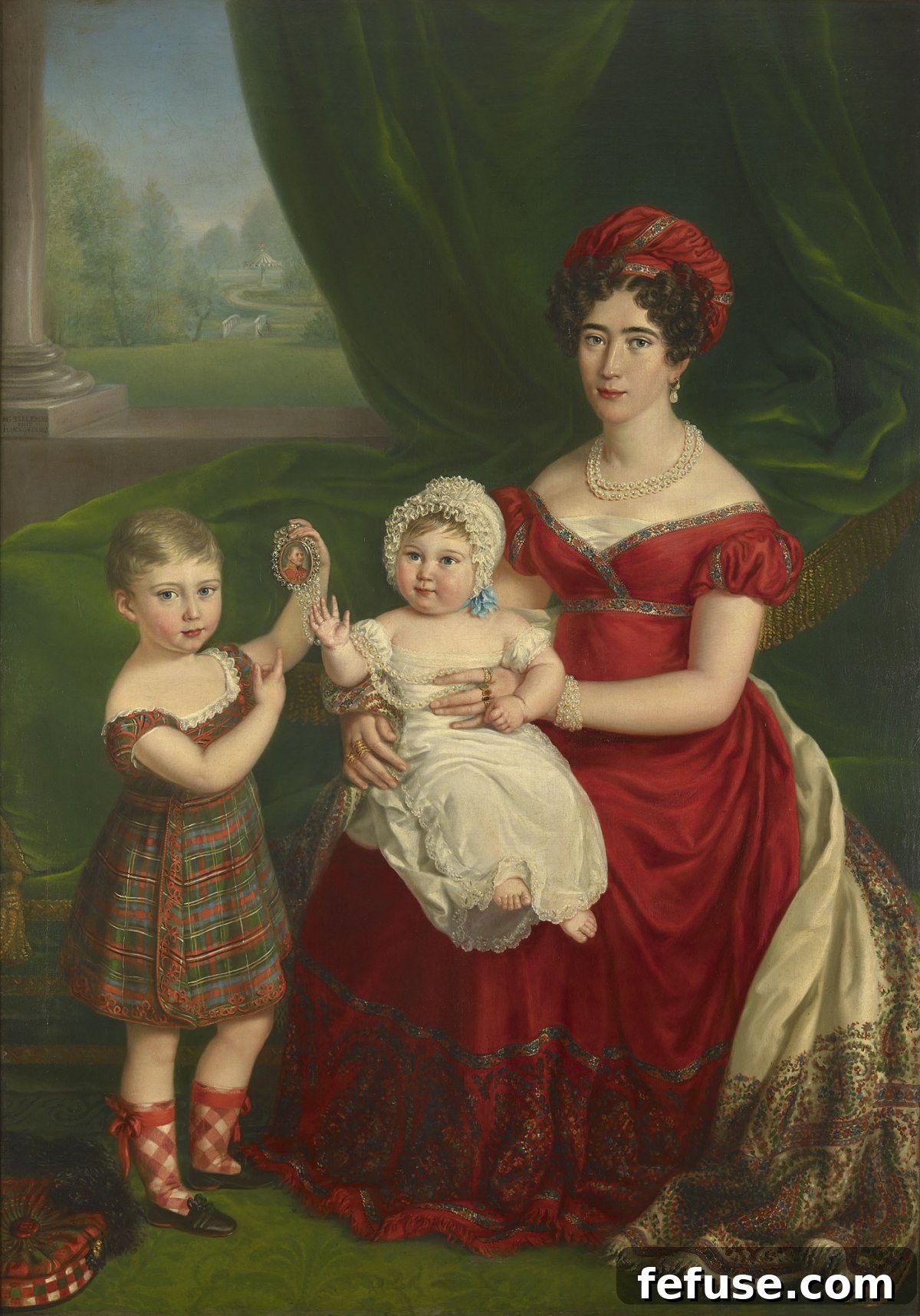
Prince Adolphus and Princess Augusta were blessed with three children who would carry on their lineage: Prince George, who eventually inherited his father’s title as the second Duke of Cambridge; Princess Augusta, who married Frederick William, Grand Duke of Mecklenburg-Strelitz; and Princess Mary Adelaide, who married Francis, Duke of Teck, a member of the royal family of Württemberg. The portrait above, painted in 1823, beautifully captures Augusta with her elder children, George and Augusta, providing a glimpse into the family that would eventually inherit these precious emeralds.
Upon the passing of Princess Augusta, Duchess of Cambridge, in 1889, the youngest of her children, Princess Mary Adelaide, Duchess of Teck, became the proud inheritor of her mother’s prized emeralds. This significant inheritance included the original necklace and earrings, along with a collection of the remaining loose cabochon stones. Mary Adelaide, known for her outgoing personality and considerable stature, was herself a prominent figure in Victorian society, and her acquisition of the emeralds ensured their continued presence within a direct line of the royal family.
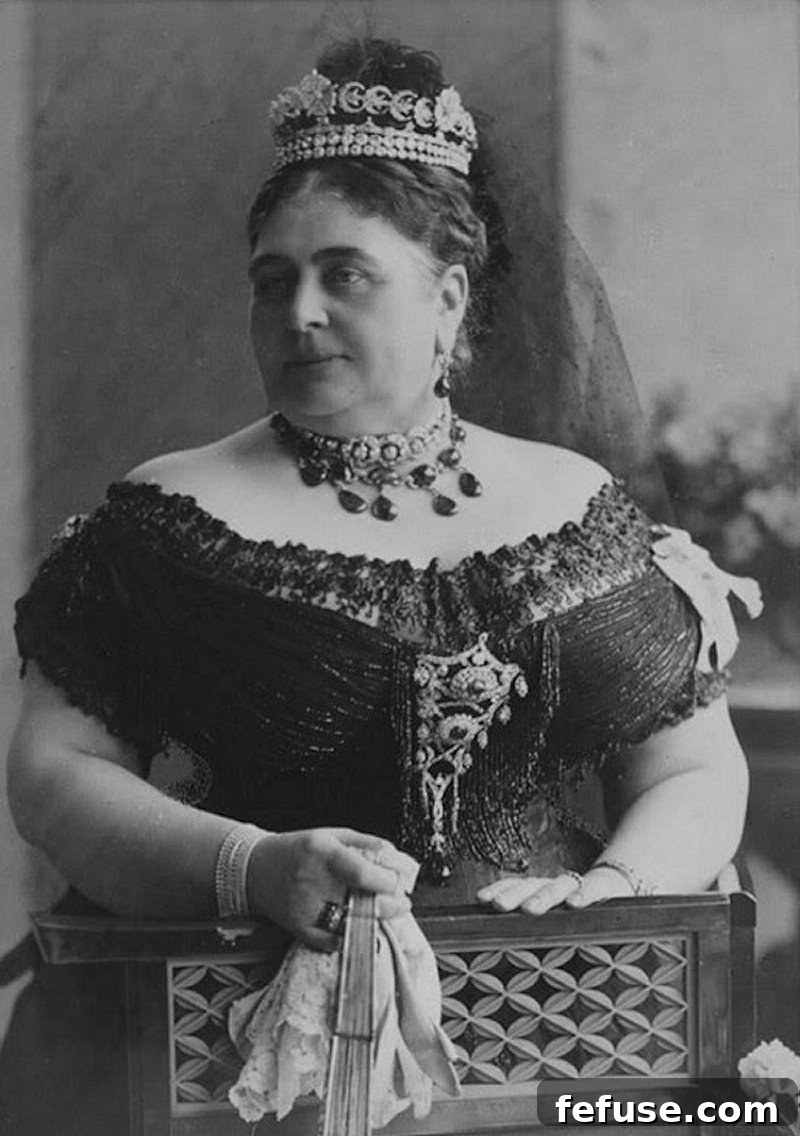
Princess Mary Adelaide treasured the Cambridge Emeralds, keeping the original necklace and earrings intact. However, her creative flair led her to adapt some of the loose stones to enhance her personal collection. She ingeniously used two of the cabochon emeralds to embellish one of her magnificent diamond stomachers. This stomacher, originally crafted by Garrard solely with diamonds, was transformed by Mary Adelaide, who had one emerald centrally placed and another suspended elegantly from the bottom as a pendant. The photograph above, dating from 1893, captures her resplendent in these jewels, proudly displaying the necklace, earrings, and the newly embellished stomacher. She is also notably wearing other significant pieces of her collection, including the Teck Crescent Tiara, which is now worn by the Duchess of Cornwall, and the Teck Hoop Necklace, currently belonging to the Earl of Snowdon.
Ironically, this same year, 1893, marked a pivotal moment for Mary Adelaide’s own daughter, Princess May of Teck, who married the future King of the United Kingdom, Prince George, Duke of York. Princess May had initially been betrothed to the Duke of Clarence, the eldest son of the Prince of Wales, but his unexpected death tragically altered the succession. Her subsequent marriage to his younger brother made her one of the most dynastically important of Mary Adelaide’s children. Yet, despite her future role as queen, Princess May did not inherit the Cambridge Emeralds when her mother, the Duchess of Teck, died unexpectedly in 1897. This surprising turn of events set the stage for one of the most intriguing chapters in the emeralds’ history.
The Scandalous Near-Escape: Prince Francis and Nellie Kilmorey
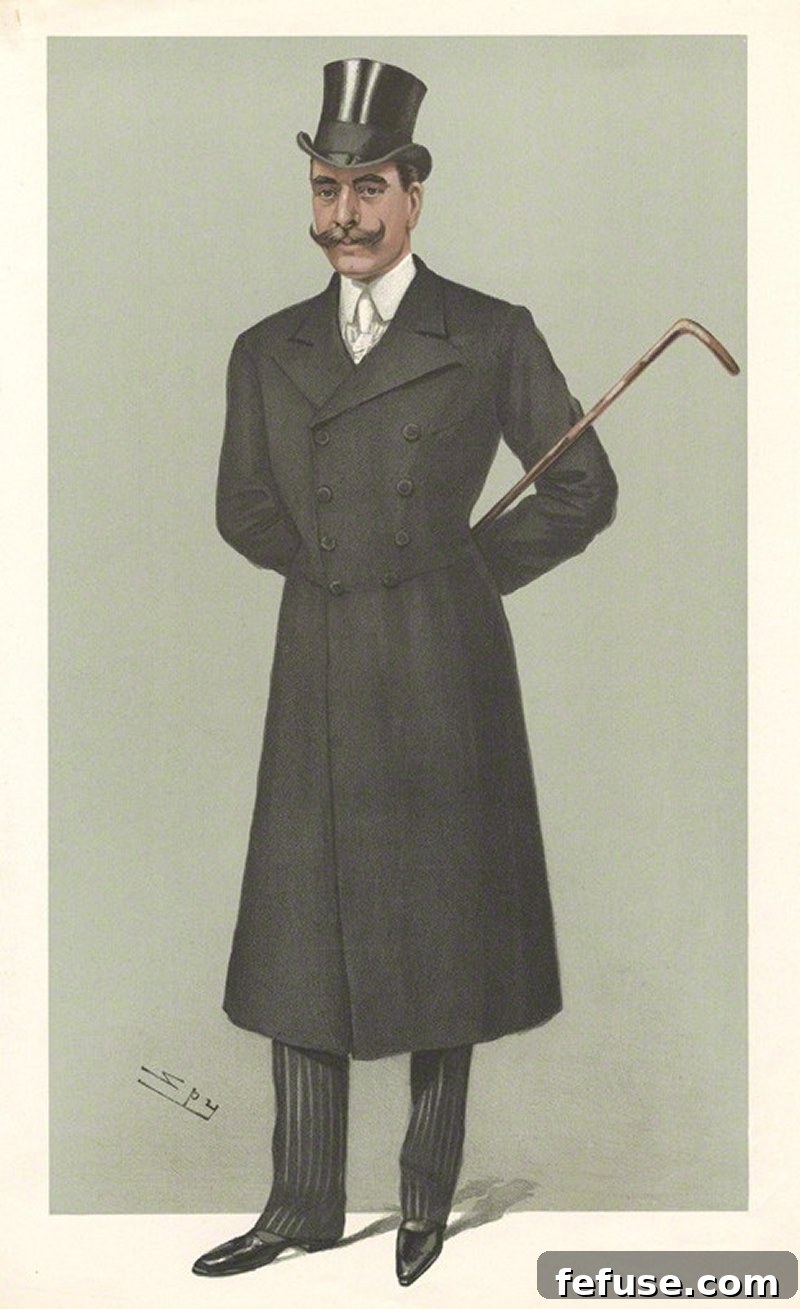
In a twist that could grace the pages of a novel, the Cambridge Emeralds bypassed Princess May and instead were bequeathed to Prince Francis of Teck, the third child of the Duke and Duchess of Teck. This choice was unconventional, particularly as Francis was a lifelong bachelor. He had no wife to wear the magnificent jewels, a factor that would soon lead to a precarious moment in the emeralds’ storied existence. While Francis received the emeralds, his youngest brother, Prince Alexander of Teck, inherited the diamond stomacher from Garrard, albeit without the emeralds that Mary Adelaide had added.
The Cambridge Emeralds very nearly exited the royal collection entirely in 1910, following Prince Francis’s sudden death. It was then revealed that he had made the controversial decision to bequeath the entirety of the emerald collection not to a royal relative, but to his mistress, Nellie, the Countess of Kilmorey. This shocking revelation threatened to remove these historically significant jewels from the British royal family’s possession forever, sparking alarm and indignation within royal circles.
As one can well imagine, Frank’s sister, who would ascend to become Queen Mary just weeks after her brother’s death, was profoundly displeased by the prospect of her grandmother’s precious emeralds falling into private hands outside the royal family. Acting swiftly and decisively, she instructed her lawyers to seal Prince Francis’s will, a practice that, to the consternation of many historians and genealogists, continues to this day for members of the royal family, often shrouding significant personal details in secrecy for decades. With the will secured, Queen Mary wasted no time and approached Nellie Kilmorey directly to negotiate the return of the emeralds. Through the mediation of Frank’s executors—her brothers, Adolphus and Alexander—Mary offered to purchase the jewels from Nellie for a considerable sum of £10,000. Nellie accepted the offer, and thus, Queen Mary successfully repatriated her grandmother’s beloved royal emeralds into the fold. This strategic move by Queen Mary not only prevented a significant historical jewel collection from being lost but also ensured that her own family’s jewels would become a major, integral part of the expanding British royal jewel collection, a testament to her vision and dedication to the crown’s heritage.
The details of this dramatic inheritance remained sealed for over a century until Prince Frank’s will was finally unsealed in 2024, confirming the long-held rumors of his exact plans to leave all of his jewelry to Lady Kilmorey. More comprehensive accounts of this fascinating episode can be explored in issues of the subscriber-supported Substack newsletter, Hidden Gems, specifically here and here.
Queen Mary’s Vision: The Delhi Durbar Parure
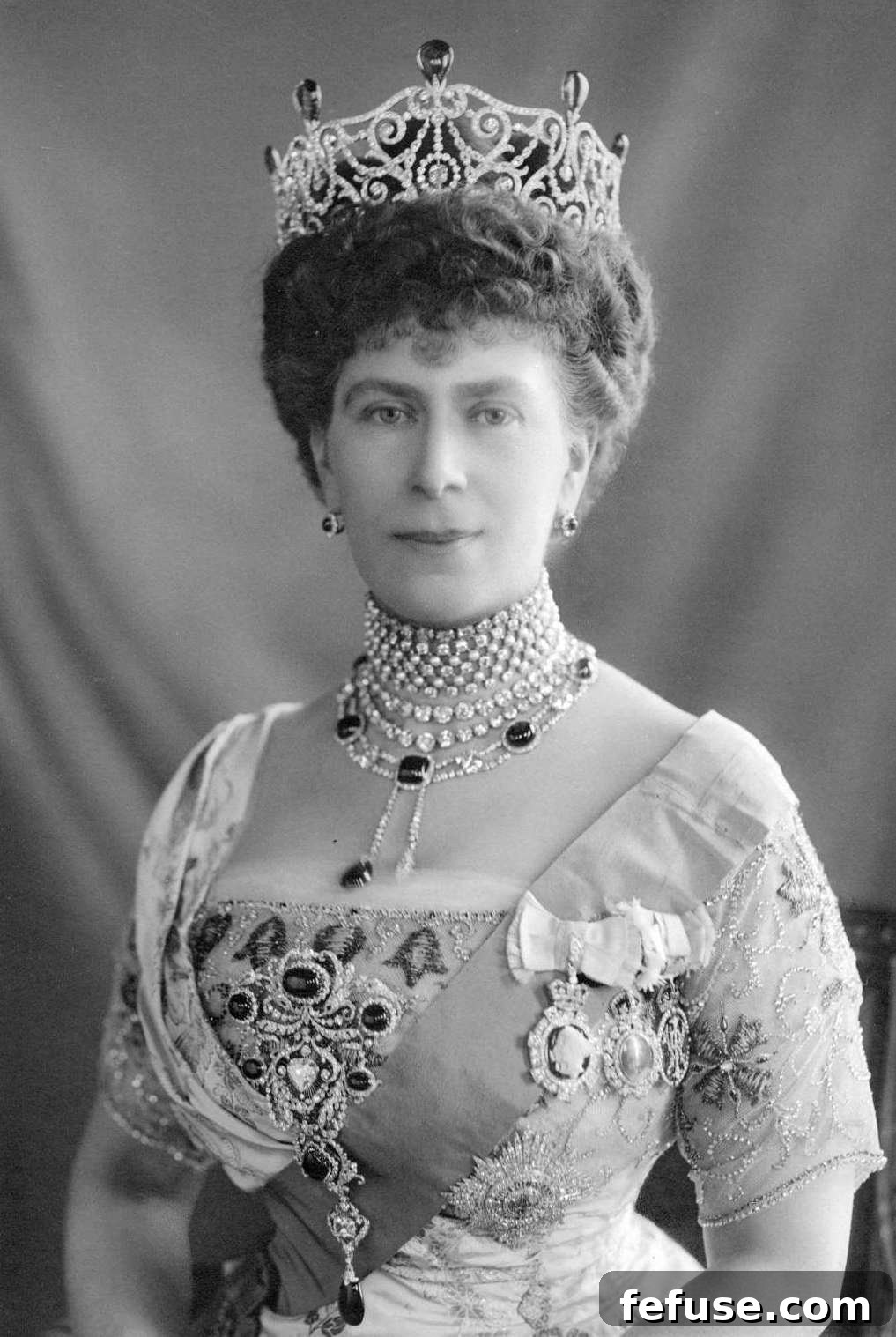
Once Queen Mary had secured the Cambridge Emeralds, she embarked on a mission of innovation and transformation, solidifying her reputation as a masterful curator of royal jewels. For the momentous 1911 coronation in India, known as the Delhi Durbar, King George V and Queen Mary commissioned Garrard, the esteemed royal jewelers, to create an entirely new suite of jewels. This grand parure was designed to reflect the majesty and significance of the event, and it became the perfect canvas for showcasing the newly recovered Cambridge Emeralds.
The jewelers crafted a breathtaking parure that included a majestic tiara, an opulent necklace, a spectacular stomacher, and a coordinating pair of earrings. The Delhi Durbar Tiara, in its original configuration, was crowned with ten of the pear-shaped Cambridge emeralds, elegantly mounted atop a glittering border of diamonds, creating a truly regal spectacle. The parure’s accompanying necklace was set with nine additional Cambridge emeralds, each contributing to its stunning verdant display. The grand stomacher incorporated seven more of these precious stones, while two found their place in the elegant earrings, completing a cohesive and magnificent ensemble that redefined the presentation of the Cambridge Emeralds.
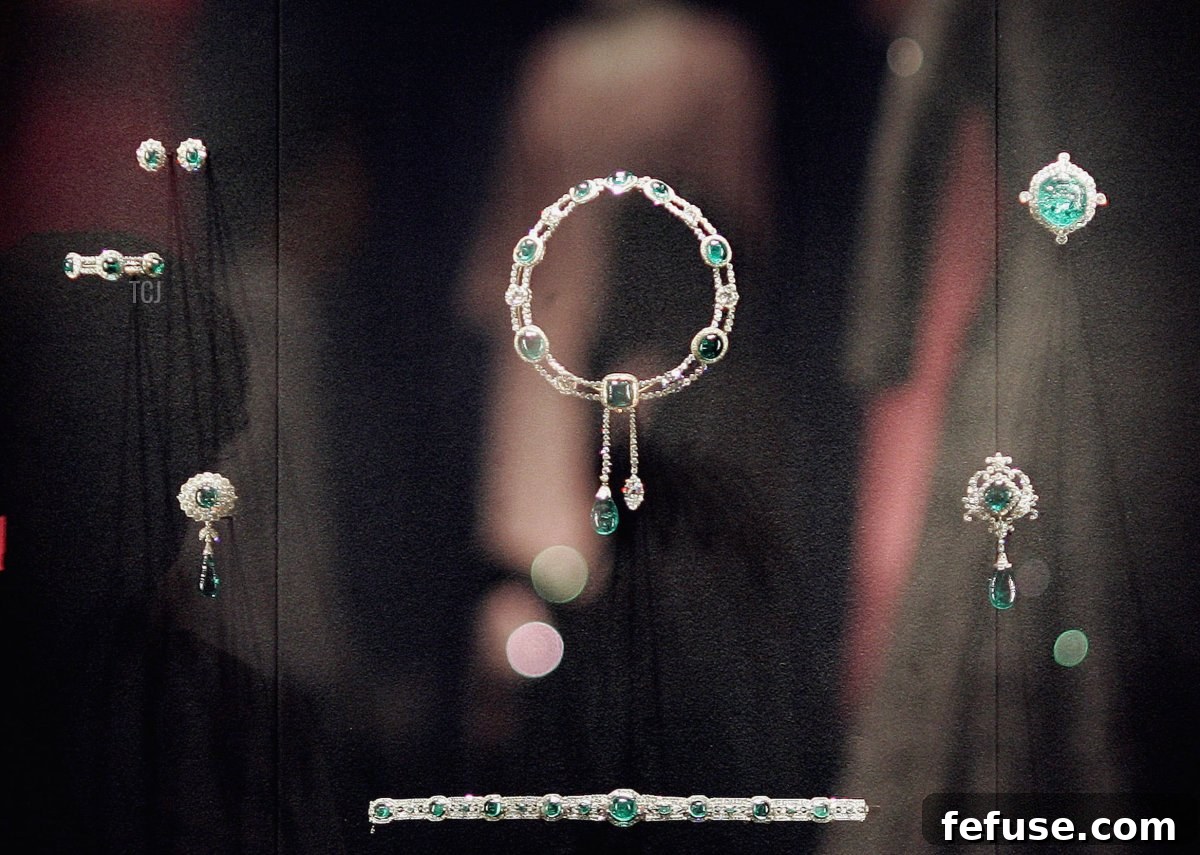
Beyond the main components, the Delhi Durbar set also features other notable emerald pieces. It includes a beautiful carved emerald brooch (visible top right in some displays) that Queen Mary received at the durbar itself, though this particular emerald is not part of the original Cambridge collection. Similarly, the striking choker necklace (seen at the bottom of displays), also a gift from the event, gained widespread fame much later, becoming iconically associated with Diana, Princess of Wales. Today, the extended set additionally comprises a bracelet adorned with three of the Cambridge emeralds, as well as a classic diamond and emerald cluster brooch featuring an emerald pendant, which incorporates two more of the precious Cambridge stones in its exquisite setting.
The Delhi Durbar Parure is exceptionally remarkable for its unique fusion of historical significance and breathtaking opulence. It masterfully combines the highly personal and historically rich Cambridge Emeralds, which belonged to Queen Mary’s own family, with some of the most colossal and impressive diamonds ever discovered within the royal vaults—notably, the legendary Cullinan stones. This deliberate integration of personal heritage with the crown’s most magnificent treasures was a powerful statement. It emphatically declared, “I am your rightful Queen Consort,” by merging her family’s cherished jewels with the grandest pieces of the British royal collection, thereby solidifying her place and vision within the monarchy’s enduring legacy.
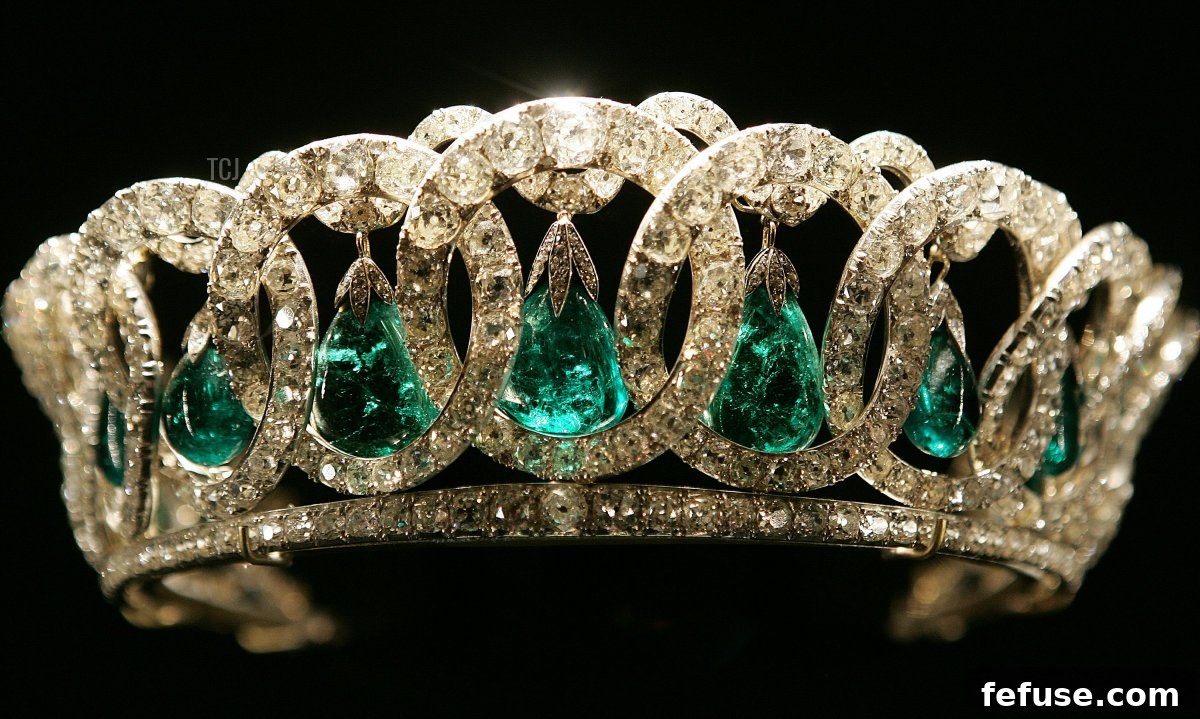
The Iconic Vladimir Tiara: A Royal Masterpiece
Queen Mary’s innovative spirit didn’t stop with the Delhi Durbar Parure. A few years after the grand coronation, she decided to repurpose some of the Cambridge Emeralds. She had the original ten emeralds carefully removed from the top of the Delhi Durbar Tiara and temporarily mounted them on a smaller diamond bandeau, demonstrating her adaptability and continuous desire to refresh the royal collection. However, her plans for these particular Cambridge emeralds were far from complete, as she envisioned an even more prominent setting for them on a major diamond tiara.
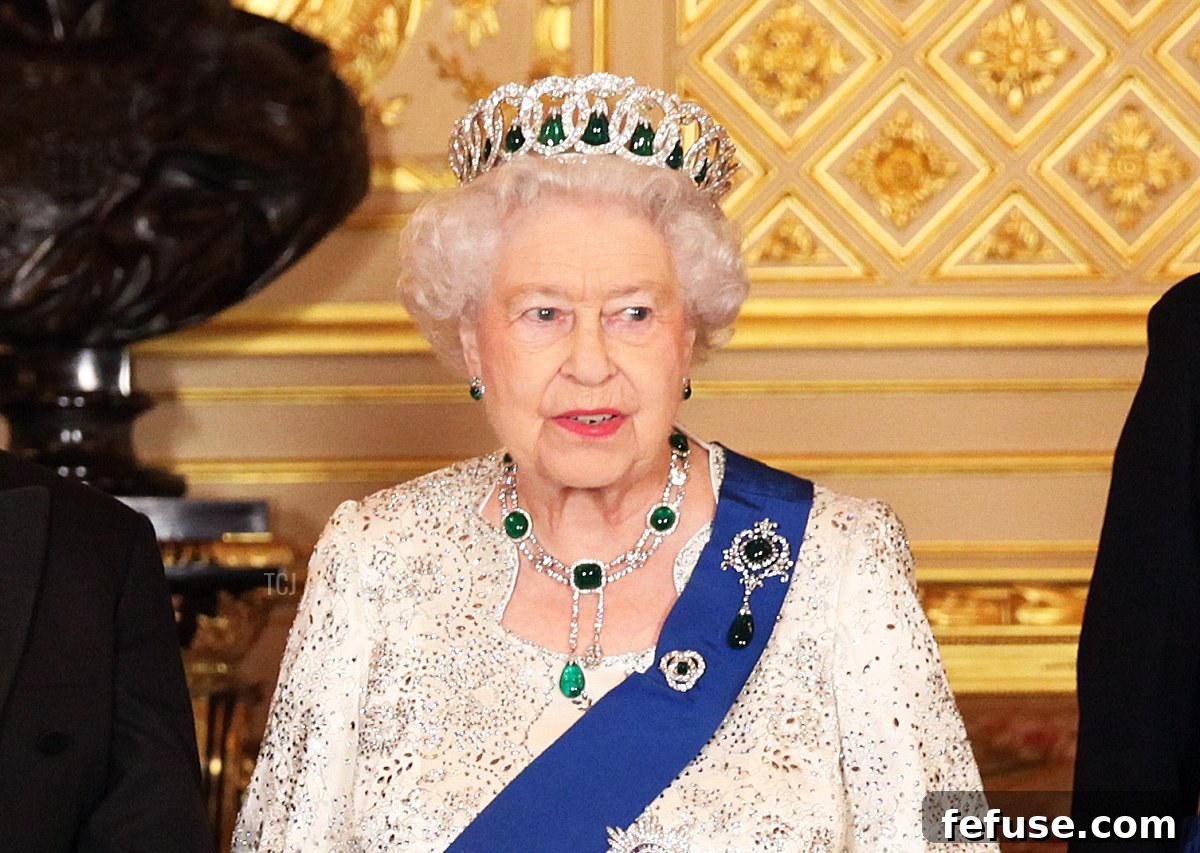
The opportunity arose when Queen Mary acquired the exquisite Vladimir Tiara. This magnificent piece, originally owned by Grand Duchess Maria Pavlovna of Russia, was purchased by Queen Mary from the Grand Duchess’s daughter following the tumultuous Russian Revolution, securing another significant historic jewel for the British Crown. In 1924, Queen Mary brilliantly adapted the Vladimir Tiara to be worn with the Cambridge Emeralds. The ten pear-shaped stones that had previously graced the Delhi Durbar Tiara were skillfully reconfigured to hang as elegant drops within the Vladimir Tiara’s diamond circles. To enhance its splendor further, five additional Cambridge emeralds were incorporated, bringing the grand total of these historic emeralds in the Vladimir Tiara to an impressive fifteen, creating one of the most iconic and recognizable tiaras in the entire royal collection.
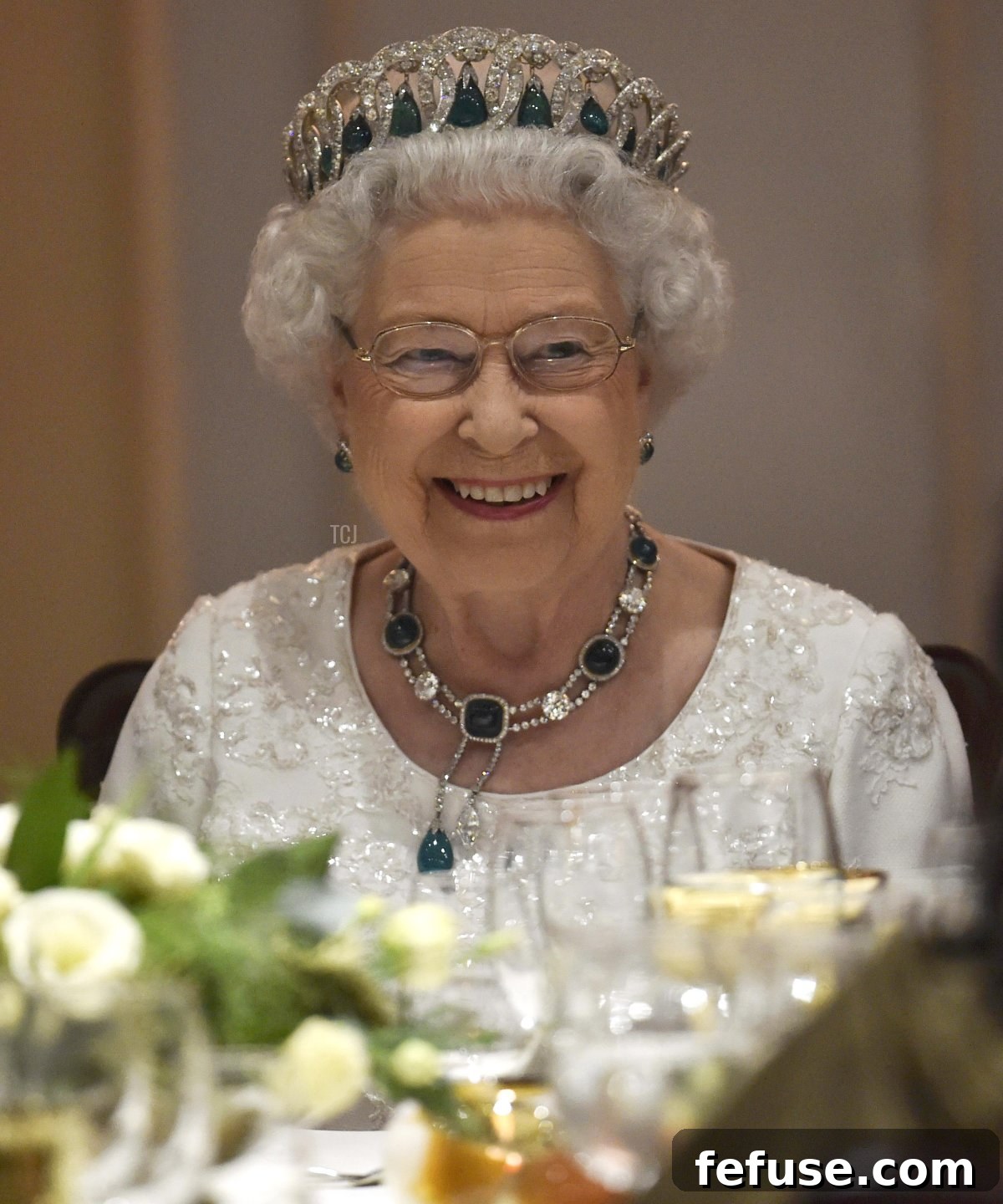
A Living Legacy: The Cambridge Emeralds Today
Today, the Cambridge Emeralds continue their illustrious journey, gracing the current monarch, Queen Elizabeth II, on numerous significant occasions. Her Majesty regularly wears the Vladimir Tiara, resplendent with its emerald drops, and other cherished components of the Delhi Durbar Parure. The original Delhi Durbar Tiara, now without its emeralds, continues to serve the royal family, having been loaned to the Duchess of Cornwall, showcasing the versatility and continued use of these historic pieces within the modern monarchy.
Queen Mary, a figure of immense influence during Queen Elizabeth II’s formative years, left an indelible mark on her granddaughter’s appreciation and stewardship of royal jewels. Consequently, Queen Elizabeth II proudly wears a significant portion of her grandmother’s extensive jewelry collection, honoring a profound lineage and a shared passion for these magnificent treasures. It is a truly exciting prospect to consider that future generations of Queen Mary’s descendants, including the young Princess Charlotte of Cambridge, who embodies the current-day Cambridge princess title, may one day have the privilege of wearing parts of this remarkable emerald set. This collection, born from a humble lottery win and shaped by centuries of royal history, beautifully harks back to her family’s early royal roots, ensuring the enduring legacy and captivating story of the Cambridge Emeralds continue for generations to come, symbolizing continuity, heritage, and the timeless allure of the British monarchy’s jewels.