
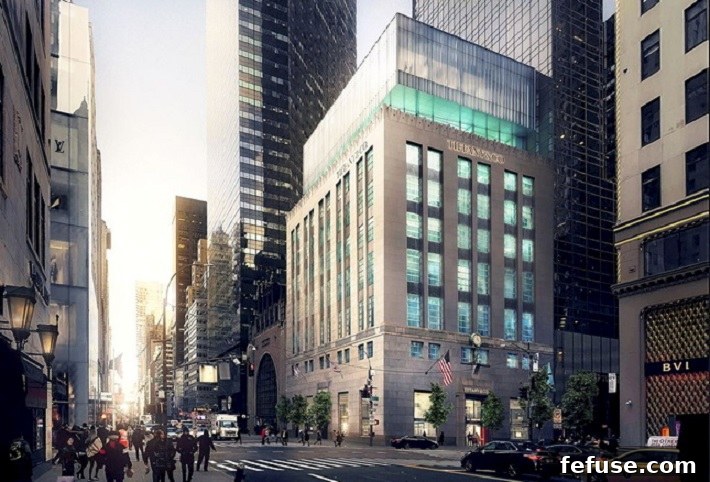
Tiffany & Co.’s Fifth Avenue Flagship Survives Electrical Blaze, A Testament to Resilience
New York City witnessed a dramatic incident at one of its most iconic luxury destinations when an electrical blaze erupted at Tiffany & Co.’s newly renovated $500 million flagship store on Fifth Avenue in Manhattan. The fire, which occurred before the store’s opening hours, drew a massive response from the New York City Fire Department (FDNY), highlighting the critical importance of rapid emergency services in a bustling urban environment and the inherent challenges in protecting high-value commercial properties.
The incident unfolded on Thursday morning, June 29, originating in a basement utility vault. Early television footage captured thick plumes of smoke billowing out from the front of the magnificent building, sending ripples of concern across the city and among luxury retail enthusiasts globally. The swift and decisive action of the FDNY was paramount, with fourteen fire appliances and an impressive eighty firefighters deployed at the peak of the operation, underscoring the potential severity of the situation had it not been contained promptly. Despite the intensity of the smoke and the significant emergency response, the store, rebranded “The Landmark” in April after an extensive three-year renovation, remarkably managed to open its doors to customers later the same day, showcasing an extraordinary degree of operational resilience.
The Landmark: A Symbol of Luxury and Renovation
The Tiffany & Co. flagship on Fifth Avenue is not merely a store; it is a global icon, a cultural touchstone immortalized in popular culture, most notably by “Breakfast at Tiffany’s.” Its recent $500 million renovation, the most ambitious in the company’s history, transformed the building into a modern marvel while meticulously preserving its historic facade. Rechristened “The Landmark,” the store now boasts ten floors of immersive experiences, combining innovative retail concepts with art, design, and unparalleled luxury. This extensive overhaul aimed to redefine the luxury retail experience, integrating advanced technology, new exhibition spaces, and exclusive private salons to cater to a discerning global clientele. The building’s intricate systems, from its power infrastructure to its climate control, represent a significant investment in cutting-edge design and engineering, making the recent electrical fire a particularly concerning event.
The renovation process itself was a colossal undertaking, reflecting Tiffany’s commitment to maintaining its prestige and relevance in an ever-evolving market. It involved a complete reimagining of the interior, creating brighter, more expansive spaces, and introducing contemporary design elements that seamlessly blend with the building’s historical grandeur. Features such as an expansive new exhibition space, a dedicated engagement and wedding salon, and a top-floor private apartment for VIP clients underscore the store’s elevated status. The incident thus placed a spotlight on the safety and integrity of such sophisticated new installations, emphasizing the ongoing need for rigorous maintenance and contingency planning in ultra-luxury retail environments. The quick assessment and reopening of the store were a testament to the robust infrastructure and emergency protocols put in place during and after the renovation.
Unraveling the Electrical Blaze and Emergency Response
The fire’s origin in a basement utility vault points towards an electrical malfunction, a common yet potentially devastating cause of commercial fires. Utility vaults house critical electrical infrastructure, including transformers, switchgear, and cabling, which distribute power throughout the building. Overheating, short circuits, or equipment failure within these confined spaces can rapidly escalate, producing intense heat and dense smoke, as witnessed at Tiffany’s. The location of the fire – pre-opening hours – was fortuitous in terms of minimizing civilian exposure, although two individuals were reportedly taken to the hospital for minor injuries or smoke inhalation, a stark reminder of the inherent dangers involved in such emergencies.
The FDNY’s response was a textbook example of urban emergency management. The deployment of eighty firefighters and fourteen appliances signifies a ‘multiple alarm’ fire, indicating the perceived threat level and the extensive resources required to tackle it. Firefighters navigated through a complex, multi-story structure, dealing with smoke-filled areas and the specific challenges posed by an electrical fire, which requires specialized extinguishing agents and protocols to avoid electrocution. Their ability to contain the fire to the basement utility vault and prevent its spread to the upper retail floors was critical in preserving the structure and its invaluable contents. This successful containment operation allowed for a rapid damage assessment and subsequent reopening, demonstrating exemplary coordination and professionalism.
Safety Protocols and Business Continuity in Luxury Retail
For a brand like Tiffany & Co., operational downtime is not merely an inconvenience; it can significantly impact sales, brand perception, and customer trust. The swift reopening of “The Landmark” hours after the fire underscores the importance of robust business continuity plans and stringent safety protocols in the luxury retail sector. These plans typically include comprehensive fire suppression systems, regular safety drills, clearly defined evacuation procedures, and highly trained staff capable of responding effectively to emergencies. Modern commercial buildings, especially those with significant investments like Tiffany’s, are equipped with sophisticated fire detection systems that can pinpoint the source of a blaze, automatically trigger alarms, and even initiate suppression measures.
Beyond immediate response, post-incident protocols are crucial. This involves detailed investigations into the fire’s cause, thorough safety inspections, and potential repairs to affected systems. The ability to quickly assess structural integrity, air quality, and the functionality of essential utilities allowed Tiffany’s to resume operations, albeit cautiously. This resilience is a key characteristic of successful luxury brands operating in high-stakes environments. It reassures customers and stakeholders that even in unforeseen circumstances, the brand remains committed to delivering its promise of excellence and unparalleled service, while prioritizing the safety of its patrons and employees. The incident serves as a powerful case study in crisis management within the competitive luxury market.
Fifth Avenue’s Enduring Allure and Urban Challenges
Fifth Avenue itself is a dynamic microcosm of New York City’s grandeur and its continuous evolution. As one of the world’s most famous shopping streets, it is home to an array of luxury brands, iconic department stores, and cultural institutions, attracting millions of tourists and shoppers annually. The presence of a fire at such a prominent location naturally garners significant attention, reflecting not just the store’s importance but also Fifth Avenue’s global stature. The challenges of maintaining modern infrastructure within historic buildings along such a vital commercial corridor are considerable. Older buildings often require substantial upgrades to meet contemporary safety standards, while new installations must be meticulously managed to integrate seamlessly and safely.
The incident at Tiffany’s highlights the ongoing balancing act between preserving architectural heritage, embracing modern luxury, and ensuring public safety in dense urban settings. It reinforces the importance of city-wide infrastructure inspections, strict building codes, and responsive emergency services. As New York City continues to thrive and reinvent itself, incidents like these serve as crucial reminders that vigilance and preparedness are non-negotiable, particularly when dealing with complex electrical systems and high-value properties that are integral to the city’s identity and economy. The prompt and effective resolution of the fire at “The Landmark” not only protected a valuable asset but also underscored the city’s robust capacity to manage emergencies efficiently.
Lessons in Vigilance and Future Outlook
The electrical blaze at Tiffany & Co.’s Fifth Avenue flagship, while quickly contained, offers valuable insights into the complexities of modern commercial building safety and the indispensable role of robust emergency preparedness. It serves as a potent reminder for businesses, particularly those with significant investments in sophisticated infrastructure, that proactive maintenance, regular safety audits, and comprehensive emergency response plans are not just regulatory requirements but fundamental pillars of operational resilience. For a brand synonymous with enduring quality and timeless elegance, safeguarding its physical assets and ensuring the well-being of its community is paramount.
In the aftermath, it is highly probable that Tiffany & Co., in conjunction with city authorities and its engineering teams, will conduct a thorough investigation to ascertain the exact cause of the electrical fault and implement any necessary preventative measures to preclude future occurrences. This proactive approach is standard practice in luxury retail, where brand reputation and customer experience are intrinsically linked to perceived safety and reliability. The swift recovery and reopening of “The Landmark” send a strong message of strength and commitment, reinforcing Tiffany’s position as a beacon of luxury on Fifth Avenue, ready to continue dazzling its clientele with brilliance and impeccable service, secure in the knowledge that its foundations, both structural and operational, are built to withstand unforeseen challenges.