
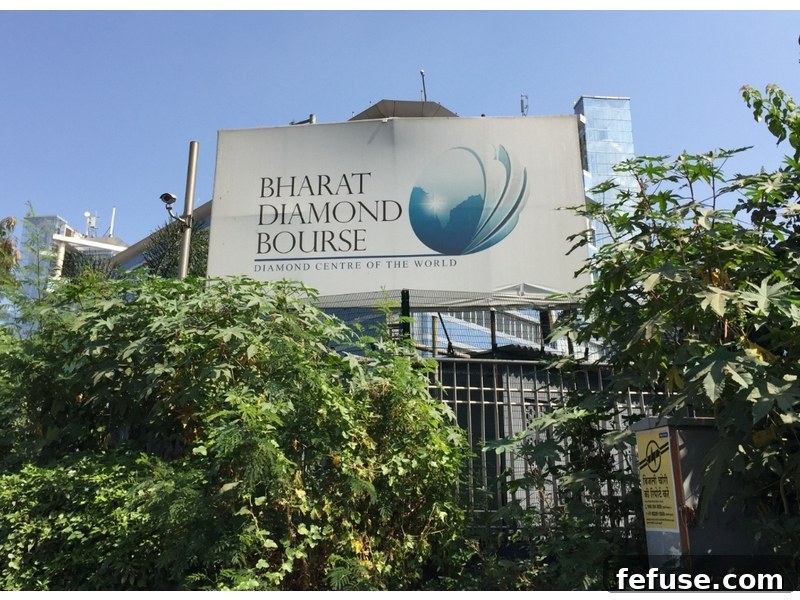
India’s Diamond Hub Poised for a Shift: Bharat Diamond Bourse to Reconsider Lab-Grown Diamond Ban
India stands as the undisputed global leader in diamond processing, meticulously cutting and polishing an astounding 10 out of every 11 rough diamonds traded worldwide. This immense contribution firmly establishes the nation, particularly its vibrant commercial capital Mumbai, at the very core of the international gem and jewellery industry. Within Mumbai, the Bharat Diamond Bourse (BDB) functions as the pulsating heart of this trade, an epicentre where the world’s most precious stones exchange hands. For years, the BDB maintained a strict prohibition on the trade of synthetic, or lab-grown, diamonds. However, a monumental shift is on the horizon, as the BDB’s leadership is now seriously contemplating lifting this ban within the next six months, signalling a transformative moment for the Indian and global diamond market.
The decision to review the long-standing ban comes after considerable deliberation and persistent representations from a growing number of BDB members. Anoop Mehta, president of the BDB, confirmed these discussions, stating, “We have received representations from a number of our members on (allowing the trade of) synthetic diamonds and we will discuss this at the board level before convening an EGM to allow the same in the next five to six months.” This announcement marks a significant pivot from the stance adopted almost a decade ago, reflecting a dynamic response to evolving industry trends, technological advancements, and shifting market demands.
The Genesis of the Ban: Protecting Consumer Trust and Industry Integrity
The BDB initially imposed its ban on the trade of synthetic diamonds in 2015. This decisive action was rooted in profound concerns within the diamond trading community. At the time, the primary fear was the potential for unscrupulous merchants to clandestinely mix lab-grown diamonds with natural stones, thereby deceiving unsuspecting customers. The relatively nascent stage of lab-grown diamond technology, coupled with the challenges in readily distinguishing them from their natural counterparts, fuelled anxieties about eroding consumer trust – the bedrock of the entire diamond industry. For an industry built on rarity, authenticity, and enduring value, safeguarding the integrity of natural diamonds was paramount. The ban was seen as a necessary measure to protect the reputation of Indian diamantaires and maintain the sanctity of the natural diamond market.
A Global Paradigm Shift: DeBeers, Technology, and Market Evolution
Several key developments have profoundly altered the landscape that once justified the ban. Perhaps the most impactful was the entry of global diamond giant DeBeers into the lab-grown market. In September 2018, DeBeers, a company historically synonymous with natural diamonds, launched Lightbox Jewellery, a brand specifically dedicated to marketing lab-grown diamonds. This move sent shockwaves through the industry, effectively lending a significant degree of legitimacy and acceptance to lab-grown stones. If the world’s leading natural diamond producer acknowledged the space for lab-grown diamonds, the fears among traders about their inherent threat to the market began to subside. The move by DeBeers helped to clarify the distinction between natural and lab-grown diamonds, framing the latter as an alternative product category rather than a deceptive substitute.
Beyond DeBeers’ strategic pivot, technological advancements have played an equally crucial role in dismantling the previous barriers. The ability to accurately and efficiently identify lab-grown diamonds has drastically improved. As Anoop Mehta highlighted, “We are now considering approving lab-grown diamond trade because they’ve become easy to identify with technology advancements and adequate machines available with the trade to identify and certify them.” Sophisticated screening and testing equipment are now widely accessible, allowing for clear differentiation between natural and lab-grown diamonds based on their growth patterns, inclusions, and spectroscopic signatures. This technological leap provides the necessary infrastructure for transparency, ensuring that consumers can make informed choices, and mitigating the risk of fraudulent mixing that plagued the industry’s perception just a few years ago.
The Economic Imperative: Affordability and Market Diversification
The economic rationale for embracing lab-grown diamonds is compelling. Bhargav Vaidya, a seasoned CA providing consultancy to prominent diamond firms within the BDB, points to their relative affordability as a major draw. “They could be 30-50 per cent cheaper and are a feasible alternative to the natural diamonds so long as there is a transparent system to identify them,” Vaidya explained. This significant price differential makes lab-grown diamonds highly attractive to a broader consumer base, particularly younger demographics and those seeking larger stones without the premium price tag associated with natural diamonds. The growth of the lab-grown market represents an opportunity for India’s diamantaires to diversify their offerings, tap into new customer segments, and enhance their overall competitiveness in the global market.
For a country like India, which possesses an unparalleled infrastructure and a highly skilled workforce in diamond cutting and polishing, integrating lab-grown diamonds into its trade ecosystem could unlock substantial economic benefits. It could lead to the creation of new jobs, foster innovation in processing techniques, and allow Indian manufacturers to maintain their dominant position across a wider spectrum of the diamond value chain. By embracing this evolving market, India can further solidify its role not just as the world’s leading processor of natural diamonds but also as a key player in the burgeoning lab-grown diamond sector.
Understanding Lab-Grown Diamonds: A Matter of Origin, Not Authenticity
It is crucial to understand that lab-grown diamonds are chemically, physically, and optically identical to natural diamonds. They possess the same sparkle, hardness, and brilliance because they are composed of crystallized carbon, just like their natural counterparts. The fundamental difference lies in their origin: natural diamonds are formed deep within the Earth over billions of years, while lab-grown diamonds are cultivated in controlled laboratory environments using advanced technological processes such as High-Pressure/High-Temperature (HPHT) or Chemical Vapor Deposition (CVD). This distinction of origin is what matters, and with transparent labelling and certified identification, consumers can confidently choose between these two legitimate options.
Moreover, lab-grown diamonds also present ethical and environmental considerations that resonate with a growing segment of consumers. They offer a conflict-free alternative, and their production often involves a smaller environmental footprint compared to traditional mining, although the energy consumption involved in their creation is also a factor. These attributes further enhance their appeal, contributing to their increasing market acceptance and making them an undeniable force in the future of the diamond industry.
India’s Broader Gem & Jewellery Export Landscape
While the debate around lab-grown diamonds captures significant attention, India’s overall gem and jewellery sector continues to be a powerhouse for the national economy. As Colin Shah, vice chairman of the Gem & Jewellery Export Promotion Council (GJEPC), noted, cut and polished diamond exports grew 0.39 per cent in value to $23.8 billion in FY19 from the previous year. This consistent performance underscores the robust demand for India’s skilled craftsmanship in diamond processing. Furthermore, the broader jewellery sector also showcased strong growth, with gold jewellery exports surging by an impressive 24.36 per cent to $12.03 billion from $9.67 billion in FY18. While silver jewellery exports saw a sharp decline of 75 per cent to $837.8 million in FY19, the overall trajectory for the core diamond and gold jewellery segments remains positive and vital to India’s export economy.
The integration of lab-grown diamonds into the BDB’s trading framework could potentially open up new avenues for growth in these export figures. By expanding the product portfolio and catering to a wider range of price points and consumer preferences, India’s gem and jewellery industry stands to gain substantial ground. The GJEPC, along with other industry stakeholders, will play a pivotal role in guiding this transition, ensuring that regulatory frameworks are robust and that India maintains its reputation for quality and integrity across both natural and lab-grown diamond markets.
Looking Ahead: A Future of Coexistence and Growth
The impending decision by the Bharat Diamond Bourse marks a pivotal moment in the evolution of India’s diamond trade. It signifies a mature recognition that the global diamond market is diversifying, and that both natural and lab-grown diamonds can coexist, each catering to different consumer needs and preferences. By embracing lab-grown diamonds, the BDB is not just lifting a ban; it is opening a new chapter for innovation, growth, and market expansion. This strategic move is expected to reinforce India’s position as a forward-thinking and adaptable leader in the international gem and jewellery arena, ensuring its continued prominence in a rapidly changing global economy. The future of diamonds in India appears to be one of transparency, technological integration, and diversified opportunities.