
London — In a landmark move poised to reshape the global gold mining industry, Randgold Resources Ltd and Canada’s Barrick Gold Corp announced on a significant Monday that they had agreed to the terms of a recommended share-for-share merger. This monumental deal, valued at an impressive $18.3 billion, is set to create an undisputed industry leader, boasting an unparalleled portfolio of premium gold assets and a formidable operational footprint across the globe.
The intricate details of the agreement stipulate that each Randgold shareholder will receive 6.1280 new Barrick shares for every share they hold in the African-focused rival. This share exchange mechanism reflects a strategic alignment between the two entities, aiming for a seamless integration and shared future growth. Upon completion of the merger, Barrick shareholders are projected to own approximately 66.6% of the newly formed Barrick merged company, while Randgold shareholders will command a substantial 33.4% stake. This structure underscores a balanced partnership, leveraging the strengths and market presence of both venerable mining houses.
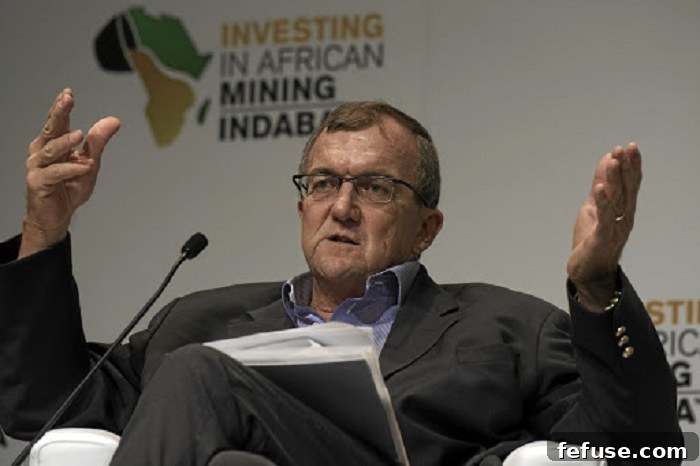
Leadership continuity and strategic vision are at the heart of this transformative merger. Mark Bristow, Randgold’s highly respected and long-serving chief executive, is slated to retain this pivotal role in the new combined entity. His proven track record of operational excellence, disciplined capital allocation, and a deep understanding of African mining environments are expected to be instrumental in guiding the merged company. Complementing Bristow’s operational expertise, Barrick’s John Thornton will assume the critical position of executive chairman, providing strategic oversight and steering the company’s long-term direction. This dual leadership structure aims to combine visionary strategy with hands-on operational acumen, positioning the new Barrick for sustained success.
A New Era of Gold Mining Dominance: Strategic Rationale Behind the Merger
In a joint statement, the boards of Barrick and Randgold articulated a compelling vision for the merger, emphasizing its potential to forge “an industry-leading gold company with the greatest concentration of Tier One Gold Assets in the industry, the lowest total cash cost position among senior gold peers.” This declaration highlights the core strategic drivers behind the deal: asset quality, cost efficiency, and market leadership. The concept of “Tier One Gold Assets” refers to mines that are characterized by large scale, long life, low operating costs, and strong exploration potential, signifying the highest quality of mining operations. By combining their portfolios, the new Barrick will consolidate an enviable collection of such assets, setting a new benchmark for operational excellence and value creation in the sector.
The pursuit of the “lowest total cash cost position” reflects a critical response to ongoing investor pressure within the gold mining industry. For years, gold miners have faced scrutiny from investors for perceived mismanagement of capital, often prioritizing production growth over profitability and shareholder returns. This environment has dampened enthusiasm for large-scale acquisitions, making cost control and capital discipline paramount. Both Barrick and Randgold have felt the impact of these market dynamics, with each company experiencing a significant decline of approximately a third in their market capitalizations over the past year. This merger, therefore, represents a proactive step to address these challenges head-on, promising enhanced efficiencies, reduced overheads, and improved profitability through economies of scale and operational synergies.
Unpacking the Value Proposition: Tier One Assets and Cost Leadership
The combined entity will boast an unparalleled portfolio of gold mines, including Barrick’s highly productive Nevada operations and Randgold’s successful ventures across Africa, such as Loulo-Gounkoto and Kibali. These assets are renowned for their robust production profiles, extensive reserves, and favorable geological characteristics, ensuring a long-term production pipeline. The strategic integration of these world-class assets is expected to unlock significant synergies, from optimized supply chains and procurement to shared best practices in exploration and mine development. This focus on premium assets not only de-risks the production profile but also enhances the attractiveness of the new company to a broader investor base.
Achieving the lowest total cash cost position is not merely an aspiration but a fundamental business imperative in the cyclical gold market. By merging, the companies anticipate realizing substantial cost savings through increased purchasing power, rationalized administrative functions, and the optimization of technical expertise across their expanded operational footprint. Such efficiencies are crucial for maintaining profitability even during periods of fluctuating gold prices and rising input costs. Furthermore, a strong financial position, bolstered by cost discipline, will enable the new Barrick to invest more strategically in exploration and innovation, ensuring sustainable growth and leadership in the evolving mining landscape.
Leadership Vision and Integration Challenges
Mark Bristow’s appointment as CEO of the combined entity is a testament to his reputation as a disciplined operator and a passionate advocate for value creation. His leadership style, characterized by a hands-on approach and a strong focus on empowering local teams, has been a hallmark of Randgold’s success in navigating complex operating environments, particularly in Africa. Under his guidance, the new Barrick is expected to prioritize operational excellence, stringent cost management, and a commitment to responsible mining practices. John Thornton, as Executive Chairman, will play a critical role in shaping the strategic direction, overseeing governance, and fostering strong relationships with stakeholders, including governments and communities.
While the strategic rationale is compelling, the successful integration of two large, geographically diverse companies presents its own set of challenges. Merging corporate cultures, harmonizing operational systems, and rationalizing duplicate functions will require meticulous planning and execution. The new leadership team will need to navigate these complexities adeptly, ensuring that the benefits of the merger are realized without significant disruption to ongoing operations. Furthermore, maintaining talent, fostering employee morale, and effectively communicating the vision for the future will be crucial for a smooth transition and long-term success. The ability to integrate effectively will ultimately determine if the merged entity can live up to its ambitious promise of becoming the undisputed leader in the gold mining sector.
Broader Implications for the Gold Market and Investors
This mega-merger sends a powerful signal to the broader gold mining industry, potentially catalyzing further consolidation among major players. Faced with declining ore grades, increasing operational costs, and persistent investor demand for better returns, other companies may be compelled to explore similar strategic alignments to enhance efficiency and competitiveness. The creation of a dominant entity with such a strong asset base and cost profile could exert pressure on smaller or less efficient producers, prompting a re-evaluation of their strategic options.
For investors, the merger offers a renewed sense of optimism. The focus on Tier One assets and disciplined capital allocation aims to restore confidence in gold mining stocks as viable long-term investments. By demonstrating a clear path to value creation through operational excellence and strategic growth, the new Barrick seeks to attract capital that may have previously shied away from the sector due to concerns over capital mismanagement and underperformance. The combined company’s increased liquidity, diversified risk profile, and robust financial standing are expected to make it an attractive proposition for both institutional and retail investors seeking exposure to the precious metals market.
The Future of Gold Mining: Sustainable Value and Global Footprint
The Barrick-Randgold merger is not merely a transaction; it represents a significant inflection point for the gold mining industry. It champions a model of growth that prioritizes quality over quantity, efficiency over expansion at any cost, and sustainable value creation for all stakeholders. The new entity will command a truly global footprint, with operations spanning North America, Africa, and beyond, providing geographical diversification and mitigating region-specific risks.
Looking ahead, the new Barrick will be well-positioned to navigate the complexities of the global economy, including geopolitical uncertainties, commodity price fluctuations, and evolving environmental, social, and governance (ESG) expectations. With a strong leadership team, a portfolio of world-class assets, and a clear strategic direction focused on cost efficiency and capital discipline, the merged company is poised to redefine what it means to be a leading gold producer in the 21st century. It aims to deliver superior shareholder returns, foster positive relationships with host communities, and contribute to the long-term sustainability of the mining sector. The journey ahead will undoubtedly involve challenges, but the foundation laid by this $18.3 billion merger points towards a future of significant potential and renewed leadership in the global gold market.
News Source: businesslive.co.za