
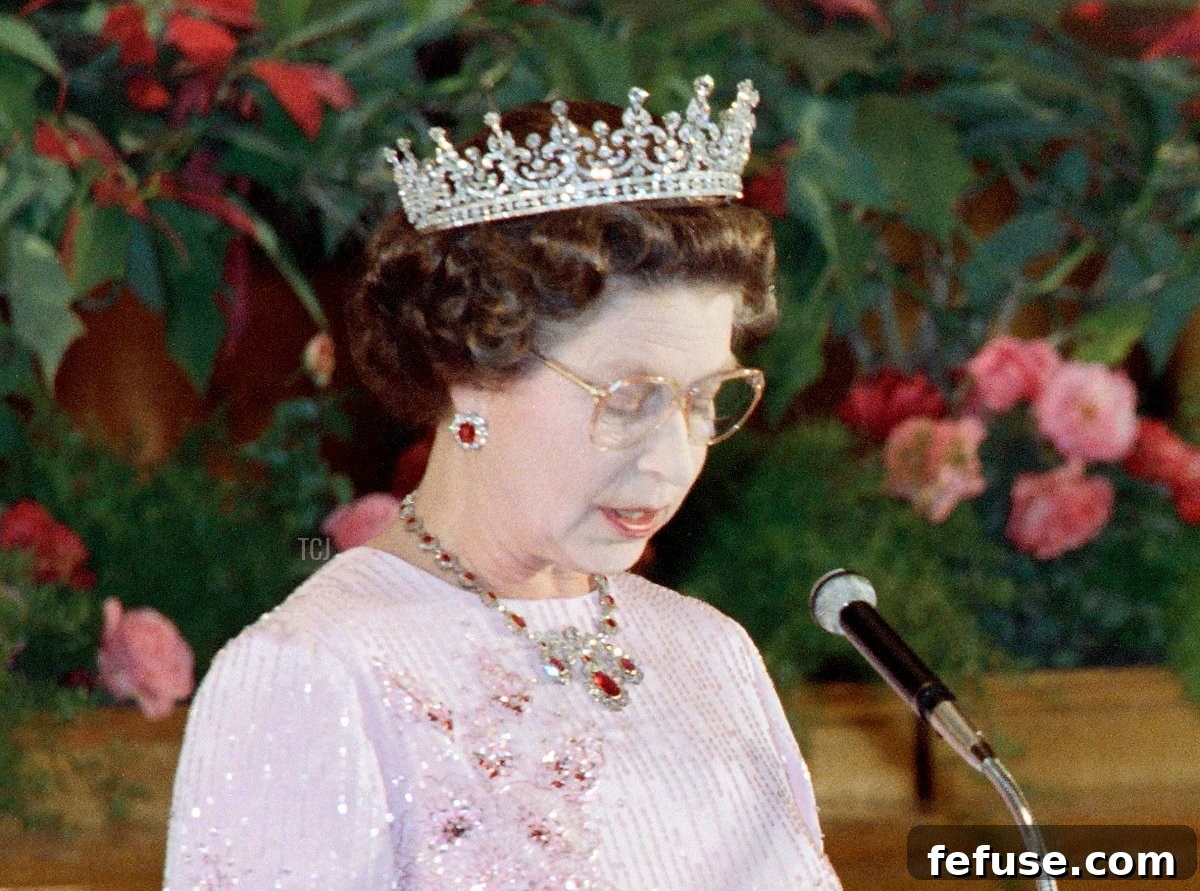
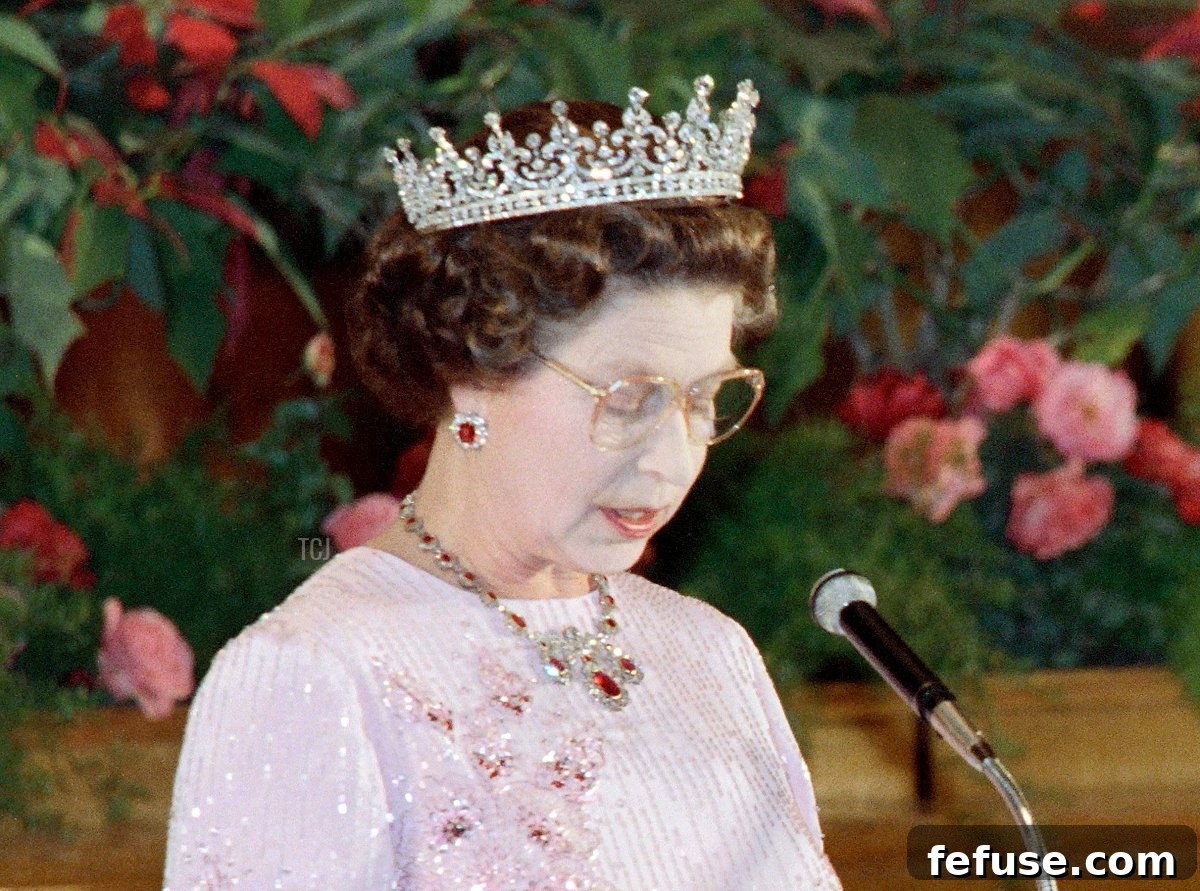
By the dawn of the 1960s, Her Majesty Queen Elizabeth II of the United Kingdom had already commanded the world stage for a full decade. Her reign was maturing, marked by an increasing number of state visits, grand white-tie banquets, and extensive overseas tours. Each of these high-profile engagements demanded impeccable sartorial choices and, crucially, a dazzling array of coordinating jewels, tiaras, and order sashes. It was during this formative period of her personal collection that the Queen began strategically acquiring select pieces to complement her existing royal treasures, filling in any perceived gaps. Among these significant additions was the magnificent Baring Ruby Necklace, a testament to her evolving personal style and the vastness of the Royal Collection.
Rubies, with their rich crimson hues, hold a special place in royal jewelry, symbolizing power, passion, and prosperity. While the Queen already possessed some impressive ruby pieces, the mid-1960s presented an opportunity to expand her personal collection with a necklace that offered both grandeur and versatility. The story of the Baring Ruby Necklace is particularly intriguing as it highlights the Queen’s discerning taste and her hands-on approach to curating her extraordinary jewelry wardrobe.
Indeed, by 1964, Queen Elizabeth II’s existing ruby collection included notable items such as the Greville Ruby Necklace, a precious wedding gift from her beloved parents. However, a significant portion of the most majestic ruby parures, including the historic Crown Rubies, remained under the care of her mother, Queen Elizabeth The Queen Mother, until her passing in 2002. This meant that for day-to-day state occasions or less formal, yet still grand, events, the Queen required a more accessible and perhaps more adaptable ruby necklace. It was precisely this desire that led to the acquisition of the Baring Ruby Necklace in 1964.
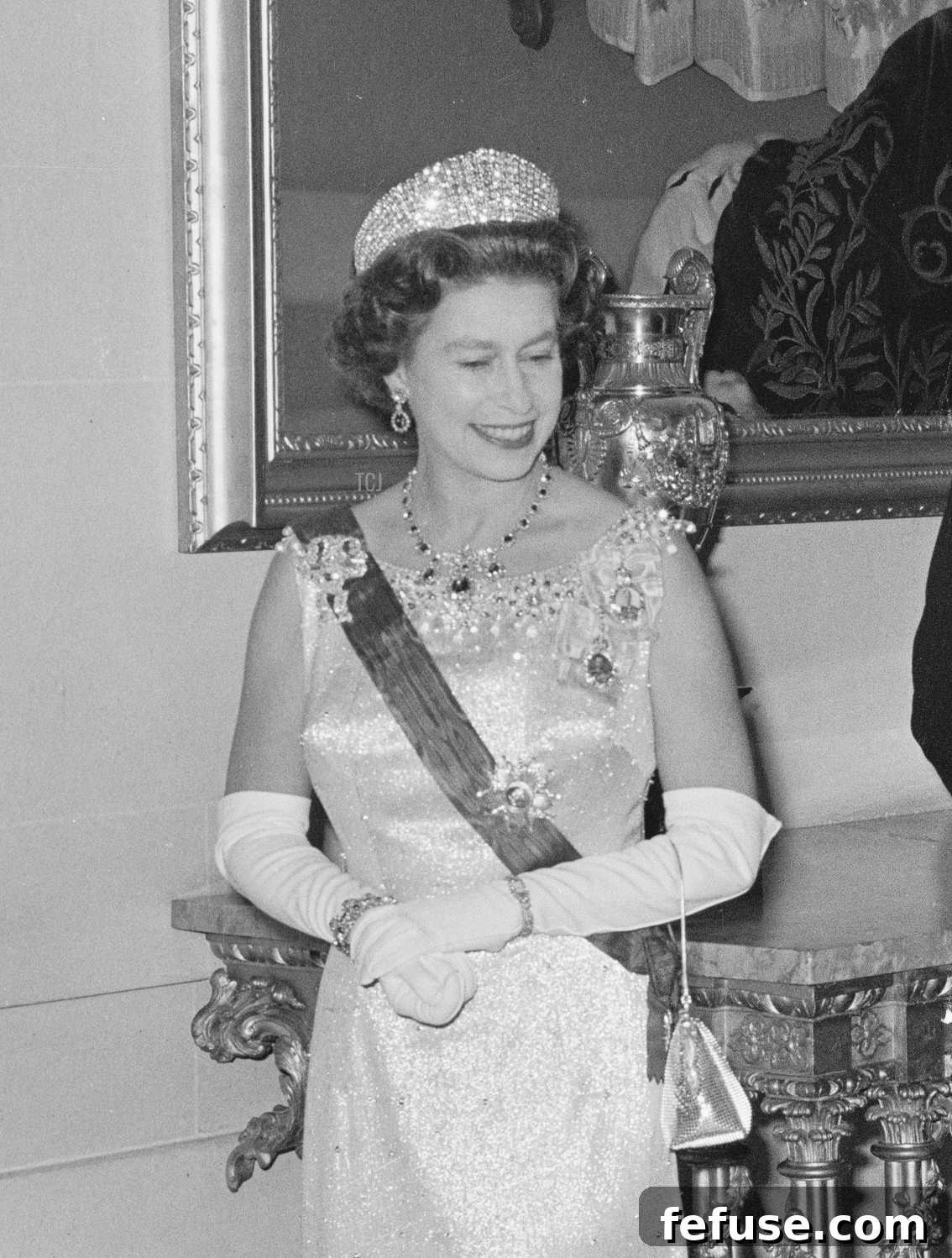
The Baring Ruby Necklace is an exquisite piece, meticulously crafted from a harmonious blend of sparkling diamonds and elegant flat-cut rubies. Its design is distinguished by three prominent pendant stones, which the Royal Collection Trust has noted were likely originally fashioned as a pair of earrings. This intriguing detail adds another layer to its history, suggesting a clever repurposing or an antique origin. The necklace’s sophisticated design makes it a versatile jewel, capable of complementing a wide array of gowns and other royal adornments. In the image above, taken in May 1972, the Queen exemplifies this versatility, pairing the Baring Ruby Necklace with the impressive Queen Alexandra’s Kokoshnik Tiara, a grand piece inspired by traditional Russian headwear, and the enduringly popular Queen Mary’s Lover’s Knot Brooch. This ensemble was worn during a significant state visit to France, specifically at the British Embassy in Paris, underscoring the necklace’s role in her most important diplomatic engagements.
Since its acquisition over five decades ago, the Baring Ruby Necklace has been a constant presence at a multitude of significant royal events. Its understated elegance yet undeniable sparkle has made it a favored choice for everything from lavish state banquets to the solemn and ceremonial State Openings of Parliament. Each appearance reinforced its status as a cornerstone of Queen Elizabeth II’s personal jewelry collection, reflecting her consistent style throughout her lengthy reign. The choice of rubies for these momentous occasions often signifies a desire for both traditional grandeur and a touch of vibrant warmth, perfectly encapsulated by the Baring Ruby Necklace.
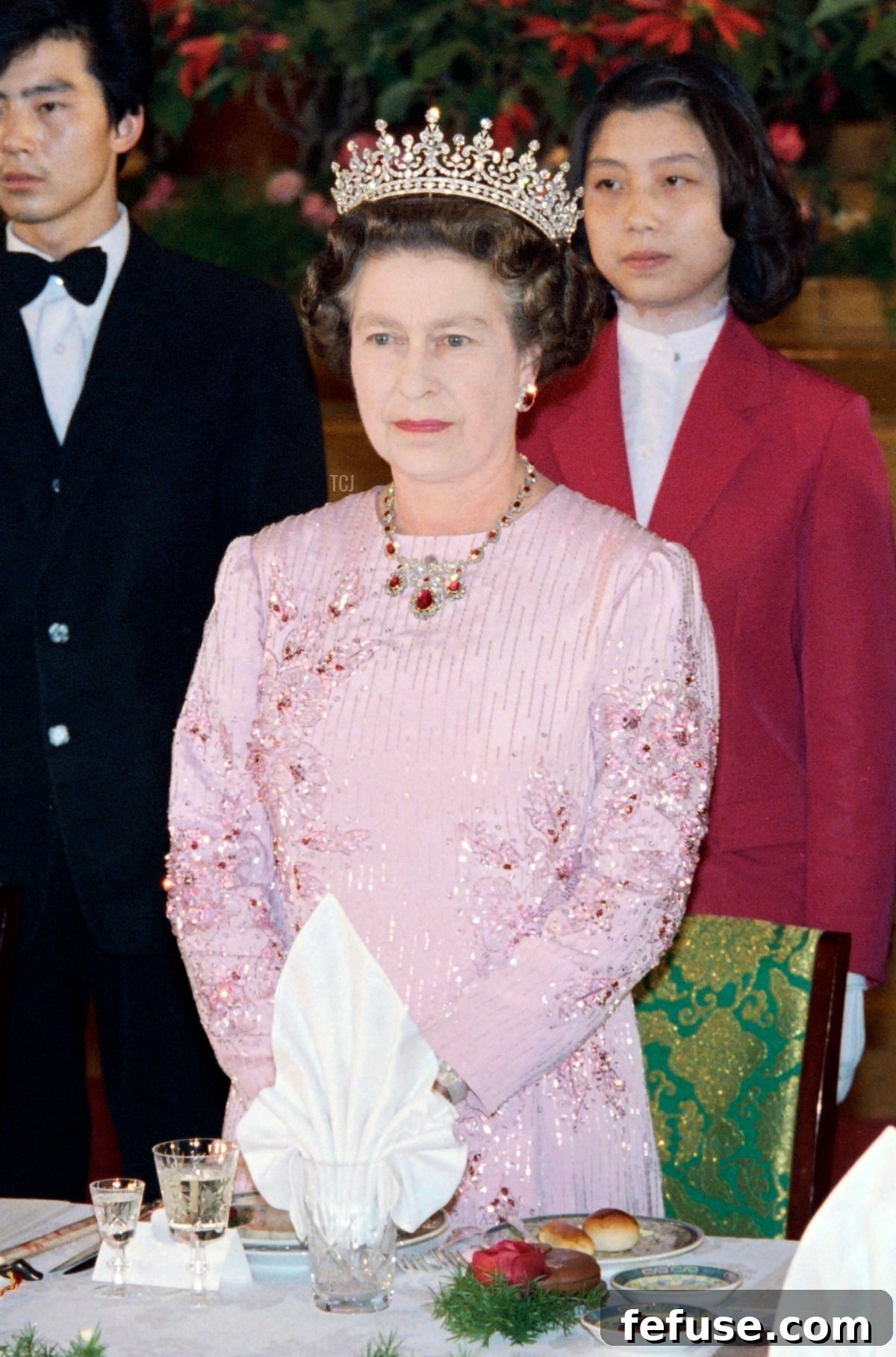
A particularly memorable instance of the necklace’s wear occurred during Queen Elizabeth II’s historic state visit to China in October 1986. This groundbreaking tour, the first by a reigning British monarch, was an event of immense diplomatic and cultural significance. For a grand banquet held at the Great Hall of the People in Beijing, captured in the image above, the Queen chose to pair the Baring Ruby Necklace with the Girls of Great Britain and Ireland Tiara. This tiara, often referred to as ‘Granny’s Tiara,’ was the Queen’s very first, a wedding gift to her grandmother, Queen Mary, and later passed down, making it a profoundly personal and symbolic choice. The ensemble was further enhanced by Queen Mary’s Ruby Cluster Earrings, creating a cohesive and breathtaking ruby and diamond display. The combination of these specific jewels for such a high-profile international engagement underscored the necklace’s versatility and its ability to contribute to an aura of regal splendor, perfectly befitting a monarch on the global stage.
As the decades progressed, the Baring Ruby Necklace continued its distinguished service, often finding new and complementary pairings within the Queen’s ever-expanding collection. Its steadfast presence throughout various eras of royal fashion and diplomatic necessity speaks volumes about its enduring appeal and suitability for the most formal occasions. The jewel’s ability to adapt to different tiaras and dress styles without losing its unique charm is a testament to its timeless design and the Queen’s masterful curation of her personal collection. This consistent usage solidified its place as one of the most recognized ruby necklaces in the British Royal Family’s possession, a true hallmark of royal elegance.
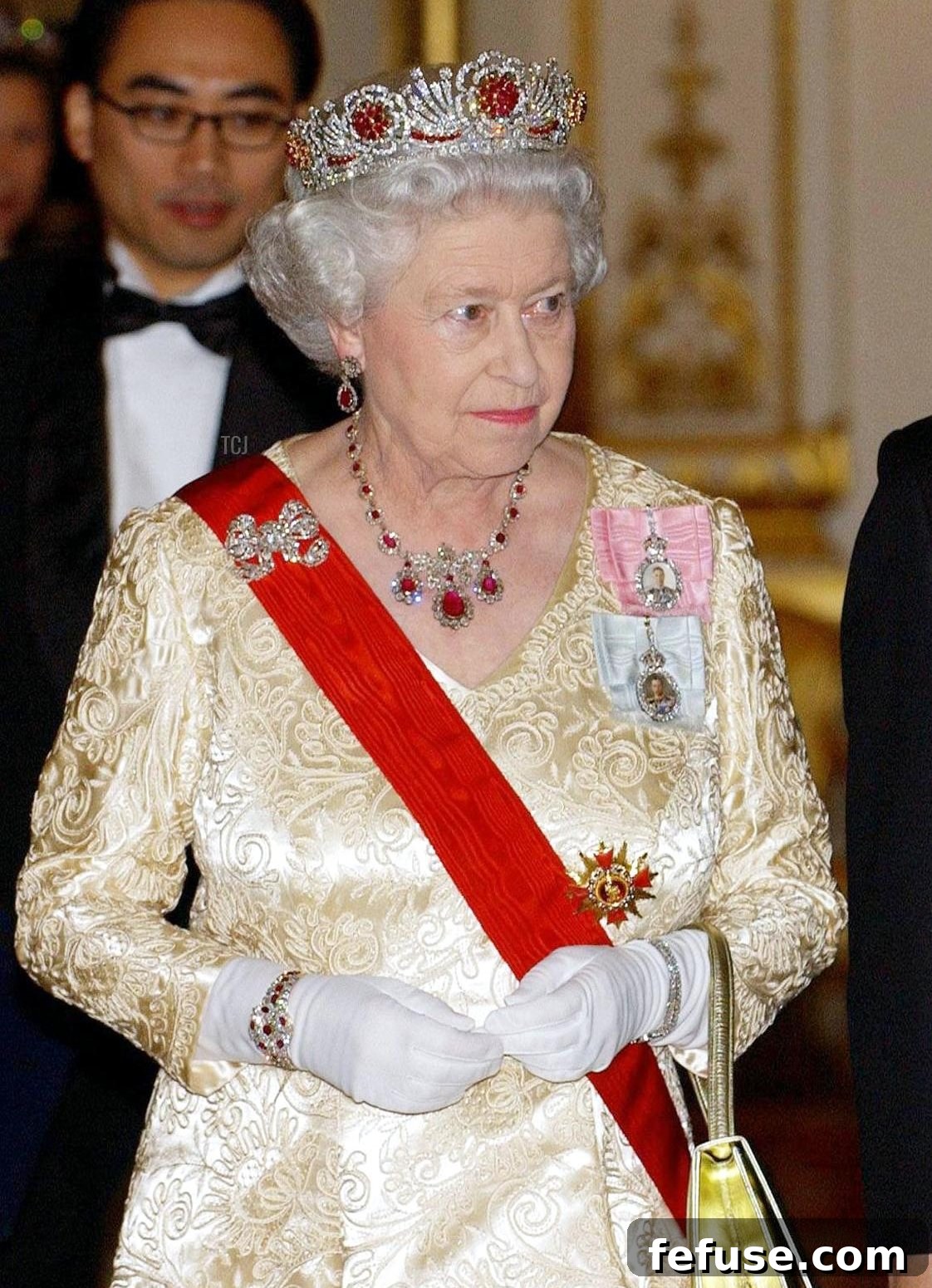
By the 1970s, another magnificent ruby creation joined the Royal Collection: the Burmese Ruby Tiara, specially commissioned by the Queen and crafted from 96 rubies gifted to her by the people of Burma. With its vibrant hues and striking design, this tiara soon became a frequent and harmonious companion to the Baring Ruby Necklace. This powerful pairing was notably showcased during a state visit from the President of Korea to Buckingham Palace in December 2004, an event demanding the highest level of royal pomp and formality. In the photograph above, Queen Elizabeth II proudly displays this exquisite combination of jewels, further accessorized by the Cornwall Rose of York Bracelet. This ensemble not only demonstrated the Queen’s impeccable taste but also highlighted the Baring Ruby Necklace’s remarkable ability to integrate seamlessly with other significant pieces, creating a grand and cohesive ruby parure perfect for welcoming foreign dignitaries to the heart of the British monarchy.
The necklace’s journey through Queen Elizabeth II’s reign also saw it paired with tiaras holding deep personal and historical significance, many of which were cherished by her late mother, Queen Elizabeth The Queen Mother. These choices underlined a continuity of royal style and a profound respect for heritage. The Baring Ruby Necklace’s adaptability allowed it to complement both the grandeur of larger tiaras and the more delicate charm of others, always enhancing the overall regal presence of the monarch.
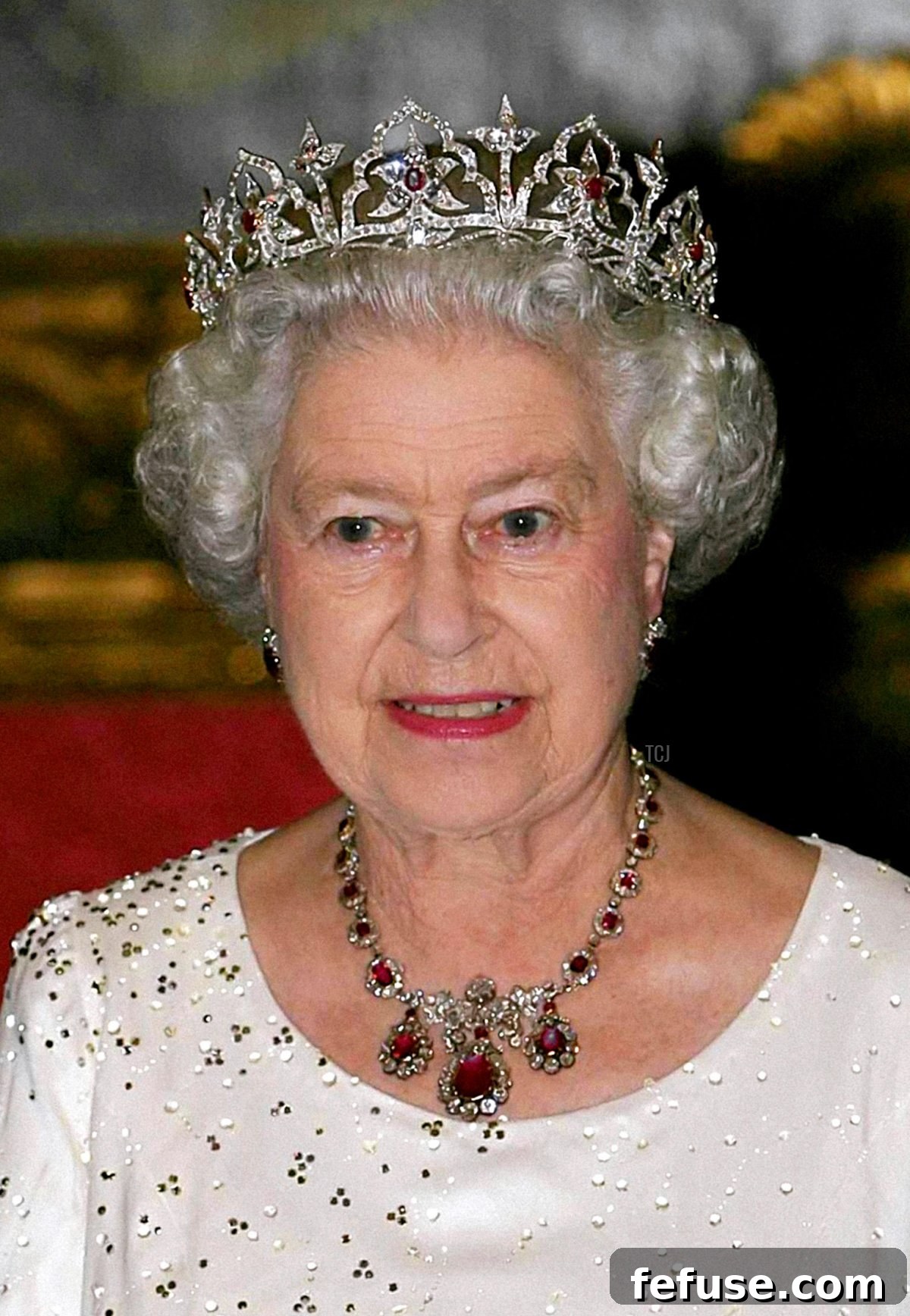
Among these historically significant pairings, the Baring Ruby Necklace was notably worn with two tiaras that were particular favorites of the Queen Mother: Queen Mary’s Fringe Tiara and Queen Victoria’s Indian Circlet. The latter, with its distinctive Mogul-inspired design and a magnificent cabochon ruby at its center, presented a striking contrast to the Baring Necklace’s flat-cut stones, yet the two harmonized beautifully. Here, in November 2005, during a banquet in Malta—a Commonwealth nation with strong historical ties to Britain—the Queen is seen wearing the Baring Ruby Necklace alongside the Indian Circlet and once again, Queen Mary’s Ruby Cluster Earrings. This choice for an overseas engagement reinforced the necklace’s status as a go-to piece for representing the monarchy with elegance and grandeur, demonstrating its seamless integration into a variety of high-profile, globally significant events and its ability to complement even the most historically resonant jewels.
The versatility of the Baring Ruby Necklace extended to how it was styled, sometimes taking center stage and at other times subtly complementing an outfit. This adaptability allowed Queen Elizabeth II to deploy it across different decades and countless royal engagements, always with an air of dignified grace. Its continued presence in her repertoire underscored its personal value to the monarch, far beyond its intrinsic material worth.
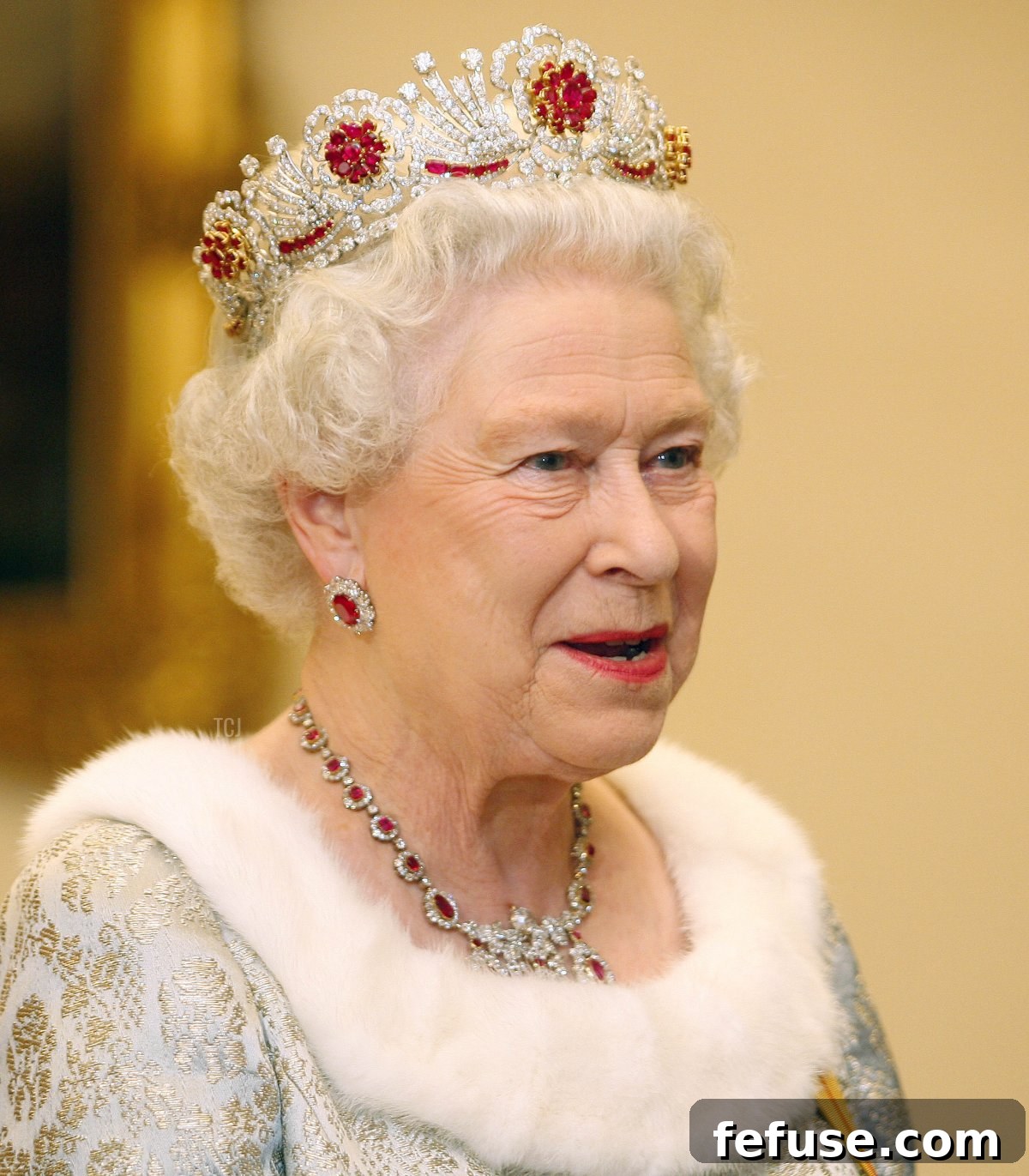
In a memorable appearance for a state dinner in Slovenia in October 2008, the Baring Ruby Necklace was again showcased with the Ruby Cluster Earrings and the magnificent Burmese Ruby Tiara. On this particular occasion, as seen in the accompanying image, the necklace was subtly tucked beneath the neckline of her gown, demonstrating a sophisticated styling choice that allowed the tiara and earrings to take a more dominant role while the necklace provided a rich, shimmering foundation. In later years, the Baring Ruby Necklace was worn with less frequency, not due to any diminution of its beauty or significance, but simply because the Queen’s extensive collection expanded to include numerous other splendid ruby options. These newer additions included the stunning Qatari Rubies, the return of the Crown Rubies to her direct possession after her mother’s passing, and the consistent presence of the Greville Ruby Necklace. Despite this wealth of choice, the Baring Ruby Necklace holds a special place, representing a key moment in Queen Elizabeth II’s personal acquisition of jewels and a staple of her regal ruby collection for nearly half a century.