
The Digital Frontier: How Technology is Reshaping the Global Mining Industry
The global mining industry, a cornerstone of economic development, is perpetually in a state of evolution. While the year 2020 saw an unprecedented focus on operational safety and employee well-being, primarily driven by the imperative to mitigate the spread of COVID-19, leading analysts like Fitch Solutions project a significant strategic pivot. Once the immediate health crisis recedes and stability returns, miners worldwide are expected to redirect their energy and investments towards the critical objectives of enhancing efficiency and substantially cutting operational costs. This shift is not merely a return to pre-pandemic priorities but an acceleration of a long-standing trend towards technological integration and digital transformation, underpinned by the lessons learned from recent global disruptions.
The challenges of the modern mining landscape are multifaceted, ranging from declining ore grades and increasing operational depths to volatile commodity prices and stringent environmental regulations. These factors collectively exert immense pressure on profit margins and operational viability. Consequently, the adoption of cutting-edge technologies is no longer a luxury but a strategic imperative for survival and growth. The pandemic, in an unforeseen way, acted as a catalyst, highlighting the vulnerabilities of traditional, labor-intensive operations and underscoring the resilience offered by automated and remotely managed systems. As the industry emerges from this period of intense focus on health protocols, the drive towards a more streamlined, cost-effective, and sustainable future, powered by technological innovation, will become the defining characteristic of the coming decade.
Australia Leads the Charge: A Blueprint for Mining Innovation
In this global race towards technological supremacy in mining, Australia is poised to take a formidable lead, not only regionally but also on the international stage. Fitch Solutions highlights several foundational strengths that position the continent as a global leader in embracing and deploying advanced mining technologies. These include a robust and expansive network connectivity infrastructure, reliable access to power, a highly skilled and adaptive labor force, and unwavering governmental support for innovation.
Australia’s vast and geographically challenging mining regions demand sophisticated communication networks. The country has proactively invested in high-speed internet and developing 5G capabilities, which are crucial for enabling real-time data transfer from remote mining sites to central command centers. This strong network connectivity is the backbone for implementing the Internet of Things (IoT), autonomous vehicles, and remote operational control, allowing for seamless communication and data exchange across vast distances. Furthermore, consistent and reliable power infrastructure is non-negotiable for operating advanced machinery, data centers, and sophisticated sensor networks that underpin modern mining operations. Australia’s commitment to stable energy supply, increasingly from renewable sources, ensures that technological deployments are not hampered by power limitations.
Beyond infrastructure, Australia boasts a highly skilled labor force that extends far beyond traditional mining expertise. The country has successfully fostered a talent pool that includes data scientists, robotics engineers, automation specialists, and cybersecurity experts—all essential for managing and optimizing technologically advanced mines. This workforce is not only capable of operating complex systems but also instrumental in driving continuous innovation and adapting to new technological paradigms. Complementing these strengths is the proactive support from the Australian government. Through various initiatives, research and development grants, and supportive regulatory frameworks, the government actively encourages the adoption of digital technologies, facilitating partnerships between industry, academia, and technology providers. This holistic ecosystem of robust infrastructure, skilled human capital, and supportive policies firmly establishes Australia as the global benchmark for technological integration in the mining sector.
Navigating the Digital Crossroads: From Tradition to Transformation
The mining landscape today stands at a pivotal juncture, described by Fitch as being at a “crossroads between a traditional past and a transformative future.” This analogy perfectly encapsulates the industry’s current challenge: to honor its foundational principles while boldly embracing radical changes that promise a sustainable and more productive tomorrow. The transition is not without its complexities, requiring substantial capital investment, meticulous change management strategies, and a steadfast commitment to overcoming technological hurdles.
Traditionally, mining has been characterized by its reliance on heavy machinery, manual labor, and often reactive operational strategies. The future, however, is being shaped by data-driven decision-making, predictive analytics, and proactive problem-solving. This shift necessitates a complete reimagining of mining processes, from exploration and extraction to processing and logistics. Companies must be prepared to invest in new hardware, software, and, crucially, in retraining their workforce to operate and manage these sophisticated systems. The cultural transformation required to move from established practices to agile, tech-centric operations is often the most significant challenge, demanding strong leadership and a clear vision.
However, the rewards of navigating this crossroads successfully are immense. A transformative future promises not only enhanced efficiency and reduced costs but also significant improvements in mine safety, environmental stewardship, and resource optimization. By leveraging technology, miners can minimize human exposure to hazardous environments, reduce their carbon footprint through optimized energy consumption, and extract valuable minerals more precisely, thereby reducing waste. This paradigm shift positions mining as a key contributor to a sustainable global economy, moving away from its historical image as a resource-intensive and environmentally impactful industry towards one that is innovative, responsible, and forward-thinking.
The Arsenal of Innovation: Key Technologies Driving Smart Mines
Modern, state-of-the-art mines are rapidly integrating a comprehensive suite of technological innovations into every aspect of their operations. These advancements are not isolated tools but interconnected components of a holistic digital ecosystem designed to maximize productivity, safety, and sustainability.
Cloud Computing: At the foundation of digital mining is cloud computing. It provides the scalable infrastructure for storing, processing, and analyzing vast amounts of data generated across mining operations. From geological surveys and production metrics to equipment performance and supply chain logistics, the cloud offers secure, accessible, and flexible data management solutions. This allows for real-time collaboration among diverse teams, regardless of their geographical location, fostering agility and informed decision-making.
New Sensors and the Internet of Things (IoT): The deployment of advanced sensors across equipment, infrastructure, and even personnel forms the nervous system of a smart mine. These IoT devices collect continuous, real-time data on critical parameters such as vibration, temperature, pressure, dust levels, and geological conditions. This stream of data enables predictive maintenance, allowing operators to identify potential equipment failures before they occur, thus minimizing downtime and costly repairs. It also provides invaluable insights into operational efficiencies, environmental compliance, and worker safety by monitoring ambient conditions.
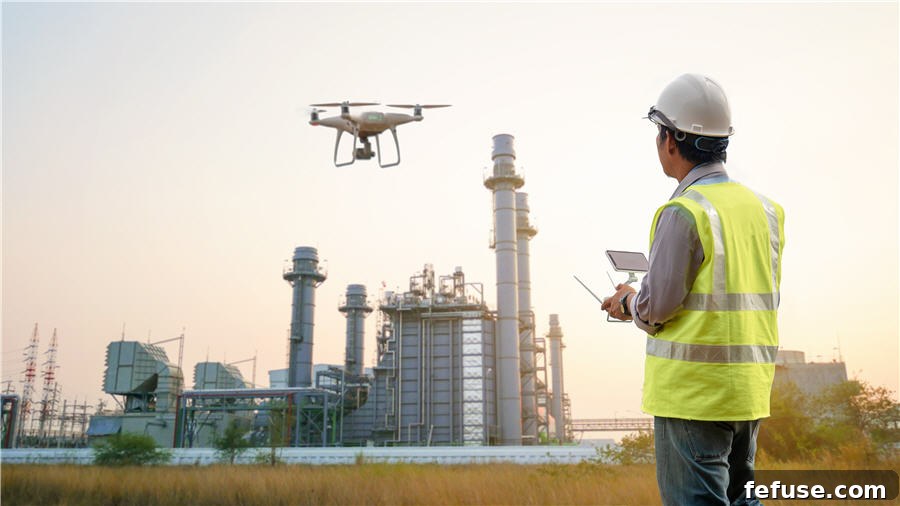
Drones and Robotics: Unmanned aerial vehicles (UAVs), commonly known as drones, are revolutionizing various aspects of mining. They are used for high-resolution aerial surveying and mapping, enabling precise geological modeling and volumetric analysis of stockpiles. Drones also conduct remote inspections of inaccessible or hazardous areas, monitor environmental changes, and enhance security. Beyond drones, ground-based robots are increasingly being deployed for tasks such as inspection, repair in dangerous zones, and even complex drilling operations, further reducing human exposure to risk.
Automation and Autonomous Systems: The journey towards full automation is a significant trend. Autonomous haulage systems, which involve self-driving trucks, are already operational in many large-scale mines, significantly improving safety by removing human operators from heavy machinery and enhancing efficiency through optimized routing and continuous operation. Automated drilling and blasting systems ensure precision and consistency, while automated processing plants streamline the extraction and refinement of minerals, reducing human error and increasing throughput. The ultimate goal is a fully integrated, lights-out mining operation where human intervention is minimized.
Machine Learning (ML) and Artificial Intelligence (AI): These sophisticated technologies represent the brain of the smart mine, transforming raw data into actionable intelligence. ML algorithms can analyze historical and real-time data to predict equipment failures, optimize energy consumption, and even forecast commodity price fluctuations. AI-powered systems are used for advanced geological modeling, identifying optimal drilling locations, and refining blasting patterns to maximize ore recovery. Furthermore, AI contributes to predictive safety analytics, identifying patterns that could lead to accidents and enabling proactive prevention strategies. From optimizing supply chains to automating decision-making in complex scenarios, ML and AI are unlocking unprecedented levels of efficiency and insight.
Industry Vanguard: Leading the Charge in Technological Integration
The successful adoption and integration of these transformative technologies require visionary leadership and substantial investment. Fitch Solutions rightly identifies companies like Rio Tinto as pioneers in this space, closely followed by Fortescue Metals Group (FMG) and BHP. These industry giants are not merely adopters but actively drive innovation, often in collaboration with technology partners and research institutions.
Rio Tinto, for example, has been at the forefront of implementing autonomous systems through its “Mine of the Future” program. This initiative has seen the widespread deployment of autonomous haul trucks, drills, and trains, fundamentally reshaping their iron ore operations in the Pilbara region of Western Australia. Their commitment extends to developing advanced data analytics capabilities and remote operations centers that manage these complex systems from hundreds of kilometers away, significantly enhancing safety and productivity.
Fortescue Metals Group (FMG) has likewise made massive strides in automation, particularly with its autonomous haulage system (AHS) fleet, which is among the largest in the world. FMG’s focus on integrating digital technologies across its entire value chain, from pit to port, has delivered substantial improvements in operational consistency, efficiency, and cost reduction. Their strategic investments in technology underpin their competitive edge and commitment to sustainable mining practices.
BHP, another global mining powerhouse, is investing heavily in digital transformation, focusing on areas like predictive maintenance, real-time data analytics, and the development of intelligent operational systems. Their remote operations centers leverage vast datasets to optimize performance across multiple sites, improve resource allocation, and enhance worker safety through proactive monitoring and control. BHP’s approach emphasizes leveraging technology to unlock greater value from their existing assets and develop new, more sustainable mining practices.
These companies exemplify how strategic investment in technology, coupled with a commitment to innovation and cultural change, can redefine the future of mining. Their leadership sets a benchmark for the rest of the industry, demonstrating the tangible benefits of embracing digital transformation.
The Future Outlook: A Sustainable and Resilient Mining Sector
As the global mining industry continues its trajectory towards a digitally integrated and technologically advanced future, the overarching benefits extend far beyond mere cost-cutting and efficiency gains. The strategic shift towards smart mining, driven by advancements in cloud computing, IoT, AI, and automation, is fundamentally redefining what it means to operate a mine in the 21st century. It is paving the way for a mining sector that is not only more productive and profitable but also significantly safer, more environmentally responsible, and intrinsically more resilient to future global disruptions.
The journey from traditional practices to transformative technologies represents a profound evolution. It promises a future where mining operations are less reliant on human exposure to hazardous conditions, where environmental footprints are minimized through precise resource extraction and optimized energy consumption, and where complex decisions are augmented by intelligent data analytics. This ongoing revolution ensures that mining, an essential industry for the materials that build our modern world, can meet global demand while upholding the highest standards of safety, sustainability, and ethical practice. The era of the smart mine is here, and its continued development will be crucial for a sustainable and prosperous future.
Read the full report here