
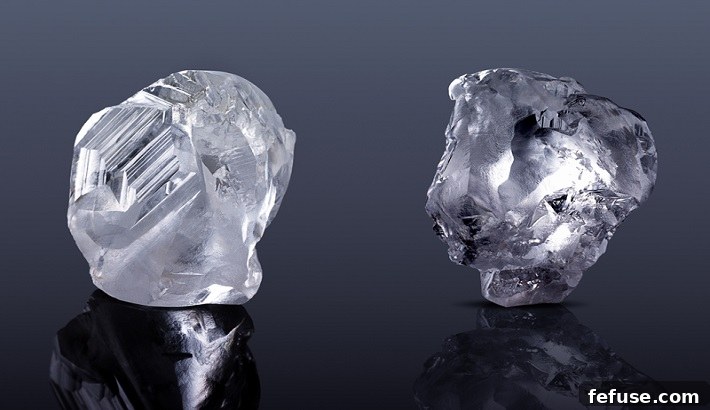
Alrosa’s Remarkable Sales Surge Signals Strong Diamond Market Recovery
The global diamond market, long under the shadow of economic uncertainties and shifting consumer behaviors, is now showing significant signs of a robust rebound. Spearheading this recovery is Alrosa, the renowned Russian diamond mining giant, whose latest financial disclosures paint an exceptionally optimistic picture for the industry. A dramatic surge in sales figures for August not only indicates renewed vitality but also sets a promising precedent for the critical year-end trading period, a crucial time for luxury goods.
A Staggering Rebound: Alrosa’s August Sales Skyrocket
According to its most recent financial data, Alrosa experienced an astonishing upturn in sales during August, a pivotal month marking a potential turning point for the sector. The total monthly sales of both rough and polished diamonds skyrocketed by over 500% compared to the figures recorded in the preceding month. This dramatic increase is a powerful testament to the underlying resilience of the diamond market and the efficacy of strategic adjustments made by key players.
To fully appreciate the magnitude of this growth, it’s essential to look at the comparative figures. In July, Alrosa’s total sales stood at a modest $35.8 million (£27.6 million), a figure that barely represented more than 10% of the pre-pandemic sales recorded in February. This stark contrast highlights the severe impact the global health crisis had exerted on the industry. However, August witnessed a spectacular recovery, with sales soaring to an impressive $216.7 million (£167 million). Such a rapid and substantial rebound suggests that the global diamond market might indeed be on track for a return to a more normalized Christmas trading period, offering a much-needed glimmer of hope to retailers and manufacturers worldwide.
Navigating the Storm: The Pandemic’s Grip on the Diamond Sector
The first half of the year presented unprecedented challenges for the luxury goods sector, and the diamond industry was no exception. Lockdowns, travel restrictions, and widespread economic uncertainty significantly dampened consumer demand for non-essential items, including diamond jewelry. Supply chains were disrupted, mining operations faced hurdles, and retail outlets, particularly those reliant on foot traffic in major metropolitan areas, struggled to maintain sales volumes. The sharp decline in Alrosa’s July sales, representing merely a fraction of its pre-pandemic performance, perfectly encapsulates the difficult environment the industry had to navigate. Manufacturers and retailers found themselves with significant inventory, while new demand was sluggish, creating immense pressure across the entire value chain.
This period of contraction compelled major players like Alrosa and its competitor, De Beers, to reassess their strategies. The traditional stability of diamond pricing, often a hallmark of the industry, came under scrutiny as market realities shifted dramatically. The need to stimulate demand and alleviate inventory pressure became paramount, leading to a crucial decision that would ultimately catalyze the recent recovery.
Strategic Price Adjustments Pave the Way for Recovery
A significant factor contributing to Alrosa’s impressive August sales surge was the strategic decision by both Alrosa and De Beers to implement rough diamond price cuts. Towards the end of August, these two industry behemoths, who collectively command a substantial share of the global rough diamond market, finally conceded to market pressures and reduced their rough diamond prices by approximately 10%. This move, while initially a difficult concession, proved to be a critical turning point for the market.
The price adjustment had an immediate effect, making rough diamonds more attractive to cutters and polishers in the midstream sector. Lower input costs allowed these manufacturers to operate with better margins and provided an incentive to replenish their depleted stocks, anticipating a resurgence in demand for polished diamonds further down the line. With September being the first full month since these pivotal price reductions took effect, market observers are now keenly anticipating whether this strategic adjustment will translate into a similar hike in total sales announced for the current month, further cementing the recovery trend.
Insights from the Top: Evgeny Agureev on Market Dynamics
Evgeny Agureev, Deputy CEO of Alrosa, offered valuable insights into the market dynamics underpinning this recovery. His comments underscore a cautious yet optimistic outlook for the diamond industry. Agureev highlighted a gradual but consistent recovery in demand for diamond jewelry, particularly noting strong performances in key consumer markets such as the United States and China. These two regions represent critical pillars of global luxury consumption, and their resurgence is an encouraging sign for the industry as a whole.
Furthermore, Agureev pointed out that diamond stock levels are steadily declining at both the retail and midstream segments of the supply chain. This reduction in inventory is a positive indicator, as it means less overhang in the market and a greater necessity for new rough diamond purchases to meet future demand. As stock levels deplete, the demand for rough diamonds naturally picks up, creating a healthier equilibrium. He characterized this trend as “a good sign as we approach seasonal growth in market activity in Q4,” emphasizing the industry’s historical reliance on the holiday shopping season for a significant portion of its annual sales.
Agureev also reflected on the support Alrosa extended to its long-term clients during the challenging period from March to August. He expressed hope that these efforts would have a positive effect on restoring the crucial supply/demand balance, ultimately helping the diamond market to successfully overcome what has undoubtedly been its most challenging period in recent memory. This proactive approach by Alrosa, focusing on supporting its partners through difficult times, illustrates a commitment to the long-term health and stability of the entire diamond ecosystem.
Global Demand Drivers: US, China, and the Shifting Consumer Landscape
The recovery of diamond jewelry demand in the US and China is a primary catalyst for the industry’s resurgence. The United States, historically the largest market for diamond jewelry, has seen a gradual reopening of its economy, coupled with a robust stock market performance and consumer resilience. Pent-up demand for luxury items, particularly as social events and celebrations slowly resume, is likely contributing to increased sales. Consumers are increasingly seeking timeless pieces that signify enduring value and emotional connection, attributes inherently associated with diamonds.
China, on the other hand, has demonstrated an even more rapid economic recovery from the pandemic. The burgeoning middle class and an expanding luxury consumer base continue to drive demand for diamonds. Furthermore, domestic tourism and consumption have been boosted as international travel remains restricted, channeling spending towards local luxury markets. Both markets also show an increasing embrace of online retail channels, which the diamond industry has rapidly adapted to, enhancing accessibility and convenience for buyers.
Beyond these geographical strongholds, there is a broader shift in consumer preferences. An increasing emphasis on authenticity, ethical sourcing, and transparency is influencing purchasing decisions. Diamond companies are responding by enhancing their communication around these aspects, ensuring that consumers not only appreciate the beauty of their purchases but also feel confident about their provenance. This evolving landscape requires continuous adaptation and innovation from miners, manufacturers, and retailers alike.
The Road Ahead: Q4 Expectations and Sustained Growth
As the diamond industry moves into the fourth quarter, the expectations for a strong holiday season are palpable. Q4 traditionally accounts for a substantial portion of annual diamond jewelry sales, driven by events like Christmas, Diwali, and Chinese New Year, as well as engagements and anniversaries. The positive momentum generated by Alrosa’s August sales and the broader market recovery provides a solid foundation for optimism. Retailers are now better positioned to stock up on inventory, confident in the anticipated consumer demand.
However, the industry remains mindful of ongoing global economic uncertainties and potential resurgence of health crises. Sustained recovery will depend on continued consumer confidence, stable economic conditions in key markets, and the industry’s ability to adapt to evolving retail landscapes, including the continued growth of e-commerce. Investments in digital marketing, enhanced online shopping experiences, and personalized customer service will be crucial for maintaining growth trajectories.
The actions of dominant players like Alrosa and De Beers will continue to play a pivotal role. Their supply management strategies, pricing policies, and support for the midstream sector will dictate the overall health and stability of the market. The collaborative spirit shown in recent months, with strategic price adjustments and client support, suggests a shared commitment to navigating future challenges effectively and fostering long-term growth.
Beyond the Numbers: Building Trust and Future Resilience
While sales figures provide an immediate snapshot of market health, the long-term resilience of the diamond industry hinges on more fundamental factors. Consumer trust remains paramount. In an era where ethical considerations are increasingly influencing purchasing decisions, demonstrating responsible sourcing, transparent supply chains, and environmental stewardship is no longer optional but essential. Companies like Alrosa are actively investing in initiatives that ensure their diamonds are mined and processed sustainably, adhering to international standards and contributing positively to local communities.
Furthermore, innovative marketing campaigns that celebrate the emotional significance and enduring value of diamonds will be key to captivating new generations of consumers. Highlighting diamonds as symbols of love, commitment, and achievement, rather than just luxury commodities, helps to reinforce their unique appeal. The ability of the industry to connect with diverse consumer segments through compelling narratives and authentic experiences will be a defining factor in its sustained success.
The impressive comeback observed in August, championed by Alrosa’s robust performance, is more than just a momentary surge; it represents a powerful affirmation of the diamond’s enduring allure and the industry’s capacity for adaptation. As the market moves forward, focusing on innovation, transparency, and consumer engagement will be vital to ensuring that this recovery translates into lasting prosperity for all stakeholders.