
The world of fine jewelry is witnessing a remarkable resurgence, and at its heart lies the timeless Akoya pearl. In 2015, Akoya pearl sales experienced an impressive 40 percent surge, followed by another 10 percent increase the subsequent year. This significant uptick caught the discerning eye of Daven Sethi, vice president of New York City-based Tara Pearls, who recognized that the classic white pearl was on the cusp of a new wave of immense popularity. “The majors have been doing superb with Akoya,” Sethi confirms, highlighting the widespread acknowledgment of their renewed appeal.
For over a century, Akoya pearls have been an indispensable staple in jewelry boxes across the globe. Their journey to prominence began around the turn of the 20th century, when Japanese inventor and cultured-pearl pioneer Kokichi Mikimoto perfected the intricate process of culturing these exquisite gems. This breakthrough democratized pearls, making them accessible beyond royalty and the ultra-wealthy. Following World War II, returning American veterans eagerly sought out Akoya strands as gifts for their sweethearts, cementing their place in popular culture. Concurrently, iconic figures and fashion arbiters like Jacqueline Kennedy and Coco Chanel adorned themselves with Akoyas, further catapulting these lustrous spheres to must-have status, symbolizing sophistication and understated elegance.
However, the jewelry landscape is ever-evolving. Over the years, the emergence of new, high-quality varieties of Chinese freshwater cultured pearls began to capture the attention of designers. These new offerings, often available in a wider array of shapes, sizes, and colors, presented a fresh alternative. In comparison, the classic Akoyas—often perceived as “your grandmother’s pearls”—started to appear somewhat traditional, even fussy, in the eyes of some contemporary consumers and designers. Yet, history has a way of repeating itself, or rather, reimagining itself. Today, a vibrant new generation of jewelry makers and collectors is breathing fresh life into the Akoya market. They are passionately rediscovering, designing with, and wearing Akoya pearls in innovative, decidedly modern ways, blending their classic charm with contemporary aesthetics.
This return to core values is evident across the industry. Kathy Grenier, marketing director for Imperial Pearl and for the Cultured Pearl Association of America, articulates this shift: “We’re interpreting fine design with pearls, including Akoyas.” She further emphasizes the cyclical nature of trends, noting, “Imperial began its life with the Akoya pearl, and now it is actually returning to this core business.” This sentiment underscores a broader industry recognition of the Akoya’s enduring value and its capacity for modern interpretation.
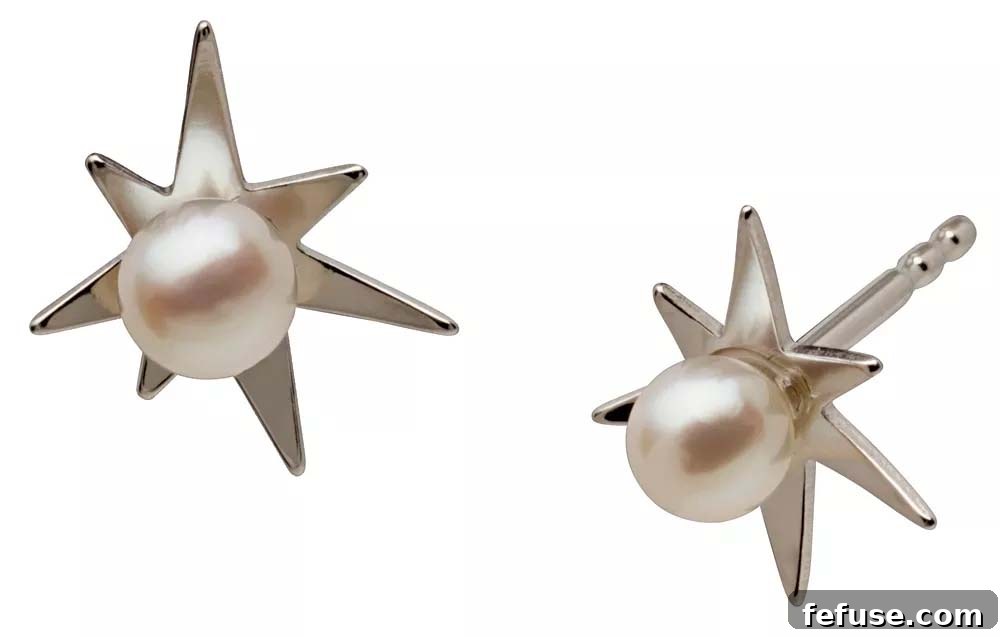
Starburst earrings in 14k gold with 3.5 mm–4 mm Akoyas; $180; Baggins, Los Angeles; 213-624-2277; bagginspearls.com
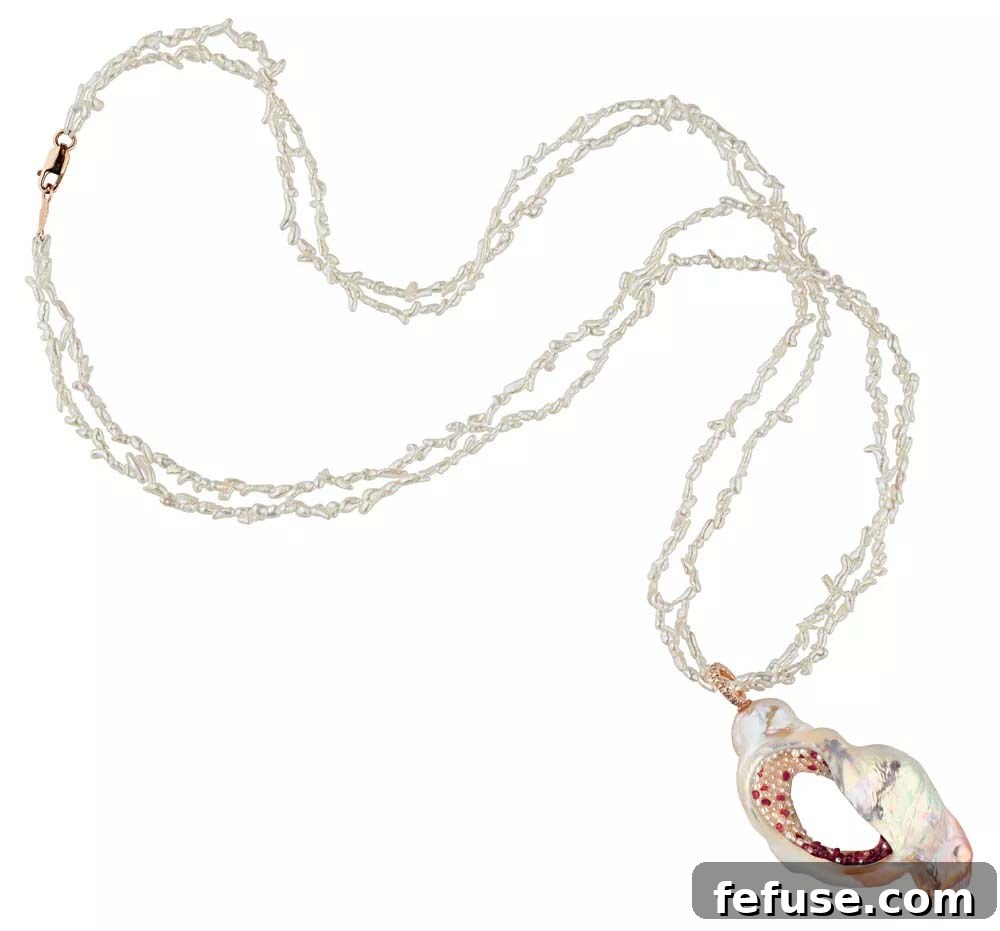
Pendant necklace in 14k gold with a sliced and bored pink freshwater soufflé pearl set with 13.7 cts. t.w. reclaimed rubies and freshwater seed pearls on a double strand of white Akoya keshi pearls; $4,000; Little H, Los Angeles; 310-474-8788; littlehjewelry.com
Unveiling the Global Drivers of Akoya Pearl Popularity
The current wave of Akoya pearl popularity is not a sudden whim but a result of several powerful market forces. By all accounts, a significant surge in demand from Asian markets has been a primary catalyst, igniting this widespread renewed interest in Akoyas, often celebrated for being among the most lustrous of pearls. Fran Mastoloni, president of New York City-based Mastoloni Pearls, corroborates this trend, stating, “The Chinese retail market has found a new desire for Akoya.” This desire is particularly impactful due to the sheer scale of the Chinese market and its rapidly expanding middle class, whose increasing purchasing power now seeks luxury and quality. This enormous market shift has effectively placed Akoyas squarely back in the global spotlight. Daven Sethi of Tara Pearls succinctly summarizes the situation: “Worldwide demand is up.”
Beyond market economics, another critical factor propelling the Akoya’s revival is the ingenuity of contemporary jewelry designers. A host of creative artists have begun to utilize this classic pearl in truly extraordinary and innovative ways, breathing new life into a category that, for a time, was perceived as somewhat stagnant or even moribund. Anil Maloo, president of Los Angeles-based Baggins, exemplifies this trend. He proudly reports that the company’s distinctive front-to-back Akoya earrings have been “our best-selling earrings for the past year.” Baggins is also strategically targeting a younger demographic, specifically millennial buyers, with its collection of “baby Akoyas”—pearls ranging from 3 mm to 4 mm in size, ethically sourced from farms in Vietnam, with retail prices starting at an accessible $180. This approach demonstrates a keen understanding of evolving consumer preferences and the need for fresh, appealing designs.
While the inherent beauty and unparalleled luster of Akoya pearls are undeniable—”The luster cannot be matched,” insists Fran Mastoloni—their renewed role as a versatile supporting element in modern jewelry designs has also been pivotal in nurturing their revival. Designers are increasingly integrating Akoyas not just as centerpieces, but as sophisticated accents that enhance other gemstones and design elements. Jocelyn Prestia, the visionary designer behind New York City-based Unhada Jewelry, explains her approach: “I modernize them and use them as you would most gemstones, as accents.” This adaptability allows Akoyas to seamlessly integrate into diverse aesthetic styles, from minimalist chic to elaborate statement pieces.
Further expanding the perception of Akoyas beyond the traditional white, round strand is the pioneering work of designers like Hisano Shepherd. At Little H in Los Angeles, Shepherd, who is also a pearl buyer for PearlParadise.com, masterfully incorporates Akoya keshi pearls and Akoya pearls in an astonishing array of natural colors—including gold, deep blue, and pistachio—into her distinctive creations. She notes that when clients encounter these diverse Akoya varieties and “realize that Akoya pearls aren’t just round and white,” their reactions are overwhelmingly positive. This innovative use of Akoyas in varied forms and hues plays a significant role in dismantling old stereotypes and showcasing the pearl’s immense design potential.
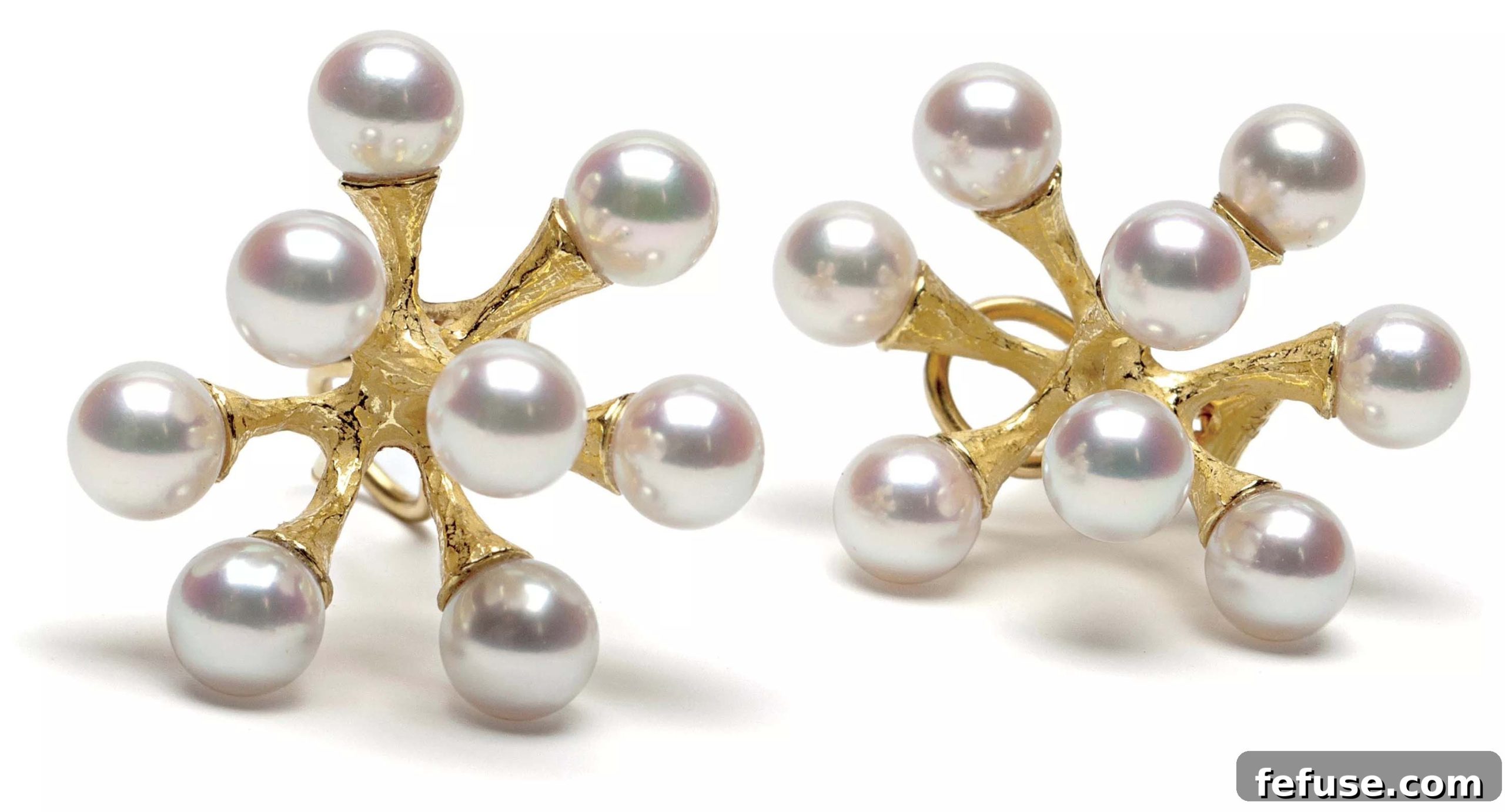
Single Jacks earrings in 18k gold with natural-color pink Akoya pearls; $3,900; John Iversen, East Hampton, N.Y.; 631-329-9756; johniversen.com
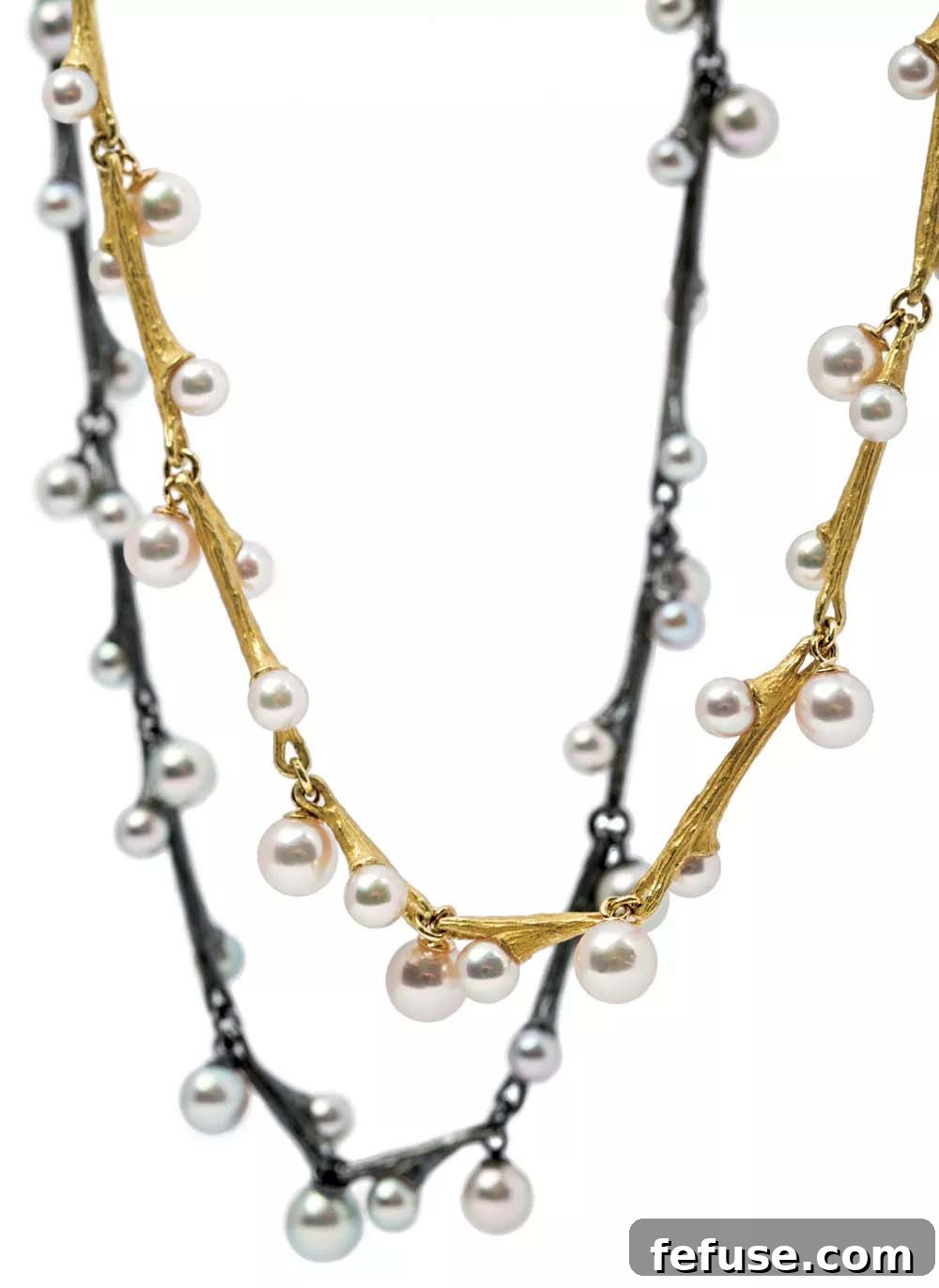
John Iversen Willow necklaces in sterling silver and 18k yellow gold with natural-color Akoya pearls; $3,200–$8,400
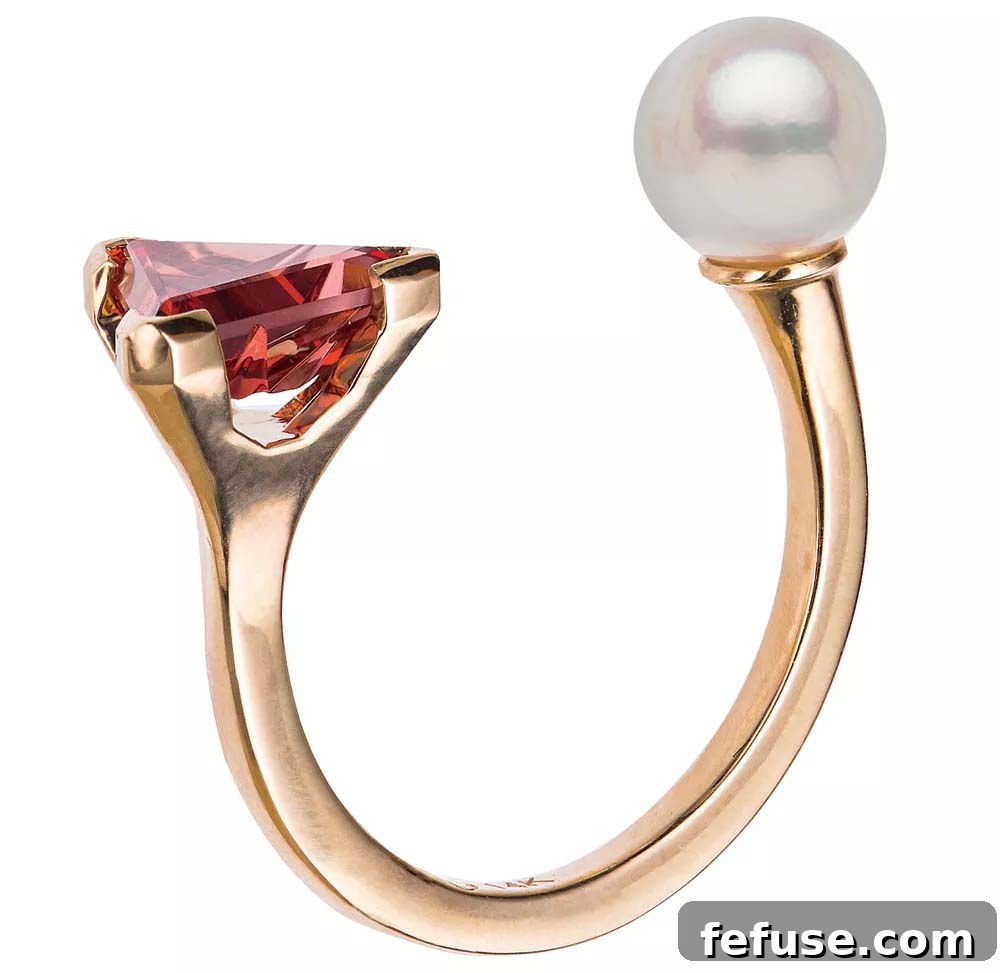
Ring in 14k gold with 1.23 ct. triangular fantasy-cut Gypsy Rose garnet and a 6.5 mm Japanese Akoya pearl; $3,000; Zhulia, San Diego; 760-487-5091; zhulia.com
The Dual Edges of Akoya’s Acclaim: Price, Supply, and Perception
While Akoya pearls are enjoying a triumphant return, their newfound success has not been without its complexities. The very reputation that once made them a timeless classic now presents a unique set of challenges. One significant factor is the double-edged sword of soaring Asian demand, particularly from China. While this demand has undoubtedly elevated Akoya’s global profile and desirability, it has simultaneously driven up its cost significantly. Buyers across the wholesale market have observed a staggering range of price increases, akin to a “Grand Canyon–like” disparity, with hikes ranging from a modest 15 percent to an astonishing 75 percent. This volatility makes sourcing and pricing a delicate balancing act for many in the industry.
Price Escalation and Supply Pressures
The economic dynamics influencing Akoya prices are multifaceted. Joseph Nakamura, owner of Shogun Pearl, explains, “Because of the demand and dollar-yen exchange rate, our cost prices are higher for sizes under 7 millimeter.” The combination of robust demand and fluctuating currency values creates upward pressure on costs, especially for smaller, often more accessible Akoya sizes. Raphael Basalely, vice president of Eliko Pearl, echoes these sentiments, attributing similar buying struggles to “increased auction prices.” The competitive nature of pearl auctions, fueled by high global demand, inevitably translates to higher acquisition costs for retailers and wholesalers.
Compounding these price hikes is a concerning trend: the declining number of Akoya farms in both Japan and China. This reduction in pearl cultivation is attributed to a combination of factors, including decreasing profitability, the environmental sensitivity of pearl farming, and a lack of interest from the younger generation in continuing the labor-intensive trade. The result is a robust and growing appetite for Akoya pearls that is increasingly difficult to satisfy, creating a significant imbalance between supply and demand. This scarcity, in turn, further fuels price increases and challenges the ability of the market to meet consumer desires efficiently.
Overcoming the “Granny Pearl” Stigma
Beyond economic pressures, the Akoya market also grapples with a persistent, hard-to-shake “white-strand stigma.” For decades, many retailers have struggled to convince themselves—let alone their clients—of the appeal of Akoya jewelry beyond the traditional, classic strand. This perception has limited the pearl’s market potential and boxed it into a narrow, somewhat outdated image. However, designers are actively working to break free from this stereotype.
Jocelyn Prestia of Unhada Jewelry provides a compelling firsthand account of overcoming this reluctance. At a recent trunk show, despite initial advice from the store owner “not to bring any pearl jewelry,” Prestia decided to showcase a couple of new pieces, including a striking $5,050 Akoya pearl ring. Her intuition paid off handsomely: “It got more oohs and aahs than any other piece. I probably could have sold five more,” she recounts. This anecdote powerfully illustrates that when Akoyas are presented in fresh, captivating designs, they readily capture the imagination and desire of modern consumers.
Educating both buyers and sellers on the finer nuances of Akoya pearls is paramount to sustaining and expanding their market presence. This includes highlighting the diverse appearances, quality grades, and price points of Akoyas. Kathy Grenier offers practical advice: “Be sure you have good, better, and best qualities.” She emphasizes a strategic approach similar to selling diamonds: “You need a similar philosophy to selling diamonds in that you show comparisons for better understanding and confidence building.” By transparently showcasing different qualities, retailers can empower consumers to make informed choices and appreciate the distinct value of each pearl.
Perhaps most critically, the industry must actively work to dismantle the entrenched “ol’ granny pearls” stereotype by offering a diverse range of intriguing Akoya pearl jewelry designs. Anil Maloo of Baggins urges retailers to “mix up the showcases so they don’t look boring and traditional.” This means embracing innovative settings, combining Akoyas with other gemstones, exploring unique arrangements, and presenting pearls in contemporary contexts that resonate with today’s fashion sensibilities. By transforming the presentation, retailers can transform perceptions and unlock the full potential of Akoya pearls.
Akoyas: The Golden Child of the Pearl World and Its Bright Future
In a dynamic pearl market where freshwater pearls have firmly established themselves as beautiful and affordable options, and South Sea pearls continue to be highly prized for their exceptional size and unique color palettes, there is an undeniable truth: Akoyas are currently the pearl world’s undisputed “golden child.” Their classic luster, elegant spherical shape, and versatile sizes make them ideal for a wide range of jewelry styles, from timeless solitaires to avant-garde creations. This enduring appeal positions them uniquely within the luxury segment.
Retailers and jewelers are increasingly recognizing the strategic importance of Akoyas. As Fran Mastoloni notes, “Customers want a better product that they can sell with a good value and margin.” Akoyas perfectly fit this criterion, offering both perceived value and healthy profitability for businesses. He further emphasizes their foundational role within his inventory, declaring Akoyas to be a true “cornerstone” of his business. This statement encapsulates the sentiment of many industry professionals who view Akoya pearls not just as a trend, but as an integral, continually evolving element of fine jewelry’s future. Their journey from historical staple to modern icon is a testament to their intrinsic beauty and the ingenuity of those who craft with them.
Top: Photograph by Ted Morrison
Fan earrings in 18k gold with Akoya pearls, amethysts, and diamonds, $10,198, Tara & Sons,NYC, 212-575-8191, tarapearls.com; ring in 14k rose gold with amethyst and Akoya pearls,$2,750, Victoria Six, Los Angeles, 818-470-5866, victoriasix.com; multistrand necklace in 18k gold with Akoya pearls and diamonds, $31,000, Assael, NYC, 212-819-0060, assael.com
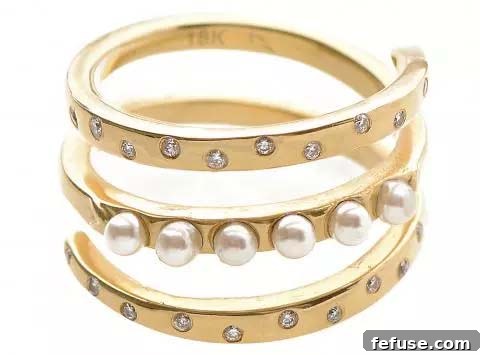
Inset: Triple Talon ring in 18k gold with Akoya pearls and 0.19 ct. t.w. diamonds; $5,700; Unhada, NYC; 877-481-8706; unhada.com
News Source : JCKOnline.com