
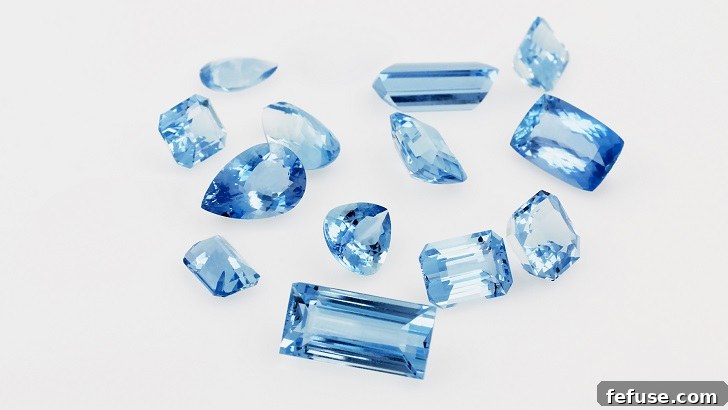
The Asian Institute of Gemological Sciences (AIGS), a globally recognized leader in gemological research and education, made a significant stride in standardizing the gemstone industry by launching its Santa Maria color code and grading reports for aquamarine in June 2022. This groundbreaking initiative aims to bring clarity, consistency, and confidence to the trade of one of the world’s most beloved blue gemstones. By meticulously defining the coveted “Santa Maria” hue, AIGS is not only setting a definitive standard for this specific trade name but also paving the way for greater transparency and trust across the entire gem market. This move underscores AIGS’s commitment to consumer protection and market integrity, ensuring that buyers and sellers alike can communicate with a shared understanding of quality and value.
Aquamarine, a mesmerizing variety of the mineral beryl, derives its name from the Latin words “aqua marina,” meaning “sea water,” a fitting descriptor for its captivating spectrum of blue and greenish-blue tones. Its allure lies in its often crystal-clear appearance, as most aquamarines are remarkably eye-clean, exhibiting very few, if any, visible inclusions. This inherent clarity means that color becomes the single most crucial factor in determining its value and desirability. The gemstone’s body color can range from delicate greenish-blue to a more pronounced blue-green, typically presenting in lighter tones. However, the market frequently sees aquamarines that have undergone heat treatment – a common and accepted enhancement process – to achieve a richer, more intense blue hue. While these treated stones are beautiful and widely appreciated, clean, unheated blue aquamarines with exceptional saturation are exceedingly rare and, consequently, highly sought after by collectors and connoisseurs due to their natural splendor and scarcity.
The AIGS Santa Maria color code is meticulously applied to aquamarines that exhibit a specific set of characteristics, embodying the pinnacle of aquamarine beauty. To qualify for this prestigious designation, an aquamarine must display a vibrant blue color with medium saturation, critically devoid of any brown or yellow tints that could detract from its pure, oceanic hue. This strict definition ensures that only the finest examples of blue aquamarine receive the Santa Maria distinction, separating them from lesser quality stones. Aquamarines exhibiting low saturation, significant clarity issues, or overly dark tones do not meet these stringent criteria, regardless of their origin. This precise definition by AIGS helps to eliminate ambiguity and provides a clear benchmark for what truly constitutes a “Santa Maria” quality aquamarine. The historical context of this trade name is deeply rooted in the gemological landscape of Brazil, where the legendary Santa Maria de Itabira mine in Minas Gerais was once the primary source of aquamarines exhibiting this typical, highly desirable color. While this illustrious mine has produced vast quantities of fine-colored aquamarines throughout its history, it is now largely depleted. It is crucial to understand that the AIGS code Santa Maria refers exclusively to the color characteristics of the gemstone and does not imply or certify its geographic origin, a distinction vital for maintaining accurate and transparent grading practices within the industry.
Brazil has historically been, and continues to be, one of the most significant sources of high-quality aquamarines globally. The aquamarines unearthed from Brazilian mines, particularly those in the mineral-rich state of Minas Gerais, are renowned for their brilliant blue color, exceptional clarity, and well-formed crystal structures, making them prized possessions in the international gem market. Beyond Brazil’s prominent contribution, the world’s geological tapestry offers several other notable sources of this captivating gemstone. Afghanistan and Pakistan, particularly their mountainous regions, yield fine aquamarines, often characterized by their vibrant blue and sometimes greenish-blue hues. African nations such as Mozambique, Nigeria, Zambia, and Madagascar are also significant producers, with their mines contributing a diverse range of colors and qualities to the global supply. Myanmar (Burma) and China further enrich the aquamarine market, each offering stones with distinct characteristics. The varied geological conditions across these regions result in aquamarines that, while sharing the overarching beryl composition, can display subtle differences in tone, saturation, and crystal habit, making the global aquamarine market a fascinating landscape for gem enthusiasts and collectors alike. Understanding these diverse origins and their typical productions is essential for appreciating the breadth and depth of aquamarine availability and quality.
Kennedy Ho, the esteemed Chairman of AIGS, eloquently articulated the profound significance of this new standard, stating, “The launch of the Santa Maria color code is yet another important initiative after launching our Jedi spinel reports last October. Trade names such as Pigeon Blood and Royal Blue have been used for centuries by gem traders to describe ideal colors implying value and rarity. Yet these trade names are often ambiguous with definitions varying between buyers and sellers alike. By transforming trade names into an industry standard through reports graded by third-party objectivity, AIGS aims to reduce such ambiguity.” This statement perfectly encapsulates the underlying philosophy driving AIGS’s mission: to bring scientific rigor and impartial assessment to a trade historically reliant on subjective descriptors. For generations, gem traders have utilized evocative, albeit imprecise, terms like “Pigeon Blood” for ruby or “Royal Blue” for sapphire to convey the epitome of color and quality. While these romantic names have served a purpose in the absence of universal standards, their inherent ambiguity has frequently led to misunderstandings, disputes, and inconsistencies in pricing and valuation. A lack of clear, universally accepted definitions for these premium color grades often results in different interpretations from one gemological laboratory to another, or even between individual traders, creating a fragmented and potentially untrustworthy market environment. AIGS’s proactive approach, evidenced by both the Santa Maria aquamarine and Jedi spinel initiatives, directly addresses this industry-wide challenge. By establishing a robust framework where such coveted trade names are underpinned by objective, scientifically derived criteria and documented in third-party graded reports, AIGS is building bridges of trust and fostering a more transparent and equitable marketplace. This commitment not only benefits consumers, who can now purchase with greater confidence, but also empowers traders with a standardized language, streamlining transactions and reducing the friction historically associated with subjective gem descriptions.
The implementation of a standardized color code like AIGS’s Santa Maria for aquamarine has far-reaching implications for the entire gemstone supply chain. For consumers, it translates into unprecedented transparency and reassurance. When a gemstone is accompanied by an AIGS report certifying its Santa Maria color, buyers can be confident that they are acquiring a stone that meets specific, documented quality parameters, rather than relying solely on a subjective description. This certainty helps to justify the premium price often associated with such highly desirable specimens and protects against misrepresentation. For retailers and jewelers, these reports serve as powerful sales tools, building trust with their clientele by providing verifiable proof of quality. It allows them to articulate the value of their inventory with precision and authority, enhancing their reputation and credibility in a competitive market. Wholesalers and dealers benefit from a streamlined process of buying and selling, as a common grading language reduces the need for extensive negotiation over color perception and quality assessment. This standardization facilitates international trade, making it easier for gems to move across borders with consistent recognition of their attributes. Furthermore, for gemologists and appraisers, the AIGS Santa Maria code provides a clear, consistent benchmark, enabling more accurate and uniform valuations, which is crucial for insurance purposes, estate planning, and market analysis. This move by AIGS represents a significant step towards bringing greater scientific rigor and objectivity to the historically subjective world of colored gemstone grading, setting a precedent that other institutions may follow. It reinforces the institute’s role as a pioneer in gemological education and research, consistently striving to elevate industry standards and foster an environment of ethical and transparent trade practices.
Beyond its economic and technical implications, the Santa Maria aquamarine, defined by this new standard, embodies a rare and exquisite beauty that continues to captivate hearts worldwide. Its tranquil blue hue, reminiscent of the clear, pristine waters of a tropical ocean, evokes feelings of serenity, calm, and joy. Aquamarine has long been associated with courage, communication, and happiness, making it a meaningful choice for jewelry and a cherished gift. The AIGS Santa Maria code specifically highlights those exceptional stones that possess the purest and most vibrant expression of this marine-inspired color, elevating their status and distinguishing them as truly premium examples. Whether set in an elegant engagement ring, a sophisticated necklace, or a pair of classic earrings, an AIGS Santa Maria aquamarine promises not only a stunning visual impact but also the confidence of a verified, top-tier gemstone. This level of certification adds an intrinsic layer of value, transforming a beautiful stone into a recognized benchmark of excellence. As the gemstone industry continues to evolve, initiatives like the AIGS Santa Maria color code are indispensable for maintaining consumer confidence, promoting fair trade, and preserving the integrity of precious gems. AIGS’s unwavering commitment to advancing gemological science and fostering transparent practices ensures that the beauty and value of gemstones like aquamarine are understood and appreciated for generations to come, securing their place as timeless treasures in the world of fine jewelry.