
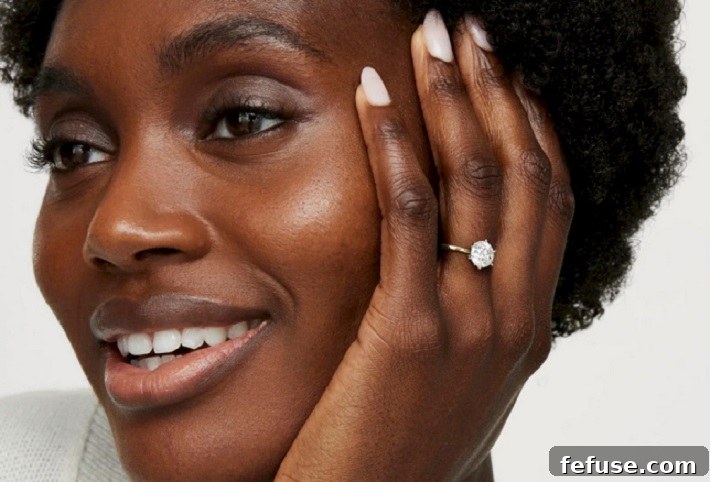
De Beers Ceases Lab-Grown Engagement Ring Sales, Reaffirming Focus on Natural Diamonds and Fashion Jewelry
London, UK – De Beers, the venerable giant of the diamond industry, has announced a significant strategic shift, declaring an end to its three-month trial of selling lab-grown diamond engagement rings. The company concluded that, despite initial curiosity from consumers, the commercial proposition for these rings proved “unsustainable.” This decision reinforces De Beers’ long-held belief in the distinct value and market position of natural diamonds for milestone occasions, while strategically repositioning its lab-grown diamond brand, Lightbox, to focus on fashion jewelry and loose stones at accessible price points.
A Brief Foray into the Bridal Market: Lightbox’s Engagement Ring Experiment
In June of this year, Lightbox, De Beers’ dedicated division for lab-grown diamonds, ventured into the highly competitive bridal market. This marked a notable departure from its established focus on everyday fashion jewelry. The initiative saw Lightbox introduce its first-ever collection of lab-grown engagement rings, accompanied by the evocative tagline, “Because great chemistry deserves great chemistry.” This slogan playfully hinted at both the scientific origin of the diamonds and the romantic connection they were intended to symbolize.
The collection featured a range of meticulously crafted pieces, with most rings priced around the $2,500 mark. Offerings varied from a modest 0.3-carat total weight (ct tw) three-stone ring, available for $500, to a more substantial $5,000 two-carat round brilliant solitaire engagement ring. These premium lab-grown diamonds were graded with impressive specifications, typically boasting colorless/VVS+ clarity, aiming to compete directly with natural diamonds on aesthetic merit.
At the outset of the trial, Lightbox CEO Antoine Borde articulated the company’s objective. He emphasized that the exercise was a controlled “in-market test” designed to gauge consumer preferences within the burgeoning lab-grown diamond engagement ring segment. Borde stated, “We are undertaking the test now to better understand more about consumer interest in lab-grown diamond engagement rings, and to better understand how Lightbox’s offering of clear information and accessible prices resonates in this segment.” The intention was clear: to gather critical data and insights into how lab-grown diamonds might fare in a market traditionally dominated by their natural counterparts, particularly when presented with Lightbox’s hallmark transparency and straightforward pricing model.
The Unyielding Commercial Realities: Why Lab-Grown Engagement Rings Proved “Unsustainable”
Following the conclusion of the three-month evaluation period, De Beers swiftly communicated its decision to discontinue the sale of lab-grown engagement rings. While specific, commercially sensitive details of the test results remain confidential, the company confirmed that sales performance aligned with their initial expectations. The core reason for withdrawal, as articulated by De Beers, centered on the fundamental economic challenges inherent in the lab-grown diamond engagement ring market.
A critical insight revealed during the trial highlighted the rapid commoditization and subsequent price erosion characteristic of lab-grown diamonds. De Beers noted that “Retailers already need to double the number of LGD carats sold every two years just to maintain a flat absolute gross profit.” This stark assessment underscores a significant hurdle for retailers and manufacturers alike. Unlike natural diamonds, which have historically demonstrated strong value retention and appreciation, lab-grown diamonds are essentially manufactured goods. As production technology improves and scales, supply increases, driving prices down at a much faster rate than demand can typically absorb for such a significant purchase. This creates an ever-decreasing margin environment, making it exceedingly difficult for businesses to sustain profitability over the long term, especially when dealing with the high transactional costs associated with selling engagement rings.
De Beers’ comprehensive understanding of the diamond market, refined over more than a century, played a crucial role in this assessment. The company deepened its grasp of the unique market dynamics surrounding lab-grown diamonds (LGDs) and carefully evaluated the evolving consumer perceptions associated with them. For a product meant to symbolize enduring love and a lifetime commitment, the rapid depreciation in value of lab-grown diamonds presents a distinct challenge to their emotional and perceived investment value. Consumers often associate engagement rings with timelessness and intrinsic worth, qualities that become increasingly difficult to attribute to a commodity product subject to swift price declines. This economic reality clashes with the traditional romance and enduring symbolism associated with engagement jewelry.
Lightbox’s Refocused Vision: Fashion Jewelry and Accessible Loose Stones
With the engagement ring trial now concluded, Lightbox will strategically pivot back to its foundational mission and areas where it identifies the most promising future opportunities within the sector. This refined focus will be squarely on fashion jewelry and the sale of loose lab-grown stones, both offered at accessible price points. This move aligns perfectly with De Beers’ initial vision when it launched Lightbox in May 2018.
At its inception, De Beers positioned Lightbox as a provider of “high-quality, fashion jewelry” specifically for “less serious occasions.” This original mandate implicitly differentiated lab-grown diamonds from natural diamonds, reserving the latter for significant life milestones like engagements and weddings. The decision to exit the lab-grown engagement ring market serves to re-emphasize and solidify this crucial distinction. Lightbox’s strategy embraces the inherent qualities of lab-grown diamonds – their beauty, consistent quality, and controlled origins – but situates them within a market segment where rapid price changes and lower emotional investment are less problematic.
In the realm of fashion jewelry, lab-grown diamonds can thrive. They offer designers unparalleled flexibility to create innovative and trendy pieces without the pricing constraints associated with natural diamonds. Consumers can acquire beautiful, high-quality diamond jewelry for everyday wear, gifting, or personal indulgence without the expectation of future value appreciation. This segment prioritizes aesthetics, design, and affordability over the intrinsic and enduring value traditionally sought in engagement rings. Similarly, the market for loose lab-grown stones caters to those seeking custom designs, specific sizes, or alternative applications where the inherent value proposition of natural diamonds is not the primary driver. Lightbox’s commitment to transparent and accessible pricing remains a cornerstone of its brand identity, ensuring consumers receive clear value for their purchases in these focused categories.
Broader Implications for the Diamond Industry and Consumer Choices
De Beers’ decision carries significant implications for the broader diamond industry, influencing both natural and lab-grown diamond sectors. For the natural diamond market, this move is likely to strengthen the perception of natural diamonds as the definitive choice for engagement rings and other significant life events. By explicitly stating the commercial unsustainability of lab-grown engagement rings, De Beers inadvertently bolsters the narrative of natural diamonds’ rarity, enduring value, and unique emotional resonance – qualities that have historically underpinned their premium pricing and desirability.
Conversely, this decision may prompt other players in the lab-grown diamond space to re-evaluate their own bridal market strategies. While some might see an opportunity to fill the void left by Lightbox, they will undoubtedly have to contend with the very economic pressures that led De Beers to withdraw. The rapid pace of technological advancement in lab-grown diamond production continues to increase supply and lower manufacturing costs, inevitably pushing down retail prices. This downward price spiral makes sustained profitability in the high-stakes, high-touch engagement ring segment particularly challenging for all participants.
For consumers, the landscape remains one of increasing choice. While De Beers refines its strategy, other brands continue to offer lab-grown engagement rings, often emphasizing their ethical and environmental claims. However, De Beers’ withdrawal serves as a powerful testament to the financial realities that underpin the diamond market. It encourages consumers to consider not only the initial purchase price but also the long-term value, emotional significance, and distinct market characteristics of both natural and lab-grown options, especially when making a once-in-a-lifetime purchase like an engagement ring. The conversation about “sustainability” now encompasses commercial viability, adding another layer of complexity to consumer decision-making beyond just environmental or social considerations.
Conclusion: A Clear Path Forward in a Evolving Market
De Beers’ three-month experiment with lab-grown engagement rings, though brief, has provided invaluable market insights. The company’s swift decision to exit this segment underscores its deep understanding of diamond market economics and consumer psychology, particularly concerning aspirational purchases. By re-centering Lightbox’s strategy on fashion jewelry and accessible loose stones, De Beers effectively carves out distinct, complementary roles for natural and lab-grown diamonds within its portfolio.
This move is not a rejection of lab-grown diamonds themselves, but rather a strategic allocation of resources to segments where they offer a genuinely sustainable commercial proposition. It clarifies De Beers’ position: natural diamonds remain the undisputed symbol for enduring commitment and exceptional value, while lab-grown diamonds, through Lightbox, provide an exciting and affordable option for fashion, self-expression, and casual adornment. As the diamond market continues to evolve, De Beers demonstrates a pragmatic and decisive approach, ensuring its leadership role by adapting to new realities while preserving the unique heritage and value of its core natural diamond business.