
Empowering India’s Artisan Core: GJEPC and Delhi Swarnkar Sangh Drive Key Initiatives
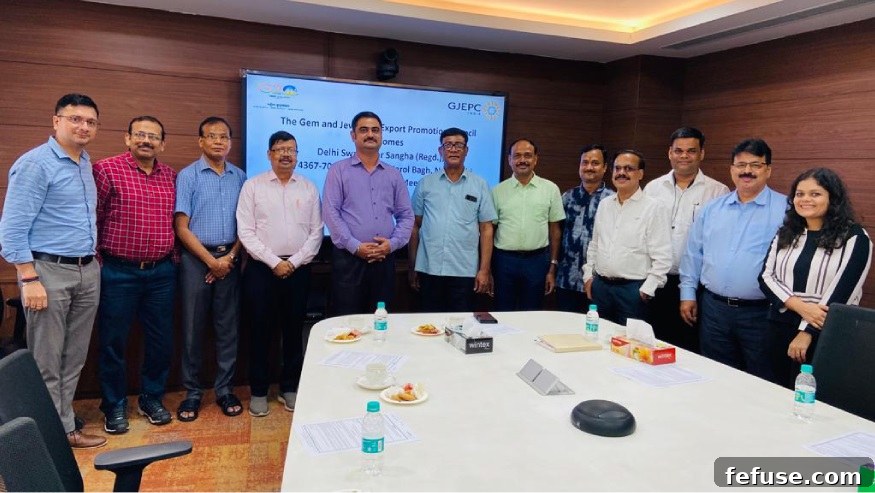
The vibrant tapestry of India’s gem and jewellery sector is intricately woven by the hands of its skilled artisans, the unsung heroes whose traditional craftsmanship has earned global acclaim. Recognizing their pivotal role and the imperative for their sustained growth and welfare, the Gem & Jewellery Export Promotion Council (GJEPC) has consistently championed initiatives aimed at empowering this vital segment. In a significant stride towards this goal, the GJEPC’s Regional Office in Delhi recently convened a crucial meeting with the esteemed office bearers of the Delhi Swarnkar Sangh on September 15th. This gathering served as a dynamic platform for fostering dialogue and outlining strategic interventions designed to uplift the lives and livelihoods of jewellery artisans, particularly those within the bustling Karol Bagh area of Delhi.
The Delhi Swarnkar Sangh, a venerable association with a profound commitment to safeguarding the interests of thousands of jewellery artisans, actively participated in a productive discussion. The agenda focused on two monumental initiatives poised to reshape the landscape for skilled craftsmen across the nation. These programs underscore a collective vision to formalize the sector, enhance skill sets, provide essential recognition, and address long-standing challenges faced by the artisan community. The collaborative spirit demonstrated during this meeting highlights the synergistic potential when industry bodies and artisan associations unite for a common, noble cause.
Pioneering Progress: The Parichay Card Scheme
At the forefront of the meeting’s primary agenda was the in-depth introduction of the Parichay Card Scheme, a commendable and visionary initiative spearheaded by the GJEPC itself. The Parichay Card is much more than a mere identification document; it represents a comprehensive effort to formalize the vast, often informal, workforce within India’s gem and jewellery industry. This unique identification card aims to provide every artisan with a recognized identity, integrating them into the formal economy and enabling better access to government schemes, industry benefits, and welfare programs tailored for their specific needs.
For jewellery artisans, obtaining a Parichay Card signifies a crucial step towards professional recognition. It allows for accurate data collection regarding the industry’s workforce, which, in turn, facilitates better policy formulation and targeted interventions for skill development, health, and social security. The GJEPC has meticulously designed this scheme to ensure that even the most remote artisans can avail of its benefits, fostering a sense of belonging and security within the larger industry framework. The process of registration was thoroughly explained during the meeting, outlining the necessary steps to ensure a smooth and accessible enrolment for all eligible craftsmen.
The Delhi Swarnkar Sangh, with its impressive membership base of over 40,000 skilled artisans, expressed enthusiastic support for the Parichay Card Scheme. Demonstrating their commitment to their members’ welfare, the Sangh articulated ambitious plans to enroll at least 5,000 artisans into the scheme. This significant commitment will not only provide formal recognition to a substantial number of craftsmen but also serve as a powerful testament to the scheme’s efficacy and the collective desire for greater organization and welfare within the sector. Such large-scale enrollment is expected to create a ripple effect, encouraging more artisans to come forward and embrace the formal identity that the Parichay Card offers, thereby strengthening the foundation of India’s traditional jewellery making.
A National Vision for Artisans: Prime Minister Vishwakarma Yojna
Another pivotal topic of discussion was the imminent launch of the Prime Minister Vishwakarma Yojna, a flagship national program scheduled to commence on September 17, 2023. This visionary initiative, conceptualized by the Prime Minister, is designed to uplift and empower ‘Vishwakarmas’ – a term encompassing traditional artisans and craftspeople across a multitude of skilled trades. From carpenters and blacksmiths to potters and barbers, and critically, the esteemed field of jewellery craftsmanship, the Yojna aims to provide holistic support to those who uphold India’s rich cultural heritage through their hands-on skills.
The Prime Minister Vishwakarma Yojna is structured to deliver multifaceted benefits to artisans, directly addressing many of the historical challenges they have faced. These benefits are expected to include, but are not limited to, comprehensive skill training programs designed to enhance traditional crafts with modern techniques, access to advanced tools and technology to improve efficiency and product quality, and crucial financial assistance in the form of collateral-free credit support. Furthermore, the scheme aims to facilitate market linkages, helping artisans connect directly with consumers and larger markets, thereby eliminating intermediaries and ensuring better remuneration for their exquisite work. For jewellery artisans, this translates into opportunities for skill upgradation in contemporary designs and techniques, access to better polishing and crafting equipment, and avenues to showcase their creations on national and international platforms.
The introduction of this national scheme is particularly significant for the jewellery sector, which is a key contributor to India’s economy and cultural identity. By providing a structured framework for skill development, financial inclusion, and market access, the Vishwakarma Yojna is set to foster a new generation of empowered artisans. It aligns perfectly with the national ‘Make in India’ vision, promoting indigenous craftsmanship and ensuring that traditional skills not only survive but thrive in the modern age. The GJEPC and Delhi Swarnkar Sangh emphasized the importance of artisans preparing to register for this scheme, leveraging its provisions to secure their future and elevate their craft.
Addressing Core Challenges: Workspace Security and Collective Action
Beyond the introduction of new schemes, the meeting also served as a crucial initial forum for the GJEPC representatives to engage in attentive listening to the concerns voiced by the Delhi Swarnkar Sangh. A particularly distressing issue brought to the fore was the unfortunate series of forced closures and sealings of modest artisan workspaces in 2018. These actions, undertaken during the previous administration led by the Municipal Corporation of Delhi (MCD), had a profound and detrimental impact on the livelihoods of countless artisans, many of whom operate from small, informal workshops that are the backbone of the Karol Bagh jewellery ecosystem.
The memory of these closures continues to weigh heavily on the artisan community, highlighting the precarious nature of their working environments and the urgent need for secure, legitimate operational spaces. Such disruptions not only lead to significant financial losses but also undermine morale and threaten the continuity of traditional craftsmanship. The Delhi Swarnkar Sangh effectively conveyed the hardships endured by its members, emphasizing the critical importance of stability and supportive regulatory frameworks for the artisan community to flourish.
In a constructive response to these grievances, the GJEPC strongly encouraged the artisans and their representatives to collaborate actively in addressing these pressing concerns. The Council urged the Delhi Swarnkar Sangh to work in close coordination with key industry figures and associations, specifically mentioning the Regional Chairman – North, GJEPC, and the esteemed Secretary of the Delhi Sarafa Association. This call for a unified front is strategically designed to pool resources, amplify voices, and ensure that the interests of the artisans are effectively represented before relevant authorities and policymakers. By presenting a cohesive and united stance, the artisan community, supported by influential industry bodies, stands a much stronger chance of advocating for long-term solutions, including policy changes that would grant greater security and legitimacy to their workspaces, preventing future disruptions.
The Strength of Unity: Delhi Swarnkar Sangh’s Impact
The Delhi Swarnkar Sangh stands as a formidable organization, representing the interests of over 40,000 skilled artisans. This substantial membership base not only reflects the widespread presence of jewellery craftsmanship in Delhi but also underscores the collective power and influence the Sangh wields. Such a large and organized body is instrumental in advocating for its members, negotiating with local and national authorities, and implementing welfare programs that have a tangible impact on the ground. Their commitment to initiatives like the Parichay Card Scheme, with a target of enrolling 5,000 artisans, demonstrates their proactive approach to enhancing the lives of their community members.
The Sangh’s ability to mobilize and represent such a significant portion of the artisan workforce makes it a critical partner for organizations like the GJEPC and governmental bodies aiming to implement artisan-centric policies. Their role extends beyond mere representation; they act as a bridge, ensuring that the needs and concerns of individual craftsmen are heard and addressed at a higher level. This robust organizational structure is vital for the sustained growth and welfare of the traditional jewellery sector in Delhi and beyond.
A Future Forged in Collaboration and Empowerment
The meeting between the GJEPC’s Delhi Regional Office and the Delhi Swarnkar Sangh marks a pivotal moment in the ongoing efforts to empower India’s skilled jewellery artisans. The discussions centered around the Parichay Card Scheme and the Prime Minister Vishwakarma Yojna are not merely about administrative processes; they embody a profound commitment to recognizing, formalizing, and uplifting a community that forms the very bedrock of India’s cultural and economic heritage. By providing formal identity, enhancing skills, ensuring financial access, and collectively addressing systemic challenges like workspace security, these initiatives pave the way for a more stable, prosperous, and dignified future for Indian craftsmanship.
The collaborative spirit fostered between industry bodies and artisan associations is the most potent tool for driving meaningful change. As India strives to position itself as a global leader in the gem and jewellery sector, the welfare and empowerment of its artisans will remain paramount. This meeting serves as a beacon of hope, illustrating a clear path forward where tradition meets modernity, and where every skilled hand is recognized, valued, and provided with the opportunities needed to thrive. The future of Indian jewellery craftsmanship shines brighter, forged in the fires of collective action and unwavering support.