
The Dynamic Global Jewellery Market: Asia’s Ascendance and Future Trends Revealed
The global fine jewellery market is a vibrant and ever-evolving landscape, characterized by shifting consumer preferences, economic growth, and cultural influences. A pivotal moment for industry stakeholders seeking to understand these transformations occurred at the International Jewellery London (IJL) trade show, held from September 2-4, 2018. During this esteemed event, Euromonitor International, a world leader in strategic market research, delivered a compelling presentation titled “Jewellery overview and impact of travel.” This insightful session on the opening day provided a comprehensive analysis, presenting critical statistics and projections that illuminated the trajectory of the world jewellery market, particularly highlighting significant regional shifts.
A New Global Hierarchy: India Overtakes the United States
One of the most striking revelations from Euromonitor International’s study was the dramatic repositioning of key players in the fine jewellery sector. The report projected that the Indian fine jewellery market was poised to claim the second position globally by the close of 2018, effectively outranking the United States. This monumental shift was underpinned by robust retail sales figures, with India anticipated to achieve approximately US$ 62.8 billion by the end of the year. This impressive sum notably surpassed the projected retail jewellery expenditure in the US, which was estimated at US$ 58.6 billion, by a margin of just over US$ 4 billion. Such a substantial growth trajectory firmly established India as the world’s second-largest fine jewellery market, trailing only behind the colossal Chinese market.
China’s Unrivaled Dominance
While India’s ascension was a major headline, China continued to underscore its formidable presence as the undisputed leader in the global jewellery arena. Euromonitor International’s data revealed that jewellery sales in China had already reached an impressive US$ 86.3 billion by the end of 2017. The momentum showed no signs of abating, with projections indicating a further surge to an estimated US$ 92 billion by the end of 2018. This consistent growth cemented China’s position at the forefront of the industry. The research agency further emphasized the extraordinary expansion of the Chinese market, which had witnessed an overall growth of over 21 percent in the preceding five years. This consistent upward trend is largely attributable to a burgeoning middle class with increasing disposable incomes, a deep cultural appreciation for jewellery as both an adornment and an investment, and an evolving consumer palate that embraces both traditional craftsmanship and modern, innovative designs. The vast population and rapid urbanization continue to fuel demand across various segments, from daily wear to high-end luxury pieces, making China a critical focus for global jewellery brands and manufacturers.
India’s Remarkable Ascent: A Fusion of Tradition and Modernity
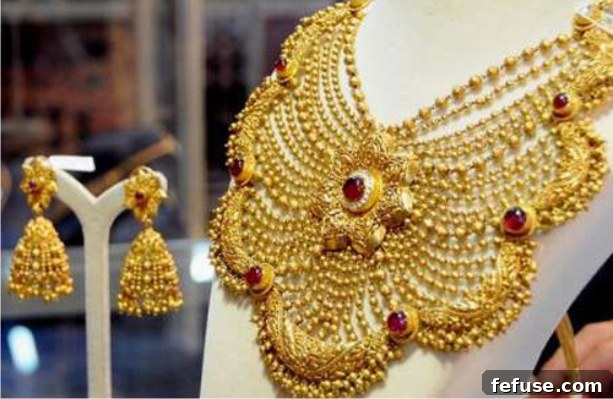
The spotlight on India’s fine jewellery market was not just about its new ranking but also its exceptional growth rate. Over the five-year period leading up to 2018, the Indian market demonstrated an astonishing expansion of 74 percent. To put this into perspective, its value soared from a base of US$ 36.1 billion in 2014 to the projected US$ 62.8 billion in 2018. This vigorous growth significantly outpaced the US market, which, over the same period, grew by a comparatively modest 12 percent, increasing from US$ 52.2 billion in 2014 to US$ 58.6 billion in 2018. India’s growth story is deeply rooted in its cultural fabric, where jewellery holds immense significance, particularly during auspicious occasions such as weddings and festivals. Gold, in particular, is not merely an ornament but a traditional form of investment and a symbol of prosperity. However, recent trends also indicate a diversification in consumer preferences, with increasing appetite for platinum, diamonds, and a wider array of coloured gemstones, alongside the perennial demand for gold. This evolving landscape reflects a younger demographic seeking contemporary designs and a growing consumer base with greater purchasing power, driving innovation and variety within the market.
The Evolving Role of the US Market
While the US market for fine jewellery experienced a slower growth rate compared to its Asian counterparts, it remains a powerhouse within the global industry. Growing by 12% over the last five years from US$ 52.2 billion in 2014 to an anticipated US$ 58.6 billion in 2018, the US market demonstrates stability and maturity. It is characterized by a strong consumer base with significant purchasing power and a diverse range of preferences. American consumers often seek both classic, timeless pieces and modern, fashion-forward designs. Engagement rings, wedding bands, and anniversary gifts continue to drive a substantial portion of sales, with diamonds remaining a dominant feature. The market is also seeing trends towards personalized jewellery, ethical sourcing, and a greater emphasis on brand storytelling. Although it has been surpassed by India in retail value, the US market continues to be a vital hub for luxury brands, innovation in retail experiences, and a trendsetter in certain design aesthetics, making it an indispensable part of the global jewellery ecosystem.
Contrasting Fortunes: Japan and Hong Kong
Euromonitor International’s analysis extended beyond the top three, encompassing the entire top five global jewellery markets, which included Japan and Hong Kong. The agency projected that, with the exception of Hong Kong, all of these leading markets—China, India, USA, and Japan—would exhibit a year-on-year increase by the close of 2018. Japan, a mature market renowned for its appreciation of high-quality craftsmanship, intricate designs, and established luxury brands, typically demonstrates stable growth driven by discerning consumers. In contrast, the Hong Kong market was identified as an outlier, facing a minor decline over the preceding five years. Its market value receded from $7.8 billion in 2014 to a projected $7.2 billion in 2018. This dip can be attributed to several factors, including shifting tourism patterns, increased competition from mainland China, and evolving geopolitical dynamics that impacted consumer confidence and spending within the region. Despite this, Hong Kong maintains its significance as a regional trading hub and a gateway for luxury goods, albeit with a need for strategic adaptation to current market conditions.
Global Jewellery Market: Key Trends and Driving Forces
The insights from Euromonitor International at IJL 2018 underscored several overarching trends shaping the global jewellery market:
- Economic Prosperity and Rising Disposable Incomes: Across developing economies, particularly in Asia, a burgeoning middle class and increasing discretionary spending power are directly translating into higher demand for luxury goods, including fine jewellery. This demographic shift is a primary catalyst for market expansion in regions like China and India.
- Demographic Shifts and Evolving Consumer Preferences: The younger generations, including millennials and Gen Z, are increasingly influential consumers. They are characterized by a preference for personalized items, ethically sourced materials, unique designs, and a strong engagement with digital platforms. Their purchasing decisions are often driven by values and self-expression, prompting brands to adapt their product offerings and marketing strategies.
- The Digital Transformation: E-commerce and Online Engagement: The rise of e-commerce has revolutionized the jewellery retail landscape. Online platforms offer unparalleled convenience, wider selections, and competitive pricing, making fine jewellery more accessible globally. Digital marketing, social media influence, and virtual try-on technologies are also becoming integral to engaging consumers and driving sales.
- Sustainability and Ethical Sourcing: Consumer awareness regarding the origins and ethical implications of precious metals and gemstones is growing significantly. Demand for conflict-free diamonds, responsibly mined gold, and transparent supply chains is pushing the industry towards greater accountability and sustainable practices. Brands that prioritize ethical sourcing are gaining a competitive edge.
- Innovation in Design and Materials: While gold remains a cornerstone, the market is witnessing a diversification in material preferences. The increasing appetite for platinum, diamonds, and a broader spectrum of coloured gemstones, as highlighted by Fotoulla Michael, Head of Sales at International Jewellery London (IJL), indicates a shift towards varied aesthetics and personalized choices. Innovative designs, bespoke pieces, and the integration of technology (e.g., smart jewellery) are also key areas of growth.
- Impact of Travel Retail: As highlighted by the presentation’s title, the impact of international travel on luxury purchases, including jewellery, is substantial. Tourists often seek unique pieces as souvenirs or capitalize on duty-free shopping opportunities, particularly in key travel hubs. Fluctuations in international travel patterns can therefore directly influence regional jewellery sales.
Industry Reactions and Strategic Implications
The research presented by Euromonitor International resonated deeply within the industry. Fotoulla Michael, Head of Sales at International Jewellery London (IJL), remarked, “This research shows that the Indian market for fine jewellery has grown enormously over the last five years. There has been news in recent months about increased appetite for platinum, diamonds and also coloured stones, alongside the more traditional demand for gold jewellery. India’s growing domestic market will have a huge impact on worldwide jewellery trade.” Her statement encapsulates the sentiment that the shifts in Asian markets are not merely regional phenomena but have profound implications for global trade dynamics, supply chains, and design trends.
Earlier, in previewing Euromonitor International’s presentation, IJL had also provided a glimpse into the broader market outlook, noting Euromonitor International’s prediction for the worldwide retail jewellery market to exceed an impressive US$ 331 billion by the end of 2018. Furthermore, the agency highlighted that the top five countries—China, India, US, Japan, and Hong Kong—collectively account for a staggering 70% of worldwide jewellery spending. This concentration of spending underscores the critical importance of these markets and the need for global brands to have tailored strategies for each.
For manufacturers and retailers globally, these insights emphasize the imperative to adapt. This includes investing in market-specific product development, understanding diverse consumer psychographics, building robust e-commerce capabilities, and ensuring transparent and ethical supply chains. The future of the global jewellery market is not just about growth but about smart, responsive, and ethically conscious growth that caters to a truly global and interconnected consumer base.
News Source: gjepc.org