
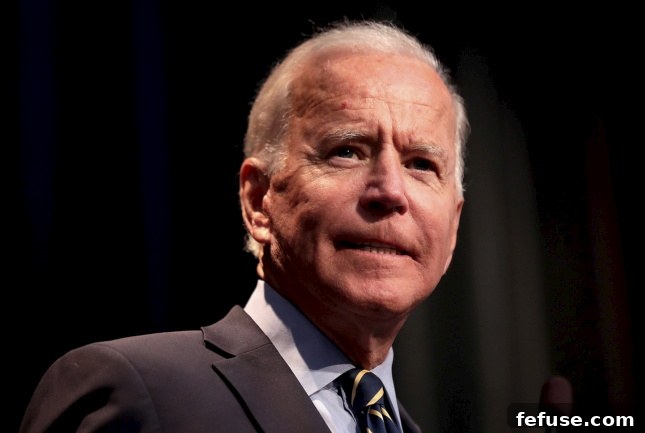
The Biden administration is currently facing significant pressure from a bipartisan group of U.S. congressmen urging the implementation of more robust and effective sanctions on Russian diamonds. This intensified push comes amid growing concerns that existing restrictions are proving inadequate in cutting off a crucial revenue stream for the Russian government, which continues to fund its ongoing invasion of Ukraine. Lawmakers argue that the current measures, initially announced on March 11, possess a fundamental flaw that severely undermines their intended impact, allowing a substantial volume of Russian-origin diamonds to circumvent the prohibitions and enter the global market, including the United States.
The core of the issue lies in the design of the initial sanctions. As critics highlight, these restrictions primarily target and prohibit the direct importation of rough diamonds from Russia. However, they conspicuously omit a critical segment of the diamond trade: gems that have undergone the processes of cutting and polishing outside of Russia’s borders. This omission creates a significant loophole, effectively enabling Russian diamonds to be transformed into finished products in third countries, thereby losing their direct ‘Russian origin’ label before being exported to international markets. This allows them to bypass the very sanctions designed to curb Russia’s access to vital funds.
Consequently, members of Congress are vehemently urging the Biden administration to close this pervasive loophole. Their primary concern is that Alrosa, Russia’s state-backed diamond mining giant, is still able to sell its diamonds freely in the U.S. and other lucrative markets, despite the declared sanctions. Given that the Russian government holds a significant one-third ownership stake in Alrosa, the revenues generated from these diamond sales directly contribute to the Kremlin’s coffers, inadvertently supporting its military efforts in Ukraine. This situation is seen as an unacceptable paradox, where economic sanctions are in place, yet a major Russian commodity continues to generate substantial income for the sanctioned regime.
The gravity of these concerns was formally articulated in a compelling letter dispatched by the bipartisan group of lawmakers. This communication was addressed directly to key figures within the Biden administration: Secretary of State Tony Blinken and Treasury Secretary Janet Yellen. The letter underscored the urgent need for a re-evaluation of the existing sanctions framework and advocated for more stringent measures that could effectively block Russia’s diamond revenue. The signatories of the letter emphasized their collective belief that the current approach falls short of its strategic objective to economically pressure Russia.
Within the detailed correspondence, the lawmakers explicitly stated their plea: “We ask for your consideration of additional actions that would constrain the Kremlin’s capacity to access revenue from their diamond industry which could fund the invasion of democratic and sovereign Ukraine.” This statement encapsulates the moral and strategic imperative driving the congressional demand for action. It highlights the direct link between the sale of Russian diamonds and the financing of a conflict that has resulted in widespread humanitarian crisis and geopolitical instability. The call for “additional actions” signals a clear demand for more comprehensive and watertight measures, moving beyond the current, easily circumvented restrictions.
The loophole permitting the trade of cut and polished Russian diamonds through third countries is a major pain point for policymakers. The process typically involves rough diamonds mined by Alrosa being shipped to major diamond cutting and polishing centers, most notably in India. Once these rough stones are transformed into sparkling gems, their country of origin becomes legally ambiguous or even completely erased under existing international trade rules, particularly for customs purposes. This transformation in a third country allows these diamonds to be designated as products of that country, effectively laundering their origin and making them eligible for import into markets like the United States, which technically prohibits direct Russian rough diamond imports.
Alrosa’s prominence in the global diamond industry cannot be overstated. It is the world’s largest diamond mining company by volume, responsible for approximately 30% of the global rough diamond supply. This market dominance gives Russia immense leverage and a significant economic advantage, making diamonds a critical export commodity for the nation. The direct ownership stake by the Russian government ensures that a substantial portion of Alrosa’s profits flows directly into state funds, providing a stable and considerable revenue stream that can be allocated to various government expenditures, including military funding. Blocking this revenue is therefore a strategic priority for those seeking to cripple Russia’s war machine.
The economic impact of Alrosa’s continued operation, even under sanctions, is substantial. Experts estimate that Russia’s diamond industry generates billions of dollars annually, a significant portion of which is directly accessible to the Kremlin. Allowing this trade to persist through the existing loophole fundamentally undermines the broader international effort to impose severe economic costs on Russia for its aggression in Ukraine. The bipartisan pressure from Congress reflects a growing frustration that a key sector of the Russian economy remains relatively untouched, especially when compared to the stringent sanctions applied to other sectors like energy and finance.
Implementing truly effective sanctions on Russian diamonds presents complex challenges for the Biden administration and its allies. The primary difficulty lies in the intricate global supply chain of diamonds. After being mined, diamonds often pass through multiple hands, countries, and processing stages before reaching the end consumer. Tracing the origin of a cut and polished diamond becomes incredibly difficult once it has left Russia and undergone transformation in another country. Current traceability systems, such as the Kimberley Process, primarily focus on preventing the trade of conflict diamonds and are not inherently designed to track the national origin of all rough diamonds through their entire lifecycle, particularly after they are processed.
The global diamond industry is also highly interconnected, with major cutting and polishing hubs, particularly in India, heavily reliant on a consistent supply of rough diamonds, a significant portion of which traditionally comes from Russia. Any sudden and complete ban on all Russian-origin diamonds, regardless of processing location, would have profound economic repercussions for these processing centers, potentially leading to job losses and significant disruption in an industry that employs millions worldwide. This delicate balance between geopolitical objectives and economic stability is a major consideration for policymakers as they weigh stronger sanctions.
However, the ethical imperative to act remains strong. Many consumers and jewelers are increasingly demanding assurance that the diamonds they purchase are not inadvertently funding conflict or human rights abuses. The war in Ukraine has heightened this awareness, putting pressure on retailers and the entire supply chain to ensure ethical sourcing. The perception that Russian diamonds are still circulating freely in the market, indirectly supporting the invasion, creates a significant challenge for the industry’s commitment to responsible practices and tarnishes the image of luxury goods.
To address these challenges and implement more effective sanctions, several mechanisms and solutions are being explored. One potential avenue involves developing enhanced traceability systems that can track a diamond’s journey from mine to market with greater precision. Technologies like blockchain are being considered for their potential to provide an immutable and transparent ledger of a diamond’s origin and subsequent movements. Such systems could, in theory, create a digital “passport” for each stone, making it much harder to launder the origin of Russian diamonds.
Another approach could involve stricter certification requirements that demand proof of non-Russian origin for all diamonds imported into sanctioning countries, regardless of where they were cut and polished. This would place a greater burden on importers and potentially require greater collaboration among international customs agencies and diamond industry bodies. The G7 nations, which represent a significant portion of the global luxury market, could play a pivotal role in establishing such unified standards and enforcement mechanisms, creating a powerful block against Russian diamond revenues.
The involvement of India, as the world’s largest diamond cutting and polishing center, is critical in any strategy to tighten sanctions. Engaging with Indian authorities and the Indian diamond industry to find mutually acceptable solutions that minimize economic disruption while adhering to sanction goals would be essential. This could involve exploring alternative sources of rough diamonds, adjusting supply chains, or implementing new verification protocols within their processing hubs to prevent the re-export of Russian-origin stones.
Furthermore, increased consumer awareness and demand for transparent sourcing can drive change from the bottom up. As consumers become more informed about the origins of their diamonds and the ethical implications, they can exert pressure on jewelers and retailers to ensure that their supply chains are free from Russian diamonds. Many reputable jewelers are already proactively seeking non-Russian sources and implementing stricter internal due diligence processes to address these concerns, recognizing the importance of maintaining consumer trust and upholding ethical standards.
The call for stronger diamond sanctions is not merely about financial punishment; it is also a moral stand against aggression. By effectively cutting off another significant source of funding for the Russian state, the international community reinforces its commitment to supporting Ukraine and upholding international law. The current debate signifies a pivotal moment for the diamond industry, which must navigate the complexities of global trade while addressing the ethical demands placed upon it by a world increasingly concerned with responsible sourcing.
In conclusion, the pressure on President Biden to tighten sanctions on Russian diamonds is a multifaceted issue encompassing economic strategy, geopolitical objectives, and ethical considerations. The existing loophole allowing cut and polished Russian diamonds to enter the U.S. market is a glaring deficiency that needs immediate attention. Congress’s bipartisan demand for “additional actions” underscores the urgency of closing this revenue stream for the Kremlin. While the implementation of comprehensive sanctions presents significant challenges for the intricate global diamond supply chain, the imperative to act effectively and decisively to curb Russia’s capacity to fund its war efforts in Ukraine remains paramount. The ongoing discussions will undoubtedly shape the future landscape of the global diamond industry, pushing it towards greater transparency and more rigorous ethical sourcing practices.