
In an era marked by unprecedented global economic turbulence, the luxury watch industry finds itself navigating a complex landscape of challenges. However, amidst these headwinds, a clear silver lining has emerged: the flourishing pre-owned luxury watch market. This dynamic segment is not merely holding its own but is actively driving a significant, albeit modest, recovery, particularly championed by iconic models from prestigious brands such as Rolex and Patek Philippe. While new watch sales grapple with the cumulative pressures of escalating tariffs, volatile currency fluctuations, and a noticeable slowdown in demand across crucial international markets, the secondary market continues to demonstrate remarkable resilience and growth, solidifying its position as a vibrant cornerstone of the luxury timepiece industry.
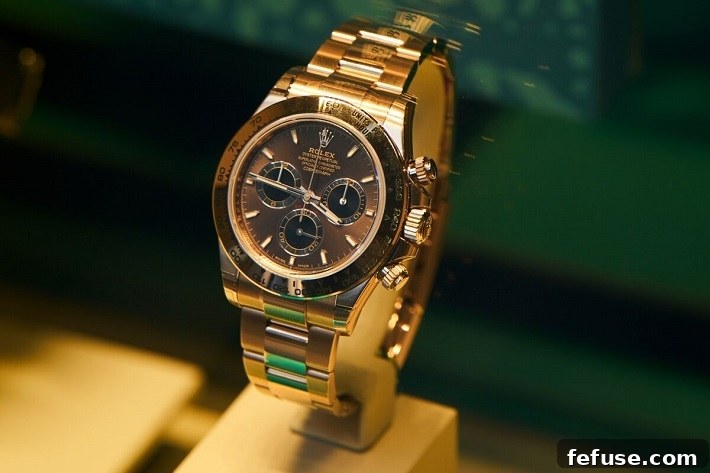
The compelling performance of the pre-owned sector is meticulously illustrated by the Bloomberg Subdial Watch Index. This authoritative index, which rigorously tracks the transaction values of the top 50 most frequently traded luxury watches, reported a robust 5.3% climb during the first half of 2025. This impressive upward trajectory has shown no signs of abating, maintaining strong momentum well into the third quarter. Leading this remarkable surge are highly coveted models like Rolex’s illustrious gold Daytona 116508 and Patek Philippe’s elegantly understated Aquanaut 5167A. Both models have experienced a notable surge in value, reflecting a heightened and consistent demand from collectors, astute investors, and passionate enthusiasts alike, cementing their status as highly desirable assets in a fluctuating market.
While these recent gains may not replicate the explosive, almost unprecedented growth rates observed during the global pandemic – a period when consumers, flush with unexpected disposable income and limited travel options, enthusiastically turned to high-end luxury goods as both a splurge and a tangible investment – they are undeniably significant. The current resurgence is unfolding within a starkly different and demonstrably more challenging macroeconomic environment. Today’s market is characterized by pervasive inflation, persistent geopolitical uncertainties stemming from ongoing conflicts in various regions, and a tightening of global trade policies, most notably the imposition of substantial tariffs. This profound contrast underscores the inherent strength, unique appeal, and surprising stability of the pre-owned luxury watch segment, distinguishing it from broader market vulnerabilities.
The Shifting Sands of the New Watch Market
In stark contrast to the sustained vibrancy of the secondary market, the primary market for new luxury watches is experiencing considerable difficulties and operational challenges. One of the most significant impediments has been the introduction of a punitive 39% U.S. tariff on Swiss watch imports. This exceptionally steep tariff, enacted amidst an escalating climate of international trade tensions and protectionist policies, has dealt a severe blow to manufacturers and retailers operating within the primary market. The immediate repercussions are strikingly evident in official statistics: Swiss watch exports registered a notable 5.6% decline in June, extending a worrying downward trend that began earlier in the year. This pronounced downturn has particularly impacted shipments to key global markets, including the United States, Japan, and Hong Kong, which collectively represent some of the largest, most affluent, and historically influential buyers in the luxury watch industry, highlighting the widespread nature of the market’s struggles.
Beyond the direct impact of tariffs, other macroeconomic factors contribute significantly to the primary market’s struggles. A persistently strong Swiss franc against major global currencies makes Swiss-made watches inherently more expensive for international buyers, thereby reducing their competitive edge in foreign markets. Furthermore, broader economic slowdowns and inflationary pressures in critical regions like mainland China have dampened overall consumer spending on high-value discretionary items. The confluence of these complex factors creates an incredibly challenging landscape for brands focused solely on new sales, pushing them to innovate and adapt their business strategies, often exploring new markets or diversifying their product offerings to maintain profitability and market share.
Why the Pre-Owned Market Thrives: Expert Insights and Market Dynamics
Christy Davis, the astute and well-respected founder of the London-based watch trading platform Subdial, offers a compelling and insightful analysis of this pronounced market dichotomy. “The pre-owned market is thriving partly because of what’s holding the new market back,” Davis explains. Her insightful observation encapsulates the inverse relationship currently at play, where the struggles of one segment inadvertently fuel the growth of another. Several core dynamics are undeniably propelling a growing number of discerning buyers towards pre-owned options, even as traditional retail channels grapple with significant challenges. These dynamics highlight a fundamental and enduring shift in both consumer behavior and market accessibility within the luxury watch sector.
One primary driver, as noted by Davis, is the soaring global price of gold, a critical and indispensable material in the crafting of many high-end luxury watches. Elevated bullion prices directly translate into substantially higher retail costs for new gold timepieces. As new models become increasingly expensive and less accessible, the value proposition of pre-owned alternatives becomes undeniably more attractive and economically sensible. Consumers seeking to acquire a prestigious gold watch often find that the secondary market offers a more palatable entry point, allowing them to own a desirable and often appreciating piece without incurring the significant premium associated with current raw material costs and brand-new retail markups.
Another crucial factor cited by Davis, and a long-standing characteristic of the exclusive luxury watch world, involves pervasive and often intentional supply issues. Iconic and highly sought-after models from top-tier brands like Rolex, Patek Philippe, and Audemars Piguet are notoriously difficult to obtain directly from authorized retailers. These esteemed manufacturers often employ stringent and opaque allocation systems, meticulously designed to control distribution, maintain an aura of exclusivity, and cultivate brand desirability. Consequently, prospective buyers frequently face extensive waitlists that can span many months, or even several years, for particularly desirable references. This artificial scarcity, while effectively fueling brand mystique and long-term demand, simultaneously steers impatient or strategic buyers directly to the secondary market, where immediate availability is a significant and powerful draw. The ability to purchase a coveted watch without an arduous and uncertain wait is a powerful incentive for many luxury consumers who value instant gratification and guaranteed acquisition.
Immediate Gratification: A Key Secondary Market Advantage
The contrast in accessibility between the primary and secondary markets is stark and profoundly impacts consumer choices. Authorized retailers, meticulously upholding brand exclusivity and image, frequently implement tight controls over their new inventory. This often involves elaborate allocation systems, where certain high-demand models are reserved for long-standing, VIP clients or distributed based on a customer’s extensive purchase history. For the average consumer, this translates into frustratingly long waiting periods, sometimes stretching into years, for popular and highly coveted timepieces. The pervasive desire for instant ownership, a common characteristic in today’s fast-paced consumer landscape, is profoundly unmet in the new watch market for many of the most iconic and desirable pieces.
The secondary market, in contrast, offers a compelling and highly efficient solution: immediate access. Platforms like Subdial, along with a vast and ever-growing network of reputable independent dealers and sophisticated online marketplaces, provide a broad and diverse inventory that is available for immediate purchase. This instant gratification is a powerful differentiator, allowing enthusiasts and collectors to acquire their desired watches without delay or uncertainty. This unparalleled accessibility not only satisfies immediate desires but also taps into the significant investment potential of these watches, as buyers can capitalize on favorable market movements without the prolonged waiting periods inherent in the primary market. Furthermore, the robust ecosystem of certified pre-owned options, coupled with transparent pricing and detailed authentication processes, instills a higher degree of confidence in buyers, solidifying the secondary market’s appeal.
Spotlight on Market Leaders: Rolex Daytona and Patek Philippe Aquanaut
The exceptional performance of specific models within the pre-owned market provides further critical insight into current trends, evolving consumer preferences, and underlying economic forces. Rolex’s gold Daytona 116508, in particular, has seen its value surge significantly, a phenomenon deeply intertwined with broader macroeconomic factors. The ongoing geopolitical conflicts in Ukraine and the Middle East, coupled with persistent global economic uncertainty and inflationary pressures, have fueled a substantial increase in bullion prices. As gold is traditionally and widely viewed as a safe-haven asset during times of financial and political instability, its heightened value naturally impacts luxury watches meticulously crafted from this precious metal. The Daytona, already a highly desirable collector’s item due to its iconic status and limited availability, benefits doubly from its unparalleled brand prestige and its intrinsic material value, solidifying its status as both a coveted luxury accessory and a robust tangible asset.
On the other hand, the remarkable ascent of Patek Philippe’s Aquanaut 5167A signals a fascinating and important shift in contemporary consumer tastes within the high-end watch market. Historically, Patek Philippe’s Nautilus line, especially the iconic and highly exclusive 5711, dominated conversations and commanded premium prices, often leading to extraordinary waiting lists. However, the Aquanaut is now significantly gaining ground, indicating a broader and more pervasive trend towards what industry experts are increasingly terming “quiet luxury.” Christy Davis aptly describes this evolving phenomenon: “There’s a clear trend toward understated elegance – what some are calling ‘quiet luxury.’ The Aquanaut fits that perfectly. It’s refined without being flashy.” This pronounced shift suggests that a significant segment of luxury consumers is consciously moving away from overt displays of wealth and ostentation towards more subtle, sophisticated, and discerning expressions of affluence. The Aquanaut, with its distinctive yet less ostentatious design compared to the more ubiquitous Nautilus, perfectly embodies this evolving aesthetic, appealing to those who appreciate unparalleled refinement and craftsmanship without overtly seeking attention, reflecting a more nuanced approach to luxury consumption.
The Broader Landscape: Challenges Persist for the Industry Giants
While specific segments of the pre-owned market enjoy robust health and considerable growth, the broader luxury watch industry continues to grapple with a myriad of systemic and interconnected challenges. Major conglomerates, such as Swatch Group AG, which commands an impressive and diverse portfolio of premium brands including Omega, Blancpain, and Longines, have acutely felt the brunt of these difficulties. The group reported a substantial 7.1% decline in first-half sales, a significant downturn primarily attributed to weak demand from the crucial Chinese market. This includes the historically significant and economically powerful regions of Hong Kong and Macau, which have traditionally been strongholds for luxury consumption and key growth drivers for many international brands. The economic slowdown in China, coupled with changing consumer behaviors, stricter government policies, and ongoing geopolitical tensions, has significantly impacted sales volumes for many luxury brands operating within the region, necessitating a re-evaluation of market strategies.
Adding another complex layer to the industry’s challenges are persistent and often unpredictable currency fluctuations. The sustained strength of the Swiss franc against major global currencies has made Swiss watch exports considerably more expensive for international buyers. This adverse currency effect directly impacts the profit margins of leading manufacturers such as Rolex, Patek Philippe, and Audemars Piguet, making it harder for them to compete effectively on price in diverse global markets. These dynamic currency movements compound the difficulties already posed by tariffs and dampened demand, forcing manufacturers to absorb higher operational costs or pass them onto consumers, potentially further eroding their competitive standing and market attractiveness, especially in price-sensitive regions.
Navigating Trade Tensions: The Tariff Dilemma and Diplomatic Efforts
The punishing 39% U.S. tariff on Swiss watch imports stands as a particularly formidable and detrimental barrier for the industry. This is notably the steepest tariff imposed on any developed market, presenting a significant and costly hurdle for Swiss manufacturers attempting to access one of their largest and most lucrative export destinations. Recognizing the detrimental and far-reaching impact of this substantial trade barrier, Swiss officials are actively engaged in intricate and sensitive diplomatic negotiations with the United States. Their primary objective is to reverse or at least significantly reduce this tariff, thereby alleviating immense financial pressure on manufacturers and potentially revitalizing new watch sales in the critical U.S. market. The success of these ongoing efforts remains uncertain and hinges on complex geopolitical and economic considerations, but their outcome will undoubtedly have profound and lasting implications for the future trajectory of the entire Swiss watch industry and its global market footprint.
The Enduring Allure and Investment Potential of Luxury Timepieces
The luxury watch market, particularly its robust pre-owned segment, is increasingly being recognized not just for its aesthetic appeal, intricate craftsmanship, and heritage but also for its substantial and often appreciating investment potential. In an economic climate where traditional financial investments can be highly volatile and uncertain, high-end watches offer a tangible, portable, and often appreciating asset that can hold or even increase in value significantly over time. This compelling investment narrative is bolstered by several key factors: unwavering brand heritage, strictly limited production numbers for certain models, and the consistent historical performance of iconic timepieces. For discerning buyers and collectors, a pre-owned Rolex or Patek Philippe is much more than just a sophisticated time-telling device; it is a wearable piece of art, a potent symbol of status and personal achievement, and a robust financial asset all rolled into one exquisite package.
The growing transparency and professionalism of the secondary market, further facilitated by sophisticated online platforms, rigorous authentication services, and robust grading systems, have significantly enhanced its overall appeal and trustworthiness. Consumers can now confidently navigate a vast and diverse selection of pre-owned timepieces, secure in the knowledge that they are acquiring authentic, well-maintained, and accurately represented examples. This enhanced ease of access, coupled with increased trust and reliability, contributes significantly to the sustained and ever-growing demand for pre-owned luxury watches, transforming them from niche collector’s items into mainstream investment-grade assets.
Conclusion: A Resilient Future for Pre-Owned Luxury Watches
In summary, while the global luxury watch industry faces a period of intense scrutiny and considerable economic and geopolitical pressures, the pre-owned market unequivocally stands out as a beacon of resilience, innovation, and sustained growth. Driven by a powerful combination of factors such as immediate availability, compelling value propositions compared to new models, the intrinsic investment potential of iconic timepieces, and a notable shift in consumer preferences towards the subtle elegance of “quiet luxury,” this dynamic segment continues to not only withstand but actively thrive amidst significant turbulence. For now, and foreseeably into the future, the second-hand market remains the definitive silver lining for both seasoned investors seeking tangible assets and passionate enthusiasts alike, offering a vibrant and ever-evolving space where demand continues its upward tick, unequivocally proving the enduring allure, intrinsic value, and sustained relevance of luxury timepieces in a rapidly changing world.