
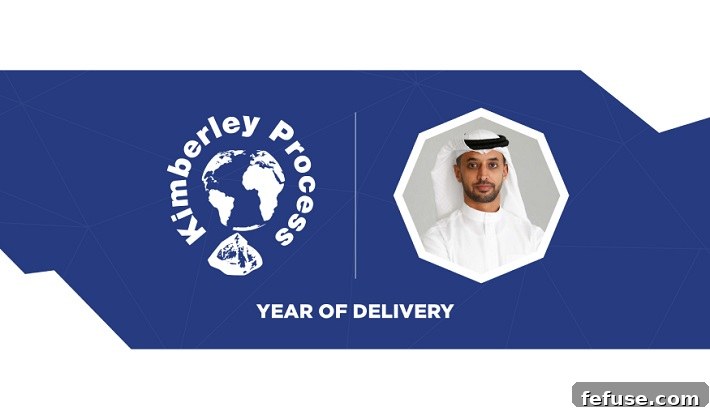
Dubai Gears Up to Host Pivotal Kimberley Process Intersessional Meeting
The global diamond industry is turning its gaze towards Dubai as the DMCC (Dubai Multi Commodities Centre) proudly announced that it will host the Kimberley Process (KP) Intersessional Meeting, commencing on May 13th. Set against the backdrop of its state-of-the-art headquarters in Uptown Dubai, this week-long event promises to be a critical nexus for representatives from across the diamond trade, civil society, and governmental bodies worldwide. The United Arab Emirates holds a particularly significant position this year, chairing the UN-mandated Kimberley Process for a historic second time in 2024, underscoring its growing influence and unwavering commitment to responsible diamond trade practices.
A Crucial Mid-Year Assessment for the Global Diamond Trade
This five-day intersessional gathering is far more than a routine meeting; it serves as a crucial mid-year stocktake within the Kimberley Process’s comprehensive annual program. It provides an indispensable platform for KP members and participants to rigorously assess the progress made since the last plenary session and to tackle the myriad of pressing issues currently impacting the global diamond trade. Discussions are expected to cover a wide range of topics, from enhancing operational efficiencies and strengthening verification mechanisms to addressing evolving market dynamics and geopolitical challenges. The overarching goal remains to uphold the integrity and transparency of the diamond supply chain, ensuring that legitimate diamonds continue to fuel economic development rather than conflict.
Such meetings are vital for the continuous evolution of the KP framework, allowing for timely adjustments to methodologies and policies. By bringing together diverse stakeholders, the Intersessional Meeting facilitates constructive dialogue and fosters collaborative solutions to complex issues. Delegates will delve into specific case studies, review audit reports, and discuss proposals aimed at reinforcing the KPCS (Kimberley Process Certification Scheme). The outcomes of these discussions are instrumental in maintaining consumer confidence globally and safeguarding the livelihoods of millions involved in the legitimate diamond value chain, from mining communities to retail markets. This proactive engagement ensures the Kimberley Process remains a robust and adaptive mechanism in the face of new threats and opportunities within the global diamond market.
UAE’s “Year of Delivery”: Driving Concrete Results for the Kimberley Process
Under the visionary leadership of the UAE’s 2024 chairmanship, themed “Year of Delivery,” a robust agenda has been set to secure the long-term future, efficiency, and operationalization of the Kimberley Process. This theme reflects a steadfast commitment to moving beyond discussions to tangible outcomes, fostering an environment where critical reforms can be implemented and progress can be demonstrably measured. The UAE’s leadership aims to streamline procedures, enhance the effectiveness of compliance measures, and adapt the KP to emerging realities in the global diamond sector.
A landmark achievement of the UAE’s chairmanship thus far has been the securing of a historic special plenary session during the intersessional week. This extraordinary measure is designed to accelerate decision-making, allowing for more dynamic and decisive resolutions on key challenges facing the KP. Traditionally, plenaries are reserved for the annual Ministerial Meeting at year-end, making this mid-year special session a testament to the UAE’s proactive approach and its determination to drive impactful change without delay. Such proactive steps are vital for adapting the framework to contemporary realities and ensuring its continued relevance in a rapidly changing world, particularly as the industry navigates a complex global landscape.
The “Year of Delivery” initiative encapsulates the UAE’s broader strategic vision for the diamond trade – one that prioritizes sustainability, ethical practices, and economic empowerment for all stakeholders. This proactive stance is not just about adhering to international standards but about actively shaping them to foster greater accountability and transparency across the entire diamond supply chain. By pushing for concrete results, the UAE is setting a precedent for more efficient and effective governance within the KP, ensuring its mandate remains strong and impactful for years to come.
Ahmed Bin Sulayem Highlights the Critical Juncture for the Global Diamond Industry
Ahmed Bin Sulayem, the Executive Chairman and Chief Executive Officer of DMCC, who concurrently serves as the UAE’s Chair of the Kimberley Process for 2024, articulated the profound significance of the upcoming meeting. He emphasized that the global diamond industry currently stands at a “critical juncture,” navigating a complex interplay of geopolitical pressures and evolving market forces. These pressures include, but are not limited to, evolving sanctions regimes impacting diamond trade flows, disruptions to global supply chains, increasing demands for enhanced traceability and sustainability from consumers and regulators, and the growing influence of ethical consumerism that scrutinizes every aspect of a diamond’s journey. Furthermore, the rise of lab-grown diamonds and shifting perceptions of luxury also present new dynamics that the traditional diamond industry must address.
Bin Sulayem stated, “The intersessional gives us a golden opportunity to propel our agenda forward and take decisions to drive the long-term future of the Kimberley Process for 2024 and beyond.” He underscored the urgency of these discussions to ensure the KP remains agile and responsive to an industry undergoing significant transformation. The decisions made during this meeting will not only influence current trade practices but also lay the groundwork for future policies, strengthening the KP’s ability to adapt and maintain its relevance in an ever-changing global economy. This forward-looking perspective is crucial for safeguarding the integrity and prosperity of the natural diamond market.
He further elaborated on the crucial role of the special plenary session, expressing his delight that the UAE secured this mechanism. “This will fast-track our ability to drive discussions and resolutions which are critical for the prosperity of the global diamond community and producer nations, especially Africa, that depend on the Kimberley Process,” he added. This statement underscores the deep commitment to ensuring that the benefits of the legitimate diamond trade are equitably distributed and contribute positively to the socio-economic development of countries where diamonds are mined. For many African nations, the legitimate diamond trade is a cornerstone of their economies, providing essential revenue for public services, infrastructure development, and job creation, thereby directly impacting the livelihoods of millions. Protecting these economies from the blight of conflict diamonds remains a core mandate and a top priority for the KP under the UAE’s stewardship.
The Kimberley Process: A Pillar of Ethical Diamond Sourcing
The Kimberley Process (KP) stands as a vital international group, meticulously tasked with regulating the global rough diamond trade. Established in 2003 by the United Nations, its primary objective is to stem the flow of “conflict diamonds” – rough diamonds used by rebel movements to finance wars against legitimate governments – by ensuring they do not enter the legitimate diamond market. Comprising 85 participating countries, along with industry and civil society observers, the KP is a testament to multilateral cooperation aimed at fostering peace and stability in diamond-producing regions. The Kimberley Process Certification Scheme (KPCS) mandates that each shipment of rough diamonds traded between member countries must be accompanied by a tamper-resistant certificate guaranteeing its conflict-free origin. This rigorous certification system has been instrumental in restoring consumer confidence in diamonds and supporting ethical sourcing practices worldwide, creating a clear demarcation between legitimate and illicit trade.
While the KP has been undeniably successful in significantly reducing the trade in conflict diamonds since its inception, it has also faced evolving challenges and criticisms. Debates surrounding the definition of “conflict diamonds” – particularly whether it should expand beyond rebel financing to encompass broader human rights abuses or environmental concerns – have prompted ongoing discussions about reform and modernization. The need for consensus among its diverse member states on these complex issues often highlights the inherent challenges of such an extensive international framework. The Intersessional Meeting in Dubai will undoubtedly serve as an important forum to address these complexities, striving to fortify the KP’s framework and enhance its responsiveness to contemporary ethical and geopolitical considerations, thereby ensuring its continued effectiveness in promoting responsible diamond trade. The ongoing effort is to ensure the KP remains a dynamic and relevant guardian of the diamond’s ethical provenance.
The UAE’s historical engagement with the KP is also noteworthy. In 2016, the UAE earned the distinction of being the first and only Arab country appointed to the annual Chairmanship of the Kimberley Process, showcasing its early commitment to global best practices in the diamond sector. This previous experience provides invaluable institutional knowledge and a nuanced understanding of the KP’s operational intricacies, which is being effectively leveraged during the current 2024 chairmanship.
DMCC’s Pivotal Role and Dubai’s Ascendancy in the Global Diamond Market
Within the UAE, the operational framework of the Kimberley Process Certification Scheme (KPCS) falls under the direct purview of the Ministry of Economy. In a significant delegation of authority, the Ministry has authorized the DMCC, recognized as the world’s flagship free zone and a leading government authority on commodity trade and enterprise, to manage the nation’s stringent import and export procedures for rough diamonds. This strategic alignment leverages DMCC’s extensive expertise in facilitating global trade and its robust regulatory environment, making Dubai a secure and efficient gateway for diamond transactions.
Dubai’s commitment to the diamond industry is clearly reflected in its impressive growth trajectory. Last year, the UAE achieved multiple year-on-year growth for its trade in both rough and polished diamonds, reaching a staggering combined value of $38.3 billion. This remarkable figure not only solidifies Dubai’s position as a premier global diamond trading hub but also underscores the effectiveness of DMCC’s infrastructure and services, which include world-class vaults, state-of-the-art grading laboratories, and a vibrant community of diamond traders. The DMCC provides a comprehensive ecosystem designed to support every facet of the diamond business, from financing and logistics to expert valuation and secure storage.
Dubai’s strategic geographical location, bridging major diamond producing and consuming markets across Africa, Asia, and Europe, coupled with its transparent and efficient trading ecosystem, has been instrumental in attracting international players and fostering significant investment in the sector. The DMCC’s proactive engagement in hosting critical events like the KP Intersessional Meeting further cements Dubai’s role as a responsible and influential leader in shaping the future of the global diamond industry. By providing a secure, compliant, and globally connected platform for diamond trade, DMCC actively contributes to enhancing the integrity and value of the entire diamond supply chain, ensuring ethical standards are met and exceeded.
Beyond Certification: The Broader Impact on Ethical Sourcing and Sustainable Development
The significance of the Kimberley Process extends far beyond mere certification; it underpins the very foundation of ethical sourcing within the diamond industry. By preventing conflict diamonds from entering the legitimate market, the KP helps safeguard consumer confidence, ensuring that the beautiful gems they purchase contribute to positive economic development rather than fueling conflict. This commitment to responsible practices is increasingly vital in today’s market, where consumers are more conscious than ever about the origin and impact of their purchases. The KP fosters a transparent supply chain, allowing stakeholders to trace diamonds from mine to market and ensuring adherence to international standards and best practices.
Furthermore, the work of the Kimberley Process directly contributes to sustainable development goals in diamond-producing regions, particularly across Africa. Revenue generated from legitimate diamond trade supports local economies, funds essential public services like education and healthcare, and creates employment opportunities for millions. The ongoing dialogues at the Intersessional Meeting are crucial for reinforcing these positive impacts, exploring avenues for enhanced benefit-sharing, and addressing any emerging challenges that could undermine these gains. These discussions often delve into how diamond revenues can be better managed to support long-term community development, infrastructure, and diversification of local economies, moving beyond mere resource extraction.
The multi-stakeholder model of the KP, bringing together governments, industry, and civil society, is a powerful testament to collective responsibility. This collaborative approach is essential for continuously evolving the framework to meet new ethical and environmental standards, thereby ensuring the long-term viability and positive societal contribution of the diamond sector. Civil society organizations, in particular, play a crucial role in advocating for expanded definitions of conflict and ensuring that the voices of mining communities are heard. The future of the global diamond industry hinges on these collaborative efforts to maintain trust, promote transparency, and champion sustainable practices across the entire value chain, fostering a truly responsible and beneficial trade for all involved.
Forging the Future of Responsible Diamond Trade from Dubai
As delegates converge in Dubai for the Kimberley Process Intersessional Meeting, the collective focus remains firmly on reinforcing the pillars of ethical sourcing and transparent trade that define the global diamond industry. Under the dynamic leadership of the UAE’s 2024 chairmanship, committed to a “Year of Delivery,” this gathering is poised to enact meaningful progress and shape decisive resolutions for the path ahead. The insights shared by figures like Ahmed Bin Sulayem underscore the urgency and the opportunity at hand to address both current challenges and future trends in the market.
Dubai, through the DMCC, continues to demonstrate its unwavering commitment to fostering a responsible and thriving diamond market. This pivotal meeting in Uptown Dubai is not merely a forum for discussion but a launchpad for action, dedicated to securing a prosperous, transparent, and ethically sound future for diamonds worldwide. It reinforces the UAE’s strategic position as a global hub for responsible commerce and a key contributor to international efforts to promote peace and sustainable development through trade. The enduring brilliance of these precious stones will continue to symbolize hope and progress for all, underpinned by the diligent work of the Kimberley Process and its dedicated members.