
India’s Pivotal Role: Driving Transparency and Ethics in the Global Diamond Industry with the Kimberley Process
In a significant demonstration of its commitment to ethical practices and responsible trade, India successfully hosted the Kimberley Process (KP) Intersessional Meeting in Mumbai from June 17th to 21st, 2019. This crucial gathering, held under India’s chairmanship for the year 2019, underscored the nation’s leadership in the global fight against conflict diamonds and its dedication to fostering a transparent and sustainable diamond industry worldwide.
The Kimberley Process Certification Scheme (KPCS) stands as an international mechanism established under a United Nations mandate. Its fundamental objective is to reduce the flow of conflict diamonds – illicit rough diamonds used to finance wars against legitimate governments – thereby safeguarding peace, human rights, and the integrity of the diamond supply chain. India’s successful orchestration of the Mumbai meeting marked a vital step forward in strengthening this global commitment, bringing together diverse stakeholders to address contemporary challenges and chart a progressive path for the future of the diamond trade.
Understanding the Kimberley Process: A Cornerstone of Ethical Diamond Trade
The Kimberley Process emerged from an urgent global need in the late 1990s to address the devastating impact of conflict diamonds, which fueled civil wars in several African nations. Adopted in 2003, the KPCS is a unique tripartite initiative involving governments, the diamond industry, and civil society organizations. This collaborative structure ensures comprehensive oversight and encourages shared responsibility in preventing conflict diamonds from entering the legitimate market, thereby protecting consumer confidence and promoting sustainable development in diamond-producing regions.
Participating countries commit to implementing a stringent set of requirements to ensure that every shipment of rough diamonds crossing international borders is certified as “conflict-free.” This includes robust internal controls, verifiable chain-of-custody documentation, and independent monitoring. The KP’s ongoing relevance lies in its adaptive framework, continuously evolving to meet new challenges and ensure the diamond industry remains a source of prosperity and development, rather than conflict and instability. It serves as a vital safeguard for the integrity of diamonds as a symbol of love and commitment.
India’s Pivotal Leadership as KP Chair 2019
As the world’s largest cutting and polishing center for diamonds, India’s role as the Kimberley Process Chair in 2019 was profoundly significant. The nation’s deep understanding of the diamond supply chain, from mining to retail, positioned it uniquely to steer discussions on critical issues facing the industry. The Mumbai Intersessional Meeting exemplified India’s proactive approach, drawing together an impressive assembly of over 200 delegates from 82 countries. These representatives hailed from major diamond-producing nations in Africa – including Sierra Leone, DR Congo, Angola, Ghana, Zimbabwe, Central African Republic, Botswana, Cameroon, Republic of Congo, Eswatini, Gabon, Guinea, Ivory Coast, Mali, Namibia, South Africa, Togo & Lesotho – alongside key consuming and trading hubs such as the US, Russian Federation, European Union, Canada, China, Israel, Australia, and the UAE. This broad international participation underscored the universal importance of the KP’s mission and India’s capacity to facilitate global consensus.
The event was meticulously organized by the Union Ministry of Commerce & Industry, Government of India, with invaluable co-organization by the Gem & Jewellery Export Promotion Council (GJEPC). This collaboration highlighted the robust partnership between government and industry in India, working in tandem to promote responsible business practices and reinforce consumer confidence in diamonds, reflecting India’s dedication not just to commerce but to ethical global trade standards.
Key Discussions and Transformative Initiatives from the Mumbai Meeting
Chairman Alok Vardhan Chaturvedi’s Vision for a Collaborative Future
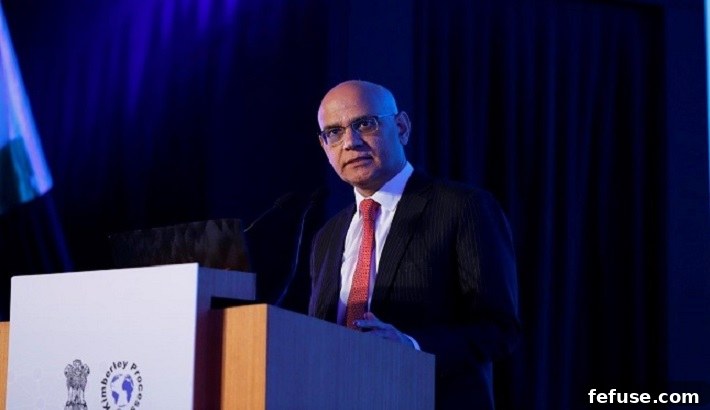
Mr. Alok Vardhan Chaturvedi, the KP Chair for 2019 and Director General of Foreign Trade (DGFT), encapsulated the spirit of the meeting in his concluding remarks. He lauded the “good exchange of ideas, discussions, and deliberations,” emphasizing the “listening & learning, debates, [and] dialogues in the true KP tradition of productive sharing of ideas to forge the way forward.” Mr. Chaturvedi extended gratitude to the global diamond community and the Civil Society Coalition for their active participation, acknowledging the “phenomenal” knowledge, experience, and expertise each delegate brought to the table. His speech resonated with a strong call for “commitment and contribution to usher in transformational change,” setting a clear mandate for the KP’s continued evolution towards greater transparency and accountability within the diamond sector.
Driving Transparency: Special Forums and Workshops
The Mumbai Intersessional was distinguished by several impactful special forums designed to tackle specific industry challenges and opportunities, fostering an environment of innovation and shared learning:
- Diamond Terminology: A dedicated session addressed the critical need for standardized diamond terminology across the global trade. Consistent and clear definitions are vital for enhancing transparency throughout the supply chain, facilitating smoother international trade, preventing misrepresentation, and ensuring robust consumer trust. This initiative aims to harmonize descriptions and classifications across borders, reducing ambiguities and ultimately strengthening the integrity of diamond transactions.
- Artisanal Mining – Small Steps to Larger Outcomes: This forum was a pivotal highlight, focusing on the often-marginalized sector of artisanal and small-scale mining (ASM). Recognizing the significant role ASM plays in the livelihoods of millions in diamond-producing countries, the session explored practical strategies to formalize the sector, improve working conditions, enhance traceability, and ensure that the benefits of diamond mining contribute directly to local community development. The “GemFair session,” specifically, showcased innovative approaches to bringing transparency and empowerment to local communities engaged in artisanal mining, demonstrating how technology and best practices can uplift these vital segments of the supply chain and promote sustainable livelihoods.
- India’s Model Initiatives: From Traceability to Social Welfare: The meeting also provided a platform for India to share its pioneering initiatives aimed at enhancing efficiency and social welfare within its expansive diamond and jewelry sector.
- Common Facility Centres (CFCs): Presentations on the Indian Government’s CFCs initiative showcased a successful model for small and medium jewelry enterprises. These centers enable the pooling of crucial resources, technology, and expertise, thereby boosting competitiveness, fostering skill development, and ensuring equitable access to modern infrastructure for smaller players in the industry. This model promotes inclusive growth.
- Chain of Custody and Trusted Delivery: Delegates gained insightful learnings from unique Indian models of trusted supply chain management. The legendary Mumbai Dabbawalas, renowned globally for their impeccable accuracy and reliability in lunchbox delivery, and the Angadias, traditional trusted couriers for valuables, served as compelling real-world examples illustrating robust “chain of custody” principles applicable to high-value goods like diamonds. These models underscored the profound importance of reliability, trust, and established networks in logistics and secure transport.
- Workforce Mapping and Social Security: India further demonstrated its commitment to its extensive workforce through presentations on the “Parichay ID card” for systematic worker mapping and the “Swathya-Rathna health insurance scheme.” These initiatives highlight a holistic and progressive approach to industry development, ensuring the well-being, social security, and health coverage of the labor force – a critical and often overlooked aspect of responsible business conduct and sustainable growth.
Voices of Collaboration: Industry and Civil Society
The closing session saw crucial addresses from other key stakeholders, underscoring the multi-faceted, collaborative nature of the Kimberley Process. Mr. Stephane Fischler, President of the World Diamond Council (WDC), represented the industry’s perspective, emphasizing ongoing efforts towards due diligence, responsible business practices, and fostering consumer confidence. Mr. Shamiso Mtisi, Coordinator of the KP Civil Society Coalition, provided the vital independent oversight and advocacy perspective, ensuring that human rights, community welfare, and environmental considerations remain central to KP discussions and reforms. The formal vote of thanks was proposed by Ms. Rupa Dutta, Economic Advisor, Union Ministry of Commerce & Industry, Government of India, acknowledging the collective efforts and spirit of cooperation that made the Mumbai meeting a resounding success.
Forging Ahead: Progress and Future Directions for the KP
The Mumbai Intersessional Meeting marked significant progress across various critical areas, setting a robust agenda and laying the groundwork for future advancements of the KPCS. Delegates engaged in deepening ongoing discussions and moved closer to finalizing key reforms that are essential for the Kimberley Process to remain effective and relevant in an evolving global landscape:
- Expanding the Scope of Conflict Diamonds: Central to ongoing reforms is the discussion on broadening the definition and scope of “conflict diamonds.” While traditionally focused on rough diamonds financing rebel groups, contemporary discourse aims to address other forms of systemic violence, human rights abuses, and environmental degradation linked to diamond extraction. This expansion seeks to ensure the KP remains relevant and responsive to evolving geopolitical realities and broader ethical concerns.
- Establishing a Permanent Secretariat: Finalization of the Terms of Reference for a Permanent Secretariat signifies a major step towards enhancing the operational efficiency, continuity, and institutional memory of the KP. A dedicated, professional secretariat would provide much-needed administrative support, consistency in policy implementation, and improved coordination for this complex international mechanism.
- Strengthening the Peer Review Mechanism: Progress was made on a draft Administrative Decision (AD) concerning the Peer Review Mechanism. This mechanism is crucial for reinforcing compliance among member states, ensuring accountability, facilitating knowledge sharing, and fostering a culture of continuous improvement in implementing KP standards across all participants.
- Enhancing Data and Guidance for Artisanal Mining: Work advanced significantly on a reconciliation guidance document and the crucial task of capturing comprehensive data for Artisanal Mining. Better data collection, clear guidelines, and improved traceability systems are essential for integrating ASM into formal supply chains, improving transparency, ensuring fair practices, and maximizing benefits for local communities.
- Boosting Oversight and Funding: Discussions also centered on the role of a new independent observer and more clear directions for the Multi-Donor Trust Fund (MDTF). Both are vital for providing impartial external oversight, funding crucial capacity-building initiatives, and supporting struggling diamond-producing nations in meeting stringent KP requirements and improving their local diamond economies.
- Consolidating Core Documents: Efforts continued towards the consolidation and streamlining of the Core Document. This initiative aims to clarify the foundational principles, procedures, and responsibilities of the Kimberley Process, making it more accessible, understandable, and effective for all stakeholders involved in the global diamond trade.
The Road Ahead: Towards the Plenary in New Delhi
The successful Intersessional Meeting in Mumbai served as a robust platform for collaborative dialogue and tangible progress. The significant momentum generated is expected to carry forward to the next pivotal gathering: the KP Plenary session, scheduled for November 2019 in New Delhi. This upcoming plenary will be instrumental in formalizing the outcomes of the Mumbai discussions, making crucial decisions on the future trajectory and reforms of the Kimberley Process, and reaffirming the global commitment to an ethical, transparent, and conflict-free diamond trade.
India’s chairmanship in 2019 undeniably showcased its leadership capabilities and its unwavering dedication to fortifying the Kimberley Process. By bringing together governments, industry, and civil society in a spirit of constructive engagement, India helped to further solidify the global framework that protects both the integrity of diamonds and the communities that depend on them. The journey towards a more ethical and sustainable diamond supply chain is continuous, and India’s contributions during this pivotal period were instrumental in driving that progress forward for the benefit of all stakeholders and consumers worldwide.