
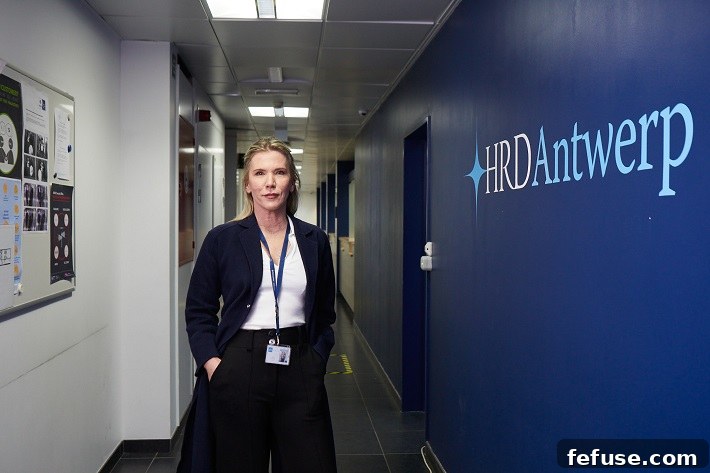
The diamond industry, renowned for its glittering allure and substantial economic impact, operates on a foundation of trust and meticulous standardization. At the heart of this trust lies the intricate process of diamond grading, where expert gemologists meticulously assess the unique characteristics of each stone. Certification from reputable laboratories is paramount, providing an independent, objective assessment that assures both buyers and sellers of a diamond’s true value. In an industry where precision and integrity are non-negotiable, any question regarding the impartiality of grading can send ripples of concern throughout the global market, potentially undermining consumer confidence and market stability.
Recently, one of the prominent players in this crucial sector, HRD Antwerp, found itself at the center of serious allegations concerning its grading practices. These claims, which suggested a deliberate manipulation of diamond gradings, sparked an extensive public prosecutor’s investigation in Belgium. After a thorough review, the official conclusion has now been announced: no charges will be filed against HRD Antwerp regarding these allegations. This outcome marks a significant moment for the organization and its standing within the international diamond community, reaffirming its commitment to ethical standards and transparent operations.
HRD Antwerp Cleared: No Charges Over Diamond Grading Allegations
In a widely anticipated announcement that brings a definitive conclusion to months of speculation, the public prosecutor’s office in Belgium has formally concluded its comprehensive investigation into allegations of manipulated diamond gradings against HRD Antwerp. The office confirmed that, following an exhaustive inquiry into the claims, no charges are to be brought forward. This decisive ruling addresses concerns that had emerged from a series of newspaper allegations, which initially cast a shadow over the integrity of one of the world’s leading gemological laboratories. The news brings a definitive end to a period of uncertainty for HRD Antwerp, allowing the institution to re-emphasize its steadfast commitment to transparency, precision, and ethical standards in diamond certification.
The allegations, first brought to light in March by the Belgian newspaper De Tijd, were severe and far-reaching. They claimed that HRD Antwerp had routinely “bumped up” diamond gradings, specifically suggesting that GIA-certified diamonds — stones already assessed by the Gemological Institute of America, another highly respected and globally recognized grading body — were being re-certified with inflated characteristics. The newspaper posited that this alleged practice involved upgrading diamonds by up to two color grades and one clarity grade. Such discrepancies, if proven true, would have significant and detrimental implications for the diamond market, potentially misleading consumers, undermining fair trade practices, and eroding the credibility of the entire diamond certification process. The subtle difference of even one color or clarity grade can translate to thousands of dollars in a diamond’s market price, making the accuracy and impartiality of these assessments critically important for maintaining consumer trust and market fairness.
The Core of the Allegations: Understanding Diamond Color and Clarity Manipulation
To truly grasp the gravity of De Tijd’s claims, it’s essential to understand the fundamental principles of diamond grading, particularly concerning color and clarity. The color grade of a diamond refers to the absence of color, with a scale ranging from D (completely colorless, the most valuable) down to Z (light yellow or brown). The clarity grade, on the other hand, refers to the absence of inclusions (internal flaws) and blemishes (external imperfections), ranging from Flawless (FL, no imperfections visible under 10x magnification) to Included (I3, inclusions visible to the naked eye). Both factors, alongside cut quality and carat weight, are crucial determinants of a diamond’s overall quality and intrinsic value. An alleged upgrade of “up to two color grades and one clarity grade” is not a minor adjustment; it represents a substantial re-evaluation that could significantly — and unfairly — boost a diamond’s perceived quality and market price, potentially facilitating widespread market fraud as initially suggested by the newspaper.
HRD Antwerp, established in 1973 and wholly-owned by the Antwerp World Diamond Centre (AWDC), has always positioned itself as a guardian of quality and ethics within the diamond trade. The AWDC itself is a highly respected organization that serves as the official representative and coordinator of the Antwerp diamond community, a global hub for diamond trading. Given this prominent background and its crucial role in the international diamond market, the accusations were particularly damaging, prompting an immediate and thorough response from the organization and initiating the official investigation by Belgian authorities. The lab’s swift cooperation with the public prosecutor’s office underscored its dedication to resolving the matter definitively and clearing its name through legal and transparent channels.
HRD Antwerp Welcomes Judicial Confirmation of Ethical Conduct
Following the public prosecutor’s highly anticipated announcement, HRD Antwerp was quick to release a comprehensive statement welcoming the outcome. Ellen Joncheere, CEO at HRD Antwerp, expressed profound satisfaction with the ruling, stating unequivocally, “This ruling is fully in line with our expectations. We are particularly pleased that the judicial authorities have confirmed with this statement that HRD Antwerp acted correctly and ethically.” Her words highlighted the organization’s unwavering confidence in its internal processes, the scientific rigor of its grading methodologies, and the inherent integrity of its gemological standards throughout the arduous period of investigation. This judicial confirmation is not merely a legal victory but a crucial validation of the lab’s operational ethos and its commitment to upholding the highest professional standards.
Joncheere further elaborated on the company’s approach to diamond grading, emphasizing the paramount importance of transparency and the recognized autonomy of reputable gemological laboratories within the industry. She stated, “From the start, we have always communicated transparently with the sector about our standard in grading. Every lab is free to determine their procedures and techniques. Every lab also does that.” This statement touches upon a fundamental, yet often misunderstood, aspect of the gemological world: while there are widely accepted international benchmarks and general guidelines for diamond assessment, each reputable laboratory develops its own proprietary methodologies, internal standards, and calibration techniques for assessing diamonds. As long as these procedures are consistent, scientifically sound, meticulously documented, and transparently communicated to the market, they are considered legitimate. HRD Antwerp’s assertion is that its standards, while potentially differing from other labs like GIA in specific procedural nuances, are robust, consistent, scientifically defensible, and ethically applied, ensuring reliable and trustworthy results for its clientele worldwide.
The Genesis of the Allegations: An Acrimonious Partnership Split and Counter-Claims
The intense investigation, and indeed the initial media allegations that ignited the controversy, did not emerge in a vacuum. They were reportedly triggered by an acrimonious and protracted business dispute. The formal inquiry was launched after a contentious split between HRD Antwerp and its long-standing partner in Turkey, a collaboration that had successfully spanned seven years before its acrimonious conclusion in 2021. Such international partnerships are commonplace and often crucial in the global diamond industry, enabling established laboratories to extend their reach, services, and brand presence across diverse markets worldwide. However, when these partnerships dissolve under difficult circumstances, they can unfortunately lead to bitter disputes, counter-allegations, and reputational challenges, as seen in this case.
In a significant development that adds another layer of complexity and context to the narrative, HRD Antwerp has confirmed that it is actively pursuing its own legal actions in the Belgian courts. The organization is suing Mehmet Can Ozdemir and his business partners, alleging serious counts of fraud and abuse of trust. This counter-litigation suggests that HRD Antwerp views the initial media allegations as potentially stemming from, or being significantly influenced by, the fallout from this fractured partnership. It posits that the claims of grading manipulation might have been part of a broader strategy by former partners to discredit the lab amidst their ongoing legal battles, turning a commercial dispute into a public scandal. This intricate interplay between commercial rivalry and public accusations underscores the challenges faced by global businesses operating in highly competitive and sensitive markets.
De Tijd’s initial reports, which played a pivotal role in fueling the public prosecutor’s investigation, cited a range of internal documents and communications as purported evidence for its claims. The newspaper asserted in March that it had obtained e-mails, internal procedures, detailed slides, audit reports, and even filmed board meetings. This substantial material was presented by the newspaper as revealing a “long-standing practice” of grading adjustments within HRD Antwerp. Furthermore, one former senior staff member at HRD Antwerp was quoted by De Tijd, allegedly describing this practice as “a way to commit market fraud.” The fact that the Belgian public prosecutor, after diligently reviewing such extensive evidence and conducting a thorough investigation, ultimately found no grounds for criminal charges, stands as a powerful and unambiguous endorsement of HRD Antwerp’s defense and a clear vindication of its operational integrity.
Maintaining Trust and Integrity in the Global Diamond Market
The global diamond industry is, at its core, inherently reliant on an intricate web of trust. From the initial extraction by miners, through the meticulous processes of cutters and polishers, to the intricate dealings of wholesalers, retailers, and ultimately the end consumers, every single step of the supply chain requires absolute confidence in the authenticity, quality, and ethical sourcing of the diamonds. Controversies such as these, regardless of their ultimate resolution, inevitably highlight the inherent fragility of this trust and underscore the constant, unwavering need for vigilance and robust oversight. The decisive clearing of HRD Antwerp’s name by judicial authorities sends a strong and reassuring message that established legal frameworks are firmly in place to thoroughly scrutinize allegations, uphold fair practice, and protect reputable institutions from unsubstantiated claims. It reinforces the notion that credible institutions, especially those involved in complex technical assessments like diamond grading, cannot be easily swayed or discredited without compelling evidence.
For HRD Antwerp, this favorable outcome represents a significant opportunity not only to rebuild any potentially lost confidence but also to substantially strengthen its formidable position as a reliable and authoritative leader in diamond certification. By consistently adhering to its transparent grading standards, continually investing in cutting-edge gemological research, and rigorously pursuing justice against those it believes have committed fraud and abuse of trust, the organization can reassert and reinforce its commitment to ethical leadership within the vibrant Antwerp and broader global diamond communities. The AWDC’s direct ownership of HRD Antwerp further inextricably links the lab’s reputation to the broader integrity of the Antwerp diamond trade, making the comprehensive resolution of this matter absolutely crucial for the entire ecosystem and its continued prosperity.
In conclusion, the definitive decision by the Belgian public prosecutor’s office not to file charges against HRD Antwerp marks a pivotal and positive turning point in the allegations that had surrounded diamond grading manipulation. While the initial claims raised significant concerns and stirred considerable debate within the industry, the subsequent judicial investigation has found no credible basis for criminal prosecution. HRD Antwerp, in parallel, continues its own robust legal fight against former partners, highlighting a complex and often intertwined interplay of commercial disputes and public accusations. This comprehensive resolution firmly reaffirms the paramount importance of rigorous and impartial investigation, coupled with transparent communication, in maintaining the indispensable integrity and unwavering trust that are absolutely vital to the flourishing global diamond trade. As HRD Antwerp moves forward, its unwavering focus will undoubtedly remain on upholding its exceptionally high standards and continually reinforcing its role as a beacon of reliability and scientific accuracy in gemological certification.