
Alrosa’s Strategic Move: Stabilizing the Global Diamond Market Amidst Overstocking and Sanction Concerns
The global diamond industry is currently navigating a period of significant volatility, characterized by fluctuating demand, inventory surpluses, and an evolving geopolitical landscape. In response to these pressing challenges, Alrosa, the world’s largest diamond mining company by volume, has taken a decisive step: suspending its rough diamond sales for September and October. This strategic move has been met with a welcoming reception from key industry players, most notably the Gem and Jewellery Export Promotion Council (GJEPC) of India, who view it as a crucial intervention to combat pervasive overstocking within the value chain.
This unprecedented decision by the Russian state-controlled diamond miner underscores a broader industry effort to recalibrate supply with the current demand reality. The aim is clear: to inject much-needed stability into a market that has experienced considerable turbulence over the past year. The implications of such a pause from a major supplier resonate deeply across the entire diamond pipeline, from mining and manufacturing to retail and consumer sales, particularly impacting the vast manufacturing hubs in India.
Understanding the Current Market Dynamics: Addressing Overstocking
The sentiment within the diamond industry has been shifting, with growing concerns about an imbalance between the availability of rough diamonds and the actual consumer demand for polished gems. Post-pandemic, an initial surge in consumer spending, particularly in luxury goods, fueled optimistic projections and increased production across the manufacturing sector. However, this robust demand proved to be unsustainable, giving way to an economic slowdown influenced by factors such as inflation, rising interest rates, and geopolitical uncertainties. Consequently, polished diamond sales softened, leading to a significant build-up of inventory at various stages of the supply chain.
Manufacturers, especially those in India who cut and polish approximately 90% of the world’s diamonds, found themselves holding substantial stocks of both rough and polished diamonds. This oversupply not only ties up significant working capital but also exerts downward pressure on prices, eroding profit margins and creating a challenging environment for businesses. The GJEPC’s proactive stance in welcoming Alrosa’s decision highlights the severity of this issue and the urgent need for collective action to prevent further market destabilization. Addressing overstocking is paramount to restoring equilibrium and fostering confidence among traders, manufacturers, and retailers alike, ensuring a healthier and more predictable market for all participants.
GJEPC’s Advocacy for Market Balance and Sustainable Growth
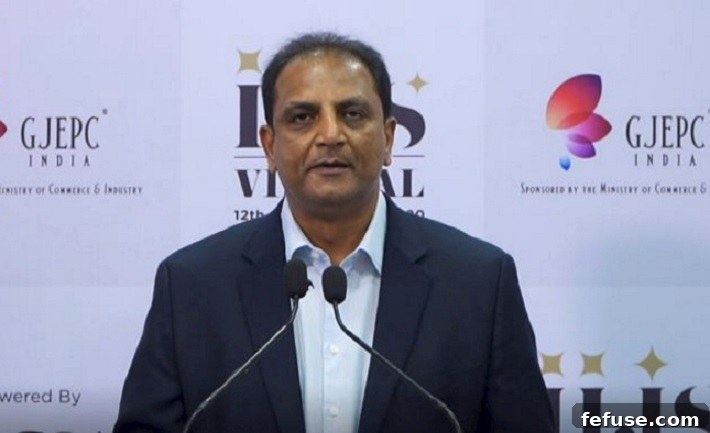
Vipul Shah, the esteemed Chairman of the GJEPC, has been at the forefront of advocating for measures to alleviate the market’s current distress. His engagement with major diamond miners, urging them to curtail supplies, reflects a deep understanding of the industry’s intricate dynamics and India’s vital role within it. Shah emphasized the critical need for collaborative mechanisms to manage both the supply and pricing of natural diamonds. He articulated that such cooperation among mining companies is not merely beneficial but “instrumental in bringing balance to the market.”
The GJEPC’s appeal to miners, including Alrosa, specifically requested “support in temporarily adjusting the supply of rough diamonds to better align with the current demand.” This call to action is rooted in the belief that a synchronized approach to supply management can effectively stabilize the industry. By preventing a flood of rough diamonds into an already saturated market, miners can help safeguard the value of existing inventories and provide manufacturers with breathing room to clear their stocks without succumbing to steep price reductions. Ultimately, the overarching goal is to “foster its sustainable growth,” ensuring the long-term health and prosperity of an industry that supports millions of livelihoods globally, particularly within India.
Alrosa’s Strategic Rationale and Financial Resilience
In its official statement, Alrosa articulated its rationale, confirming that the decision to halt sales for September and October was a direct effort to “reverse the existing trend of diminishing demand.” This move demonstrates Alrosa’s commitment to protecting the long-term value of natural diamonds and ensuring the sustainability of the entire pipeline. As a dominant player in the global diamond mining sector, Alrosa possesses significant leverage, and its actions carry substantial weight across the international market. The company also highlighted its robust financial position, stating, “Our solid and high-quality asset base and stable financial position allow us implementing such measures.”
This financial resilience is crucial, enabling Alrosa to absorb the short-term impact of suspended sales without jeopardizing its operational stability. It empowers the company to prioritize market health over immediate revenue generation, a strategy that, if successful, could benefit all stakeholders in the long run. By proactively managing supply, Alrosa aims to prevent a further downturn in rough diamond prices, which would inevitably trickle down to polished prices and impact profitability for manufacturers and retailers. This commitment to market stewardship is a testament to the complex responsibilities that come with being a leading global supplier in a sensitive commodity market.
The Looming Shadow of Western Sanctions and Geopolitical Shifts
While Alrosa’s current sales have largely remained unaffected by existing Western sanctions related to the conflict in Ukraine, the geopolitical landscape continues to evolve. The specter of new, more stringent restrictions looms large, particularly from the G7 nations. These powerful economies collectively account for approximately 70 percent of global diamond consumption, making any restrictions they impose potentially transformative for the industry. There is widespread expectation that the G7 will announce new measures, possibly targeting Russian-origin diamonds, to be implemented early in the New Year.
The anticipation of these sanctions adds another layer of complexity to the already challenged market. Imposing restrictions on Russian diamonds, which represent a significant portion of global supply, would necessitate intricate tracking and certification mechanisms to ensure compliance. This could lead to a significant restructuring of global supply chains, increased administrative burdens for importers and processors, and potentially higher costs for consumers as the industry adapts to new sourcing realities. The G7’s objective is to reduce Russia’s revenue from diamond exports, but the practical implementation without inadvertently disrupting the legitimate trade and harming other economies, such as India’s, remains a significant challenge. The industry is closely watching these developments, preparing for potential shifts in sourcing strategies and trade routes to ensure business continuity.
India’s Pivotal Role and the Impact of Diwali
India stands as the undisputed heart of the global diamond cutting and polishing industry, processing an overwhelming majority of the world’s rough diamonds into glittering finished gems. Millions of jobs and countless livelihoods are directly or indirectly dependent on this vital sector within India, making its stability paramount for the nation’s economic health. Consequently, any significant fluctuation in the supply of rough diamonds or global demand for polished stones has a profound impact on the nation’s economy and its vast workforce.
Adding to the current market dynamics is the annual observation of Diwali, the Hindu festival of light, which falls on November 12th this year. Diwali is a period of immense cultural and spiritual significance in India, and traditionally, many diamond manufacturing units and factories across the country shut down for an extended break. This annual closure, lasting several days to sometimes weeks, serves multiple purposes: allowing workers to celebrate with their families, conducting crucial year-end inventory checks, and aligning production with anticipated seasonal demand cycles. While a regular occurrence, the timing of this year’s Diwali shutdown, amidst an already overstocked and volatile market, could amplify the effects of reduced activity, further contributing to the industry’s efforts to digest existing inventory before ramping up production again. It offers a natural pause, allowing the market to recalibrate and absorb some of the excess stock without immediate pressure for new supply.
Navigating Towards Sustainable Growth and Future Resilience in Diamonds
The collective efforts by Alrosa, GJEPC, and other industry stakeholders to manage supply and demand are critical for fostering long-term stability and sustainable growth within the natural diamond sector. The industry faces multifaceted challenges, not only from macroeconomic downturns and geopolitical tensions but also from the increasing competition posed by lab-grown diamonds and evolving consumer preferences towards transparency and ethical sourcing. Maintaining the allure and intrinsic value of natural diamonds requires continuous strategic effort.
To ensure a resilient future, the industry must continue to adapt and innovate across all segments. This includes enhancing transparency throughout the entire supply chain, investing in responsible mining practices, and effectively communicating the unique value proposition of natural diamonds to consumers globally. Collaborative dialogue between miners, manufacturers, retailers, and governments will be essential in developing robust strategies that can withstand future market shocks and capitalize on new opportunities. The current period of adjustment, while challenging, presents an invaluable opportunity for introspection and strategic realignment, ultimately aiming for a more robust, balanced, and sustainable global diamond trade that benefits all participants.
The Path Forward: Collective Responsibility and Strategic Adaptation
The decisions made by major players like Alrosa, in conjunction with advocacy from influential bodies such as the GJEPC, highlight a growing awareness of the intricate interconnectedness of the global diamond supply chain. No single entity can unilaterally dictate the health of the market; rather, it requires concerted effort and strategic adaptation from all participants. The temporary adjustment of rough diamond supply by a powerhouse like Alrosa sends a strong signal, indicating a commitment to long-term market health over short-term sales targets. This proactive measure is intended to allow manufacturers to process existing rough inventory, clear polished stock, and restore healthier profit margins, thereby stabilizing the entire ecosystem.
Looking ahead, the industry will need to closely monitor global economic indicators, shifts in consumer sentiment, and the practical implementation of any new international sanctions. The focus must remain steadfast on maintaining a delicate balance between supply and demand, fostering continuous innovation, and upholding the highest ethical standards across the value chain. By collectively addressing these complex challenges with foresight and collaboration, the natural diamond industry can emerge stronger and more sustainable, continuing its legacy of beauty, rarity, and enduring value for generations to come. This period of strategic adaptation, while initially disruptive, lays the groundwork for a more stable and predictable future for everyone involved in the magnificent world of diamonds.