
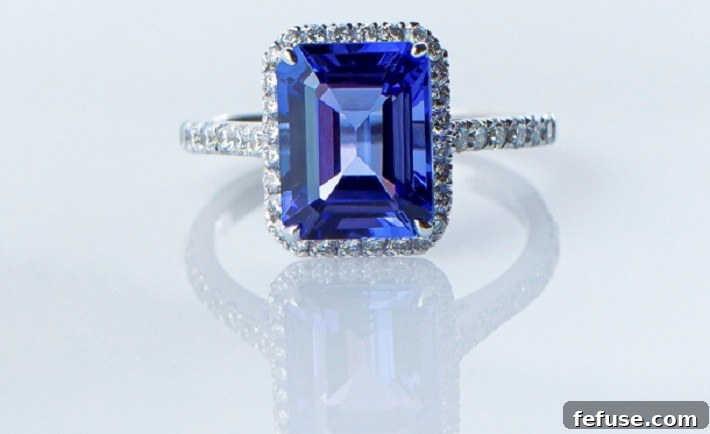
In a saga unfolding in the heart of Nashville, Tennessee, a couple has initiated legal proceedings against a long-standing jewelry establishment, seeking a substantial $75,000 in damages following the alleged loss of a precious engagement ring. This high-stakes dispute has captivated local attention, highlighting not only the monetary value attached to such treasured items but also the profound emotional and symbolic significance they carry. The case underscores crucial aspects of consumer trust, business responsibility, and the intricate world of fine jewelry, particularly when rare gemstones and specialized craftsmanship are involved.
Chelsea King, an accomplished singer, and her fiancé, Dawson Blankinship, a professional tennis player, are at the center of this legal battle. Their claim against the family-owned jewelry store stems from a critical lapse: the alleged failure to adequately insure the engagement ring. This negligence, they contend, led directly to the ring’s disappearance while it was in transit, on its way back from a specialized gem cutter in Florida. The couple’s lawsuit not only seeks financial recompense but also reflects their deep disappointment and sense of betrayal concerning an item that held immense personal and familial value.
The focal point of this entire ordeal is a tanzanite crystal, a truly exceptional gemstone that was not merely a purchase but a cherished family heirloom. The couple had entrusted King Jewelers with this invaluable piece, paying $1,100 to have the tanzanite expertly cut and meticulously set into an engagement ring. They assert that this particular tanzanite, recognized globally as one of the planet’s rarest gemstones, possessed an inherent value of $9,500. This significant discrepancy between the cutting fee and the gem’s stated worth underscores the substantial loss they believe they have incurred, far beyond the cost of the service provided.
Dawson Blankinship vividly recalls the assurances given by the jeweler, which formed the basis of their trust. According to local news channel KTVZ-TV, Dawson stated, “They told me they insure all items, for up to $100,000.” This explicit promise of comprehensive coverage provided the couple with a crucial sense of security. However, their understanding was shattered when they learned the true circumstances. Dawson continued, expressing his shock and disillusionment, “What I didn’t know was that they were shipping it off to a gem cutter in Miami.” This revelation highlighted a critical communication gap and a failure to disclose the full details of the process, leaving the couple feeling misled and vulnerable.
King Jewelers, a respected establishment located in Green Hills, has publicly acknowledged the situation and asserted that it has exhausted every reasonable avenue in an attempt to resolve the matter amicably. Their initial response indicates a commitment to customer satisfaction, recognizing the gravity of the loss and the emotional distress it caused. However, the path to resolution has clearly proven to be fraught with challenges, leading to an escalation of the dispute far beyond the confines of a private negotiation.
In a formal statement released by the jeweler, they outlined the measures taken to address the couple’s predicament. King Jewelers reportedly offered to craft a bespoke engagement ring, utilizing a superior-grade gemstone, entirely at no additional charge to King and Blankinship. Alternatively, they proposed to compensate the clients at a fair market value for the lost tanzanite. These offers suggest an effort to mitigate the couple’s financial loss and potentially salvage their relationship with the esteemed jeweler, reflecting a standard approach to resolving customer grievances within the industry.
However, the situation has taken a contentious turn, with King Jewelers now adopting a more adversarial stance. Their statement revealed a significant shift in their perception of the unfolding events: “Despite our efforts, the situation has escalated publicly and legally. We are now facing a legal matter that we believe constitutes defamation and extortion, and we are prepared to counter-sue to address the exaggerations and false information being spread online.” This declaration signals a firm resolve to defend their reputation and challenge the claims made against them, transforming what began as a dispute over a lost ring into a complex legal confrontation involving allegations of reputational damage.
The heart of this dispute lies in the inherent value and profound rarity of the tanzanite gemstone. Tanzanite, discovered relatively recently in the Merelani Hills of northern Tanzania in 1967, is celebrated for its breathtaking pleochroism—the ability to display different colors (typically blue, violet, and burgundy) when viewed from various angles. Its singular source, nestled at the foot of Mount Kilimanjaro, makes it exceptionally rare, far rarer than diamonds, with experts predicting that its primary mines could be depleted within the next few decades. This scarcity contributes significantly to its high market value, and for King and Blankinship, the loss of a tanzanite that was also a family heirloom amplifies its irreplaceable nature, extending beyond mere monetary worth to encompass generations of sentiment and memories. The $9,500 valuation they place on the gem reflects its exquisite quality and its unique provenance within their family story.
Entrusting a family heirloom, particularly a rare gemstone like tanzanite, to a jeweler for cutting and setting is a common yet highly delicate process. Jewelers often partner with specialized gem cutters who possess the intricate skills and advanced equipment required to transform a rough crystal into a dazzling, faceted stone. This partnership is crucial for maximizing the gem’s brilliance and optimizing its final appearance. However, it also introduces additional logistical complexities and potential points of vulnerability. The journey of such a valuable item from the jeweler’s premises to the gem cutter’s workshop, and then back again, involves multiple stages of handling and transit, each posing a risk of loss, damage, or theft. This intricate chain of custody demands rigorous attention to security and, most importantly, comprehensive insurance coverage to safeguard against unforeseen circumstances, a factor that appears to be at the core of the current legal battle.
The promise of insurance, as recalled by Dawson Blankinship, is a cornerstone of trust between a client and a jeweler. In the jewelry industry, insuring valuable items entrusted by customers is not just a best practice but often a legal and ethical imperative. Jewelers typically carry various forms of insurance, including general liability, property insurance, and specific coverage for items under their care, often referred to as “jewelry block” policies. These policies are designed to protect against risks such as theft, fire, or accidental damage, whether the item is on the premises, with a third-party contractor like a gem cutter, or in transit. The critical question in this case revolves around the specific details of King Jewelers’ policy, whether it covered items being shipped to third-party specialists, and if this coverage was adequately communicated and documented to King and Blankinship. Consumers, in turn, are typically advised to inquire about and receive written confirmation of insurance policies for any valuable items left for service, ensuring clarity on who bears responsibility at each stage of the process.
The decision by King Jewelers to pursue a counter-suit, citing defamation and extortion, significantly complicates the legal landscape of this dispute. Defamation refers to the act of damaging someone’s good reputation by making false statements, while extortion typically involves obtaining money or property through force or threats. These are serious allegations that suggest the jeweler believes the public statements made by King and Blankinship, or their legal demands, have crossed a line beyond legitimate complaint into malicious or unlawful conduct. This escalation highlights the increasing role of public opinion and online narratives in modern legal battles. In an era where social media can rapidly disseminate information—and misinformation—the line between exercising free speech to voice a grievance and engaging in legally actionable defamation can be perilously thin. Both parties now face the daunting prospect of a protracted and potentially costly legal battle, with their reputations and significant financial stakes hanging in the balance, underscoring the complexities inherent in resolving disputes that spill into the public domain.
This unfortunate incident serves as a crucial cautionary tale for both consumers and businesses operating within the luxury goods sector. For consumers, the paramount lesson is the absolute necessity of obtaining clear, explicit, and written documentation regarding all services, especially when entrusting valuable or sentimental items to third parties. This includes comprehensive details about insurance coverage: what exactly is covered, for what amount, under what circumstances (e.g., in-store, in transit, with contractors), and for how long. Furthermore, independently appraising high-value items and considering personal jewelry insurance policies can offer an additional layer of protection, complementing or even superseding the coverage provided by a jeweler. Always ask for itemized receipts, before-and-after photographs, and written agreements detailing the scope of work and liability clauses. Such meticulous documentation can prove invaluable should a dispute arise, providing irrefutable evidence of agreements and expectations.
For jewelers and other service providers handling precious goods, the case underscores the critical importance of transparent communication and robust risk management. Every stage of an item’s journey, from intake to return, must be meticulously documented and secured. This includes clearly informing clients about any third-party services involved (like gem cutting), the associated transit risks, and the specific insurance coverage in place at each point. Ensuring that staff are well-trained in communicating these policies and obtaining client acknowledgments can prevent misunderstandings that often escalate into disputes. Moreover, businesses must carefully weigh the consequences of public statements and legal threats, as these can significantly impact brand reputation and customer trust. Navigating a customer dispute requires a delicate balance of empathy, clear communication, and adherence to established protocols, particularly when the sentimental value of an item far surpasses its market price.
As this complex legal and public relations saga continues to unfold, it serves as a potent reminder of the fragility of trust and the potential for devastating consequences when precious items, imbued with deep personal meaning, are lost. The lawsuit between Chelsea King, Dawson Blankinship, and King Jewelers is more than a simple claim for damages; it encapsulates a broader narrative about consumer rights, business ethics, and the responsibility inherent in handling irreplaceable treasures. The outcome of this case will undoubtedly set precedents and offer significant insights into how similar disputes might be resolved in an increasingly connected and litigious world, where every interaction, every promise, and every oversight can be brought under intense scrutiny, both in the courtroom and in the court of public opinion.