
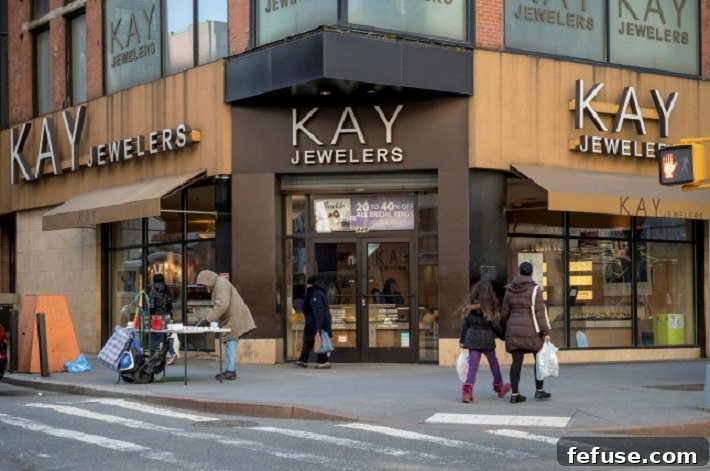
The North American jewelry market, a dynamic landscape shaped by economic shifts and evolving consumer preferences, continues to see Signet Jewelers maintain its formidable position as the highest-grossing retailer. Despite experiencing an 8 percent decline in revenue over the past year, Signet’s total 2023 sales of $6.7 billion significantly outpaced its closest competitors. This commanding lead, almost double that of second-placed Walmart, underscores Signet’s enduring influence within the sector, as revealed by National Jeweler magazine’s highly anticipated annual State of the Majors report. This comprehensive report meticulously analyzes the performance of “supersellers” – retailers achieving $100 million or more in jewelry sales – providing invaluable insights into the industry’s health and trajectory based on the most current available figures.
Signet Jewelers, globally recognized as the largest retailer of diamond jewelry, operates an extensive network of approximately 2,400 outlets across a diverse portfolio of beloved brands, including household names like Kay Jewelers, Zales, Jared, and the increasingly prominent online platform, Blue Nile, among others. While their market dominance remains unchallenged, the past year presented considerable headwinds. The company reported a 6.3 percent decrease in net sales for the fourth quarter and a more pronounced 9.6 percent drop in same-store sales. These figures reflect broader challenges facing the discretionary retail sector, such as inflationary pressures impacting consumer spending power, a normalization of demand following the pandemic-driven surge, and shifts in consumer priorities. For a company heavily reliant on occasion-based purchases, economic uncertainties can directly translate into delayed or scaled-down jewelry acquisitions, affecting even a titan like Signet.
Analyzing the competitive landscape reveals a mixed bag of performances among the top echelons of North American jewelry retail. Interestingly, general merchandise behemoths Walmart and Amazon, securing second and third places respectively, both managed to achieve an increase in their 2023 revenues. Walmart’s consistent strong performance in the jewelry category can be attributed to its vast reach, everyday value proposition, and ability to cater to a broad customer base seeking affordable yet quality options. The accessibility of jewelry within a familiar shopping environment, coupled with competitive pricing, makes Walmart a significant player, often serving as an entry point for many consumers into the jewelry market. Their merchandising strategy typically focuses on popular styles and accessible price points, effectively capturing a substantial segment of the market.
Amazon, on the other hand, exemplifies the burgeoning power of e-commerce in the jewelry space. Its growth underscores the increasing comfort consumers have with purchasing jewelry online, driven by convenience, vast selection, and often competitive pricing. While traditional jewelers focus on the in-store experience, Amazon leverages its robust logistics and customer review system to build trust and facilitate sales of everything from fashion jewelry to fine pieces. The platform’s continuous innovation in customer service and delivery options also contributes significantly to its rising influence, making it a formidable contender even against specialized jewelry retailers. Their ability to quickly adapt to market trends and offer a wide array of products from various sellers allows them to capture diverse consumer demands effectively.
The luxury segment of the market experienced some notable shifts. Richemont, the Swiss luxury conglomerate renowned for its prestigious watch and jewelry brands such as Cartier, Van Cleef & Arpels, and Piaget, slipped from its third-place standing in 2022 to fourth in 2023. This change came as its revenues declined by almost 8 percent, settling at $3.11 billion. The performance of luxury brands often serves as a barometer for the health of the high-end consumer market, which can be particularly sensitive to economic fluctuations, geopolitical events, and shifts in global wealth. A strong U.S. dollar can also impact the reported revenues of European luxury groups when converted, potentially contributing to the perceived decline despite steady demand in local currencies. The discerning nature of luxury consumers means brands must continually innovate and maintain exclusivity, a challenge even for established players like Richemont.
Maintaining its esteemed fifth position was LVMH Moët Hennessy Louis Vuitton, another French luxury powerhouse that boasts an impressive portfolio of iconic jewelry brands including Tiffany & Co. and Bulgari. LVMH’s steady ranking reflects the robust resilience of the ultra-luxury sector, where brand heritage, craftsmanship, and exclusivity command premium prices and often attract affluent consumers who are less impacted by general economic downturns. Their strategic acquisitions and brand revitalization efforts, such as those seen with Tiffany, continue to strengthen their foothold in the high-end jewelry market, signifying that brand power and heritage remain paramount for this consumer segment. The enduring appeal of timeless pieces and investment-grade jewelry further bolsters the performance of such luxury groups.
Beyond the top five, other significant players continued to shape the North American jewelry retail landscape. Costco Wholesale Corporation remained a consistent presence in sixth place, proving that its unique membership-based bulk retail model can effectively integrate fine jewelry sales. Costco’s appeal lies in its perceived value and quality, offering often high-carat diamonds and other precious jewelry at competitive prices to its loyal member base, who trust the retailer for significant purchases. Macy’s, a long-standing department store chain, held onto its seventh position. While traditional department stores face ongoing challenges, Macy’s jewelry departments continue to attract customers, leveraging their established brand recognition and in-store experience, despite needing to constantly adapt to evolving retail trends and increased online competition.
In a slight downward movement, Pandora, known globally for its customizable charm bracelets and accessible luxury jewelry, slipped from eighth to ninth place. This shift could indicate increased competition in the affordable luxury segment, changes in fashion trends, or evolving consumer preferences for personalized items. Pandora’s business model thrives on frequent customer engagement and new collections, and any slowdown in these areas could impact its standing. Entering the list at eighth place was Nonantum Capital Partners, a private equity firm that made headlines with its acquisition of Ross-Simons, a prominent multichannel jeweler. This strategic move highlights the ongoing interest of investment firms in the jewelry sector, recognizing its potential for growth and consolidation, particularly for brands with strong online presences and established customer bases. Such acquisitions often lead to significant operational changes and market repositioning for the acquired brands.
Rounding out the top ten, Bucherer, the distinguished Swiss luxury watch and jewelry retailer, maintained its tenth position. Bucherer’s focus on high-end watches and exquisite jewelry, often featuring exclusive brands and unique pieces, caters to a sophisticated clientele seeking premium quality and heritage. Their strategic expansion, particularly in the North American market through acquisitions like Tourneau, underscores their commitment to global growth in the luxury sector. The continued presence of specialized luxury retailers like Bucherer and general merchandisers like Walmart within the top ten illustrates the wide spectrum of consumer needs and price points that characterize the North American jewelry market, from everyday accessories to high-value investment pieces.
A significant finding from the National Jeweler report was the stable number of retailers in North America that achieved $100 million or more in jewelry sales during the year, holding steady at 36. This consistency suggests a degree of market stability among the top players, indicating that while individual rankings may shift, the overall pool of major contributors remains relatively constant. This could imply a mature market with established players who possess strong brand recognition, efficient supply chains, and robust customer loyalty. However, it also signals potential barriers to entry for new companies looking to scale rapidly to the “superseller” category, as well as significant challenges for smaller brands trying to break into the top tier dominated by these giants.
The broader economic context undeniably played a pivotal role in the performance of the jewelry sector in 2023. Persistent inflation, rising interest rates, and general economic uncertainty often lead consumers to re-evaluate discretionary spending, with luxury and non-essential items like jewelry being among the first categories impacted. However, certain segments, particularly the ultra-luxury market, demonstrated greater resilience, suggesting a bifurcated market where high-net-worth individuals continue to invest in fine jewelry as both an adornment and a store of value. Consumer behavior is also evolving, with increasing demand for sustainable and ethically sourced jewelry, personalized designs, and the growing acceptance of lab-grown diamonds as a viable and often more affordable alternative to natural diamonds. Retailers that can effectively adapt to these shifts, incorporating transparent sourcing practices and offering diverse product options, are better positioned for future success.
The digital transformation of retail continues unabated, profoundly impacting how jewelry is discovered, marketed, and sold. E-commerce platforms, social media, and digital marketing strategies are now indispensable tools for reaching modern consumers. Retailers are investing heavily in enhancing their online presence, offering virtual try-ons, and creating seamless omnichannel experiences that blend online convenience with in-store personalization. The success of online-first brands like Blue Nile (now part of Signet) and the strong online performance of Amazon highlight the imperative for all jewelry retailers, regardless of their legacy, to embrace digital innovation. Supply chain resilience and inventory management also remained critical concerns, with companies focusing on diversifying sourcing and optimizing logistics to navigate potential disruptions. The ability to forecast trends accurately and maintain a lean, responsive inventory is a significant competitive advantage in this fast-paced market.
In conclusion, the North American jewelry market in 2023 painted a picture of enduring leadership amidst considerable change. Signet Jewelers’ continued dominance, despite revenue declines, underscores its unparalleled market penetration and brand strength. The mixed performances of other key players—from the growth of general retailers like Walmart and Amazon to the slight retraction in parts of the luxury sector—reflect the complex interplay of economic factors, evolving consumer preferences, and strategic adaptations. The consistent number of “supersellers” indicates a stable yet highly competitive top tier, where innovation, digital prowess, and a deep understanding of consumer needs will be crucial for navigating future growth. As the industry moves forward, retailers will need to remain agile, embracing technological advancements, sustainable practices, and personalized customer experiences to thrive in this glittering, ever-evolving landscape.