
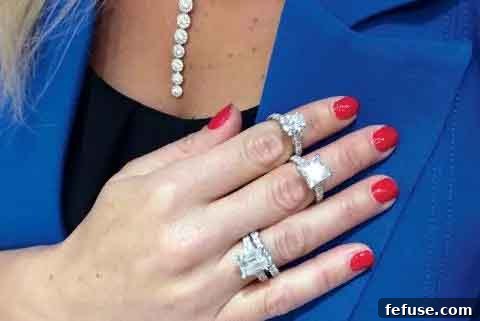
In the heart of Silicon Valley, surrounded by the world’s most innovative technology companies, Fanya Hull, owner of Vardy’s Jewelers in Cupertino, California, finds herself constantly contemplating the future. Her 35-year-old jewelry store, situated less than a mile from Apple’s global headquarters, thrives on anticipating shifts – in consumer sentiment, industry trends, and global economic forces – to strategically adapt her business in the present.
“If you’re not considering what might be ahead, then you risk being stagnant,” Hull emphasizes, highlighting a crucial mindset for survival and growth in a rapidly evolving market.
For jewelry retailers nationwide, the next five years present a complex yet exciting landscape. It’s a period brimming with both significant opportunities for innovation and formidable challenges demanding acute awareness and agile strategic planning. This in-depth look explores the critical issues shaping the future of the jewelry marketplace, drawing insights from leading retailers across the country.
Navigating the Evolving Jewelry Landscape: Key Trends for Retailers
Understanding the Millennial Consumer: Beyond Traditional Expectations
For years, many in the jewelry industry voiced concerns about millennials’ perceived disinterest in traditional jewelry, with some even forecasting the decline of brick-and-mortar stores. However, this narrative is rapidly proving to be an oversimplification. Dave Audette, co-owner of M.R.T. Jewelers in East Providence, Rhode Island, offers a more nuanced perspective: “Millennials are buying jewelry; they’re just shopping differently.”
Comprising approximately 80 million individuals in the United States, the millennial generation represents an enormous and influential consumer base. Their approach to purchasing is characterized by a deep desire for authenticity, transparency, and personal connection. These shoppers are inquisitive; they want to know the origin story of a diamond, the heritage of a brand, or the rationale behind a particular material choice, such as rose gold over platinum. Audette notes, “They’re shrewd shoppers who want real info, not slogans or gimmicks.” This demands that retailers move beyond superficial marketing and engage in meaningful dialogues with their customers, sharing compelling narratives and demonstrating ethical practices.
To truly capture the millennial market, retailers must also be willing to step outside their conventional comfort zones regarding product offerings. A growing trend, for instance, sees many millennials opting for non-diamond alternatives for engagement rings, such as vibrant pink sapphires or other unique gemstones. Audette advises, “If you don’t carry these things, you’d assume millennials aren’t buying. You have to have the guts to inventory product you might not understand yourself, but products that might be an asset in your store.” This willingness to diversify inventory and embrace emerging trends is vital. By 2020, Accenture estimated that millennial retail spending would reach an astounding $1.4 trillion, accounting for nearly one-third of all purchases. This immense purchasing power signifies their pivotal role in shaping future market demands, making their preferences a non-negotiable focus for any forward-thinking jeweler. As Audette aptly puts it, “And 2020, well, that’s just right around the corner,” emphasizing the immediacy of this generational shift.
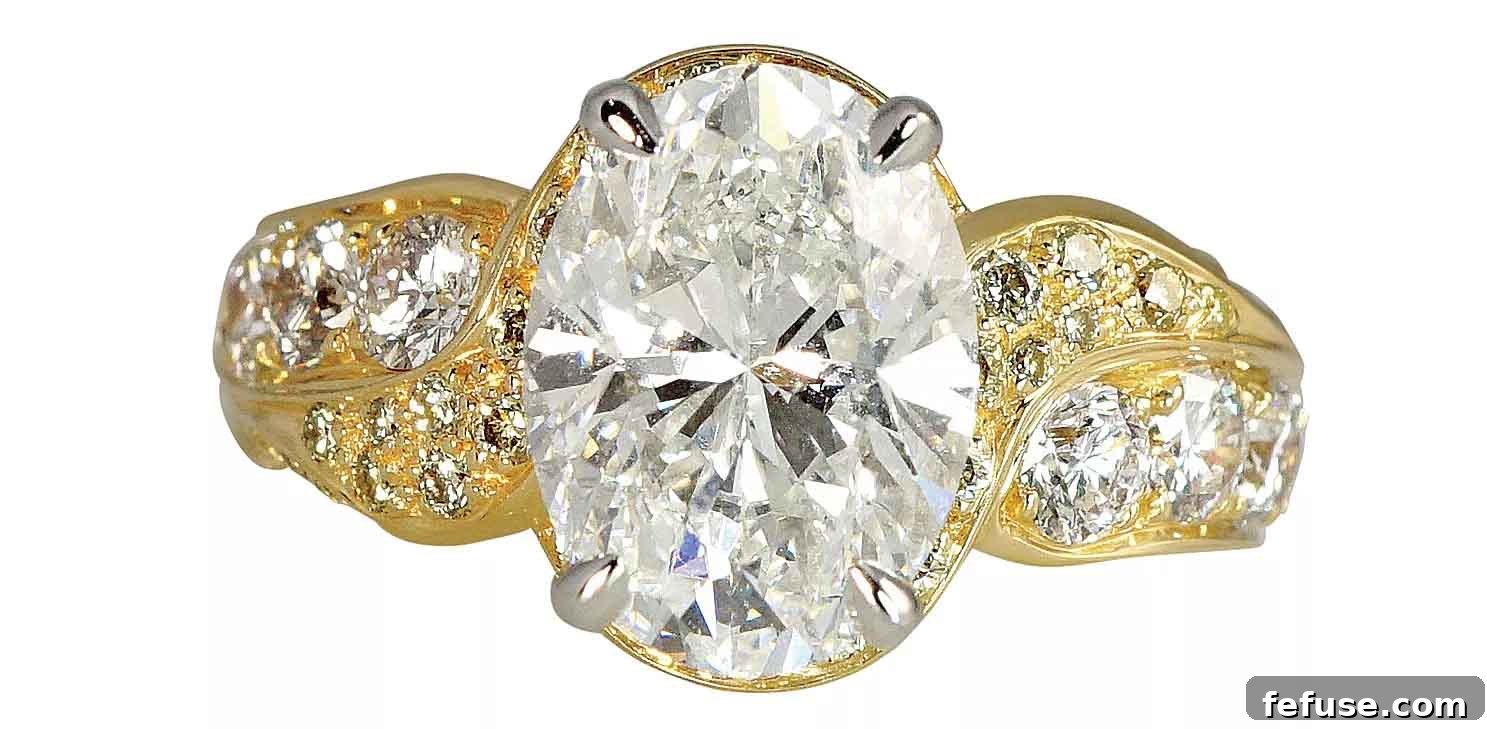
Jill custom engagement ring in 18k yellow gold and platinum with a 3.52 ct. oval center diamond, 1 ct. t.w. round diamonds, and 0.4 ct. t.w. fancy yellow diamonds; price on request; Cynthia Britt, Boston; 857-239-9885; cynthiabritt.com
The Imperative of Digital Marketing: Connecting in a New Era
As traditional media channels continue to wane in influence, digital marketing has emerged as the indispensable cornerstone of modern retail strategy. Sophie Shor, co-owner of Bridgewater, N.J.–based Roman Jewelers, views this shift not as a challenge, but as a significant opportunity. “The jewelry industry can sometimes be behind the curve adopting technology, pushing back until there’s no choice but to embrace it,” Shor observes. However, she firmly believes that “the sooner we embrace technology, though, the better we are.”
Consumers’ media consumption habits have dramatically transformed, with trust increasingly placed in online recommendations, social media engagement, and digital content over television, radio, or newspaper ads. This trend is expected to accelerate, making a robust digital presence non-negotiable for jewelers. Digital marketing offers unparalleled advantages: it is often far more cost-efficient than traditional advertising and, crucially, enables retailers to forge more authentic connections with their audience. Through comments, direct messages, and interactive content, brands can engage in two-way conversations, fostering community and building loyalty.
Roman Jewelers exemplifies this proactive approach. The 27-year-old store actively utilizes platforms like Facebook, Pinterest, and Instagram, yielding tangible results in customer engagement and sales. Looking ahead, they plan to expand their efforts on YouTube, recognizing the power of video content for showcasing products and sharing brand stories. Shor also commits to allocating more financial resources to “new wave” advertising opportunities, including targeted social media campaigns, influencer collaborations, and search engine optimization (SEO). While acknowledging that “it’s constant work, there’s no question about that,” Shor underscores its profound importance: “but it’s important to our future.” Embracing digital channels allows jewelers to meet customers where they are, understand their preferences through data analytics, and build lasting relationships in a dynamic online environment.
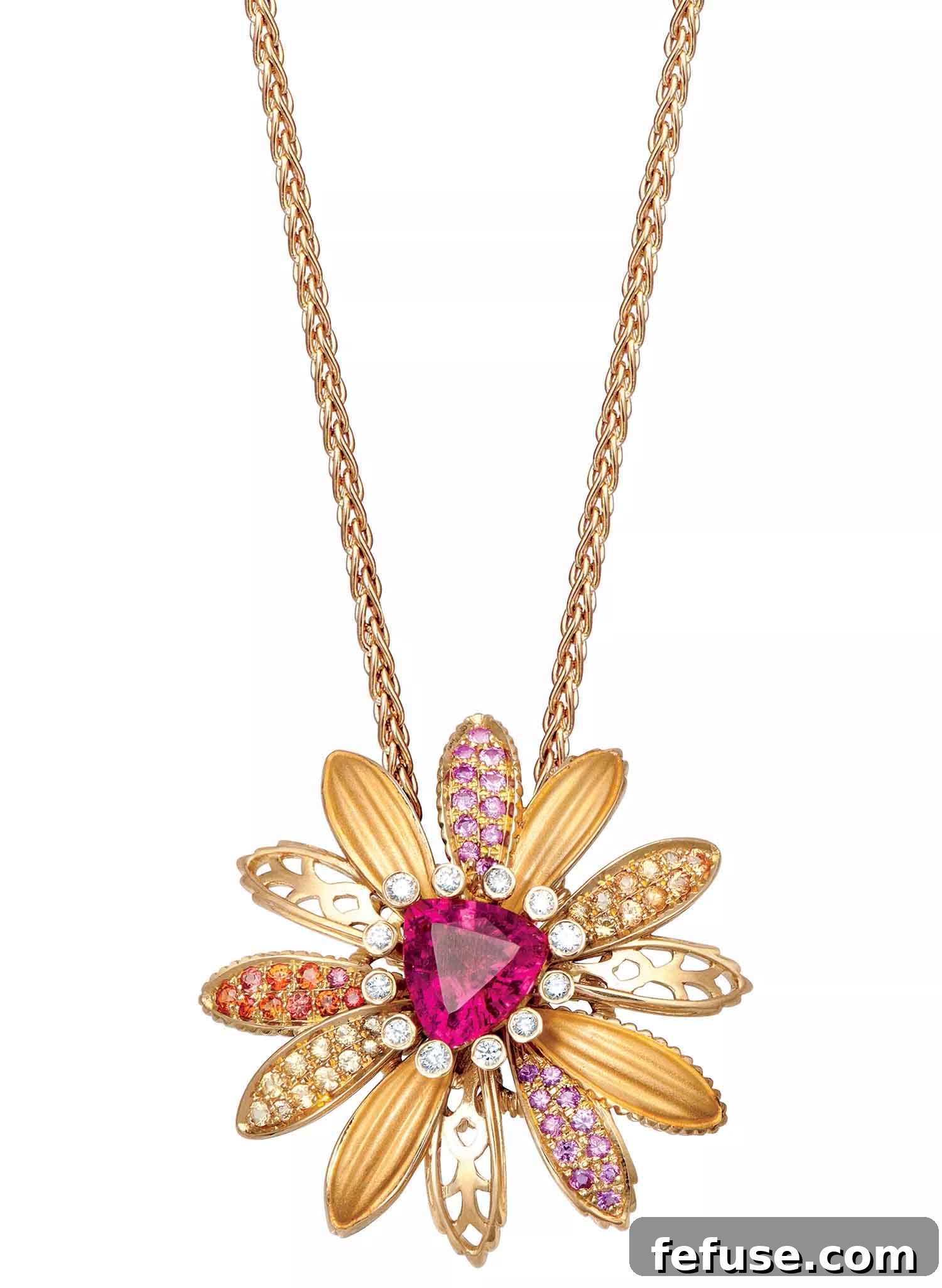
Necklace in 18k gold with 1.95 ct. pink tourmaline, and 0.18 ct. t.w. pink, 0.21 ct. t.w. orange, and 0.09 ct. t.w. yellow sapphires; price on request; Carrera y Carrera, NYC; 212-753-8877; carreraycarrera.com
Embracing E-Commerce: The 24/7 Storefront
While some retailers view e-commerce with apprehension, others, like Sophie Shor, recognize it as an essential and inevitable avenue for growth. As consumers’ comfort with online shopping continues its meteoric rise, Shor believes that jewelry stores must proactively prepare to capture this evolving buyer segment. “The public is ready and we need to be ready as well, or else we will be left behind,” she warns.
Despite not yet having a full e-commerce site, Roman Jewelers is actively exploring the option, researching successful online models and seeking insights from industry peers. Shor acknowledges that developing a robust e-commerce platform represents a significant investment, but one that could ultimately “put time on our side” by expanding reach and enhancing customer convenience. The benefits of an online presence extend far beyond direct sales. Accenture research reveals that nearly 9 out of 10 millennials prioritize access to real-time information on product availability, influencing their choice of stores. An e-commerce site, even if not fully transactional, can serve as a vital information hub, allowing customers to browse inventory, check stock, schedule appointments, and learn about products before ever stepping foot in the physical store.
Anthony Taitz, owner of Arlington, Va.–based Protea Diamonds, vividly captures this transformation: “It used to be your store windows were your window to the world; now, the Internet is a store window 24/7.” This metaphor underscores the profound shift in retail visibility. An online store transcends geographical limitations and time constraints, offering a perpetual showcase of products to a global audience. For high-value items like jewelry, e-commerce platforms can also build trust through detailed product descriptions, high-resolution imagery, customer reviews, and clear return policies. The ability to research and compare products at leisure empowers modern consumers, making an integrated online and offline experience crucial for sustained success.
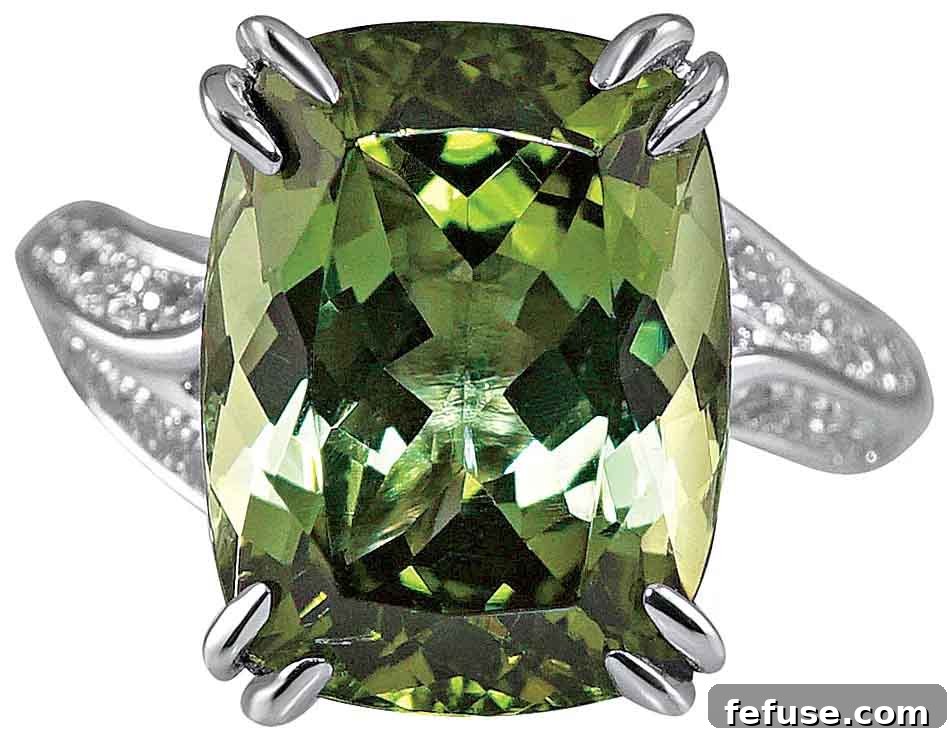
Marcy custom ring in platinum with a 7 ct. cushion green tourmaline and 0.46 ct. t.w. diamonds; price on request; Cynthia Britt, Boston; 857-239-9885; cynthiabritt.com
Chains vs. Independents: A Shifting Competitive Landscape
The competitive landscape within the jewelry industry is experiencing a notable recalibration. The Jewelers Board of Trade reported 760 U.S.-based retail jeweler/repairer closures last year, a sobering statistic that highlights the growing challenges faced by independent operators. This trend coincides with a period of intensified momentum among the industry’s well-established chain stores. Dave Audette attributes this to the chains’ ability to leverage superior resources: “The major chains are getting better at what they do, and they combine that with technology, advertising dollars, and more resources than a 50-year-old independent could ever dream of.”
This widening gap between single-store owners and large chains creates a more intricate and demanding market dynamic, fostering concerns about rising operational costs and escalating competition. Akshay Andy Anand of Karats, an 11-year-old retail business in Overland Park, Kansas, encapsulates this sentiment with a stark warning: “Only the strongest survive.” He stresses the need for constant vigilance, innovation, and a holistic review of every business aspect. “You need to keep your eye on the ball, constantly innovating and looking at every aspect of your business. You can’t let anything slip away.”
For independents to thrive in this “Darwinian race,” adaptation and evolution are paramount. Anthony Taitz of Protea Diamonds, celebrating its 30th anniversary, advises jewelers to shed outdated practices and embrace trending products like rose gold and morganite, which resonate with contemporary tastes. “We all need to figure out what’s on the upswing and navigate this minefield,” Taitz emphasizes. Ultimately, relevance is the name of the game. Maintaining relevance demands thoughtful strategies and concentrated effort, focusing on what truly matters to today’s consumers. Audette concludes, “You cannot think everyone is always going to want jewelry, so you need to promote your business in a way that makes sense for consumers.” This means understanding shifting desires and positioning one’s business to meet them proactively.
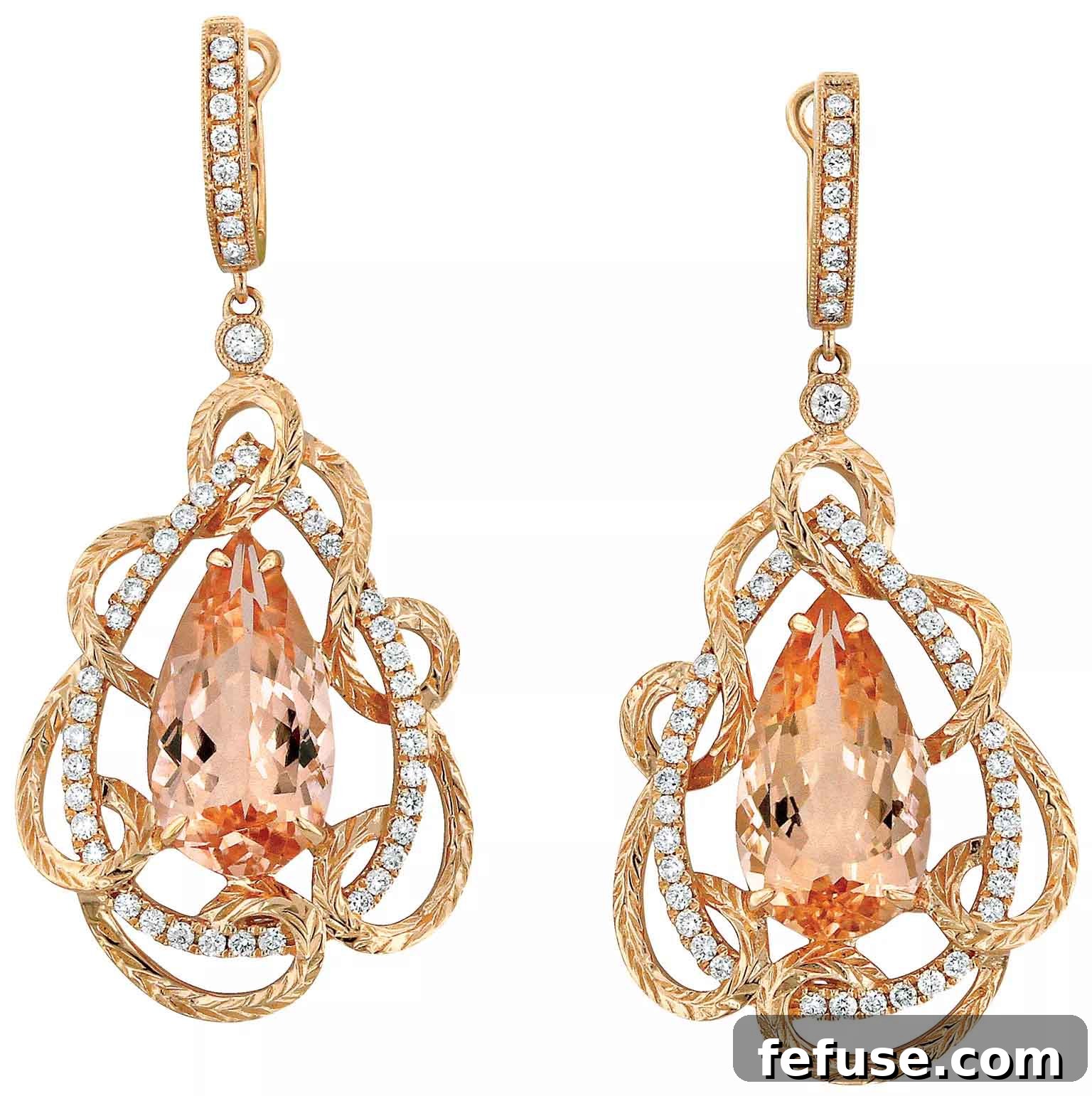
Earrings in 18k rose gold with 10.5 cts. t.w. morganite and 0.91 ct. t.w. diamonds; $11,259; Yael Designs, San Francisco; 415-989-9235; yaeldesigns.com
Cultivating Niches and Specializations: The Path to Distinction
In an increasingly competitive environment, complacency can be fatal, as Akshay Andy Anand warns: “Complacency kills.” For independent jewelry retailers, the future lies in pioneering distinct niches and developing specializations that are difficult for larger chains to replicate. This strategy allows businesses to carve out unique market positions and attract specific customer segments.
Karats, for example, has strategically built its business on three foundational pillars: bridal jewelry, watches, and exceptional service. On the bridal side, Karats has successfully positioned itself as Kansas City’s premier engagement ring destination. This involves meticulously monitoring current styles and trends, which are then reflected in a robust and diverse inventory within its expansive 5,500-square-foot storefront. Anand stresses the importance of extensive selection: “You cannot sustain yourself with only a few lines. You have to provide customers with so much selection that you don’t lose the sale, all while being selective and shrewd with your buying.” This balance between breadth and curated quality is crucial for customer satisfaction.
Similarly, at Vardy’s Jewelers, Fanya Hull continues to reinforce the store’s reputation as a custom jeweler. She is confident that consumers will increasingly favor unique, one-of-a-kind pieces over mass-market reproductions. “People want something different and something no one else has,” Hull notes, tapping into the desire for personal expression and exclusivity. Customization not only offers a distinctive product but also builds a deeper connection with the customer through the collaborative design process.
Long-standing independent jewelers, meanwhile, can leverage their established track record and community trust. In Marquette, Michigan, Jandrons Fine Jewelry actively promotes its 26-year legacy as a family-owned business, built on principles of honesty, reliability, and unparalleled service. Jon Arntsen, Jandrons manager, highlights their unique selling proposition: “This is something the Internet doesn’t have. We’re the place people can come to make an educated purchase. We’re the ones who will sell the product, repair it, and maintain it. We need to make sure this is known.” This emphasis on expert advice, comprehensive after-sales support, and genuine relationships provides a powerful differentiator that chains often struggle to replicate, fostering deep customer loyalty and repeat business.
The Road Ahead: Five Strategies for a Brighter Future in Jewelry Retail
In an era of rapid transformation, proactive measures are essential for success. Here are five actionable strategies retailers can implement today to secure a more prosperous future:
- Renovate: Beyond fresh paint and new lighting, consider a comprehensive remodel to modernize your store’s aesthetics and functionality. An updated environment enhances the customer experience, reflects contemporary tastes, and can attract a new, younger clientele. Think about optimizing layout for product discovery, integrating digital displays, and improving security infrastructure.
- Develop Human Capital: Your employees are your most valuable asset. Invest in their training, empower them with decision-making capabilities, and reward their dedication. This not only boosts employee retention but also directly impacts the bottom line through enhanced sales performance, superior customer service, and a deeper collective product knowledge. Equip them to tell compelling stories about your jewelry.
- Study Success: Look beyond your immediate industry for inspiration. Roman Jewelers’ Sophie Shor, for instance, analyzes Walt Disney’s theme parks to understand how to exceed customer expectations. Examine companies renowned for exceptional customer experience, innovative marketing, or operational efficiency, regardless of their sector. Adapt their best practices to your jewelry business to create memorable customer journeys.
- Silence the Noise: Dave Audette of M.R.T. Jewelers wisely focuses his energy on what he can control, rather than external factors like national economy fluctuations or wholesale pricing. Concentrate on internal strengths: refine sales techniques, enhance staff training, optimize inventory management, and strengthen local marketing efforts. By focusing on controllable variables, retailers can build resilience and achieve tangible results.
- Shorten the Business Plan: The traditional five-year business plan may no longer be agile enough for today’s fast-paced market. Anthony Taitz of Protea Diamonds advocates for a two-year business plan. This shorter timeframe encourages more frequent reviews, greater flexibility, and quicker adjustments to shifting marketplace conditions, allowing retailers to remain responsive and competitive.
The future of jewelry retail is dynamic and full of potential for those willing to adapt, innovate, and prioritize the evolving needs of their customers. By embracing technological advancements, understanding generational shifts, and cultivating unique value propositions, independent jewelers can not only survive but thrive in the years to come.
Inset: Roman Jewelers touts Tacori on Facebook.