
Boosting India’s Gem & Jewellery Sector: A Strategic Leap with Common Facility Centers
India’s illustrious gem and jewellery sector, a cornerstone of its cultural heritage and economic prowess, is poised for significant advancement. Recognizing the immense potential and the critical role played by artisans and micro, small, and medium enterprises (MSMEs), the Indian government, in collaboration with the Gems and Jewellery Export Promotion Council (GJEPC), is implementing a transformative initiative: establishing Common Facility Centers (CFCs) across the nation. These state-of-the-art centers are designed to be catalysts for innovation, quality enhancement, and increased production efficiency within the sector.
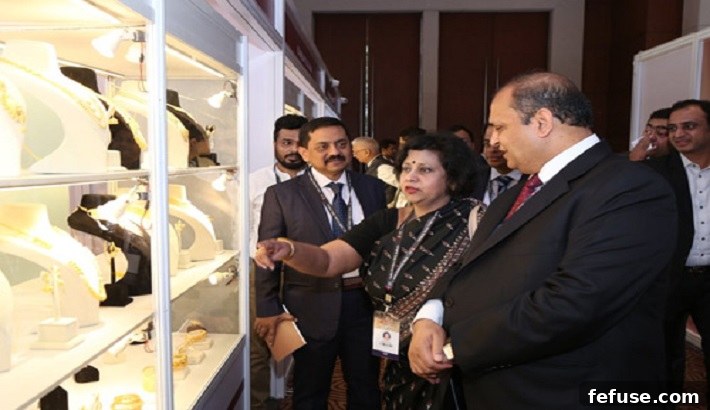
Rupa Dutta, Economic Advisor to the Ministry of Commerce and Industry, emphasized the strategic importance of these centers. “For primarily artisans in the micro, small and medium enterprises (MSME) sector to improve their production and quality, the government along with the Gems and Jewellery Export Promotion Council (GJEPC) is setting up Common Facility Centers (CFCs),” she stated. This proactive approach underscores a commitment to empowering the grassroots of the industry, ensuring that even the smallest workshops have access to cutting-edge technology and expertise previously beyond their reach.
Empowering Artisans and MSMEs through Common Facility Centers
The establishment of Common Facility Centers is a game-changer for India’s gem and jewellery MSMEs. These centers are meticulously planned to address the perennial challenges faced by small-scale manufacturers and individual artisans, such as limited access to advanced machinery, high capital investment for technology, and the need for continuous skill upgrades. By providing a shared infrastructure, CFCs democratize access to sophisticated tools and techniques, fostering an environment of collective growth and competitiveness.
Each CFC is envisioned as a hub of excellence, offering a spectrum of services including precision manufacturing equipment, advanced design software, quality testing laboratories, and specialized training programs. Artisans can utilize these facilities on a pay-per-use basis, significantly reducing their operational costs and allowing them to focus on honing their craft. This model not only boosts production volume but also elevates the overall quality and finishing of Indian jewellery, making it more competitive in global markets. The initiative directly supports the ‘Make in India’ vision by strengthening the domestic manufacturing ecosystem and promoting indigenous craftsmanship.
The implementation of these CFCs is already well underway. Rupa Dutta confirmed the progress, stating, “Three CFCs have already been set-up and the work of fourth CFC has completed in Junagadh, Gujarat, and will be inaugurated soon.” This rapid deployment highlights the government’s resolve to quickly operationalize these vital facilities. Furthermore, the ambition extends far beyond the initial few centers. “We have grant for setting up 13 CFCs all across the country and we have identified clusters like Kolkata, Rajkot, Coimbatore, Jaipur, Delhi and Hyderabad,” she added. This strategic geographical spread ensures that major gem and jewellery manufacturing hubs, each with their unique specializations, benefit from these advanced facilities. The work for the Kolkata CFC, a crucial center for the eastern region, was slated to commence by the end of December 2018, marking another significant milestone in this nationwide endeavor.
India’s Growing Dominance in Global Gold Jewellery Exports
The concerted efforts to bolster the domestic manufacturing capabilities directly feed into India’s formidable presence in the global jewellery market. India has long been recognized for its intricate designs, exceptional craftsmanship, and the sheer volume of its gem and jewellery exports. This sector is not merely an economic contributor but also a custodian of traditional artistry and a dynamic force for innovation.
The performance of gold jewellery exports, in particular, has been a testament to the sector’s resilience and growth trajectory. In the financial year 2017-18, gold jewellery exports registered a remarkable growth of 10.9 percent compared to the previous financial year (2016-17). This robust growth underscores the increasing global demand for Indian-made gold jewellery and the industry’s ability to meet international standards and preferences. Rupa Dutta proudly highlighted India’s standing on the global stage: “Currently, India is the fourth world’s largest exporter of gold jewellery.” This position is a result of centuries of accumulated expertise, a vast pool of skilled artisans, and a continuous drive for excellence.
The gem and jewellery sector holds immense strategic importance for the Indian economy, forming a substantial portion of the nation’s overall export basket. Dutta further elaborated on this, stating, “The gems and jewellery sector forms a very important part of our exports basket, it’s over 14-16% of our export basket.” This significant contribution highlights its role as a key foreign exchange earner, providing stability to the trade balance and projecting India’s soft power through its exquisite products. The continuous growth in exports, driven by both traditional markets and emerging economies, demonstrates the sector’s adaptability and enduring appeal.
Forging International Partnerships: The Role of Buyer-Seller Meets
Beyond domestic infrastructure, fostering international relationships is crucial for sustained growth. Events like the India Jewellery Buyer-Seller Meet, organized by the GJEPC in Kolkata, serve as vital platforms for global engagement. These meets are strategically designed to open new avenues for trade and investment, connecting Indian manufacturers directly with key international buyers.
The objective of such first-ever trade meets in cities like Kolkata is multi-faceted. They aim to invite key business decision-makers from target countries, facilitating one-to-one meetings with prominent Indian jewellery manufacturers. This direct interaction removes intermediaries, allowing for deeper understanding of market needs, fostering trust, and exploring bespoke opportunities. At the Kolkata meet, 24 Indian Jewellery manufacturers showcased their latest plain gold crafted jewellery, offering a glimpse into India’s design prowess and manufacturing capabilities. Such initiatives are instrumental in developing new trust and understanding at cultural, business, and professional levels, paving the way for lucrative future business collaborations and stronger bilateral investment ties.
These buyer-seller interactions are more than just transactions; they are opportunities for cultural exchange and brand building. By directly engaging with international partners, Indian manufacturers gain invaluable insights into global design trends, quality benchmarks, and consumer preferences. This feedback loop is essential for continuous innovation and for maintaining India’s competitive edge in a dynamic global market. The meets not only facilitate immediate orders but also lay the groundwork for long-term partnerships, helping to diversify India’s export portfolio and expand its market reach across continents.
Nurturing Growth: Government Support and Sectoral Significance
The government’s steadfast commitment to nurturing the gem and jewellery sector stems from its profound socio-economic impact. This sector is not only a major contributor to India’s GDP and export earnings but also a significant employer, particularly in skill-intensive roles. The sector boasts high employability, providing livelihoods to millions of artisans, craftsmen, designers, and support staff across various skill levels, from traditional handcrafting to modern manufacturing. Many of these jobs are in semi-urban and rural areas, making the sector a crucial engine for inclusive growth and regional development.
The sustained support for the sector is evident in various policy initiatives, including the establishment of CFCs, skill development programs, and promotional activities. These measures aim to enhance productivity, promote design innovation, and ensure that the Indian gem and jewellery industry remains globally competitive. The sector’s ability to blend traditional artistry with modern technology positions it uniquely, allowing it to cater to diverse global tastes while preserving its rich heritage. Furthermore, the industry contributes to India’s brand image globally, with ‘Made in India’ jewellery often synonymous with exquisite craftsmanship and unparalleled quality.
Navigating Challenges: Credit Crunch and Financial Resilience
Despite its robust performance and strategic importance, the Indian gem and jewellery sector is not without its challenges. Sabyasachi Ray, Executive Director of the GJEPC, highlighted a significant hurdle facing the industry: a credit crunch. He noted that the banking system was not disbursing ‘standby credit,’ a vital financial lifeline for many businesses in the sector. This lack of liquidity is exacerbated by external economic factors. Ray pointed out that the sector had already lost “10-15 per cent of its limit due to the depreciation of the rupee,” directly impacting the operational capacity and expansion plans of many enterprises.
The credit crunch and currency fluctuations pose substantial risks, particularly for smaller MSMEs that rely heavily on consistent access to finance for raw material procurement, technological upgrades, and day-to-day operations. The depreciation of the rupee not only reduces the borrowing capacity but also increases the cost of imported raw materials, such as rough diamonds and gold, which are integral to the industry. Addressing these financial challenges requires a concerted effort from both the government and the banking sector to ensure adequate credit flow, introduce flexible financing options, and devise strategies to mitigate the impact of currency volatility.
The Future Trajectory: Innovation, Sustainability, and Skill Development
Looking ahead, the Indian gem and jewellery sector is focused on a trajectory of innovation, sustainability, and continuous skill development. Beyond the physical infrastructure provided by CFCs, there’s a growing emphasis on fostering creativity and embracing digital transformation. Design innovation, driven by market research and consumer trends, will be key to staying relevant in an ever-evolving global market. This includes leveraging advanced design software, 3D printing technologies, and exploring new materials and techniques.
Sustainability and ethical practices are also becoming increasingly critical. Global consumers are more conscious about the origin of their jewellery, demanding transparency in sourcing, environmentally friendly production processes, and fair labor practices. The Indian industry is adapting by adopting responsible sourcing policies for diamonds and gemstones, minimizing waste, and investing in green technologies. Furthermore, the push towards digitalization, encompassing e-commerce, digital marketing, and blockchain for provenance tracking, will unlock new market opportunities and enhance efficiency across the value chain. Continuous skill upgradation programs, ranging from traditional carving techniques to modern CAD/CAM skills, will ensure that India maintains its competitive edge and continues to produce world-class artisans and jewellery. These multifaceted efforts underline India’s ambition to not only maintain its position but to ascend further as a global leader in the gem and jewellery industry, driven by quality, innovation, and ethical integrity.