
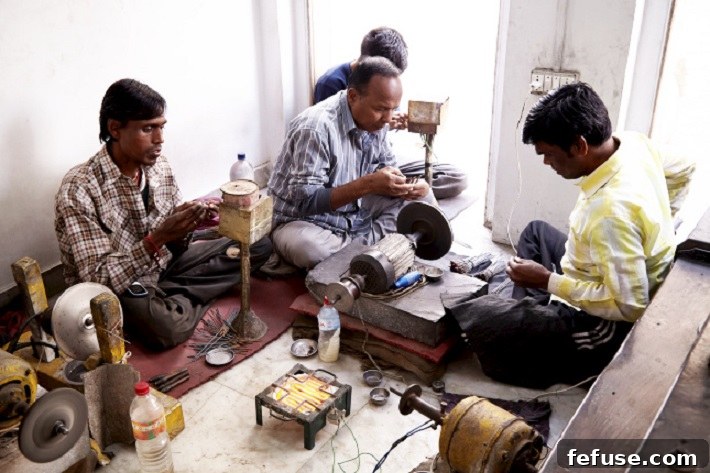
Surat’s Diamond Industry Confronts COVID-19: Factories Shut Down, Safety Protocols Under Scrutiny
The global hub for diamond cutting and polishing, Surat, is currently grappling with the profound challenges posed by the COVID-19 pandemic. In a significant development, three prominent diamond manufacturing facilities in the city were compelled to cease operations yesterday for a minimum of ten days. This drastic measure was enacted following the confirmation of 22 positive coronavirus cases among their workforce, sending ripples of concern throughout the industry and raising urgent questions about workplace safety and the potential for disease transmission within this vital economic sector.
Municipal authorities are taking aggressive steps to contain the spread, implementing stringent measures to protect the city’s expansive workforce. A particular point of concern for health officials revolves around the raw materials themselves. There is a palpable fear that packets of rough diamonds, handled by numerous individuals throughout the processing chain, may have inadvertently served as vectors for the infection. Consequently, an urgent appeal has been issued to factory owners and industry stakeholders to ensure that all rough diamonds undergo thorough sanitization before they are distributed to workers for the intricate and labor-intensive polishing process. This directive underscores the unprecedented nature of the current health crisis, compelling businesses to re-evaluate every aspect of their operations, from raw material handling to final product delivery.
Immediate Fallout: Three Major Diamond Factories Shutter Amidst Outbreak
The closures represent a critical turning point in Surat’s battle against the pandemic, especially within its core industry. Dr. Ashish Naik, the city’s deputy health commissioner, provided specific details regarding the affected firms and the extent of the outbreaks within them. Speaking to The Indian Express news website, Dr. Naik stated, “Our teams had identified 13 positive cases from Dharmanandan Diamonds, five positive cases from Shivam Exports, and four from J & B Brothers. We have subsequently issued closure notices to all three firms.” These decisive actions highlight the authorities’ unwavering commitment to prioritizing public health and safety, even at the cost of temporary economic disruption. The immediate shutdown of these major players is a stark reminder of the virus’s insidious ability to infiltrate industrial settings, necessitating swift and uncompromising intervention.
The targeted closures serve as a potent warning to the broader diamond industry in Surat, emphasizing the critical importance of adhering to established COVID-19 safety guidelines. The scale of the outbreak within these factories suggests potential lapses in protocol, leading to the rapid internal spread of the virus. Such incidents underscore the inherent vulnerability of workplaces where close contact and shared tools are common, making rigorous hygiene practices, social distancing, and immediate isolation of symptomatic individuals absolutely paramount. The move by the municipal corporation is not merely punitive but preventive, aiming to avert a larger crisis that could cripple Surat’s economy and endanger countless lives.
Unprecedented Concerns: Rough Diamonds as Potential Vectors
The suggestion by municipal authorities that rough diamonds might act as fomites, or inanimate objects capable of carrying infectious agents, introduces an entirely new dimension to the fight against COVID-19 in the diamond sector. While the primary mode of transmission for coronavirus is person-to-person through respiratory droplets, the virus can survive on surfaces for varying durations. Given the extensive handling of rough diamonds by multiple individuals across different stages—from mining and sorting to transport and initial processing—the potential for surface transmission cannot be entirely dismissed. The directive to sanitize these materials, therefore, represents a proactive measure to mitigate a theoretical, yet plausible, transmission pathway. Implementing effective sanitation protocols for millions of raw diamonds circulating through the city’s factories presents a logistical challenge of immense proportions. It necessitates innovative solutions and a collective commitment from all industry participants to safeguard their workforce and maintain the integrity of their products.
Surat: The Global Hub for Diamond Processing and Its Vulnerabilities
Surat, often celebrated as the “Diamond City” of India, plays an indispensable role in the global diamond supply chain. An astonishing 90% of the world’s diamonds are cut and polished in Surat, employing millions of skilled artisans and laborers. This unparalleled concentration of diamond processing activity has historically been a source of immense prosperity and pride for the region. However, in the age of a global pandemic, this very density and interconnectedness present significant vulnerabilities. The sprawling network of small, medium, and large-scale factories, often situated in densely populated industrial zones like Katargam, creates an environment where infectious diseases can spread with alarming speed. The close proximity of workers on factory floors, shared transportation, and communal living arrangements all amplify the risk of rapid transmission. The current crisis has starkly illuminated the delicate balance between economic prowess and public health resilience, forcing the industry to confront its inherent structural challenges in the face of an invisible enemy.
A Deep Dive into Surat’s COVID-19 Landscape, Katargam Under Scrutiny
The broader COVID-19 situation in Surat provides crucial context for the recent factory closures. The city has been a significant hotspot in Gujarat, recording a substantial number of cases since the pandemic began. Alarmingly, almost a quarter of the 3,018 COVID-19 cases reported in Surat so far have originated from the Katargam zone, which is recognized as a key diamond processing area. This disproportionate concentration of cases in Katargam underscores the unique challenges faced by industrial belts during a pandemic. On a recent Saturday, for instance, Surat city reported 77 new cases, with a significant 26 of these emerging from Katargam alone. This data points to a clear correlation between high-density industrial activity and heightened transmission risk. The close-knit communities, shared public transport, and the sheer volume of human interaction in these zones create fertile ground for the virus to propagate, making targeted interventions and community-level awareness campaigns absolutely vital.
Stern Warnings and Enforcement: A Precedent for Adherence
Surat Municipal Commissioner Banchhanidhi Pani articulated the strategic importance of issuing closure notices to the three major factories. His statement clarified that these closures were not merely reactive but served a larger purpose: “It was important to issue closure notices to the three big factories, as a warning to others that they must follow COVID-19 rules.” This unequivocal declaration sends a powerful message across the entire diamond industry and, indeed, all industrial sectors within Surat. It signals that authorities are prepared to take decisive action against any establishment found in non-compliance with public health guidelines. The closures set a precedent, emphasizing that adherence to safety protocols—including social distancing, mandatory mask-wearing, regular sanitization, and immediate reporting of symptoms—is not optional but an absolute imperative. This stern approach aims to foster a culture of collective responsibility and ensure that all businesses actively contribute to curbing the pandemic’s spread, protecting both their workforce and the wider community.
Economic Repercussions and Worker Livelihoods
While public health remains the paramount concern, the economic repercussions of factory closures on Surat’s diamond industry are undeniable and far-reaching. The temporary shutdown of operations means a halt in production, impacting delivery schedules, potentially straining relationships with international buyers, and creating an ripple effect across the entire supply chain. Small and medium enterprises, which often rely on a constant flow of work, are particularly vulnerable to these disruptions. More critically, the closures directly affect the livelihoods of thousands of workers, many of whom are daily wage earners or migrant laborers. For these individuals, a temporary cessation of work can mean immediate financial hardship, inability to meet basic needs, and a looming sense of insecurity. While some factories might offer partial pay or support during such periods, many workers might face the harsh reality of no income. The delicate balance between safeguarding public health and ensuring economic stability for a vast workforce becomes a central dilemma, requiring thoughtful policy interventions and support mechanisms from both government and industry bodies.
Redefining Operations: The Future of Diamond Polishing Amidst a Pandemic
The current crisis compels Surat’s diamond industry to fundamentally rethink its operational strategies. The era of densely packed factory floors and communal working conditions, without stringent health safeguards, appears to be drawing to a close. Moving forward, the industry must embrace revised Standard Operating Procedures (SOPs) that prioritize worker safety and infection control. This will likely involve a paradigm shift towards staggered shifts to reduce worker density, rigorous and frequent sanitization of workstations and shared equipment, mandatory health screenings at entry points, and the strict enforcement of mask-wearing and social distancing throughout the premises. Furthermore, there might be an accelerated adoption of technology for contact tracing, real-time health monitoring, and even automation in certain low-skill repetitive tasks to minimize human contact. The crisis, while devastating, also presents an opportunity for the industry to modernize its practices, invest in safer working environments, and build greater resilience against future public health challenges, thereby safeguarding its long-term viability and global standing.
Safeguarding the “Diamond City”: A Collective Responsibility
The containment of COVID-19 within Surat’s diamond industry is not solely the responsibility of municipal authorities or factory owners; it is a collective imperative involving every stakeholder. Workers must adhere to personal hygiene protocols, report symptoms immediately, and cooperate with testing and isolation measures. Factory owners must invest in creating safe working environments, providing necessary protective equipment, and implementing and enforcing health guidelines. The government must continue to monitor the situation, provide clear directives, and offer support to both businesses and affected workers. Only through a concerted, collaborative effort can Surat effectively navigate this unprecedented crisis, protect its vital industry, and ensure the well-being of its millions of citizens. The resilience and adaptability demonstrated by the Surat diamond industry throughout its history will be crucial in overcoming this current hurdle, paving the way for a safer and more secure future.
Looking Ahead: Navigating the New Normal in Surat’s Diamond Sector
As Surat’s diamond industry moves forward, it faces the complex task of adapting to a “new normal” shaped by the ongoing pandemic. This will entail not only short-term adjustments to current health regulations but also long-term strategic planning to build a more robust and health-conscious industrial ecosystem. The challenges are formidable, ranging from maintaining global supply chain stability amidst disruptions to ensuring sustained economic growth while prioritizing public health. However, within these challenges lie opportunities for innovation, for forging stronger partnerships between industry and government, and for reinforcing Surat’s reputation as a responsible and resilient global diamond hub. The lessons learned from these factory closures and the subsequent public health interventions will undoubtedly inform future policies, guiding the industry towards practices that simultaneously uphold economic vitality and safeguard the invaluable human capital that forms the very heart of the “Diamond City.” Ensuring both public health and economic stability will be the twin pillars upon which Surat rebuilds and thrives in the post-pandemic era.