
De Beers’ Lightbox Jewelry Makes Groundbreaking Move into Physical Retail
The global diamond industry is witnessing a significant and strategic shift as De Beers’ Lightbox Jewelry, its innovative brand specializing in lab-grown diamonds, prepares to make its debut in traditional brick-and-mortar retail stores. This pivotal expansion marks a new chapter for Lightbox, which has primarily engaged consumers through its dedicated online platform and temporary pop-up stores since its launch. Set to commence as an initial six-month trial run, this move into physical retail environments represents a calculated evolution for De Beers and a compelling development for the broader jewelry market.
According to a detailed report by Anthony DeMarco in Forbes, the highly anticipated physical rollout is slated to begin this month. Lightbox Jewelry will become accessible to a wider consumer base through carefully selected locations of the esteemed department store chain, Bloomingdale’s, and the well-established, family-owned independent retailer, Reeds Jewelers. This dual-pronged strategy, encompassing both high-end department store visibility and broad accessibility through mall-based jewelers, suggests a thoughtful approach to test market receptiveness across diverse consumer segments and retail landscapes.
Strategic Pilot Program: Bridging Online and In-Store Experiences
The initial phase of this trial will strategically position Lightbox collections in a limited yet impactful number of locations. Bloomingdale’s will feature Lightbox Jewelry in two of its prominent stores—one situated in the vibrant heart of New York City and another in the dynamic urban center of San Francisco. This selective placement within Bloomingdale’s likely aims to capture a discerning, luxury-oriented demographic, capitalizing on the department store’s strong brand reputation and significant foot traffic in major metropolitan areas. In parallel, Reeds Jewelers will integrate Lightbox products into 30 of its stores, with a majority of these locations strategically situated within high-traffic shopping malls. This broader distribution through Reeds Jewelers is designed to offer Lightbox extensive exposure to everyday consumers and regional markets, providing invaluable insights into broader market acceptance and purchasing behaviors.
Further enhancing accessibility and consumer convenience, both Bloomingdale’s and Reeds Jewelers will simultaneously offer the complete Lightbox jewelry range on their respective e-commerce platforms. This integrated omnichannel retail strategy ensures that consumers can engage with Lightbox lab-grown diamonds through their preferred shopping channel, whether they seek an immersive in-store experience or the convenience and flexibility of online browsing and purchasing. This comprehensive approach is essential in today’s retail climate, effectively catering to evolving consumer preferences and shopping habits.
Transparent Pricing and Diverse Lab-Grown Diamond Offerings
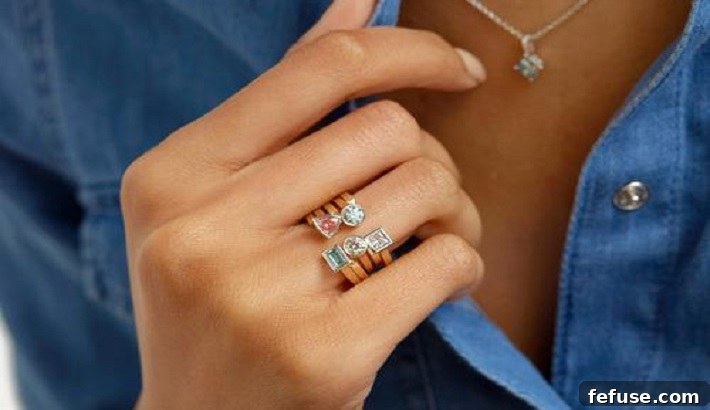
At every participating retail point, both physical and digital, Lightbox Jewelry will proudly present its full spectrum of lab-grown diamond offerings. This extensive collection includes popular and versatile jewelry categories such as elegant pendant necklaces, timeless stud earrings, contemporary bracelets, and stylish stacking rings. Each piece is meticulously set with high-quality laboratory-grown diamonds, available in the brand’s signature radiant white, enchanting pink, and striking blue hues. This diverse collection is thoughtfully curated to appeal to a wide array of personal styles and occasions, ranging from everyday adornment to thoughtful gifting.
A fundamental pillar of the Lightbox brand philosophy is its commitment to transparent and straightforward pricing, a model that will be consistently upheld across all new retail channels. Lightbox lab-grown diamonds are priced at an accessible US$200 for a quarter-carat stone, with prices escalating proportionally to US$800 for a one-carat diamond. It is important for consumers to understand that the cost of the jewelry setting is charged separately, independent of the diamond price. This clear, per-carat pricing strategy distinctly sets Lightbox apart in the diamond market, emphasizing exceptional value and simplicity, and reinforcing its mission to position lab-grown diamonds as an accessible luxury rather than a traditional investment commodity.
To ensure a highly successful launch and achieve robust brand visibility, Lightbox is poised to unleash a comprehensive and dynamic marketing and advertising campaign. Reports indicate that the brand “will support the launch with outdoor advertising and digital advertising, social media content and special events in key markets.” This multi-channel marketing blitz will be instrumental in generating widespread awareness for the physical retail presence, driving crucial foot traffic to stores, and fostering engaging interactions with consumers across various digital platforms, thereby further solidifying Lightbox’s prominent position in the rapidly evolving diamond landscape.
De Beers’ Strategic Vision: Clear Branding and Market Segmentation
From its very inception, Lightbox has maintained an unwavering commitment to clear and unambiguous branding practices. As highlighted by DeMarco, the brand has consistently affirmed that its collections “will be merchandised separately from natural diamonds” within all retail environments. Moreover, Lightbox products will be branded and presented to customers “clearly as laboratory-grown diamonds.” This deliberate and transparent distinction is fundamental to De Beers’ overarching strategy: to effectively segment the diamond market, ensuring that consumers are fully informed about the nature of their purchase and that the integrity and unique value propositions of both natural and lab-grown diamond categories are meticulously preserved. This commitment to transparency is pivotal for building consumer trust and empowering informed purchasing decisions based on individual preferences and values.
The initial introduction of Lightbox in September 2018 sent profound ripples, indeed seismic waves, across both the established natural diamond industry and the burgeoning lab-grown diamond sector. It represented a bold and audacious strategic maneuver by De Beers, an entity historically recognized as the staunchest advocate for natural diamonds, to actively participate in the synthetic diamond market. This groundbreaking launch ignited intense industry debate and compelled a widespread re-evaluation of market strategies among competitors. Now, the strategic decision to move Lightbox into physical retail stores is poised to once again stimulate significant discussion and adaptation from industry players and stakeholders alike, further shaping the future trajectory of the diamond market.
A Planned Evolution: From Digital to Omnichannel Presence
While this significant brick-and-mortar expansion might appear sudden to some, it aligns seamlessly with previous indications and strategic insights shared by the brand’s leadership. The actual move into physical retail environments should not come as a major surprise to astute industry observers. Lightbox CEO Steve Coe had provided a clear and forward-looking signal of this intent at the prestigious Las Vegas Show in June 2019. A comprehensive report by Eileen McClelland, published in Instore on June 4, 2019, explicitly detailed Coe’s foresight: “Coe announced that he expects to begin market testing the brand in retail stores later this year. After the company’s $94 million plant in Gresham, OR goes online in 2020, production will increase and the brand will be offered to a broad range of retailers by 2021. Color offerings and jewelry-design styles will likely be expanded as well.”
DeMarco’s recent column, which includes direct and insightful quotes from Coe, serves to powerfully reaffirm that this strategic evolution has been a meticulously planned, long-term endeavor rather than an impulsive business decision. Coe is quoted by DeMarco as unequivocally asserting, “It has always been our plan to move forward into bricks and mortar distribution in due course.” He further elaborated on the invaluable insights garnered from Lightbox’s initial direct-to-consumer model and temporary activations: “Over the last year we have learned a lot regarding consumer preferences for our jewelry, from both our eCommerce retail and the series of pop-up stores we have run. Based on this learning we are now in a good place to push forward with these bricks and mortar trials.” This statement emphatically underscores the data-driven and consumer-centric approach De Beers is employing, meticulously leveraging feedback from online sales and pop-up store experiences to strategically inform its more permanent and extensive retail strategy.
Impact and Future Outlook for Lab-Grown Diamonds in Retail
The implications of Lightbox’s entry into physical retail are profound, multifaceted, and far-reaching across the entire diamond value chain. For consumers, this expansion signifies enhanced accessibility to lab-grown diamonds, affording them the crucial opportunity to physically see, touch, and try on pieces before committing to a purchase—an experience that remains inherently vital for high-value and emotionally significant items like fine jewelry. For retailers, this strategic move presents an invaluable opportunity to diversify their product offerings and effectively cater to a rapidly growing segment of the market that prioritizes transparency, affordability, ethical sourcing, and sustainability considerations often associated with lab-grown alternatives. This development could also compel other traditional jewelers to critically reassess their long-held stances on lab-grown diamonds, potentially leading to wider industry acceptance and more integrated merchandising across various retail channels.
The six-month trial period is undeniably a critical and closely watched phase for Lightbox. The brand’s performance during this period, encompassing crucial metrics such as sales figures, invaluable customer feedback, and operational efficiency, will be rigorously evaluated by De Beers to inform future strategies. While the precise outcome remains a subject of industry speculation, all current indications strongly suggest that Lightbox will garner a positive and enthusiastic reception during its initial rollout. The brand’s clear and compelling value proposition, seamlessly combined with De Beers’ formidable marketing prowess and the strategic selection of reputable retail partners, collectively positions Lightbox for considerable and sustained success within this evolving market segment.
Should these initial trials prove successful, it is highly probable that Lightbox will embark on a significant and expansive growth trajectory. This could involve securing permanent shelf space within the current trial stores, expanding into a greater number of locations within Bloomingdale’s and Reeds Jewelers, and undoubtedly forging strategic partnerships with a much broader array of retailers across the nation and potentially internationally. Such an expansion would further democratize access to lab-grown diamonds, transforming them into a ubiquitous and equally desirable option alongside natural diamonds in the mainstream jewelry market. The exciting potential for expanded color offerings and innovative jewelry design styles, as subtly hinted by CEO Coe, also promises a more dynamic and diversified product line in the future, appealing to an even wider and more sophisticated consumer base.
De Beers’ strategic and calculated foray into physical retail for Lightbox is far more than a mere expansion; it serves as a powerful statement about the rapidly evolving landscape and future direction of the global diamond industry. It overtly acknowledges the increasing consumer acceptance and demand for lab-grown diamonds and proactively seeks to shape their market trajectory. By offering a distinct, clearly branded, and ethically positioned alternative, De Beers aims to robustly maintain its influential presence across the entire diamond spectrum, ensuring its continued relevance and leadership in a future where informed consumer choice and diversified offerings are paramount. The transformative journey of Lightbox from an online-only venture to a significant physical retail presence stands as a compelling testament to calculated risk-taking, strategic foresight, and an impressively adaptive business model within a centuries-old industry steeped in tradition.