
GJEPC Engages Parliamentary Committee on Critical Banking Issues Affecting India’s Gem & Jewellery Sector
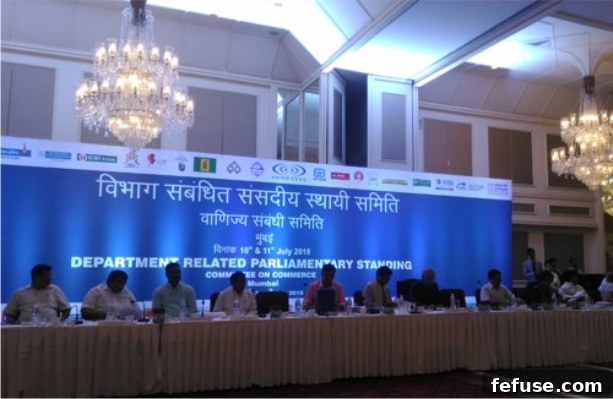
In a pivotal move to safeguard and promote one of India’s most significant export sectors, a high-level delegation from The Gem & Jewellery Export Promotion Council (GJEPC) recently presented its comprehensive insights to the Department Related Parliamentary Standing Committee on Commerce. This crucial interaction, held on July 11th in Mumbai, focused intently on the “Impact of banking misappropriation on trade & industry,” a topic of paramount importance to the national economy and thousands of livelihoods.
The Gem & Jewellery sector stands as a cornerstone of India’s export landscape, contributing substantially to the country’s foreign exchange earnings and employment generation. Therefore, ensuring its operational stability and growth, free from undue financial impediments, is a national imperative. The GJEPC’s proactive engagement with the parliamentary committee underscores its commitment to representing the industry’s interests at the highest levels of governance, advocating for policies that foster a conducive environment for trade and investment.
Parliamentary Committee’s Study Visit to Mumbai
The Parliamentary Standing Committee, under the distinguished chairmanship of Shri Naresh Gujral, embarked on a critical study visit to Mumbai from July 9th to 11th, 2018. As the financial capital of India, Mumbai serves as the pulsating heart of numerous industries, including a significant portion of the gem and jewellery trade. During their visit, the committee engaged with various export promotion councils, gathering diverse perspectives on the challenges and opportunities confronting India’s export-oriented businesses. GJEPC’s meeting was a highlight of these interactions, providing a specialized view into the unique financial dynamics of the gem and jewellery industry.
The committee’s objective was clear: to thoroughly investigate how banking sector issues, particularly instances of misappropriation, might be rippling through various trade and industry segments. This involved understanding the systemic challenges, regulatory gaps, and practical implications faced by exporters. Such fact-finding missions are vital for informed policy-making, helping legislators craft regulations that are both effective in preventing financial irregularities and supportive of legitimate business operations.
GJEPC’s Comprehensive Representation: Clarifying Misconceptions and Addressing Core Issues
The GJEPC delegation utilized this significant platform to articulate the industry’s perspectives on a range of critical issues spanning banking practices, the role of the Export Credit Guarantee Corporation of India (ECGC), and directives from the Reserve Bank of India (RBI). Their presentation was meticulously prepared, aiming not only to highlight challenges but also to offer constructive solutions and clarify widespread misconceptions.
One of the most pressing clarifications made by the GJEPC related to the general perception surrounding the impact of the ban on Letters of Credit (LOC) and Letters of Undertaking (LOU) on the gem and jewellery industry. The delegation emphatically stated that the industry does not, in fact, utilize these specific financial products for its primary financing needs. This crucial clarification served to dispel erroneous narratives that had inadvertently linked the sector to certain banking malpractices involving these instruments, thereby mitigating unwarranted reputational damage and ensuring accurate policy consideration.
Understanding LOCs and LOUs in Trade Finance
To fully grasp the significance of GJEPC’s clarification, it’s essential to understand what Letters of Credit and Letters of Undertaking entail. A Letter of Credit (LOC) is a widely used financial instrument in international trade, issued by a bank to guarantee a buyer’s payment to a seller. It essentially substitutes the bank’s creditworthiness for that of the buyer, providing security to the exporter. A Letter of Undertaking (LOU), on the other hand, is a guarantee issued by an authorized bank to another bank, typically for facilitating buyer credit for imports, often without underlying collateral, and later came under scrutiny for misuse in certain high-profile cases.
The GJEPC’s assertion that the gem and jewellery industry does not rely on these products for its financing is a testament to the sector’s distinct operational model and its preferred financing mechanisms. This clarification was vital for the parliamentary committee to accurately assess the industry’s financial risk profile and avoid painting it with a broad brushstroke alongside sectors that might indeed be heavily reliant on such instruments.
Broader Banking and Regulatory Concerns
Beyond the LOC/LOU clarification, GJEPC’s representation delved into various other banking-related issues that directly affect the daily operations and long-term viability of gem and jewellery businesses. These likely included discussions on:
- Access to Credit: Ensuring adequate and timely availability of working capital and term loans at competitive interest rates for manufacturers, exporters, and retailers.
- Collateral Requirements: Addressing potentially stringent collateral demands from banks, which can hinder smaller and medium-sized enterprises (SMEs) from accessing necessary finance.
- Export Credit Insurance: Discussing the role and effectiveness of ECGC in providing risk cover to exporters against payment defaults, and advocating for enhanced services or streamlined claim processes.
- Regulatory Compliance Burden: Highlighting challenges associated with navigating complex and frequently evolving RBI guidelines, emphasizing the need for clarity, consistency, and ease of implementation.
- Impact of De-risking by Banks: Concerns that banks, in response to increased scrutiny, might adopt overly cautious approaches, leading to reduced lending or withdrawal of services to certain sectors, including legitimate gem and jewellery businesses.
- Technological Integration: Exploring how digital banking solutions and FinTech innovations can be leveraged to improve efficiency, transparency, and access to finance within the sector.
These issues are critical for the continued growth and global competitiveness of India’s gem and jewellery industry. A stable and supportive banking ecosystem is not merely a convenience; it is a fundamental prerequisite for sustained export performance and job creation.
The Distinguished GJEPC Delegation
The GJEPC delegation that met with the Parliamentary Standing Committee comprised experienced leaders and experts from within the industry, ensuring a well-rounded and authoritative representation. Led by Sanju Kothari, Convener of the Banking, Insurance & Taxation Committee (BITC), the delegation brought a wealth of knowledge to the table. He was ably supported by Mavjibhai Patel, Co-convener, and Bharat Kakadiya, Member, both also from the BITC, who provided crucial insights into the practical aspects of banking and finance impacting the sector.
Adding further depth and external perspective were industry consultants Lalit Bajaj and Maulik Shah, whose expertise in financial matters and market dynamics proved invaluable. From the GJEPC secretariat, Sabyasachi Ray, Executive Director, and Sudhir Patil, Assistant Manager, ensured seamless coordination and comprehensive data presentation. This diverse team collectively presented a cohesive and compelling case, articulating the industry’s needs and challenges with precision and foresight.
The Importance of India’s Gem & Jewellery Sector
India’s gem and jewellery industry is a global powerhouse, renowned for its skilled craftsmanship, design prowess, and technological advancements, particularly in diamond cutting and polishing. It is a highly export-oriented sector, contributing significantly to India’s overall merchandise exports. The industry directly and indirectly employs millions of people across various segments, from artisanal workshops to large-scale manufacturing units, impacting rural and urban economies alike.
The industry’s reputation for quality and ethical practices is paramount. Therefore, any perceived link to financial irregularities, however indirect or unfounded, can have far-reaching consequences on its international standing, buyer confidence, and access to global markets. GJEPC’s role in clarifying such perceptions and advocating for a transparent, well-regulated, yet facilitative financial environment is thus indispensable.
Furthermore, the sector’s contribution extends beyond mere export figures. It drives innovation, promotes traditional artistry, and acts as a cultural ambassador for India on the global stage. Its resilience in navigating global economic shifts and adapting to evolving consumer preferences speaks volumes about its inherent strength and potential for future growth. Sustaining this momentum requires a collaborative effort between the industry and policy-makers, ensuring that financial regulations are supportive rather than restrictive.
Outlook and Collaborative Future
The interaction between GJEPC and the Parliamentary Standing Committee on Commerce represents a vital step in fostering greater understanding and collaboration between industry stakeholders and government bodies. Such dialogues are crucial for developing robust policies that protect the financial integrity of the nation while simultaneously enabling legitimate businesses to thrive and contribute to economic growth.
GJEPC’s proactive approach in clarifying misconceptions and presenting the industry’s ground realities helps in dispelling unfounded fears and ensures that policy decisions are based on accurate information. It paves the way for a more targeted and effective regulatory framework that can address genuine concerns of banking misappropriation without inadvertently stifling the growth of a legitimate and vital export sector.
Moving forward, the industry hopes that these discussions will translate into tangible policy actions that enhance the ease of doing business, ensure predictable financial policies, and reinforce India’s position as a leading global hub for gem and jewellery trade. Continued engagement, transparent communication, and a shared vision for growth will be key to overcoming challenges and unlocking the full potential of this magnificent industry.
News Source: gjepc.org