
The Enduring Elegance of Queen Mary’s Lover’s Knot Tiara: A Royal Legacy
In the illustrious world of royal jewelry, few pieces capture the imagination quite like the tiara. Yet, even among these glittering treasures, some stand out for their profound history and the number of remarkable women who have worn them. Queen Mary’s Lover’s Knot Tiara is a prime example, a dazzling testament to royal heritage and enduring style. This magnificent diamond and pearl tiara has graced the heads of no less than four extraordinary royal ladies, each adding their own chapter to its storied existence. From its original commission by Queen Mary to its iconic association with Princess Diana, and its current prominent role with Catherine, the Princess of Wales, the Lover’s Knot Tiara remains a symbol of regal beauty and continuity within the British royal family.
Its delicate design, featuring a series of graceful diamond bows interspersed with suspended pearls, evokes a sense of timeless romance and sophistication. More than just an ornament, this tiara embodies generations of royal history, witnessing countless state banquets, diplomatic receptions, and significant family moments. Its journey from Queen Mary’s personal collection, through Queen Elizabeth II’s reign, to becoming one of the most recognizable pieces in Princess Diana’s and subsequently Catherine’s jewelry box, highlights its unique place in royal lore. Each wearer has imbued the tiara with personal significance, making it not just a beautiful artifact, but a living piece of history that continues to evolve with the monarchy itself.
Queen Mary: The Genesis of an Icon
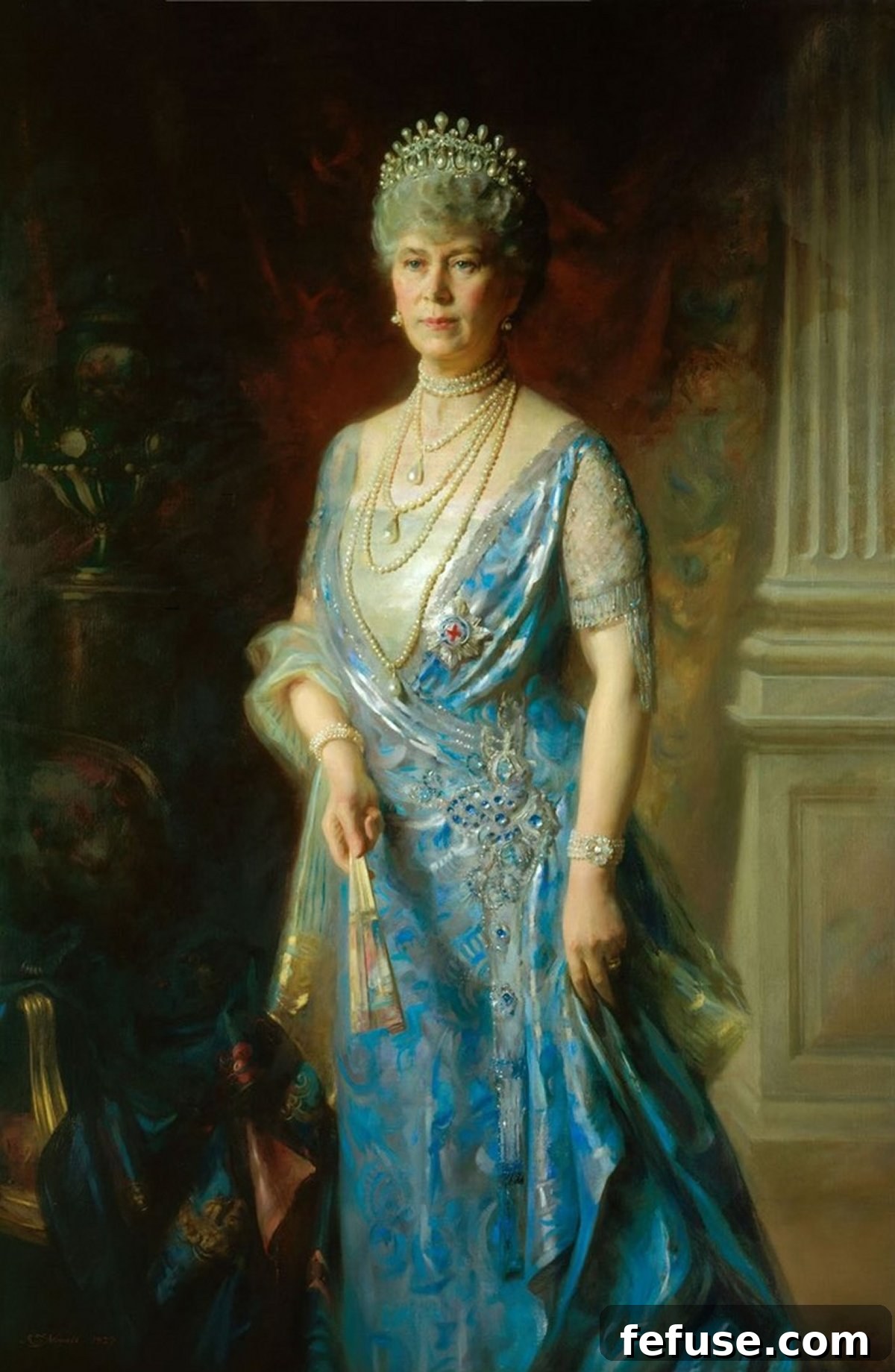
The story of the Lover’s Knot Tiara begins with Queen Mary, consort of King George V, a formidable figure known for her extensive and exquisite jewelry collection. By 1913, Queen Mary possessed an impressive array of diadems, but her discerning eye sought a new addition that reflected her refined taste. Her inspiration for this particular piece came from a tiara she deeply admired: the Cambridge Lover’s Knot Tiara, a stunning jewel that belonged to her aunt, the Grand Duchess of Mecklenburg-Strelitz. This original tiara, a testament to intricate craftsmanship, had captivated Queen Mary for years. Given that she could neither inherit nor purchase the original, Queen Mary, ever the pragmatist and connoisseur, decided on the next best course of action: she commissioned the esteemed royal jewelers Garrard to create a faithful, yet unique, copy.
Garrard, holding the prestigious appointment of Crown Jeweller, was the perfect choice for such a significant commission. The creation process was meticulous, resulting in a tiara that mirrored the delicate beauty of its muse while incorporating elements that made it distinctly Queen Mary’s. The choice of diamonds and pearls, classic symbols of purity and elegance, was a deliberate nod to royal tradition. The Lover’s Knot motif itself, a symbol of enduring affection and commitment, resonated deeply with the values of the monarchy. This commission not only added a magnificent piece to her collection but also solidified Queen Mary’s reputation as a collector with an unparalleled eye for historical beauty and exquisite design. It was through her vision that the Lover’s Knot Tiara was born, destined to become one of the most famous pieces in the royal collection.
Design Evolution: From Upright Pearls to Diamond Brilliance
When the new Lover’s Knot Tiara was completed by Garrard in 1913, its appearance differed slightly from the version we recognize today. Initially, the tiara was designed to be even grander, featuring a row of upright pearls adorning its top. These particular pearls carried their own significant history, having once been an integral part of another famous royal jewel: the Girls of Great Britain and Ireland Tiara. This practice of re-using and adapting existing jewels was common within the royal family, reflecting both thrift and a desire to maximize the beauty of their extensive collection.
However, over time, as tastes evolved and perhaps for practical reasons, these upright pearls were removed. Their removal transformed the tiara into a slightly more streamlined, yet equally majestic, piece. In their place, a row of dazzling diamond brilliants was set along the top, enhancing the tiara’s sparkle and emphasizing its intricate diamond-and-pearl design. This modification provided a more consistent and brilliant silhouette, allowing the delicate “lover’s knot” bows and the suspended pearls to truly shine. This evolution in design speaks to the dynamic nature of royal jewels, which are often adapted and reimagined to suit the preferences of their wearers and the prevailing fashion of the era. Despite this change, the core beauty and historical essence of Queen Mary’s Lover’s Knot Tiara remained perfectly intact, ready for its next illustrious chapter.
Queen Elizabeth II: A Reign of Splendor
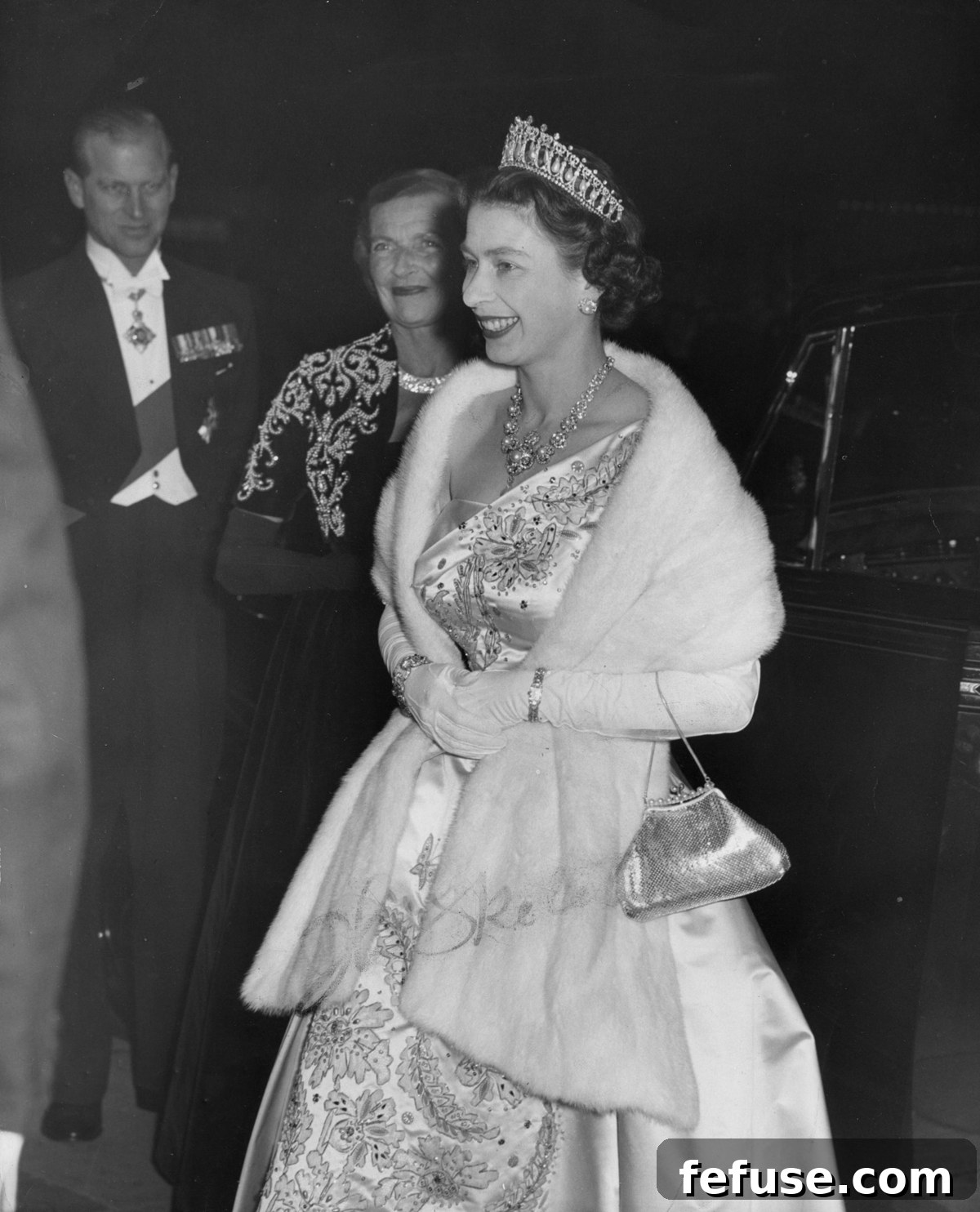
The magnificent Lover’s Knot Tiara transitioned into the jewelry collection of the reigning monarch, Queen Elizabeth II, in 1953. This significant transfer occurred following the death of her grandmother, Queen Mary, who bequeathed many of her cherished jewels to her granddaughter. Upon its inheritance, the tiara was already in its current form, without the upright pearls, featuring instead the dazzling row of diamond brilliants along its upper edge. Queen Elizabeth II, known for her discerning taste and deep appreciation for royal heritage, wore the tiara on several notable occasions throughout her long and illustrious reign.
While not her most frequently worn tiara (that distinction often went to the Girls of Great Britain and Ireland Tiara or the Vladimir Tiara), the Lover’s Knot Tiara made appearances at diplomatic receptions, state banquets, and other formal events where regal splendor was paramount. For instance, Queen Elizabeth II was pictured wearing it at events such as the premiere of the film Dunkirk in March 1958, demonstrating its versatility and timeless appeal even during the mid-20th century. Her decision to wear this tiara underscored its importance as a significant piece within the Crown’s extensive collection. The tiara spent several decades in her personal use before she decided to pass it on, continuing its legacy of gracing the heads of successive generations of royal women. This choice would ultimately link the tiara to one of the most beloved and photographed figures in modern royal history.
Princess Diana: The Tiara’s Most Iconic Wearer
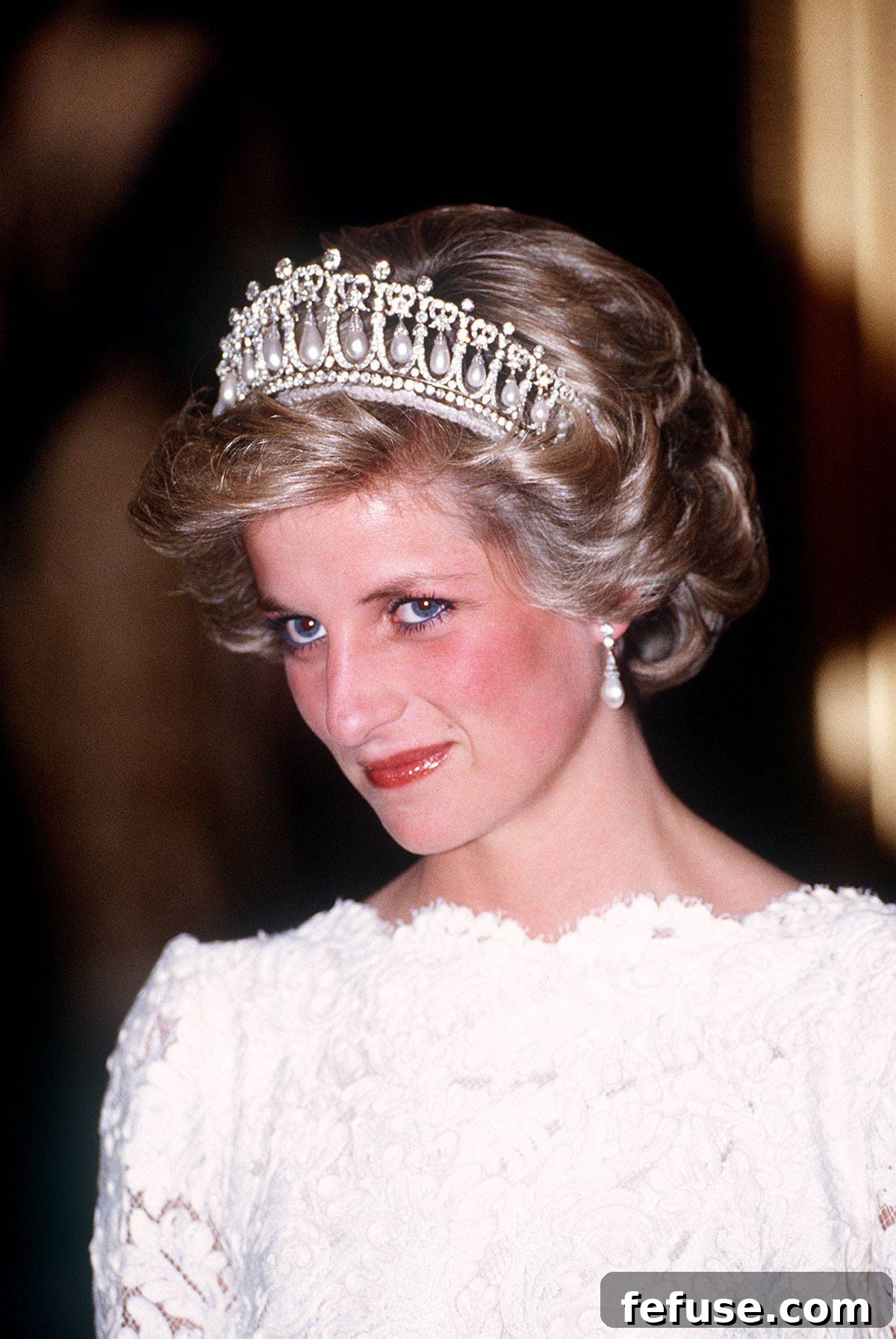
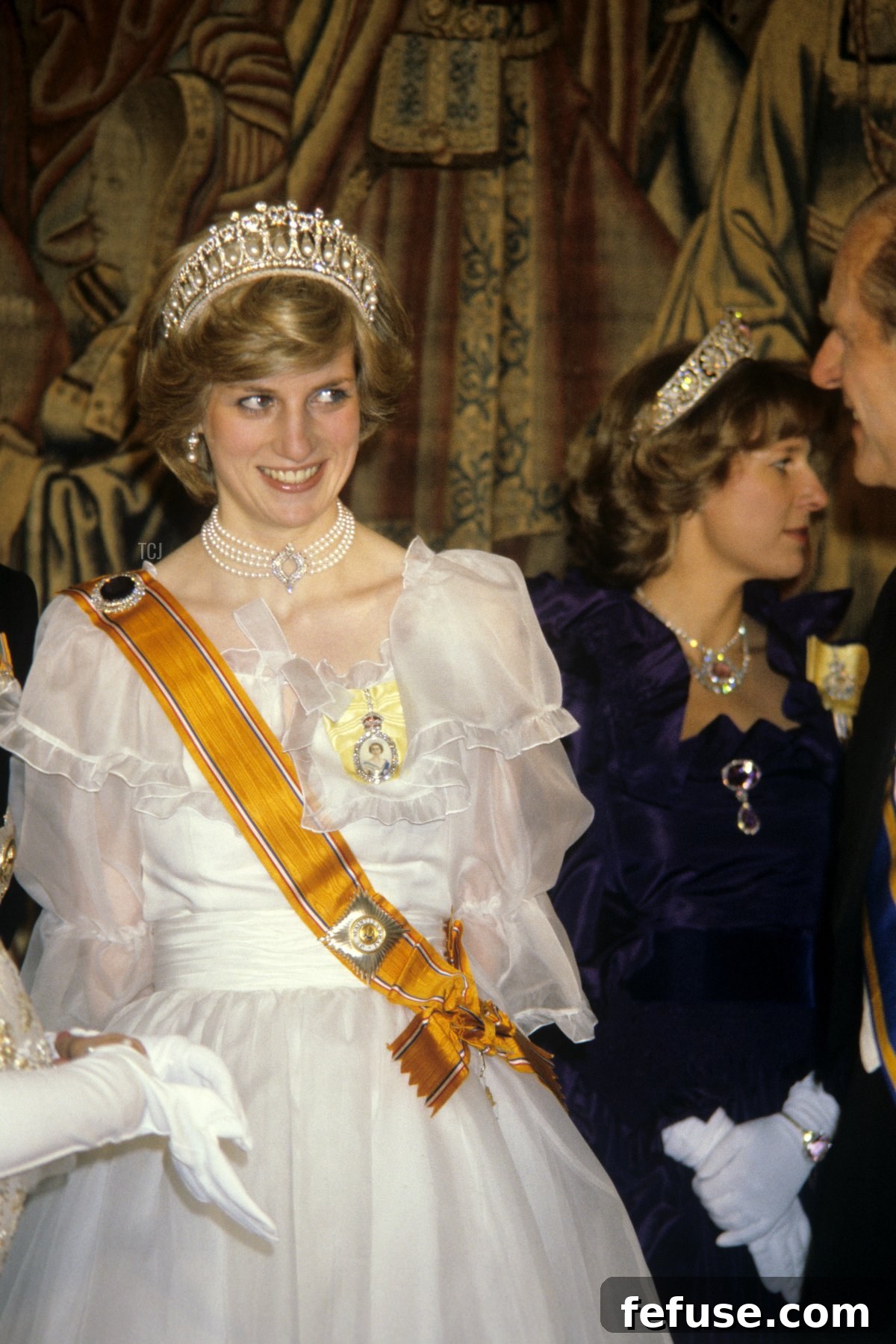
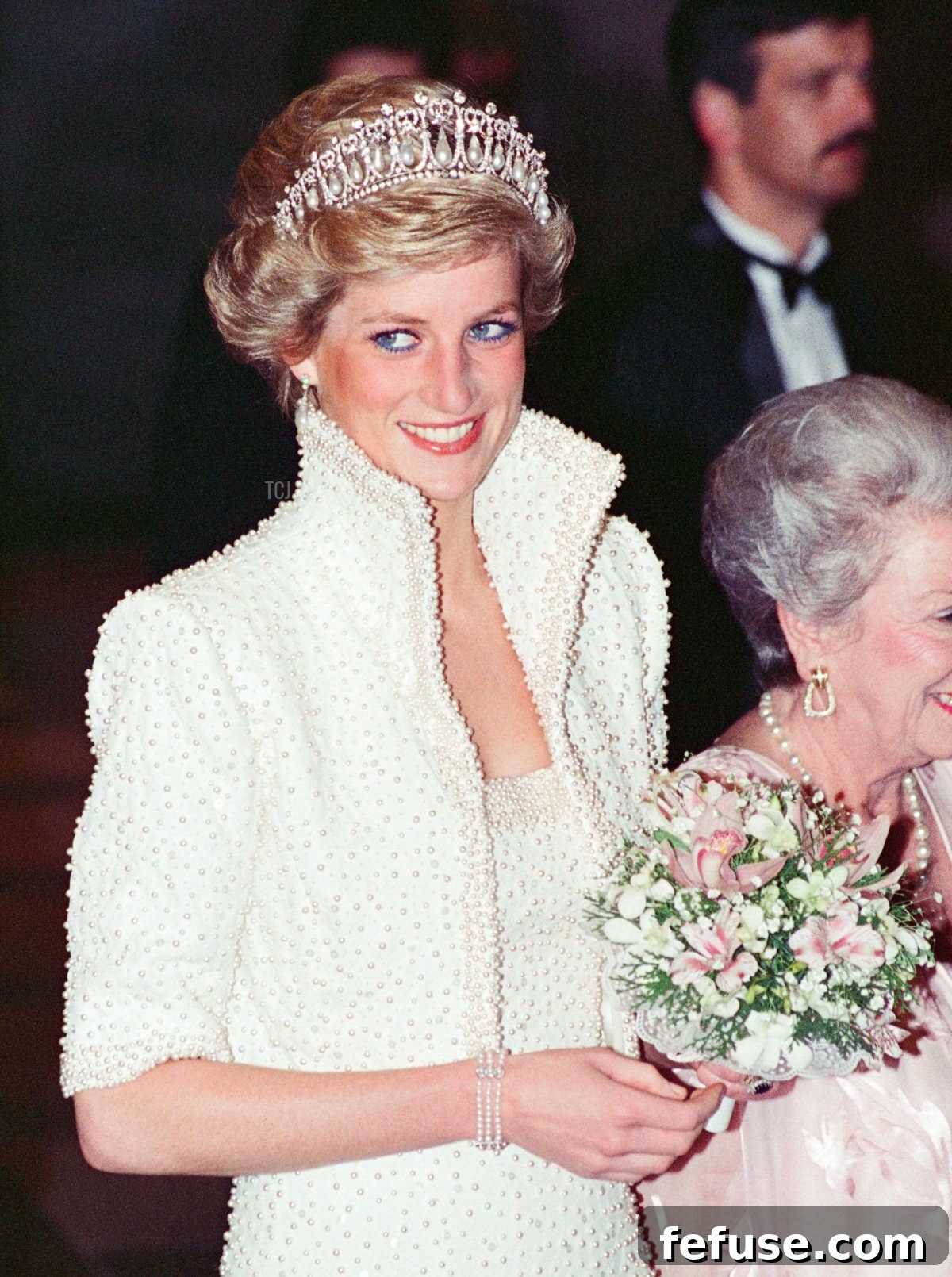
The Lover’s Knot Tiara gained unprecedented global fame and instantly recognizable status when Queen Elizabeth II chose it as a wedding gift for her new daughter-in-law, Lady Diana Spencer, in 1981. Although it was a wedding gift, it was understood to be an official loan, rather than a permanent personal possession. Princess Diana, who would soon become the Princess of Wales, famously alternated between wearing this exquisite piece and her family’s Spencer Tiara during her tenure. However, it was the Lover’s Knot Tiara that became indelibly linked with her image, gracing her head at countless diplomatic functions, state dinners, and significant public engagements around the world.
The tiara’s delicate yet grand presence perfectly complemented Diana’s elegant style and captivating persona. Its shimmering diamonds and pearls framed her iconic blonde hair and piercing blue eyes, contributing to many of her most memorable and frequently reproduced photographs. It became synonymous with her royal role, seen during historic visits abroad and at important events at Buckingham Palace. Interestingly, despite its stunning beauty and immense popularity, there were persistent reports that the weight of the substantial tiara often caused Princess Diana headaches. This discomfort occasionally led her to revert to wearing her lighter family tiara, offering a rare glimpse into the practical challenges of wearing such magnificent, heavy jewels. Regardless of these personal challenges, the Lover’s Knot Tiara became one of the defining symbols of the People’s Princess, forever etched in the collective memory of a generation.
Return to the Vaults and Re-emergence
Following the divorce of Prince Charles and Princess Diana in 1996, the Lover’s Knot Tiara, like many official royal loans, was returned to the Queen’s extensive vault. While Princess Diana was allowed to retain personal gifts she had received during her marriage, official gifts, particularly those associated with her role as the Princess of Wales, were expected to revert to the Crown. This distinction meant that upon vacating her royal title, the tiara, an emblem of that very position, also returned to the palace’s safekeeping. By the time of her tragic death in 1997, the Lover’s Knot Tiara had already been back in the royal collection for approximately a year, waiting for its next chapter.
For nearly two decades, the tiara remained largely unseen by the public, residing in the royal vaults as a cherished piece of history. Its absence from public view only amplified its mystique, especially given its strong association with Princess Diana. Royal watchers and jewelry enthusiasts often speculated when and by whom this iconic piece would next be worn. The tiara’s re-emergence would mark a poignant moment, connecting a new generation of royals to a beloved figure from the past and continuing the legacy of this magnificent jewel within the British monarchy.
Catherine, Princess of Wales: Continuing the Legacy
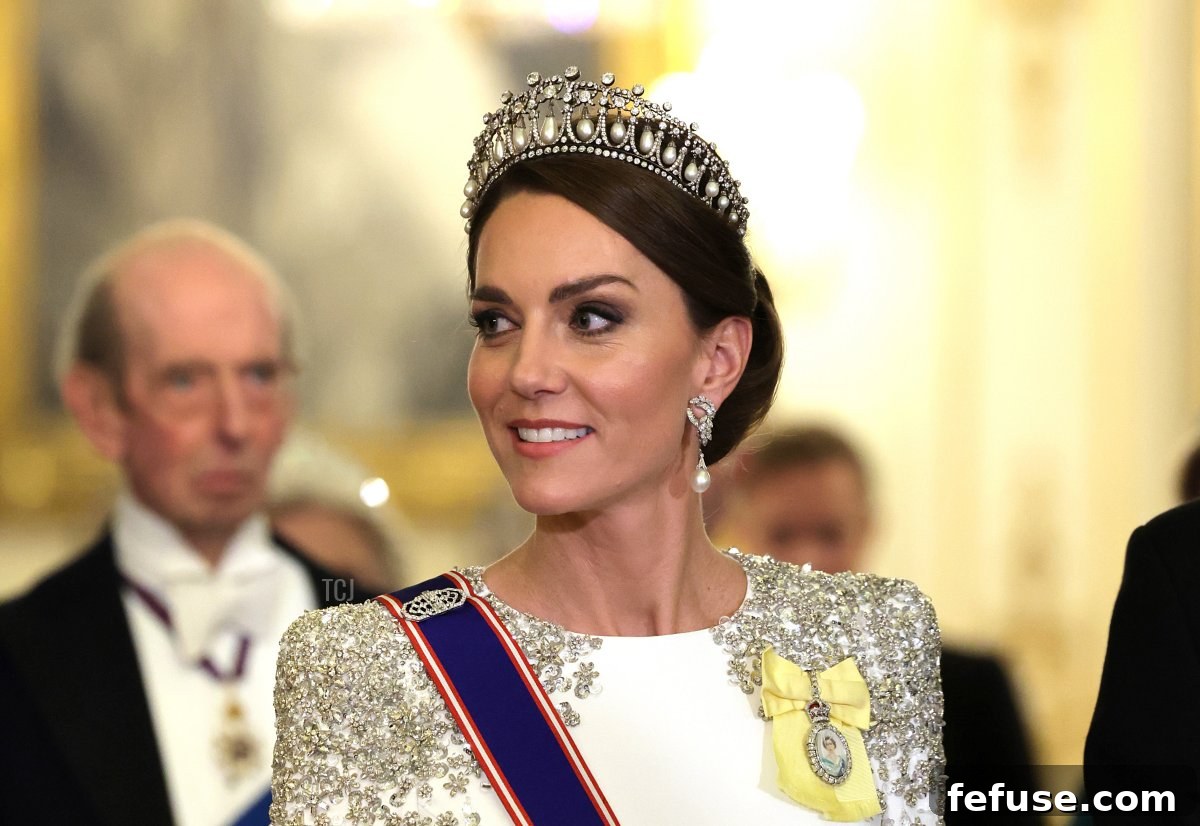
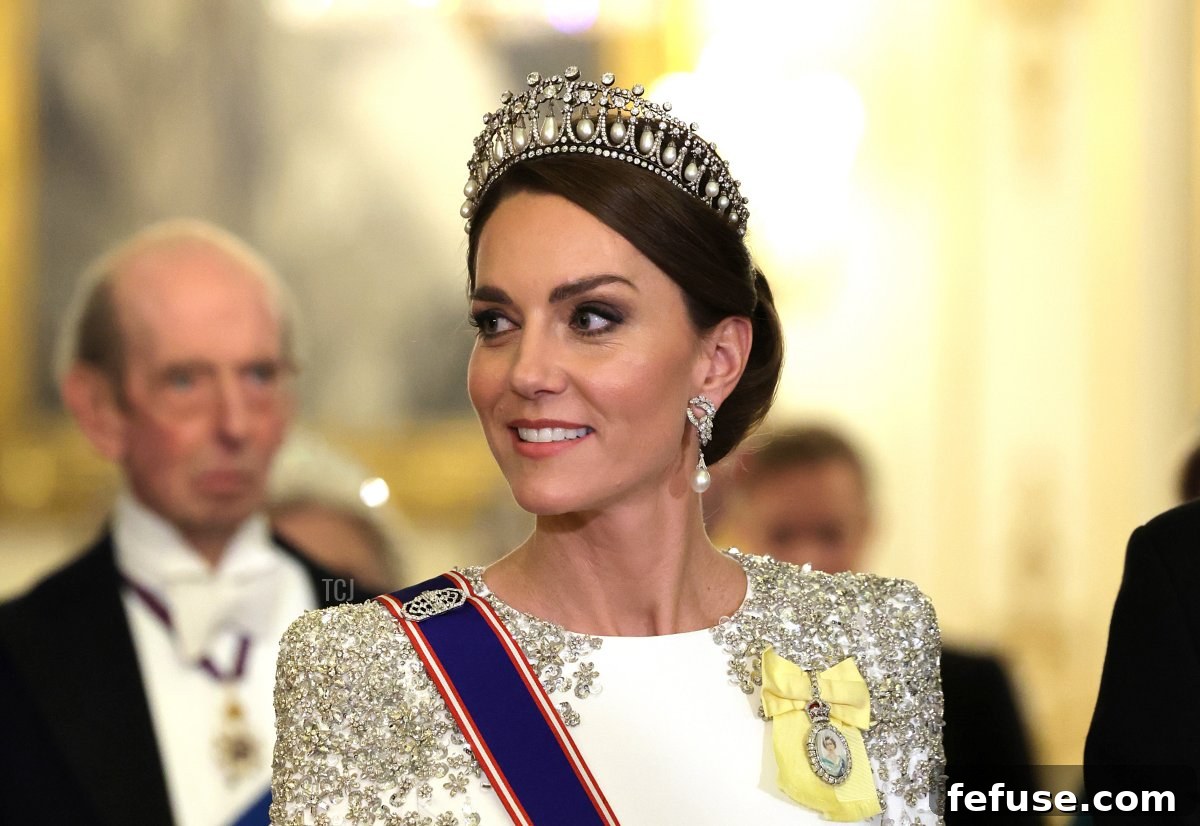
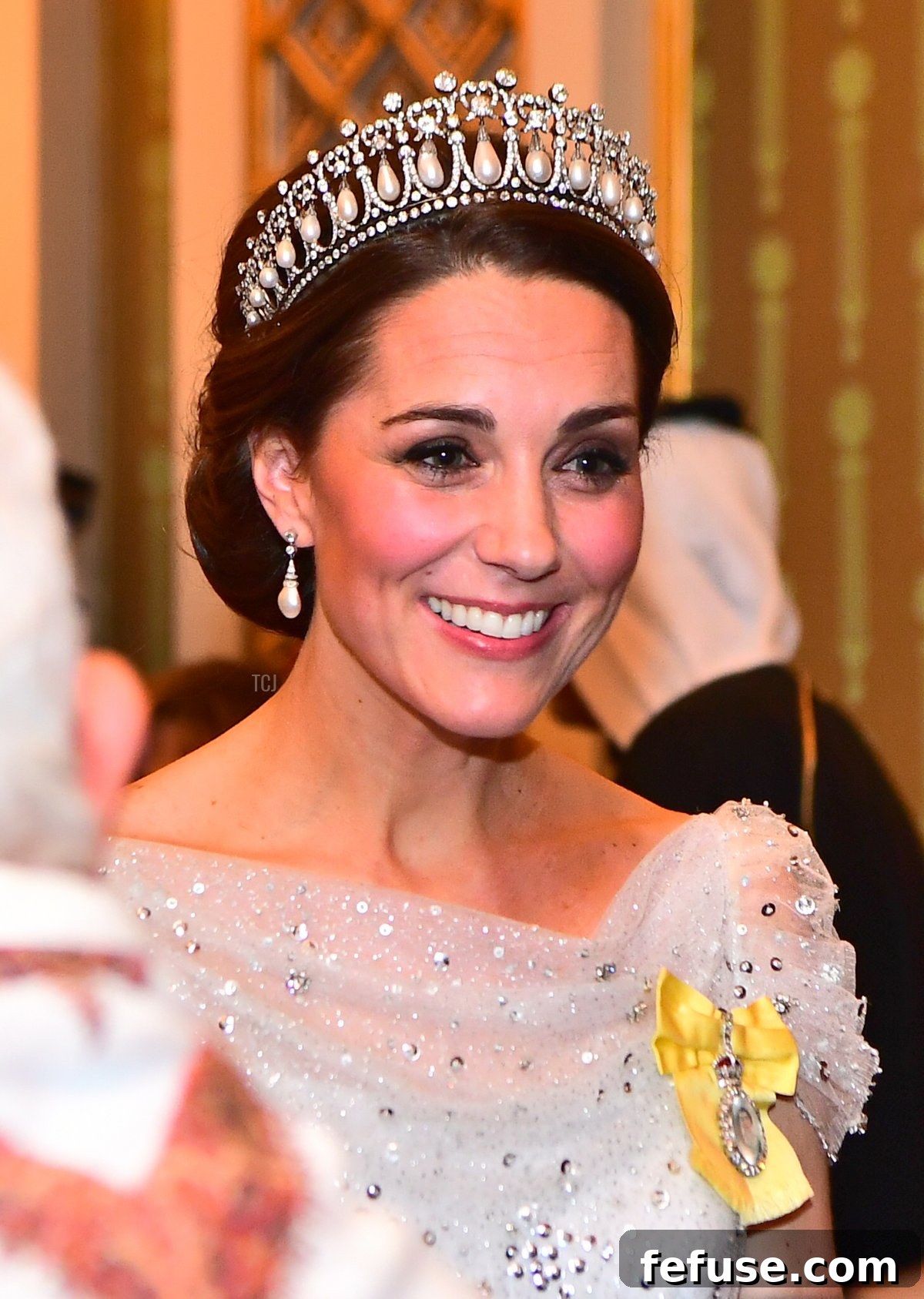
The twenty-first century witnessed the much-anticipated return of the Lover’s Knot Tiara to public life, finding a new and equally prominent wearer in Catherine, then the Duchess of Cambridge, and now the Princess of Wales. Catherine debuted the tiara at a diplomatic reception at Buckingham Palace in December 2015, immediately drawing comparisons to her late mother-in-law, Princess Diana. This moment was significant, not only for showcasing a magnificent piece of royal jewelry but also for symbolizing the continuity of royal tradition and a respectful nod to the past.
Since its re-introduction, the Lover’s Knot Tiara has swiftly become Catherine’s most frequently worn and beloved tiara. She has donned it for numerous high-profile engagements, including state banquets, diplomatic receptions, and other significant white-tie events hosted at Buckingham Palace. Her choice to regularly wear this particular tiara reinforces its status as a timeless piece and allows it to forge new connections with a modern monarchy. Each appearance is met with public admiration, as the tiara’s intricate design of diamonds and pearls, paired with Catherine’s elegant style, continues to captivate audiences worldwide. Through Catherine, the Lover’s Knot Tiara continues its journey, adding new chapters to its already rich history and ensuring its place as one of the most cherished and iconic jewels in the British royal collection, a true testament to enduring royal splendor and historical continuity across four generations of remarkable women.