
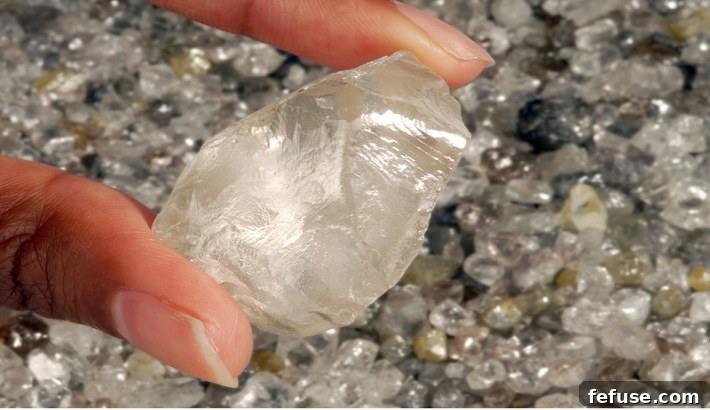
De Beers Reports Robust Rough Diamond Sales in Late 2020, Signaling Industry Recovery
Anglo American, the parent company of the world-renowned De Beers Group, announced a significant surge in its rough diamond sales for the eighth cycle of 2020. This positive development highlights a remarkable turnaround for the diamond industry, which faced unprecedented challenges earlier in the year. The reported figures indicate an increase of over 50% compared to the corresponding period in the previous year, offering a strong indication of renewed consumer confidence and market dynamism.
Provisional sales data for Cycle Eight, spanning from September 21st to October 9th, 2020, revealed impressive earnings of $467 million (£362 million) from rough diamond transactions. This substantial figure marks a significant improvement, not only when contrasted with Cycle Eight of 2019, which saw sales of $297 million (£230 million), but also against the more recent Cycle Seven of 2020, during which sales reached $334 million (£259 million). Such a substantial uptick provides a much-needed boost to the sector and underscores the resilience of the luxury goods market.
CEO’s Perspective: Cautious Optimism Amidst Growing Demand
Bruce Cleaver, the Chief Executive Officer of the De Beers Group, shared his insights on these encouraging trends. “We continue to observe a steady improvement in the appetite for rough diamonds during the eighth sales cycle of the year,” Cleaver stated. He attributed this increased purchasing activity to cutters and polishers who are actively restocking their inventories in anticipation of robust retail orders, particularly as the crucial holiday shopping season approaches. This chain reaction within the supply chain is a healthy sign for the industry’s ecosystem.
While acknowledging the positive momentum, Cleaver maintained a tone of cautious optimism regarding the longevity of this recovery. “It’s heartening to witness these demand trends,” he added, “but these are still nascent stages, and there remains a considerable journey ahead before we can definitively ascertain a sustained recovery in trading conditions.” This prudent outlook reflects the volatile global economic landscape of 2020 and emphasizes the need for continued vigilance and adaptive strategies across the diamond pipeline.
Understanding the Market Dynamics: Why the Surge in Late 2020?
The diamond industry, like many luxury sectors, experienced significant headwinds in the early and middle parts of 2020 due to the global health crisis. Lockdowns, travel restrictions, and widespread economic uncertainty led to a sharp decline in demand and disrupted supply chains worldwide. However, as economies began to cautiously reopen and consumer spending habits shifted, the latter half of the year started showing signs of recuperation, with diamonds emerging as a preferred luxury item for many.
Several factors likely contributed to the unexpected strength in rough diamond sales. Firstly, the impending holiday season – encompassing events like Thanksgiving, Black Friday, Christmas, and New Year – traditionally accounts for a substantial portion of annual jewelry sales. Retailers and manufacturers, anticipating a surge in consumer purchases, strategically ramped up their procurement of raw materials. This forward-looking approach by industry players is critical for meeting consumer demand efficiently.
Secondly, there was likely an element of pent-up demand. Consumers who deferred luxury purchases earlier in the year, possibly due to economic anxieties or limited retail access, began to re-engage with the market as confidence slowly returned. Furthermore, with restrictions on international travel and experiential spending, a portion of discretionary income that might have otherwise been allocated to holidays or leisure activities was redirected towards tangible luxury goods, such as fine jewelry and diamonds, making them an attractive investment or celebratory gift.
The acceleration of e-commerce also played a pivotal role. As traditional brick-and-mortar retail faced limitations, online platforms became indispensable for jewelers to connect with customers. Digital sales channels provided convenience and accessibility, allowing consumers to browse and purchase diamonds from the comfort of their homes, thereby mitigating some of the challenges posed by physical store closures. De Beers itself, through its various initiatives and partnerships, has been actively exploring and investing in digital solutions to enhance its market reach and customer engagement.
The Broader Implications for the Global Diamond Market
De Beers’ sales performance is often considered a bellwether for the entire diamond industry, given its historical significance and ongoing position as a major producer. A strong showing from De Beers indicates a ripple effect across the supply chain, benefiting cutters, polishers, manufacturers, and ultimately, retail jewelers globally. This upward trend suggests a gradual but discernible return to normalcy, or at least a new equilibrium, for an industry deeply entwined with global economic health and consumer sentiment.
However, the recovery remains uneven. While some major markets, particularly in Asia and North America, showed signs of robust activity, others continued to grapple with economic slowdowns and ongoing public health concerns. The ability of the industry to sustain this growth hinges on several interconnected factors, including the continued easing of global trade restrictions, the efficacy of economic stimulus measures, and the trajectory of the global health crisis itself.
Looking ahead, the diamond industry must continue to adapt to evolving consumer preferences. Modern consumers are increasingly interested in the provenance of their purchases, demanding transparency and ethical sourcing. De Beers has been at the forefront of promoting responsible practices through initiatives like its “Tracr” blockchain platform, which traces diamonds from mine to finger, ensuring integrity and building consumer trust. This focus on sustainability and ethical practices is not just a moral imperative but also a strategic advantage in a discerning market.
A Path Forward: Sustaining Momentum and Building Resilience
The positive rough diamond sales figures for De Beers in late 2020 provided a much-needed shot of optimism. While the “early days” caveat from CEO Bruce Cleaver remains pertinent, the industry demonstrated its capacity for resilience and adaptation in a challenging year. The fundamental allure of diamonds, as symbols of love, commitment, and celebration, endures, ensuring their continued relevance in the luxury market.
To secure a sustained recovery, the diamond sector must continue to innovate, embrace digital transformation, and prioritize consumer engagement. Investment in targeted marketing campaigns that resonate with contemporary values, coupled with a steadfast commitment to transparency and responsible business practices, will be crucial. As the world navigated the complexities of 2020, the diamond industry, led by key players like De Beers and Anglo American, showcased its enduring strength and its potential for a sparkling future.