
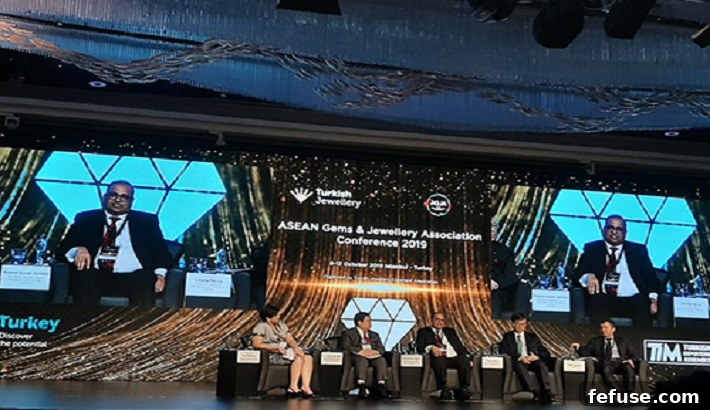
Strengthening Global Gems and Jewellery Trade: India and Turkey Lead Discussions at ASEAN Conference
The vibrant city of Istanbul, a historic bridge between continents and a cultural melting pot, served as the distinguished host for a pivotal event in the global gems and jewellery industry. On October 9, 2019, industry leaders and policymakers from across the globe converged for the 8th ASEAN Gems and Jewellery Association Conference. This significant gathering was meticulously organized by the Jewellery Exporters’ Association of Turkey and strategically timed as a crucial prelude to the grand opening of the 49th edition of the renowned Istanbul Jewelry Show. The conference set a collaborative and forward-looking tone for discussions on international trade, economic partnerships, and the future trajectory of the sector.
A prominent figure at the conference was Pramod Kumar Agrawal, the esteemed Chairman of India’s Gem & Jewellery Export Promotion Council (GJEPC). His active participation underscored India’s profound commitment to fostering stronger economic ties and enhancing trade within the dynamic ASEAN region and its broader global partners. India has long been a proactive participant in the ‘ASEAN plus 6’ initiative, a strategic framework designed to bolster regional cooperation and facilitate increased trade under the proposed Regional Comprehensive Economic Partnership (RCEP). This extensive partnership aims to create one of the world’s largest free trade blocs, encompassing a significant portion of the global population and economic output.
India’s Strategic Vision for Regional Economic Integration and Trade
The proposed Free Trade Agreement (FTA) under the RCEP framework is envisioned as a transformative force, poised to impact a wide array of economic sectors, with the vital gems and jewellery industry standing as a key beneficiary. For India, a nation boasting a rich legacy and a dominant global footprint in the intricate processes of diamond cutting and polishing, and the vibrant trade of coloured gemstones, its engagement in such large-scale regional blocs is not merely an option but an economic imperative. The GJEPC has consistently championed India’s interests within the gems and jewellery sector on the international stage, and its presence at this conference marked its third active participation in the ASEAN Gems & Jewellery Association’s annual gathering, signifying a sustained and deepening strategic engagement.
During a particularly insightful session aptly titled “Easy trade, trade wars and free trade agreements,” GJEPC Chairman Agrawal delivered a compelling address that resonated deeply with the prevailing global economic climate. He passionately advocated for a substantial increase in the volume and fluidity of trade among countries within the region. Crucially, he emphasized that this expansion must be meticulously balanced to ensure it does not, in any way, compromise the mutual interests, economic stability, or unique developmental pathways of each participating nation. Agrawal articulated a clear and actionable pathway to achieving this delicate equilibrium: “through rationalising of taxes and simplifying the rules of negotiation in FTAs.” This potent call for streamlined customs procedures, equitable tax structures, and simplified regulatory frameworks is aimed at dismantling existing trade barriers, fostering greater transparency, and ultimately creating a more predictable and conducive environment for seamless cross-border commerce.
Cultivating a Level Playing Field for Sustainable Global Growth
Chairman Agrawal conveyed profound confidence in the transformative potential of robust regional partnerships. He firmly believes that by strategically synergizing their inherent strengths, diverse resources, and specialized expertise, participating countries can collectively emerge as formidable and influential players in the highly competitive global market, particularly in the production and distribution of high-value-added products. This collaborative approach transcends mere commodity exchange; it actively fosters innovation, encourages excellence in design, and drives the development of sophisticated manufacturing capabilities, moving the industry towards greater complexity and profitability.
To fully realize this ambitious vision, Agrawal passionately called for “a level playing field for our self and all the members of ASEAN and other partner countries so that together we can grow and contribute to the gem and jewellery industry globally.” The concept of a level playing field, in this context, is multifaceted and deeply significant. It encompasses not only the implementation of fair trade practices and non-discriminatory policies but also equitable access to cutting-edge technology, timely market intelligence, and comprehensive skill development initiatives. It is about nurturing an ecosystem where all stakeholders, irrespective of their current scale or developmental stage, can compete fairly, innovate freely, and achieve sustainable, long-term growth. Such an environment encourages robust competition, facilitates mutual learning, and ultimately benefits consumers worldwide with a wider array of high-quality, ethically sourced, and creatively designed gems and jewellery.
India’s Commitment to Business Facilitation and Manufacturing Excellence
Further bolstering his address, Chairman Agrawal highlighted the proactive and comprehensive measures recently undertaken by the Government of India to significantly enhance the ‘Ease of Doing Business’ within the country. These ambitious programmes and far-reaching regulatory reforms have been meticulously designed to cultivate a highly stable, predictable, and exceptionally business-friendly environment, thereby attracting substantial domestic and international investment. The tangible and widely recognized impact of these reforms was vividly evidenced by India’s remarkable ascent of 23 places in the prestigious World Bank’s Ease of Doing Business report of 2019. This impressive upward trajectory is far more than a mere statistical achievement; it reflects a deeper, unwavering commitment to policy stability, enhanced transparency, and the establishment of a responsive regulatory framework that effectively de-risks investment and significantly streamlines operational procedures for businesses across various sectors, including gems and jewellery.
The Chairman elaborated on India’s impressively robust infrastructure specifically tailored for the burgeoning gems and jewellery sector. The country currently boasts numerous well-established free zones and strategically located, dedicated jewellery parks within various industrial clusters. These facilities provide state-of-the-art infrastructure for manufacturing, advanced processing, and efficient trade. Demonstrating a forward-looking approach to industry development, Agrawal also unveiled exciting plans for a pioneering new Jewellery Park that the GJEPC is actively developing in Mumbai, India’s financial capital and a global hub for the diamond trade. This ambitious project is meticulously designed to accommodate over 2,000 manufacturing units, thereby consolidating the industry’s production capabilities, fostering an environment of innovation, and enhancing overall efficiency in one of the world’s leading jewellery centers. This monumental initiative is expected to not only significantly boost production capacity but also create tens of thousands of skilled jobs, further cementing India’s undisputed position as a global manufacturing powerhouse in the gems and jewellery domain.
Unlocking Investment Potential: India’s Open Invitation for Global Collaboration
Concluding his address with a compelling call to action, Agrawal extended a powerful invitation to the global business community, emphatically stressing India’s liberalized and investor-friendly policies. He reminded all attendees that 100% Foreign Direct Investment (FDI) is fully permitted in India’s dynamic gems and jewellery sector, making it an exceptionally attractive and viable destination for international capital and expertise. With clear conviction, he proclaimed, “this is the perfect time to do business with India… (to) collaborate with Indian companies for mutual benefits.” This statement transcended a mere invitation; it served as a resounding testament to India’s readiness and eagerness to forge lasting, mutually beneficial partnerships built upon shared prosperity, technological exchange, and collective expertise.
Furthermore, Agrawal extended an equally significant and reciprocal offer, showcasing India’s vision for two-way global engagement: “Indian jewellery manufacturers are open for entering into collaboration for setting up of manufacturing facilities in any country.” This demonstrates a mature and confident approach to global trade, where Indian expertise, advanced manufacturing techniques, and valuable resources can contribute significantly to the development and enhancement of jewellery manufacturing capabilities worldwide. This two-way street of investment, technological transfer, and collaborative partnership underscores a progressive and confident approach to global economic integration, promoting shared growth and fostering innovation across international borders. It signals India’s role not just as a recipient but also as a proactive contributor to global industrial development.
Turkey’s Growing Stature and Strategic Role in the Global Jewellery Market
The conference provided an invaluable platform for Turkey to vividly showcase its burgeoning influence and increasing prominence in the global jewellery landscape. Earlier, while addressing the inaugural session, Turkey’s Deputy Trade Minister Riza Tuna Turagay highlighted the impressive and upward trajectory of his nation’s jewellery sector. He reported that Turkey’s jewellery exports had achieved a remarkable US$ 4.4 billion in the preceding year, securing a substantial 4% share of the highly competitive global jewellery exports market. This impressive figure not only serves as a testament to Turkey’s rich and enduring tradition of exceptional craftsmanship and innovative design but also reflects its successful strategic penetration into diverse international markets through effective trade policies and targeted marketing efforts. Minister Turagay confidently asserted the country’s immense potential to further expand its offerings and solidify its already strong position in world markets, driven by continuous innovation, design leadership, and strategic trade partnerships.
A particularly noteworthy development highlighted by Minister Turagay was the significant surge in demand from the dynamic ASEAN region for Turkish jewellery. Exports to these rapidly growing Southeast Asian economies had soared by an astonishing 82% in the last year alone, reaching a substantial value of US$ 50 million. This rapid and robust growth signifies the increasing appreciation for the unique Turkish designs, high-quality craftsmanship, and competitive pricing within the ASEAN bloc, paving the way for even deeper and more extensive trade relationships and collaborative ventures in the future. It emphatically underscores the effectiveness of Turkey’s market diversification strategies and the growing economic connectivity and mutual trust between these two strategically important regions.
Istanbul: A Dynamic Nexus for Global Jewellery Dialogue and Trade
The welcoming remarks at the conference were eloquently delivered by Mustafa Kamar, the distinguished Chairman of the Jewellery Exporters’ Association of Turkey. He extended a warm and gracious welcome to all the Presidents of Jewellery Exporters’ Associations, including those from ASEAN member countries, vital sectoral dialogue partners, and numerous other delegations, collectively representing an impressive 35 different countries. This diverse and widespread participation underscored the profound international significance of the conference and solidified Istanbul’s established role as a major meeting point and commercial hub for the global jewellery industry.
Kamar eloquently articulated the compelling reasons behind Turkey’s selection as the host nation for such a prestigious international gathering. He emphasized the country’s many significant achievements in exports, showcasing its robust manufacturing capabilities, innovative design prowess, and strong market presence. Furthermore, he highlighted the increasingly effective and influential role Turkey plays in the global jewellery market, not merely as a prolific producer but also as a strategic trade facilitator, a key trendsetter, and a vital connector of diverse markets. The decision to host such a significant event in Istanbul was a clear testament to Turkey’s growing prominence, its strategic geographical advantage, and its unwavering commitment to fostering international cooperation and sustainable growth within the global gems and jewellery sector.
Beyond the Conference: Exploring Istanbul’s Impressive Jewellery Ecosystem
While in Turkey, GJEPC Chairman Pramod Kumar Agrawal’s itinerary extended purposefully beyond the confines of the conference halls, providing him with an invaluable firsthand look at Istanbul’s truly impressive and comprehensive jewellery ecosystem. He actively participated in the inauguration of the October edition of the Istanbul Jewelry Show, a premier international event that annually brings together a vast and diverse network of industry professionals, buyers, and sellers. The show featured an impressive array of 800 exhibitors, attracting an expected 19,000+ trade visitors from around the world. Such large-scale and meticulously organized exhibitions are absolutely vital for facilitating market access, identifying emerging trends, fostering valuable networking opportunities, and forging new, mutually beneficial business relationships, further cementing Istanbul’s strategic status as a global trade hub for the entire jewellery value chain.
Chairman Agrawal’s visit also included a fascinating tour of KUYUMCUKENT in Istanbul, a facility often hailed as the world’s biggest integrated gold, silver, and jewellery production and trade center. This colossal and meticulously planned facility is a marvel of industrial organization and efficiency, housing an astounding 3,000 operational units. These units vary significantly in size, ranging from compact 300 sq ft workshops suitable for artisanal production to expansive 3,000 sq ft production facilities capable of large-scale manufacturing, thus demonstrating its remarkable capacity to support businesses of all scales and operational requirements. KUYUMCUKENT is far more than just a collection of workshops; it is a self-contained, vertically integrated ecosystem that encompasses every facet of the jewellery business.
Within its sprawling premises, KUYUMCUKENT also boasts a dedicated mall specifically catering to both Business-to-Business (B2B) and direct retail sales, thereby creating a dynamic and highly efficient marketplace. Additionally, it features numerous smaller manufacturing units, some thoughtfully integrated with display shops, specifically designed to facilitate seamless B2B transactions. This privately-run park, ingeniously built and managed by a cooperative, stands as a unique and exemplary model for fostering comprehensive industry development – from the initial processing of raw materials to the final sale of finished products, all efficiently managed under one technologically advanced roof. Its very existence powerfully underscores Turkey’s unwavering commitment to creating advanced, world-class infrastructure for its flourishing jewellery sector, strategically positioning it as a global leader in integrated manufacturing and international trade.
A Collaborative Future for the Global Gems and Jewellery Industry
The 8th ASEAN Gems and Jewellery Association Conference in Istanbul served as a powerful and unambiguous testament to the growing interconnectedness and collaborative spirit within the global gems and jewellery industry. The profound insights shared by GJEPC Chairman Pramod Kumar Agrawal, detailing India’s strategic vision for international trade, its steadfast commitment to fostering a business-friendly environment, and its eager readiness for global collaboration, unequivocally highlighted the immense potential for synergistic and mutually beneficial partnerships. Simultaneously, the compelling statistics and proactive initiatives presented by Turkey’s Deputy Trade Minister Riza Tuna Turagay, alongside the impressive and comprehensive infrastructure exemplified by KUYUMCUKENT, underscored Turkey’s significant and rapidly expanding role in shaping the industry’s future trajectory.
The discussions on pivotal topics such as “Easy trade, trade wars and free trade agreements” resonated deeply with all attendees, emphasizing the collective responsibility of nations to actively foster an environment characterized by open, fair, and simplified trade practices. The unified call for rationalizing taxes, streamlining complex FTA negotiations, and actively creating a “level playing field” is absolutely crucial for driving sustainable and equitable growth across all participating regions and nations. As the global economy continues to navigate the complexities of evolving trade dynamics and geopolitical shifts, such international platforms become utterly indispensable for facilitating meaningful dialogue, forging broad consensus-building, and charting a clear and cooperative course towards shared prosperity and innovation.
The conference, seamlessly coupled with the vibrant Istanbul Jewelry Show and the awe-inspiring facilities like KUYUMCUKENT, showcased a unified resolve to strengthen global supply chains, significantly enhance market access for all players, and vigorously promote value-added production throughout the industry. The mutual invitation for increased investment and deeper collaboration—whether it involves foreign companies investing in India’s thriving and expansive market or Indian manufacturers strategically expanding their global footprint through international ventures—signals a forward-looking, pragmatic, and highly collaborative approach to partnership. Ultimately, events of this caliber are vital catalysts, fostering the essential trust and invaluable cooperation necessary for the gems and jewellery industry worldwide to not only adeptly overcome existing and future challenges but to truly thrive, innovate, and shine brightly for generations to come, contributing significantly to global economic well-being and cultural exchange.