
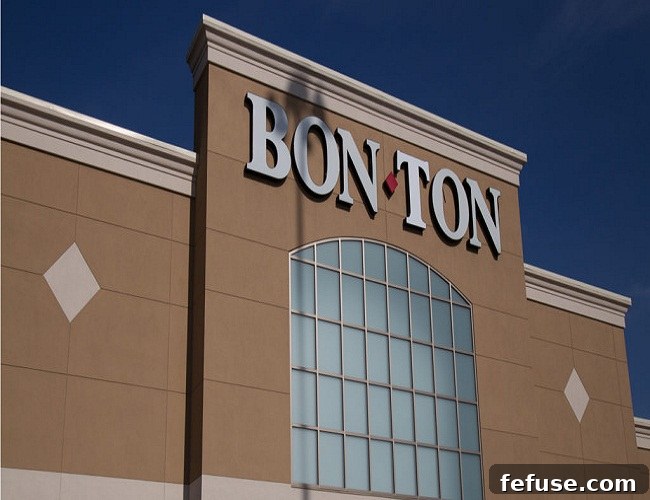
The Unfolding Saga of Bon-Ton: A Retail Legacy’s Fight for Survival
In an era marked by unprecedented challenges for brick-and-mortar retail, the fate of Bon-Ton Stores has captivated industry observers and concerned communities alike. While many once speculated about its inevitable demise, recent developments suggest that this 120-year-old department store chain may yet avoid the finality of liquidation, offering a glimmer of hope for its future.
A Glimmer of Hope: Bon-Ton Seeks a Going Concern Buyer Amidst Chapter 11
Bon-Ton Stores, currently navigating the complexities of Chapter 11 bankruptcy protection, has publicly announced it is engaged in active, high-level discussions with multiple interested parties. These entities are reportedly vying to acquire the venerable department store as a “going concern”—a critical distinction meaning the buyer intends to continue operating the business rather than dismantling it for its assets. This announcement, detailed in a recent press release from the company, signals a potential lifeline for a retail institution deeply embedded in the communities it serves.
For over a century, Bon-Ton has been a staple in regional retail, specializing in a diverse array of apparel, accessories, and jewelry. The prospect of an acquisition as a going concern stands in stark contrast to the company’s previously stated alternative: full-scale liquidation. The implications of a successful acquisition are vast, potentially preserving thousands of jobs, maintaining a significant retail presence across numerous states, and continuing a legacy that began in 1898. The focus on apparel, accessories, and jewelry underscores Bon-Ton’s traditional strength in providing a broad selection of fashion and personal items, catering to a demographic that values accessible department store shopping.
The High Stakes of Uncertainty: No Guarantees in the Retail Rescue Mission
While the news of active discussions injects a dose of optimism into the Bon-Ton narrative, the company’s statement was also tempered with a necessary dose of realism. It explicitly cautioned that “there can be no assurances that discussions with these interested parties will lead to a definitive agreement being reached on any transaction.” This caveat highlights the inherent volatility and complexity of bankruptcy proceedings, where negotiations can be intricate and outcomes uncertain until the final papers are signed. The identity of these prospective buyers remains confidential, and their potential plans for the chain’s future operations have not been disclosed, adding another layer of speculation to the ongoing saga.
In conjunction with these crucial discussions, Bon-Ton has strategically extended the deadline for qualified bids for the company. Prospective buyers now have until April 4 to submit their offers, providing additional time for due diligence and the formulation of comprehensive proposals. Following this period, the official court-supervised auction, a pivotal event in any bankruptcy case, is scheduled to take place on April 9. These dates represent critical junctures that will largely determine the future trajectory of Bon-Ton Stores.
Operations Continue Amidst Turmoil: Stores Remain Open for Business
Despite the backdrop of financial restructuring and potential acquisition, all stores operating under the Bon-Ton umbrella have continued to remain open and serve customers. This decision, as conveyed in the company’s statement, reflects a strategy to maintain operational continuity, generate revenue, and preserve customer loyalty during this uncertain period. For many shoppers in the 23 states where Bon-Ton operates, these stores represent more than just retail outlets; they are integral parts of their local shopping experience and community fabric.
However, the strategy of keeping stores open has not been without its critics. On February 6, a significant challenge emerged from a group of second-lien bondholders. They filed a motion with the court advocating for “an immediate orderly liquidation” of Bon-Ton’s assets. Their contention, as outlined in their motion, was that “The Debtors have continued to incur the enormous overhead cost of maintaining a going concern that has little prospect of surviving.” This viewpoint underscores the financial pressures and differing stakeholder interests often present in bankruptcy cases. While management aims to preserve the business, some creditors may prioritize immediate asset recovery to mitigate further losses, highlighting the delicate balance that must be struck between potential long-term recovery and short-term financial prudence.
The Road to Chapter 11: Understanding Bon-Ton’s Bankruptcy Filing
Bon-Ton officially filed for Chapter 11 bankruptcy protection on February 4 in Delaware federal court. This filing marked a significant moment in the company’s extensive history, signifying a formal effort to reorganize its finances and operations under court supervision. The decision to file for Chapter 11, rather than Chapter 7 liquidation, indicates an intent to continue business operations and negotiate with creditors, aiming for a viable path forward.
With corporate headquarters strategically located in both York, Pennsylvania, and Milwaukee, Wisconsin, Bon-Ton has maintained a substantial retail footprint across the American landscape. The chain operates an impressive 251 stores spread across 23 states, primarily concentrated in the Northeast, Midwest, and the upper Great Plains regions. Beyond its flagship Bon-Ton brand, the company’s diverse portfolio includes several well-known regional nameplates such as Bergner’s, Boston Store, Carson’s, Elder-Beerman, Herberger’s, and Younkers. Each of these brands carries its own history and customer base, contributing to Bon-Ton’s extensive reach and regional identity. This network of stores employs approximately 23,000 part- and full-time workers, making Bon-Ton a significant employer in many of these communities. In its last reported full fiscal year, 2017, the company generated approximately $2.55 billion in total revenue, showcasing its considerable economic scale despite the underlying financial pressures that led to its bankruptcy filing.
Broader Retail Landscape: The Challenges Facing Department Stores
Bon-Ton’s struggle is not an isolated incident but rather a poignant symptom of a much larger seismic shift occurring within the retail industry. Traditional department stores, once the undisputed titans of American commerce, have faced mounting pressure from various fronts over the past two decades. The relentless rise of e-commerce, spearheaded by giants like Amazon, has fundamentally altered consumer shopping habits, making convenience and direct-to-consumer models increasingly dominant. Shoppers are now accustomed to browsing vast selections, comparing prices instantly, and receiving goods directly to their homes, often circumventing physical stores entirely.
Beyond the digital revolution, department stores have also contended with shifting consumer preferences. There’s a growing inclination towards experiential shopping, niche brands, and value-oriented retailers. Discount stores, off-price retailers, and fast-fashion chains have captured market share by offering compelling price points or rapidly evolving trends. Meanwhile, luxury brands have often opted for their own boutique experiences or exclusive online channels, further fragmenting the market that department stores once served comprehensively. The middle ground, where many traditional department stores like Bon-Ton reside, has become increasingly squeezed. High overhead costs associated with large physical spaces, a vast workforce, and inventory management have become unsustainable in an environment where foot traffic dwindles and profit margins thin. Many legacy retailers have struggled to adapt quickly enough to these changes, leading to a wave of bankruptcies, store closures, and desperate attempts at reinvention across the sector. Bon-Ton’s journey through Chapter 11 is a clear illustration of these profound industry-wide transformations and the urgent need for innovation and strategic restructuring to survive in the modern retail landscape.
What Lies Ahead: The Critical Auction and Bon-Ton’s Future
As the retail world watches, the upcoming April 9 auction will undoubtedly be a defining moment for Bon-Ton Stores. The outcome of this court-supervised process will dictate whether the 120-year-old chain can emerge from bankruptcy as a revitalized entity or if it will join the growing list of storied retailers that succumbed to modern economic pressures. A successful acquisition by a “going concern” buyer would offer a pathway for Bon-Ton to reorganize its debt, potentially streamline its operations, and invest in strategies to attract contemporary shoppers—perhaps through an enhanced online presence, curated merchandise, or redefined in-store experiences. Such an outcome would preserve the brand, jobs, and a significant retail presence across its core regions.
Conversely, if no suitable buyer emerges or if the offers fall short of creditor expectations, the alternative of full liquidation looms large. This scenario would involve the systematic sale of all assets, including inventory, real estate, and intellectual property, bringing an end to the Bon-Ton brand and its associated nameplates. The consequences would be far-reaching, resulting in the loss of thousands of jobs, significant gaps in regional shopping options, and a further consolidation of retail power. Regardless of the outcome, Bon-Ton’s journey through Chapter 11 serves as a stark reminder of the volatile and transformative period currently reshaping the retail industry, emphasizing the critical importance of adaptability and strategic foresight for even the most enduring retail legacies.