
US Fortifies Sanctions: Closing the Indirect Import Loophole for Russian Diamonds
The United States has taken a decisive step to tighten its economic grip on Russia, implementing a new measure that effectively closes a long-standing loophole in its sanctions regime against Russian diamonds. For nearly two years, rough diamonds originating from Russia could find their way into the US market as long as they underwent cutting and polishing in a third country, most notably India. This pathway for Russian-sourced gems is now definitively blocked, signaling a significant escalation in the economic pressure against Moscow.
President Joe Biden signed an Executive Order on Friday, December 22, explicitly broadening existing restrictions. This new directive immediately includes diamonds and other specified Russian goods, explicitly stating their inclusion “even if these products are then transformed in a third country.” This amendment addresses the critical aspect of “substantial transformation” that had previously allowed Russian diamonds to bypass import bans once they were processed outside of Russia.
The Evolution of Diamond Sanctions: From Initial Ban to Comprehensive Clampdown
The journey to this comprehensive ban began shortly after Russia’s full-scale invasion of Ukraine. On March 11, 2022, just weeks into the conflict, the US imposed its initial ban on rough diamonds directly from Russia. However, this early measure contained a crucial caveat: it excluded stones that had been “substantially transformed” in another country. This provision was designed, in part, to mitigate immediate severe economic impacts on major diamond processing hubs like India, which historically relied heavily on Russian rough diamond supply.
While the initial ban aimed to reduce Russia’s revenue from its lucrative diamond industry, the “substantial transformation” loophole created an indirect channel that many felt undermined the spirit and effectiveness of the sanctions. Russian diamonds, once cut and polished in a country like India, would lose their “Russian origin” designation under existing customs rules, making them eligible for import into the US and other markets.
A Coordinated International Effort: The G7’s Role
The announcement of these stricter US restrictions closely follows a broader, coordinated commitment by the Group of Seven (G7) nations. The G7, of which the US is a prominent member, had previously declared its intention to impose a unified ban on Russian diamonds, with a planned enforcement date of January 1. The US Executive Order aligns with and reinforces this collective international stance, demonstrating a united front against Russia’s ongoing aggression.
This synchronized action by major global economies underscores the determination to systematically reduce Russia’s ability to fund its war efforts. Diamonds represent a significant source of revenue for the Russian state, with ALROSA, Russia’s state-owned diamond mining company, being a major global player. Curtailing this revenue stream is a core objective of the expanded sanctions.
The White House’s Stance and National Security Imperatives
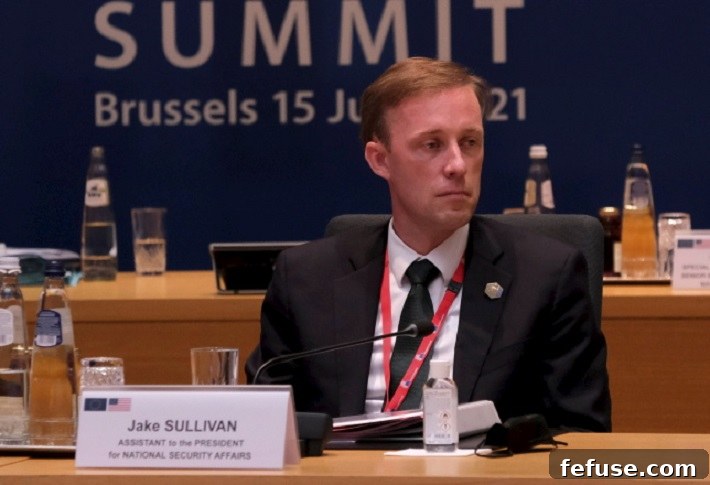
US National Security Advisor Jake Sullivan emphasized the gravity of this new policy in a public statement, asserting: “We are sending an unmistakable message: Anyone supporting Russia’s unlawful war effort is at risk of losing access to the U.S. financial system.” This powerful warning extends beyond direct trade, signaling potential financial repercussions for entities globally that continue to facilitate or benefit from transactions involving Russian goods deemed critical to its economy.
Further clarifying the broader scope, the White House stated that the Executive Order (E.O.) would “also make it more difficult for specific Russian goods to enter the United States after being modified in a third country.” This indicates a comprehensive strategy to target various Russian sectors and prevent circumvention of sanctions through third-country processing. It signifies an evolving understanding within the US administration and its allies of how supply chains can be manipulated to bypass economic restrictions.
Looking ahead, the White House further articulated its future intentions: “In the coming months, the United States and our partners intend to introduce import restrictions on certain diamonds mined, processed, or produced in Russia, building on an existing U.S. ban on the importation of Russian-origin diamonds.” This statement suggests that the current Executive Order is part of a multi-stage approach, with potentially more detailed and expansive restrictions on Russian diamonds to follow.
Significant Impact on India’s Diamond Industry
This new policy is anticipated to deliver a substantial blow to India’s thriving diamond industry. India serves as the world’s largest cutting and polishing center for diamonds, handling approximately 90% of the world’s rough diamond supply by value. A significant portion of these rough diamonds, particularly lower-value and smaller stones, traditionally originated from Russia. The US market is critically important for Indian diamond exporters, accounting for approximately 45 percent of all its polished diamond exports.
The immediate challenge for Indian diamantaires will be to source alternative rough diamond supplies to sustain their operations and meet global demand. This shift will necessitate reconfiguring existing supply chains, which could lead to disruptions, increased operational costs, and potentially job losses in the short term. The industry will need to adapt rapidly, focusing on diamonds from non-sanctioned origins such as Botswana, Canada, South Africa, and Australia. This may also accelerate discussions around enhancing traceability and transparency within the diamond supply chain to unequivocally prove the non-Russian origin of polished stones.
Challenges of Implementation and Traceability in the Global Diamond Market
While the intent behind these sanctions is clear, their effective implementation presents considerable challenges, particularly concerning the inherent nature of diamonds. Unlike many other commodities, diamonds are small, easily transportable, and lack unique identifying markers once they are extracted from the ground and mixed with other rough stones. Tracing the origin of a polished diamond back to its specific mine is a complex task.
The industry has explored various solutions, including advanced technologies like blockchain, laser inscription, and sophisticated analytical tools to verify a diamond’s journey from mine to market. The G7’s long-term plan aims to develop and implement a robust traceability mechanism. However, creating a foolproof system that can withstand sophisticated attempts at circumvention will require unprecedented cooperation among governments, industry bodies, and technological innovators. This comprehensive approach will need to cover the entire value chain, from mining and sorting to cutting, polishing, and retail.
Broader Implications for Global Trade and Supply Chain Resilience
The US’s latest move on Russian diamonds is a powerful demonstration of how geopolitical events are reshaping global trade practices. It underscores a growing emphasis on ethical sourcing and supply chain transparency, particularly for luxury goods. Consumers are increasingly demanding assurances about the origin and ethical credentials of their purchases, pushing industries to adopt more stringent verification processes.
Beyond diamonds, this Executive Order sets a precedent for how the US and its allies may approach other commodities that are processed in third countries after originating from sanctioned nations. It highlights a strategic pivot towards addressing indirect trade routes that previously allowed sanctioned economies to maintain revenue streams. This shift will compel businesses worldwide to undertake more thorough due diligence on their supply chains, not only for compliance but also for resilience against future geopolitical disruptions.
Conclusion: A New Era for the Diamond Trade
The US’s decision to close the loophole for Russian diamond imports marks a significant turning point in the global diamond trade and the broader landscape of international sanctions. It is a clear signal of unwavering commitment from the US and its G7 partners to intensify economic pressure on Russia, aiming to diminish its capacity to finance the conflict in Ukraine. While this will undoubtedly create significant challenges for major processing centers like India and necessitate substantial adjustments across the industry, it also accelerates the push for greater transparency, traceability, and ethical sourcing practices within the diamond sector.
As the global diamond industry adapts to this new reality, the focus will be on building more resilient, verifiable, and ethically sound supply chains. The coming months will reveal the full extent of these changes, shaping not only the flow of these precious gems but also setting new standards for international commerce in an increasingly interconnected and politically charged world.