
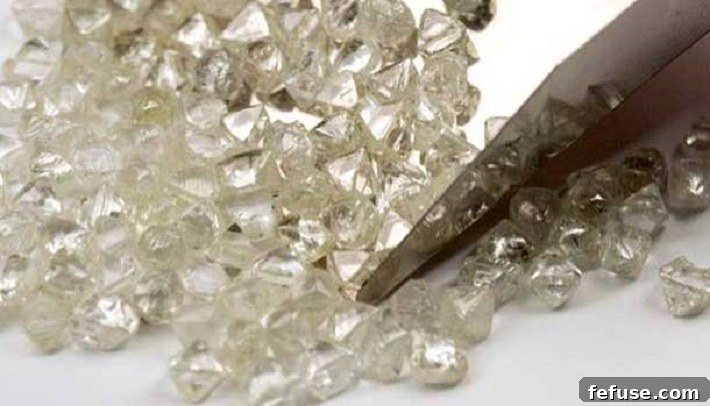
De Beers Concludes 2018 with Robust Rough Diamond Sales, Signaling Strong Retail Season Ahead
De Beers Group, the world’s leading diamond company, wrapped up its financial year 2018 with a compelling display of strength in the global diamond market. The company provisionally reported robust sales of $540 million worth of rough diamonds in its 10th and final sales cycle of the year. This significant performance not only exceeded the $455 million recorded in the corresponding 10th cycle of 2017 but also marked a substantial increase over the $442 million provisionally sold in Cycle 9 of 2018. This upward trend in sales figures underscores a positive momentum building within the industry as it geared up for the critical end-of-year retail period.
The cumulative provisional sales for rough diamonds throughout 2018 reached an impressive $5.46 billion, reinforcing De Beers’ dominant position and the sustained global demand for natural diamonds. These figures offer valuable insights into the health of the diamond supply chain, from mining and cutting to polishing and retail, and reflect a resilient market sentiment despite various economic headwinds faced throughout the year. The consistent demand for rough diamonds indicates that manufacturers and retailers were actively restocking their inventories in anticipation of strong consumer interest, particularly in key holiday seasons.
Bruce Cleaver, CEO of De Beers Group, commented on the performance, stating, “De Beers Group’s rough diamond sales during the final cycle of the year continued to be in line with expectation ahead of the all-important retail selling season as cutting and polishing factories in India restarted their operations following the Diwali holiday.” His statement highlights two crucial factors influencing the strong sales: the strategic timing before major retail events and the operational recovery of India’s vital diamond processing sector. India plays an indispensable role in the global diamond industry, as it processes an estimated 90% of the world’s rough diamonds, making the resumption of its factories post-Diwali a critical driver for rough diamond demand.
Understanding the Dynamics: Retail Season and Diwali’s Impact
The rough diamond sales cycle is intrinsically linked to the broader retail calendar, with the final cycles of the year often reflecting the industry’s preparations for the peak holiday shopping season. For many Western markets, the period from Thanksgiving through Christmas and New Year’s is the most crucial for jewelry sales, particularly engagement rings and other diamond jewelry. Manufacturers and cutters purchase rough diamonds from companies like De Beers months in advance to ensure they have sufficient polished inventory to meet this anticipated surge in consumer demand.
Diwali, the Hindu festival of lights, significantly impacts the global diamond industry due to India’s central role in diamond cutting and polishing. Factories in major Indian diamond hubs like Surat typically close for a period during and after Diwali, allowing workers to celebrate with their families. The reopening of these factories signals a renewed appetite for rough diamonds, as polishers restock and ramp up production to fulfill orders for the upcoming retail season. The alignment of De Beers’ final sales cycle with the post-Diwali restart of operations in India was therefore a perfectly timed confluence that contributed significantly to the strong sales figures observed.
This interplay between cultural holidays and global supply chain logistics demonstrates the intricate and interconnected nature of the diamond market. The robust demand seen in Cycle 10 was a clear indicator that the midstream sector (cutters and polishers) had a positive outlook for the downstream retail sector, investing confidently in rough stones to be transformed into exquisite jewelry for end consumers.
De Beers’ Position in the Global Diamond Landscape
As a leading player in the diamond industry, De Beers operates a unique sales model known as “sights” – exclusive, invitation-only events where accredited buyers, known as sightholders, purchase rough diamonds. These sales cycles occur approximately ten times a year, providing a consistent supply stream to the market. De Beers’ provisional sales figures serve as a bellwether for the overall health and sentiment of the diamond industry. The company’s careful management of supply and its deep understanding of market dynamics are crucial in maintaining stability and value across the diamond pipeline.
De Beers’ legacy is built on its extensive mining operations across Southern Africa and Canada, its rigorous sorting and valuation processes, and its historic marketing prowess. The iconic “A Diamond Is Forever” campaign, launched over 70 years ago, revolutionized consumer perceptions of diamonds and established them as enduring symbols of love and commitment. This brand-building heritage continues to influence consumer desire for natural diamonds globally, contributing to the sustained demand observed in sales cycles like the one reported.
Beyond sales, De Beers is also deeply invested in responsible sourcing and sustainability initiatives. Efforts like the GemFair program aim to improve working conditions and market access for artisanal and small-scale miners, while other initiatives focus on environmental stewardship and community development around its mining operations. These commitments resonate with increasingly conscious consumers who demand transparency and ethical practices from the brands they support, further solidifying the value proposition of natural diamonds.
Broader Market Trends and the Future Outlook for Diamonds
The strong finish to 2018 for De Beers suggests a healthy underlying demand for diamonds, influenced by several global trends. Economic growth in key markets, particularly the United States and emerging economies in Asia, typically correlates with increased luxury spending, including diamond jewelry. While global economic conditions can be volatile, the resilience shown in diamond sales points to the enduring appeal of these precious gems as investments, heirlooms, and symbols of significant life moments.
The industry is also navigating the evolving landscape of consumer preferences. Younger generations, while still valuing diamonds, are increasingly drawn to personalized experiences, unique designs, and brands that align with their values. This has prompted manufacturers and retailers to innovate in terms of product offerings, digital engagement, and storytelling that emphasizes the natural origin, rarity, and emotional significance of diamonds. The strong rough diamond sales indicate that the industry is adapting to these shifts, preparing a diverse range of products to cater to a broad spectrum of consumer tastes.
Furthermore, the emergence of lab-grown diamonds has added a new dimension to the market. While De Beers itself has ventured into this space with its Lightbox Jewelry brand, its core business and focus remain firmly on natural diamonds. The sustained demand for rough natural diamonds, as evidenced by the 2018 sales figures, reaffirms the distinct and irreplaceable value proposition of naturally occurring gems, which are prized for their unique geological history, rarity, and intrinsic value.
Looking ahead from the perspective of late 2018, the industry entered the new year with cautious optimism. The strong performance in the final sales cycle provided a solid foundation, signaling that the demand pipeline was robust. Analysts and industry stakeholders would be closely watching the upcoming retail reports to gauge the actual consumer spending during the holiday season, which would then influence subsequent rough diamond sales cycles. De Beers’ consistent ability to meet market expectations and drive substantial sales figures underscores its strategic leadership and the enduring allure of natural diamonds in the global luxury market.
In conclusion, De Beers’ impressive rough diamond sales in the 10th and final cycle of 2018, culminating in a provisional annual total of $5.46 billion, underscore a vibrant and resilient diamond industry. Fueled by the critical post-Diwali resumption of Indian cutting and polishing operations and the anticipation of a robust holiday retail season, these figures paint a positive picture for the natural diamond market. As the industry continues to evolve, De Beers remains at the forefront, balancing supply with demand and upholding the timeless appeal of diamonds for generations to come.