
Jaipur’s Bridal Jewelry Legacy: Unveiling Top Trends and Evolving Aesthetics for the Modern Wedding Season
In the grand tapestry of wedding celebrations, few elements capture desire and express profound passion quite like bridal jewelry. More than mere adornment, these exquisite pieces embody a dazzling dance of precious metals and rare stones, transcending simple price tags or investment values to become true testaments to unparalleled craftsmanship and exclusive artistry.
The contemporary bridal aesthetic champions tasteful elegance over overt ostentation, where the philosophy of ‘less is more’ often sees statement pieces taking center stage. We delve into the rich heritage and innovative spirit of four distinguished jewelry houses, all hailing from the legendary Pink City of Jaipur. These esteemed jewelers have consistently redefined the evolving narrative of bridal sparkle, shaping trends that resonate with both tradition and modernity.
From a venerated brand with a 280-year history, once crafting opulent designs for Rajputana royalty, to a dynamic 17-year-old enterprise already designing for the esteemed royal family of Abu Dhabi, these visionary creators are true dream catchers. Their mesmerizing creations grace the esteemed red carpets, adorning everyone from Hollywood beauties to Bollywood luminaries, marking them as global custodians of luxury and style.
Amrapali: Weaving Tribal Aesthetics into Global Fashion
If the majestic sight of Brad Pitt’s sculpted physique as Achilles, clad in a cobalt blue toga in the epic film Troy, remains etched vividly in your memory, yet the intricate, beaten gold, engraved neckpiece he sported eludes recall, then a moment of national reflection might be in order. Every piece of jewelry worn by Achilles, Helen, Hector, and Paris in that cinematic masterpiece was meticulously designed by the Jaipur-based jewelry powerhouse, Amrapali. This revelation often sparks a surge of national pride, or at the very least, a sense of pleasant surprise, given the brand’s relatively young origins.
Founded in 1978, Amrapali’s roots trace back to the serene, unassuming bylanes of Jaipur’s Chameliwala bazaar. Tarang Arora, 35, the creative director of the company, fondly recalls its humble beginnings: “The Amrapali shop was the last stop on the deadest lane of the market,” a testament to their unwavering vision in an otherwise nondescript locale. The House of Amrapali quickly distinguished itself by fearlessly translating a raw, tribal aesthetic into a powerful fashion imperative. This journey began as a bold rebellion, compelling two history-student best friends, Rajeev Arora and Rajesh Almira, to forge their own path. While Rajeev hailed from a lineage of doctors and lawyers, Rajesh’s family had a long-standing trade in emeralds. However, Rajesh found himself uninspired by a life dedicated solely to assessing and cutting green stones. Thus, their entrepreneurial odyssey commenced with trading handicrafts, capitalizing on Jaipur’s status as a major craft hub. At this nascent stage, fine jewelry was not even a glimmer in their ambitious imaginations.
About eighteen months into their business, a serendipitous encounter in Delhi brought news of a burgeoning demand for garnets, a stone expertly cut in Jaipur. Intrigued, they decided to explore the allure of garnets, a quest that unexpectedly unveiled an entire universe of jewelry design and craftsmanship. By 1981-82, the visionary duo began selling unique jewelry pieces, marking a pivotal shift in their business trajectory. Their innovative approach involved extensive travel across the state, observing the distinct jewelry worn by tribal women. “At this point,” Arora explains, “no one was interested in elevating tribal jewelry into a high fashion statement.” Their strategy involved visiting ‘sarafa’ (pawn) shops to acquire exquisite traditional pieces. They would then meticulously dismantle these finds, for instance, transforming a necklace with fourteen pendants into seven pairs of striking earrings. The rationale was simple yet brilliant: redesigning a single necklace would yield one sale, but creating seven distinct pieces meant seven clients, each becoming an organic advocate, significantly amplifying their publicity and profitability. This ingenious strategy marked the true genesis of Amrapali’s unique brand story.
What began as avant-garde designs crafted primarily in silver, characterized by a chunky, bold aesthetic, has gracefully evolved over the years to encompass an exquisite range of fine jewelry. “We are an Indian brand,” Arora emphasizes, “we infuse that inherent Indianness into our designs, reflecting authentic Indian craftsmanship and inspiration. Whether we craft it in white gold, yellow gold, or rose gold, or even integrate it with traditional jadau, the essence remains unequivocally Indian.” This distinctive blend of Indian sensibility with universal Western appeal proved instrumental in garnering international acclaim. In 2002, Amrapali received a prestigious invitation to Selfridges for a special promotion dubbed “23 and a half days of Bollywood.” What was initially a contract for a mere 23 days has, fourteen years later, blossomed into a enduring presence, with the brand still thriving at Selfridges.
Further cementing its global standing, Amrapali made history in 2011 by becoming the first Indian brand invited to join the esteemed fine jewelry room at Harrods, sharing prestigious space with iconic houses like Harry Winston and Bulgari. “People may not always distinguish between a Harry Winston and a Bulgari,” Arora states with confidence, “but if you encounter an Amrapali ring, you will unequivocally recognize that it is neither Bulgari nor Harry Winston. We proudly represent a distinct point of difference in the global fine jewelry market, embodying India’s rich cultural legacy with unparalleled strength.” With an extensive network of 38 retail outlets across India and a presence in six countries, a remarkable 75 percent of Amrapali’s jewelry, especially its bridal collections, comprises unique, one-of-a-kind creations. The brand recently embarked on a captivating collaboration with renowned fashion designer Anamika Khanna for wedding jewelry, aiming to craft a bridal aesthetic that deviates from the conventional. “The idea was to design for a wedding that transcends typical expectations,” Arora explains. “No bride or groom desires to resemble a Christmas tree. Consequently, delicate pieces are very much in vogue, or even if the pieces are larger, they are rendered with a refined, delicate aesthetic.”
Amrapali’s Key Bridal Trends:
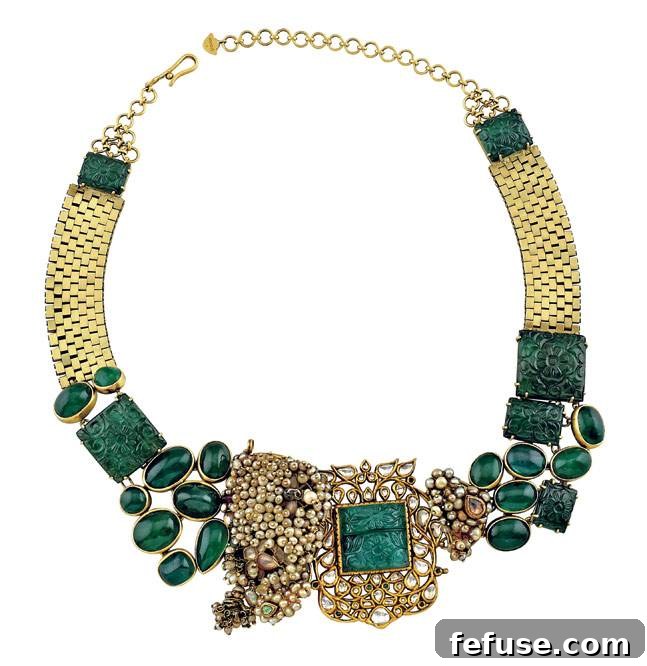
- Monochromatic Revival: Single-color jewelry is making a significant comeback, departing from the multi-colored pieces that previously dominated bridal aesthetics.
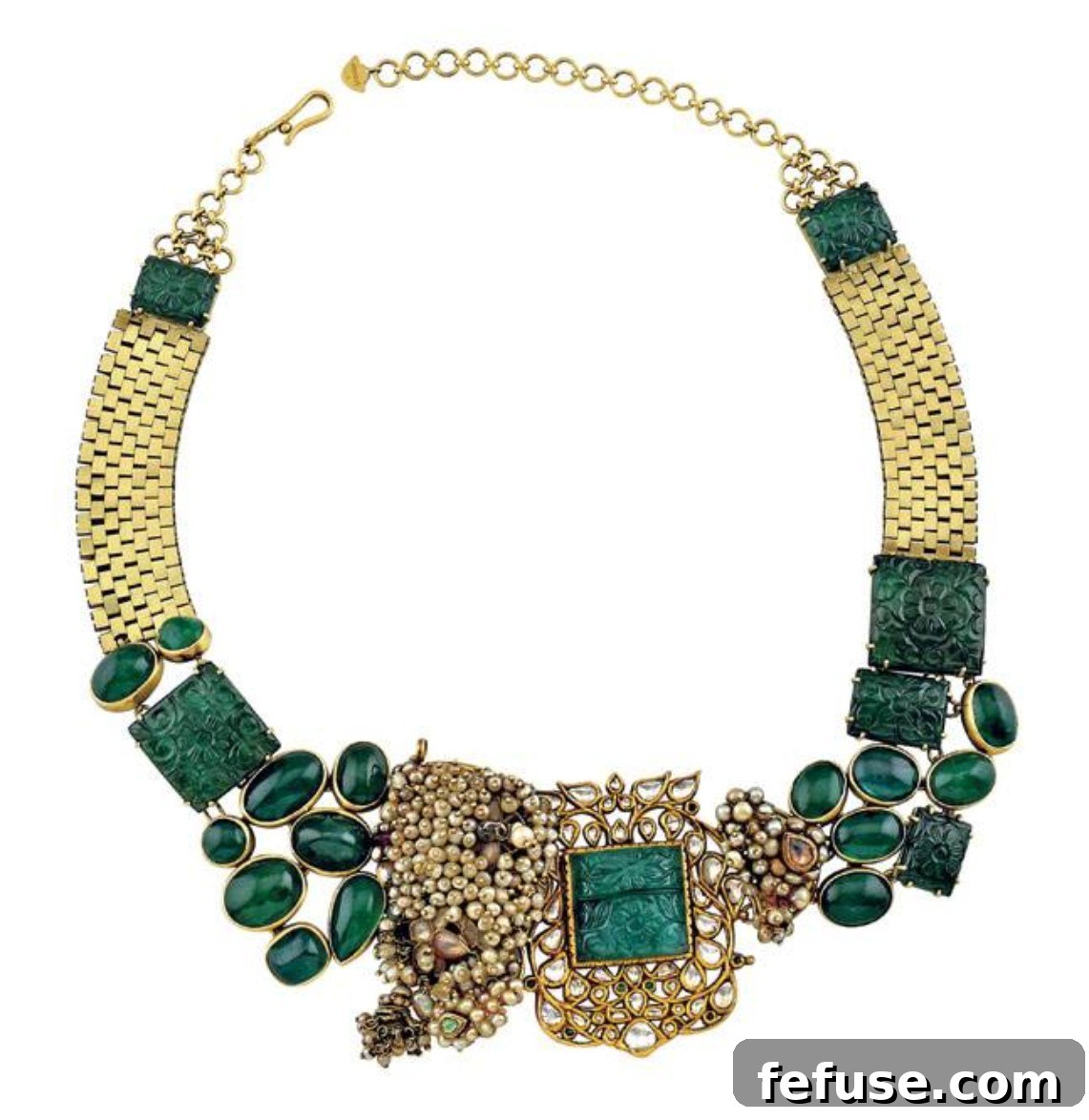
- Artistry in Stone: Carved emeralds and intricate workmanship on various gemstones are highly sought after, captivating a growing number of ardent enthusiasts.
- Mixed Mediums: The combination of diverse metals, such as gold and silver, is now a prominent trend, even in wedding jewelry. The allure of black gold with a vintage finish is also gaining enduring popularity.
- Evolution of Polki: The era of oversized polki (uncut diamond) looks is giving way to a new aesthetic defined by vibrant colored stones, with striking blue tanzanites spearheading this contemporary trend.
Bhuramal Rajmal Surana Johuree: Timeless Elegance and Royal Heritage
Whispers of history echo through the hushed corridors of inherited memories as Chandra Prakash Surana, the 7th generation descendant of the revered jewelry house Bhuramal Rajmal Surana Johuree, recounts enthralling tales. He speaks of a time when his forefathers, who held the esteemed position of official jewelers to the royal family of Jaipur, were escorted through the secluded zenana quarters for an exclusive audience with the queen. This extraordinary privilege, typically reserved for a select few outside the royal bloodline, highlights the profound trust and respect accorded to the Surana family. They were not only privy to the intimate royal courts and chambers but had, in fact, been personally invited to settle in Jaipur by Maharaja Sawai Jai Singh II, the visionary founder of the city, back in 1735. The Maharaja’s intention was to foster and promote the intricate artistry of handcrafted gold, enamel, and kundan work within his new capital.
Nearly three centuries later, the venerable House of Surana continues to uphold the distinguished traditions of its royal past, meticulously preserving the ancestral techniques, unparalleled craftsmanship, and inspired designs. While their artisanal skills reflect an archival grandeur, a thoughtful infusion of contemporary aesthetics ensures the brand remains profoundly relevant, rendering its jewelry eternally captivating. “Jadau is our most celebrated specialty,” explains Chandra Surana, 53, “in fact, we can rightfully claim to be pioneers in the art of jadau. However, it is the sophisticated integration of colored stones, for which Jaipur is globally renowned, within our jadau creations that truly forms the mainstay of our exquisite jewelry.” This is a well-deserved boast, for their collections offer a range that redefines exquisiteness in the most ethereal manner.
Their elaborate necklaces, masterfully crafted bangles, and traditional head ornaments such as ‘matha patti,’ ‘mang tikka,’ ‘jhela,’ and ‘borla’ are intricately textured, imbuing each piece with an elegant yet effortlessly graceful allure. These iconic jadau creations are lavishly embellished with an array of precious stones, including vibrant emeralds, rich rubies, lustrous South Sea pearls, captivating tourmalines, flat uncut diamonds (polki), and brilliant diamonds. The accompanying ‘meenakari’ or enamel work is as delicate as it is intricate, adding another layer of artistic depth. “It is precisely this finesse in workmanship that truly elevates a piece of jewelry to an art form,” he passionately explains. Meenakari, meticulously crafted in 23-carat gold, is a recurring and cherished theme. However, it has been thoughtfully contemporized through the use of soft pastel hues and the incorporation of unstructured South Sea pearls, which lend an appealing asymmetrical edge to their designs.
Regarding wedding jewelry, Surana affirms, “Jadau is an integral component of every bridal wishlist; the extent of its heaviness chosen by the bride remains an individual preference.” He observes that jewelry trends often mirror those in fashion, becoming more experimental and streamlined. “However,” he adds, “the use and style are now less weighty compared to earlier times when jewelry was primarily considered a significant investment asset.” For example, the ‘hasli,’ traditionally a broad and stiff neck ornament, is now crafted in a more delicate avatar, enhancing comfort for the wearer and resonating with contemporary sensibilities. “Ours is a traditional art form,” he continues, “so we frequently refer to archival designs. Yet, even when we revisit these designs, our artisans subtly tweak them, ensuring that customers acquire something uniquely their own.” As proportions evolve with changing times and client preferences, the emphasis shifts; layers reduce, and embellishments become more modest. Today, only 20 percent of their jewelry is customized, a significant shift from earlier decades when bespoke creations accounted for a 50-50 split with ready-to-wear pieces. “Patience, much like the contemporary aesthetic, is a virtue that has been whittled down,” he muses, “but as long as women continue to cherish jewelry, our future looks exceptionally bright.” And as the discerning eye drifts from one shimmering bauble to another precious gem, what truly isn’t there to adore?
www.brsjohuree.com
Suranas’ Latest Bridal Trends:
- Lighter Meenakari: Elaborate meenakari on the surface has been replaced by more stone work and open settings, making pieces significantly lighter and more comfortable.
- Popular Head Ornaments: Traditional head ornaments such as ‘borlas,’ ‘jhelas,’ and ‘matha pattis’ are experiencing a surge in popularity this season, adding a regal touch to bridal ensembles.
- Elegant Hand Adornments: Hand ornaments like ‘hathphools’ and ‘tagdis’ are trending in lighter versions, yet still maintain a substantial and impactful presence. Traditional bangles like ‘dasti’ or ‘paunchi’ also remain highly sought after.
- Men’s Royal Comeback: Men’s traditional ornaments, notably the ‘kalangi’ and ‘sarpech’ (turban ornaments), are making a much-deserved comeback, adding a sophisticated touch to groom’s attire.
Birdhichand Ghanshyamdas Jewellers (BG): Sonnets in Stone, Blending Tradition and Audacity
It is a rare woman who remains untouched by the captivating rhapsody of precious stones meticulously set in gleaming metal. Historically, royal patronage served as the ultimate casting director for jewelry, shaping its evolution and prominence. Nawal Agrawal, representing Birdhichand Ghanshyamdas Jewellers in Jaipur, is quick to credit this foundational influence. History played a significant advantage for Jaipur, as Maharaja Sawai Jai Singh II, the city’s visionary founder, harbored ambitious plans for his new capital. To realize this vision, he extended invitations to the finest craftsmen from across India, encouraging them to settle in specially allocated areas. Johari Bazaar, in the heart of Jaipur, was designated exclusively for jewelers, transforming it into a vibrant hub of unparalleled artistry.
Birdhichand Ghanshyamdas (BG) Jewellers was among the pioneering establishments in this famed market, where their illustrious journey began in 1944. With a vibrant and diverse color palette and inspirations meticulously drawn from India’s rich culture and architectural marvels, BG masterfully translates its designs into a glorious duality—a profound respect for traditional roots infused with a fresh, contemporary sensibility. Naturally, the enchanting state of Rajasthan serves as their ultimate muse. Patrons of the much-celebrated art of kundan meenakari, their exquisite collections—including ‘Hunar,’ ‘Adrishya,’ ‘Aranya,’ ‘Amér,’ and the newest, ‘Adaa’—draw deeply from a wide spectrum of genres, cultures, and creative expressions spanning the entire subcontinent. The traditional insistence on heavy gold and silver jewelry has perceptibly evolved, altering the very face and trajectory of traditional craftsmanship.
Agrawal’s son, Yash, a distinguished graduate of GIA (Gemological Institute of America) Carlsbad, US, has played a pivotal role in infusing the brand with youthful vigor through his innovative renditions. He has successfully created more than 400 copyrighted and patented designs, pushing the boundaries of creativity while honoring heritage. While kundan-meenakari remains their foundational strength and hallmark, BG Jewellers now boldly experiments with vibrant colored stones and both uncut and full-cut diamonds, defining new, more natural delineations for the brand. Keeping perfectly in step with the modern bride’s evolving preferences, their wedding collections showcase audacious hues and intriguing combinations of diverse gemstones, diamonds, and polki intricately set in gold. Variety is truly the call of the day, with bold and unconventional choices now triumphing over overtly flashy styles, and vivacity reigning supreme over the tried and tested. This commitment to innovation ensures that BG Jewellers continues to captivate and inspire a new generation of brides.
www.bgjewellers.in/
BG Jewellers’ Top Wedding Trends:
- Hathphool Dominance: Traditional hand ornaments like ‘hathphool’ are reigning supreme this season, adding a touch of classic elegance to bridal hands.
- Nose Ornament Revival: Nose ornaments, particularly the long ‘nath’ with an attached chain, are poised to be immensely popular, making a striking statement.
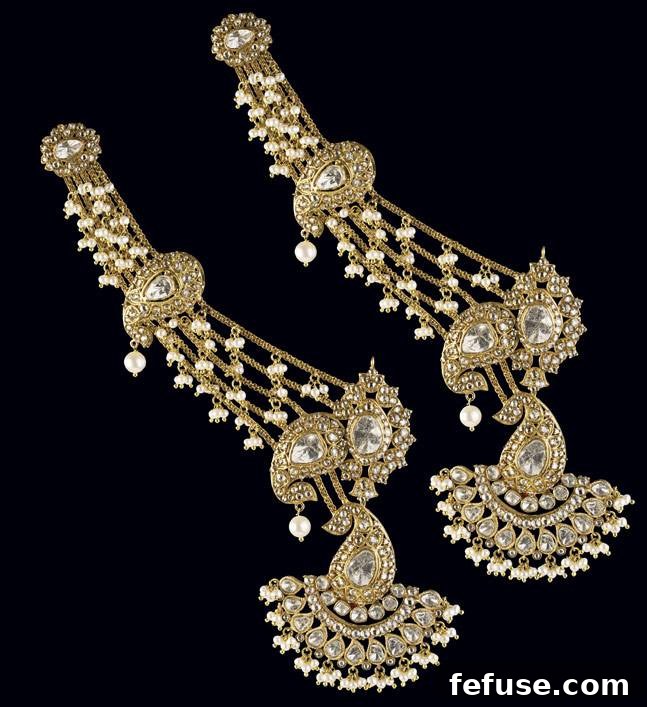
- Jhumka with Kaanche: Long ‘jhumka’ earrings paired with ‘kaanche’ (hair attachments) represent another significant trend, offering a captivating blend of traditional and dramatic appeal.
- Head Ornament Trailblazers: Traditional head ornaments such as ‘maang tikkas,’ ‘passa,’ ‘borla,’ and ‘maatha patti’ will undoubtedly be the trailblazers for this coming wedding season, gracing brides with timeless grandeur.
Sunita Shekhawat: A Symphony of Color in Contemporary Meenakari
Sunita Shekhawat, both the acclaimed brand and the visionary designer, encapsulates a narrative intricately woven entirely in color. Here, the sublime confluence of nature, history, art, and traditional craft collaborate to create a refreshingly original reinterpretation of classic meenakari work. At the very heart of this distinctive brand lies an unwavering dedication to “meenakari, meenakari, and meenakari,” as she eloquently states. Shekhawat masterfully explores this heritage craftsmanship, rendering it in ethereal pastel hues and a striking spectrum of blues, offering a truly unique perspective on this ancient art form.
The youngest brand within our curated selection, Sunita Shekhawat ventured into the commercial jewelry business only in 1999. Yet, her profound passion for art and craft had been an integral part of her life since her student days. This deep-seated passion seamlessly translated into designing jewelry; initially, she crafted pieces solely for herself. However, as ambient appreciation for her unique creations began to transform into tangible demand, she decided to share her artistic joy with a wider audience. Her design process was deeply personal: she would meticulously take orders after gaining a clear understanding of her clients’ ideas and budget, then sit alongside individual craftsmen, observing her designs beautifully take form. Encouragingly successful, she soon began designing for the Jaipur royalty, including the esteemed erstwhile Maharani Gayatri Devi. It was only after her husband joined the venture that the enterprise expanded its commercial footprint, reaching a broader clientele.
“Unlike most other jewelers,” she explains, “we meticulously design collections according to specific seasons, which typically translates into two or three distinct collections per year.” A significant proportion, almost 90 percent, of their collections comprises wedding jewelry, including bespoke pieces crafted for both men and women. Men’s jewelry, in her discerning view, extends beyond the typical ‘kalgi,’ coat buttons, and rings to include elegant long necklaces, which she insists “are emphatically not feminine.” Prospective buyers are required to undergo a precise fitting session before their bespoke jewels are designed. Why such meticulousness? “If a man stands six feet tall,” Shekhawat clarifies, “the requirements for his necklace will be distinctly different. For women, the length of the neck and the precise starting point of the collar bone are absolutely essential to ensure the perfect, flattering rest of a choker.”
To ensure unparalleled satisfaction, they recommend a comprehensive sitting with the entire family to thoroughly assess their collective requirements and aesthetic sensibilities. “We actively encourage the bride to bring her complete wedding ensemble along for the initial design session,” she emphasizes, “so that we can guarantee the jewelry impeccably resonates with the sense and sensibility of her attire.” The philosophy of ‘less is more’ clearly underpins their design perspective, yet the client’s vision remains paramount, for in their atelier, the client is always queen.
www.sunitashekhawat.com/
Sunita Shekhawat’s Bridal Style Guide:
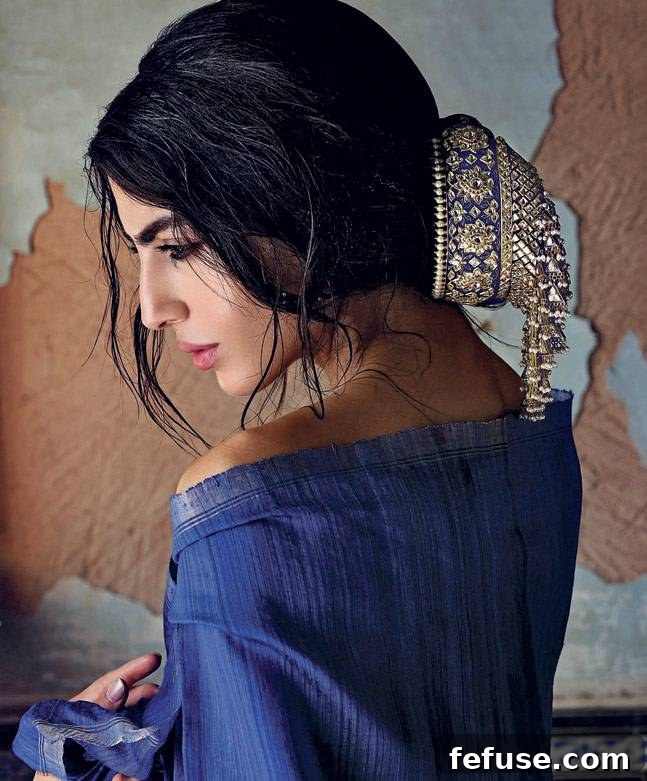
- Embrace Wearable Elegance: Heavy, cumbersome jewelry is definitely on its way out, making way for sensible, lighter, and more comfortably wearable pieces that reflect modern lifestyle.
- Statement Pieces Reign: Individual statement pieces that can be worn independently project a contemporary allure and are currently riding high on the wedding circuit, allowing for versatility and personal expression.
- Art of Layering: Layering of jewelry is a prominent and evolving trend, offering immense versatility with options to dramatically embellish an ensemble or elegantly scale it down, depending on the occasion.
News Source: indiatoday.intoday.in